This site is supported by our readers. We may earn a commission, at no cost to you, if you purchase through links.
Every sewer knows the frustration of clean fabric turning ragged because the scissors couldn’t keep up. Dull blades snag delicate weaves, and heavy grips wear your fingers down before the project’s halfway done. Good scissors aren’t a luxury—they’re the line between sloppy seams and precise craftsmanship.
The best scissors for fabric cutting feel balanced, slice cleanly through multiple layers, and stay sharp after months of use. Whether you’re tailoring fine silk or trimming thick denim, the right pair transforms the work from struggle to rhythm—precise cuts that follow your hand as if they already know where to go.
Table Of Contents
- Key Takeaways
- Key Features of Fabric Cutting Scissors
- Types of Scissors for Fabric Cutting
- Top 10 Best Scissors for Fabric Cutting
- 1. Guggenheim Professional Tailor Shears
- 2. Tula Pink Curved Fabric Scissors
- 3. Havel Embroidery Scissor Snips
- 4. Kai Ergonomic Sewing Scissors
- 5. Fiskars Embroidery Scissors
- 6. Gingher Stainless Steel Fabric Scissors
- 7. Kai Pink Handle Sewing Scissors
- 8. Kai Quilting Scissors
- 9. Electric Fabric Scissors Cutter
- 10. Heavy Duty Scissors
- How to Maintain Fabric Cutting Scissors
- Choosing The Right Scissors for Your Needs
- Frequently Asked Questions (FAQs)
- Conclusion
Key Takeaways
- The best fabric scissors combine sharp, balanced blades with ergonomic handles to deliver precise, fatigue-free cutting across all fabric types.
- High-carbon or titanium-coated steel offers superior edge retention and durability, especially for heavy-duty or multi-layer projects.
- Specialized types like pinking, embroidery, and tailor shears each serve unique functions, improving control, detail, or fray prevention.
- Proper maintenance—cleaning, oiling, sharpening, and storing scissors exclusively for fabric—keeps them cutting smoothly for years.
Key Features of Fabric Cutting Scissors
Good scissors make all the difference when you’re cutting fabric cleanly and fast. Before choosing a pair, it helps to know what sets great ones apart from the rest.
If you want them to stay sharp and glide smoothly, these scissor care and sharpening tips make a big difference over time.
Here are the key features that matter most when you’re looking for quality and comfort.
Ergonomic Design for Comfort
Ergonomic Design is what lets your Sewing Scissors disappear in your hand so you can focus on Fabric Cutting, not pain. Ergonomic Grips with the right Grip Sizes support neutral Wrist Alignment and better Cutting Posture, while good Scissor Balance and LeftHanded options keep your wrist straighter, reduce strain, and make long sessions feel easier, especially when you stay on top of basic Scissor Maintenance.
For heavier projects and multi-layer cuts, combining ergonomic grips with can further improve precision, durability, and overall cutting comfort.
Blade Length and Sharpness
Comfort pairs best with control, and that starts with Blade Length and Sharpness. Balanced blades let you move cleanly through fabric without forcing the cut. For even better results, match your shears to the fabric type and project, using this scissor selection by fabric type guide as a reference.
To fine-tune your setup, consider:
- 8–10″ blades for smooth, long seams
- Serrated blades for slippery materials
- Proper Blade Geometry for Cutting Efficiency
- Regular Scissor Sharpening
- Careful Scissor Maintenance for lasting Sharp edges
Material Quality and Durability
Once you’ve nailed blade length and sharpness, the next power move is Blade Composition and Steel Hardness. High‑carbon Fabric Scissors give you exceptional Edge Retention for Heavy Duty cutting, while stainless with titanium coating boosts Corrosion Resistance.
Pair that with solid Handle Durability and regular Scissor Maintenance and Sharpening, and your Serrated Blades stay working at a Professional level.
Precision and Cutting Accuracy
You’ve dialed in Blade Sharpness and steel, now Precision and Cutting Accuracy decide whether your Fabric Cutting feels clean or like a fight. Micro‑serrated Sewing Scissors improve Fabric Grip and Edge Precision, while correct Scissor Balance and pivot tension keep the blades shearing instead of chewing.
Match Cutting Technique to the tool, from tight‑tip snips to Pinking Shears, and your cut lines finally obey you.
Types of Scissors for Fabric Cutting
Not all fabric scissors are built for the same job. Some are made for quick snips, others for heavy, precise cuts.
Here’s a look at the main types and how each one fits your projects.
Dedicated Fabric Scissors
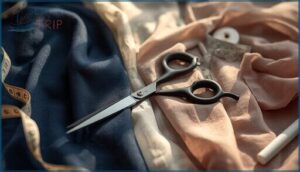
Think of Dedicated Fabric Scissors as your studio’s secret weapon—built for textiles and nothing else. Their sharp, finely angled blades glide cleanly through every seam you cut. Keep them sacred to fabric and defend their edge with proper Scissor Maintenance, Blade Sharpening, and Hand Ergonomics.
- Hold their edge with exclusive Fabric Selection
- Protect precision through correct Cutting Techniques
- Avoid paper to preserve sharpness
- Store responsibly to extend life
Multipurpose Scissors
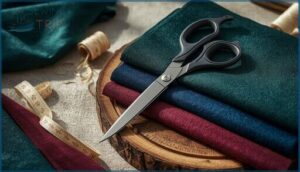
Multipurpose Scissors bridge the gap between home tools and true Fabric Scissors. Built with stainless Blade Materials and Ergonomic Grips, they handle both paper and fabric with ease.
Proper Scissor Maintenance preserves Sharpness Factors, keeping cuts smooth for precise Fabric Cutting. Use refined Cutting Techniques from Sewing Shears to guarantee consistent performance across varied Sewing Scissors tasks.
Pinking Shears for Decorative Edges
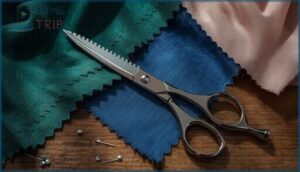
Pinking Shears are your go-to when you want Edge Finishing to pull double duty as design and Fray Control in Fabric Cutting. Their Zigzag Edge turns raw seams into clean Decorative Cuts that read as a deliberate Decorative Touch, not a compromise, especially on tightly woven fabrics. Use them as part of your core Sewing Techniques and Sewing Scissors lineup:
- Reserve Pinking Shears for fabric only to protect the teeth.
- Cut in long, steady strokes so the zigzag stays even.
- Pink seam allowances to tame fraying on cottons and linens.
- Pink fabric edges before prewashing to reduce loose threads.
- Use pinked swatches in planning notebooks instead of reaching for Embroidery Scissors.
Embroidery and Quilting Scissors
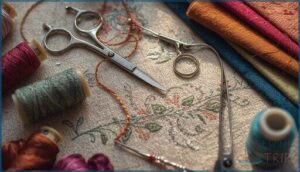
Embroidery and quilting scissors are your precision scalpels in a world of blunt tools, and they completely change your Fabric Cutting Techniques. Short, sharp Embroidery Scissors or Embroidery Shears with fine tips give you Embroidery Stitch Precision, clean thread tails, and tight curve control, especially when you invest in hardened Scissor Blade Materials like German stainless steel.
For a closer look at how blade strength and fabric type affect your cuts, this guide on choosing the best fabric scissors for dressmaking breaks it down beautifully.
Pair those with spring-loaded Quilting Tools and curved snips for efficient Quilting Thread Management, so your Quilting Supplies stay lean, your Gingher classics stay dedicated to fabric, and your Ergonomic Handle Designs keep your hands fresh through long piecing and applique sessions.
Heavy-Duty Scissors for Thick Fabrics
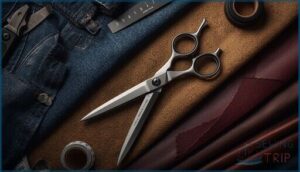
When you move into Thick Fabric Cutting, ordinary Fabric Shears tap out fast and you need true Heavy Duty blades built for Industrial Sewing and upholstery work. For clean Fabric Cutting and Fabric Shearing on denim, leather, canvas, and drapery, look for:
- Heavy Duty blades in high‑carbon or titanium-bonded steel
- Serrated edges that grip thick, slippery fabrics
- Bent grips that keep layers flat on the table
- Long 9-inch blades for fewer strokes through bulk
- Proven Scissor Durability from brands like Gingher, plus Pinking Shears reserved for finishing edges
Top 10 Best Scissors for Fabric Cutting
Finding the right pair of fabric scissors can make or break your sewing setup. The best ones feel balanced in your hand, cut cleanly, and hold their edge through constant use.
Here are ten options that stand out for precision, comfort, and durability.
1. Guggenheim Professional Tailor Shears
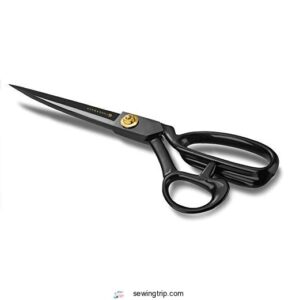
If you want a pair that feels like a tool, not a toy, start here. Guggenheim’s professional tailor shears use high‑carbon steel blades with a 40‑degree edge, so they bite cleanly into denim, canvas, and layered quilt cotton without chewing the fabric.
The rubber‑coated full cast steel grips give you a solid, locked‑in grip, which matters on long cutting days. They’re heavier and pricier than basic fabric scissors, but you get serious durability and a lifetime warranty in return.
| Best For | Tailors, quilters, and serious sewists who need durable, precision shears for cutting tough fabrics with control and comfort. |
|---|---|
| Material | Alloy Steel |
| Primary Use | Tailoring & Quilting |
| Blade Type | Precision knife-edge |
| Ergonomic Handle | Yes |
| Weight | 8.5 oz |
| Multi-Layer Cutting | Yes |
| Additional Features |
|
- Sharp high‑carbon steel blades make clean cuts through multiple fabric layers.
- Ergonomic rubber‑coated steel handles reduce hand fatigue during long use.
- Lifetime warranty ensures long-term reliability and value.
- Higher price than standard fabric scissors.
- Heavier build may take time to get used to.
- Occasional quality control issues like loose screws reported by users.
2. Tula Pink Curved Fabric Scissors
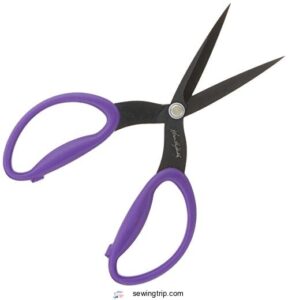
While Guggenheim shears handle the heavy cuts, grab Tula Pink curved EZ snips when you need precision without the bulk. These 5-inch spring-loaded beauties from Karen Kay Buckley feature micro-serrated, curved blades that grip threads tight, snipping flush to fabric or under the presser foot without nicking stitches.
The titanium-coated stainless steel stays sharp through endless quilting sessions, and the auto-open grips cut hand strain—even if arthritis tags along. At 3.84 ounces, they’re light enough for all-day control, perfect for applique trims and jump threads.
| Best For | Quilters and sewists who need lightweight, ultra-precise scissors for trimming applique or snipping threads cleanly. |
|---|---|
| Material | Plastic |
| Primary Use | Sewing & Quilting |
| Blade Type | Micro-serrated |
| Ergonomic Handle | Yes |
| Weight | 3.84 oz |
| Multi-Layer Cutting | Yes |
| Additional Features |
|
- Micro-serrated blades keep fabric from slipping or fraying.
- Comfortable cushioned handles reduce hand fatigue.
- Sharp to the tip, ideal for detailed and curved cuts.
- Pricier than many small fabric scissors.
- Equal-size finger holes may not fit smaller hands comfortably.
- Takes some practice to get used to the fine serrated edges.
3. Havel Embroidery Scissor Snips
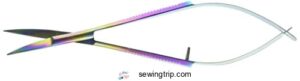
When you want that same under-the-foot control without the opalescent drama, Havel Snip Eze snips quietly get it done. These 4 ¾-inch squeeze snips use a spring-like action instead of finger loops, so you just grab, squeeze, and release while your fabric stays hooped.
The curved tips slide under jump stitches and tiny thread tails, and the impeccably sharp blades cut clean in a single squeeze. They’re lightweight, friendly to arthritic hands, and the safety cap lets you toss them in a notions bin without fear.
| Best For | Crafters who love Tula Pink’s vibrant aesthetic and need precise, easy-control snips for embroidery, quilting, and fine detail work. |
|---|---|
| Material | Stainless Steel |
| Primary Use | Embroidery & Detail Work |
| Blade Type | Fine micro-serrated |
| Ergonomic Handle | Yes |
| Weight | 1.06 oz |
| Multi-Layer Cutting | No |
| Additional Features |
|
- Micro-serrated blades grip threads for clean, slip-free cuts.
- Curved design fits neatly under a presser foot or tight seams.
- Lightweight build and spring action make it easy on the hands.
- May arrive with a slight burr that needs smoothing.
- Not as smooth in motion as premium brands like Fiskars.
- Opalescent finish can make it feel a bit heavier or bulkier.
4. Kai Ergonomic Sewing Scissors
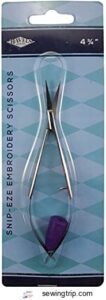
If gentle squeeze snips are your thing, the Kai ergonomic sewing scissors take comfort up a notch. Their soft elastomer grip molds to your hand, keeping wrists relaxed even through marathon cutting sessions.
The stainless steel blades—often hardened to about 56 HRC—slice smoothly from hinge to tip, gliding through silk and denim alike. Models like the 5210 or N5220 stay sharp for years, proof that Japanese blade craftsmanship still outlasts most mass-market shears.
| Best For | Crafters and sewists who need lightweight snips that reduce hand strain while offering precise cuts for embroidery and quilting work. |
|---|---|
| Material | Plastic |
| Primary Use | Embroidery & Quilting |
| Blade Type | Curved blade |
| Ergonomic Handle | Yes |
| Weight | 0.64 oz |
| Multi-Layer Cutting | No |
| Additional Features |
|
- Gentle squeeze handle design reduces fatigue for arthritic or tired hands.
- Sharp curved blades allow precise trimming even under a presser foot.
- Includes a safety cap for blade and hand protection.
- May dull over time with frequent use.
- Not ideal for thick or heavy-duty materials.
- Some users find it pricier than comparable thread snips.
5. Fiskars Embroidery Scissors
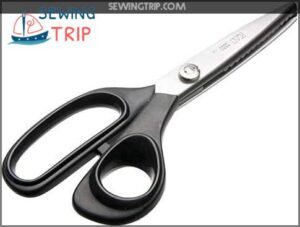
When big-project shears feel like overkill, Fiskars embroidery scissors step in with quiet confidence. At just 4 inches, their micro-tip, precision-ground stainless steel blades cut cleanly all the way to the point — no crushed threads, no fraying.
The lightweight double-loop handle works for both right- and left-handed sewists, and the balanced proportions keep your hand close to the cutting line.
For trimming jump stitches or tidying tight cross-stitch corners, these small scissors punch well above their size.
| Best For | Sewists, quilters, and crafters who need lightweight, precise shears for clean cuts on fabric and craft projects. |
|---|---|
| Material | Stainless Steel |
| Primary Use | Sewing & Quilting |
| Blade Type | Saw-tooth edge |
| Ergonomic Handle | Yes |
| Weight | 3.2 oz |
| Multi-Layer Cutting | Yes |
| Additional Features |
|
- Sharp stainless steel blades make clean, precise cuts with minimal fraying.
- Lightweight, ergonomic handle reduces hand fatigue during long use.
- Ideal for sewing, quilting, and crafting across various fabrics.
- Handle may feel bulky or uncomfortable for smaller hands.
- Some units have inconsistent quality due to mixed manufacturing origins.
- Sharpness and build quality can vary between batches.
6. Gingher Stainless Steel Fabric Scissors
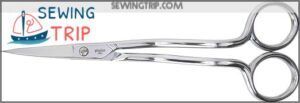
Gingher stainless steel fabric scissors are what you reach for when you’re done fighting flimsy blades. Their premium forged steel, precision-ground knife-edge blades slice through multiple fabric layers cleanly, all the way to the tip, so your seams and long cuts stay straight and crisp.
The double-curved, ergonomic handle keeps your hand in a natural position over hoops or flat work, which matters on marathon sewing days.
With the chrome-over-nickel finish, you’re buying a tool that’s built to last, not a one-season standby.
| Best For | Crafters and sewists who want precise, long-lasting scissors that stay sharp through detailed fabric work. |
|---|---|
| Material | Alloy Steel |
| Primary Use | Embroidery & Crafts |
| Blade Type | Precision knife-edge |
| Ergonomic Handle | Yes |
| Weight | 1.41 oz |
| Multi-Layer Cutting | Yes |
| Additional Features |
|
- Premium forged steel blades cut cleanly through multiple fabric layers.
- Double-curved handle design offers great comfort and control during long sessions.
- Durable chrome-over-nickel finish resists wear for lasting performance.
- May feel small for users with larger hands.
- Thick blades can leave tiny thread tails on close cuts.
- Pricier than basic scissors, which might deter casual users.
7. Kai Pink Handle Sewing Scissors
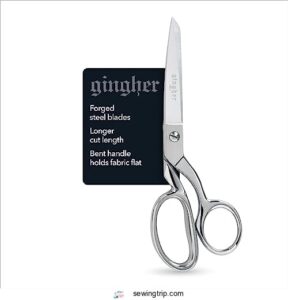
Spot the pink handle in your sewing chaos, and you’ve grabbed a winner for smooth cuts. These 8-inch Kai shears, built from high-carbon stainless steel with a 56 HRC hardness, glide through denim layers or light cottons like butter, thanks to their satin-finished, hand-polished blades.
The soft ergonomic grips cut fatigue on long sessions, balancing control without strain—perfect for dressmaking or quilting when you demand precision that lasts.
| Best For | Sewers, quilters, and crafters who want precision cutting and lasting comfort for long fabric sessions. |
|---|---|
| Material | Stainless Steel |
| Primary Use | Sewing & Quilting |
| Blade Type | Knife-edge bent |
| Ergonomic Handle | Yes |
| Weight | 7.2 oz |
| Multi-Layer Cutting | Yes |
| Additional Features |
|
- Bent handle keeps fabric flat and ensures smooth, even cuts.
- Knife-edge blades handle multiple layers with ease.
- Comes with a nylon sheath for safe storage.
- Finger holes may be tight for larger hands.
- A bit heavier than plastic-handled options.
- Pricier than basic sewing scissors.
8. Kai Quilting Scissors
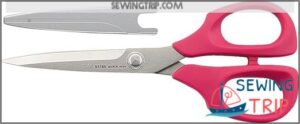
Quilters, grab these Kai scissors to conquer layered cottons and batting without slipping a stitch. Models like the N5150 rag quilter, at 6 inches, clip thick seam allowances cleanly, while the 8-inch N3210SE micro-serrated edges grip slippery fabrics for straight patchwork cuts.
High-carbon stainless steel blades, hardened and hand-polished, stay razor-sharp through marathon sessions, and soft ergonomic grips ease wrist strain on big projects. You’ll slice multiple layers precisely, owning every quilt block.
| Best For | Quilters and crafters who need precise, comfortable scissors for cutting delicate fabrics and multiple layers. |
|---|---|
| Material | Alloy Steel |
| Primary Use | Quilting & Crafting |
| Blade Type | Straight edge |
| Ergonomic Handle | Yes |
| Weight | 2.82 oz |
| Multi-Layer Cutting | Yes |
| Additional Features |
|
- Sharp NSSWR-2 steel blades stay rustproof and cut cleanly through fabric.
- Lightweight and ergonomic design reduces hand strain.
- Ideal for fine detail work, tight corners, and people with arthritis or tremors.
- Too small for cutting large fabric pieces.
- Not suited for heavy or thick materials.
- Limited to one unit per purchase.
9. Electric Fabric Scissors Cutter
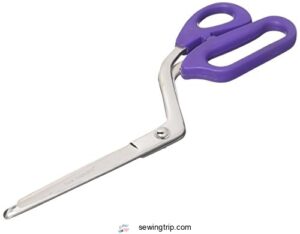
Tired of hand cramps from thick layers? Electric fabric scissors cutters power through with a 3.6-volt motor spinning at 11,000 RPM, slicing up to 8mm of cotton or 6mm of velvet effortlessly. You’ll cut multiple batting layers or denim stacks in seconds, freeing you to focus on your project.
Built-in lithium-ion batteries last 3 hours on a 60-minute USB charge, and lightweight designs under a pound keep your wrist happy during long sessions. Tungsten steel blades, replaceable for longevity, handle curves and straights like a pro—claim your cutting freedom now.
| Best For | Long-arm quilters or anyone trimming thick layers of batting who need precision and comfort for large projects. |
|---|---|
| Material | Stainless Steel |
| Primary Use | Batting Trimming |
| Blade Type | Straight-edge |
| Ergonomic Handle | Yes |
| Weight | Not listed |
| Multi-Layer Cutting | Yes |
| Additional Features |
|
- Long handles and 5-inch blades make cutting straight lines easy.
- Rounded tips prevent fabric snags and ensure clean edges.
- Comfortable grip reduces hand fatigue during long trimming sessions.
- Large size may feel awkward for smaller hands.
- Requires some effort for steady, even cuts.
- Not ideal for quick, tight-corner trimming.
10. Heavy Duty Scissors
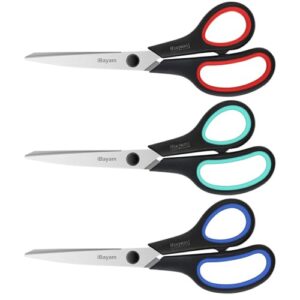
Need to conquer denim stacks or quilt batting without breaking a sweat? These beasts pack 2.5mm-thick stainless steel blades in 8-inch lengths, powering through multiple layers of tough fabric like canvas or upholstery. Comfort-grip grips with rubber inserts fight fatigue on big projects, while the 3-pack (red, green, blue) gives you adaptable options for sewing rooms or garages.
They’re not for leather extremes, but for everyday heavy lifting, they deliver clean cuts and long life—just store safely around kids. Take charge of your toughest cuts.
| Best For | Crafters, sewists, and DIYers who need reliable, sharp scissors for cutting fabric, paper, and everyday materials across different rooms. |
|---|---|
| Material | Rubber/Stainless Steel |
| Primary Use | General Sewing & Crafting |
| Blade Type | Straight edge |
| Ergonomic Handle | Yes |
| Weight | 3.2 oz |
| Multi-Layer Cutting | Yes |
| Additional Features |
|
- Sharp 2.5mm stainless steel blades handle multiple layers smoothly.
- Comfortable rubber grip keeps hands steady during long projects.
- Great value with three color-coded pairs for different uses.
- Not ideal for very thick materials like heavy leather.
- Blades can dull faster with heavy-duty use.
- No blade lock, so extra care needed around kids.
How to Maintain Fabric Cutting Scissors
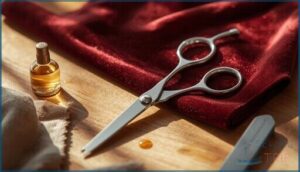
Keeping your fabric scissors in top shape takes a little care and consistency. A few simple habits can make them last years longer and cut like new.
Here’s how to keep them performing their best.
Cleaning and Oiling Blades
Think of blade maintenance as basic tool maintenance, not a luxury. After each session, wipe your sewing scissors with a soft, lint‑free cloth to clear fibers and dust.
Use cleaning methods like rubbing alcohol only when you see sticky residue from tape or fusibles. For smooth scissor lubrication, add one tiny drop of sewing machine oil at the pivot, open and close the blades to work it in, and wipe away every trace of excess so it never stains fabric.
This simple habit boosts rust prevention, keeps your sewing tools feeling newly sharpened longer, and delays expensive repair.
Proper Sharpening Techniques
You’ve cleaned and oiled; now Edge Maintenance is about working with the Blade Geometry, not against it.
For most sewing scissors and Razor Edge Scissors, you sharpen only along the existing bevel using fine Sharpening Tools, like a 1000–3000 grit stone with simple Whetstone Techniques and light Scissor Honing strokes, and test on fabric or embroidery scissors scraps until they cut cleanly.
Safe Storage and Handling
Sharp blades hold their edge best when treated with intention. Keep your scissors closed and sheathed for proper Blade Protection, and store them high or locked away if kids roam the room.
Follow these Handling Tips: label Storage Solutions clearly, separate Sewing Tools and Accessories, and secure them before travel—smart Scissor Safety is quiet power.
Preventing Rust and Corrosion
Once your Fabric Shears are safely stored, Rust Prevention keeps them battle-ready. Wipe every blade dry after use and apply light machine oil for Blade Coating strength.
Corrosion Control starts with Humidity Management—stash Specialty Scissors for Sewing in a dry drawer with silica gel.
Top Sewing Scissors Brands use premium Metal Treatment for lasting Fabric Cutting Tools.
Avoiding Cross-Contamination With Other Materials
With rust locked down, turn to Material Isolation for your fabric scissors. Label grips ‘Fabric Only’ to dodge Contamination Risks from paper dust or glue that dull blades fast.
Practice Scissor Sanitizing by wiping after each cut, enforcing Cleaning Protocols for Fabric Protection.
Keep Fabric Cutting Tools apart in sewing caddies—your Sewing Tools stay sharp for precise Fabric Cutting and Crafting.
Choosing The Right Scissors for Your Needs
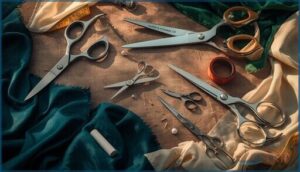
Picking the right pair of scissors depends on what you’re cutting and how you like to work. Some are built for precision, others for power or comfort during long sessions.
Here’s how to find the best fit for your projects and budget.
Matching Scissors to Fabric Types
Think of Fabric Selection like pairing the right knife with the right ingredient, because different Fabric Types demand specific Textile Scissors and Cutting Techniques for clean, controlled Cutting Fabric.
For silk and chiffon, choose fine-point stainless Sewing Scissors with micro-serrated Scissor Materials and tight Blade Angles for snag-free Edge Finishing.
Denim and wool respond better to long, high-carbon knife-edge shears, while stretchy knits behave best under lighter serrated blades that grip instead of stretching.
Considering Handle Comfort and Ergonomics
Comfort at the grip is where real Scissor Ergonomics starts, because if your hand hurts, you’ll stop creating fast. Look for Ergonomic Grips with contoured, curved rings that support neutral Wrist Posture, plus soft Handle Materials that boost Grip Comfort during long cutting sessions. For true left handed control and everyday Sewing Essentials, check that your ergonomic design actually fits how you cut, not just how Sewing Scissor Reviews sound.
True scissor ergonomics begin at the grip—when your hand feels good, your creativity flows effortlessly
- Contoured, offset grips keep your wrist straighter on the table.
- Soft, cushioned inserts spread pressure over your fingers.
- Larger lower rings let you add two fingers for extra power.
- True left handed models align the blades with your natural grip.
- Spring or curved designs help if you already feel thumb or wrist strain.
Evaluating Brand Reputation and Reviews
One smart shortcut is to treat Brand Loyalty like a tool, not a rule, and dig into real Sewing Scissor Reviews and Comparisons instead.
Use Review Analysis and Customer Feedback for core Sewing Essentials like Gingher, Fiskars, and Kai, watching for consistent Social Proof about sharpness, durability, and comfort.
Strong Brand Recommendations for Sewing Tools repeat across blogs, forums, and marketplaces, which tells you their Reputation Management is backed by actual sewists, not just marketing.
Setting a Realistic Budget
Setting a realistic budget starts with blunt cost analysis, not wishful thinking. Use budget planning to separate sewing essentials for beginners from long-term investments in dependable sewing scissors brands with real dependability and affordability.
For instance, compare a $10 starter pair against a $25–$50 upgrade using simple price comparison and expense management, then align every purchase with your actual financial priorities.
Frequently Asked Questions (FAQs)
What kind of scissors are best for cutting fabric?
Like a trusty blade slicing through chaos, the best scissors for cutting fabric are dedicated fabric scissors with razor-sharp blades, ergonomic grips, and high-carbon steel for durability.
Gingher and other sewing scissors brands excel in blade sharpness and scissor materials, perfect for your fabric selection and cutting techniques—forget pinking shears unless edging raw seams.
Are Fiskars scissors good for fabric?
Fiskars fabric scissors deliver reliable performance with impressive blade sharpness and scissor durability.
Many sewists trust Fiskars Quality for smooth fabric cutting, noting an easy user experience in sewing and embroidery—even outperforming general pinking shears.
What is the best tool for cutting fabric?
Under bright task lighting and a flat cutting mat, the best tool for cutting fabric is still a dedicated pair of Fabric Scissors with high Scissor Sharpness, quality Blade Materials, and Ergonomic Grips.
Rotary cutters, Pinking Shears, and Embroidery Scissors polish your Cutting Techniques, but a sharp pair of Gingher-style shears should anchor your Sewing Kit for most Fabric Cutting work.
What special scissors do tailors use?
Tailors rely on Professional Tailor Shears with Bent Grips for smooth, flat cuts, Pinking Blades to prevent fraying, Embroidery Tips for detail work, and Heavy Duty Cutters or Gingher Tailoring Tools for thick fabrics.
What type of scissors keep fabric from fraying?
Straight cuts leave fabric edges unraveling fast, but pinking shears with serrated blades deliver zigzag cuts for fray prevention.
These serrated edge scissors give you edge control, a clean fabric finish, and enhanced edge control in fabric cutting and textile cutting.
What’s the difference between dressmaking shears and pinking shears?
Dressmaking shears feature straight, beveled knife edges for clean cuts through woven fabrics like cotton, while pinking shears use serrated blades for zigzag cuts that prevent fraying on edges.
Dressmaking grips stay flat on tables; pinking ones suit finishing tasks.
Should I buy separate scissors for paper and fabric?
Yes, you should keep separate scissors for paper and fabric, because paper’s mineral fillers chew up fine edges, killing Cutting Efficiency, Blade Durability, and Fabric Protection. That makes your Fabric Scissors, Sewing Scissors, and Embroidery Scissors a shorter Tool Investment for Tailoring and Fabric Cutting.
How do I clean stuck-on fabric bits from my blades?
If Fabric Residue or Sticky Buildup coats your Fabric Scissors, wipe blades with alcohol-dampened cloths for Blade Maintenance. Open them wide, clean the pivot, apply light oil, and finish Scissor Sanitizing—essential for professional Tool Maintenance and Repair.
Are fabric scissors safe for kids to use?
You might assume Fabric Scissors are fine for any DIY and Crafting Projects with kids, but here’s the twist: true sewing shears are not Kid Friendly Designs and carry real Accident Risk Assessment concerns.
For Scissor Injury Prevention, stick to blunt‑tip child models with safety edges, shorter blades, and strict Supervised Use.
Then reserve sharp fabric shears for adults or highly responsible older kids who already follow basic Sewing Techniques and Tips, treat Crafting Supplies with respect, and have a track record of dependability around tools.
Can I use fabric scissors on paper?
You can, but you really shouldn’t. Regular Paper Cutting speeds up Blade Dulling on Fabric Scissors, which leads to rough Fabric Cutting, hidden Fabric Damage, and more Edge Sharpening and Scissor Maintenance on your core Crafting Supplies and Embroidery Scissors.
Conclusion
Sharp, steady, satisfying cuts start with tools that truly match your hands. When you choose the best scissors for fabric cutting, you gain cleaner edges, calmer wrists, and more control over every project. Think about your fabrics, your grip, and how long you sew in one sitting, then pick accordingly.
Treat your scissors like partners, not throwaways, and they’ll return the favor with years of smooth, confident, frustration-free cutting on every fabric you dare tackle.
- https://ldhscissors.ca/blogs/news/high-carbon-steel-versus-stainless-steel
- https://artmaninstruments.com/blogs/our-blogs/how-spring-action-scissors-and-needle-holders-prevent-hand-fatigue
- https://www.fiskars.com/en-gb/scissors-shears/products/left-handed-scissors
- https://www.nytimes.com/wirecutter/reviews/best-scissors-kitchen-shears/
- https://www.macmillandictionaryblog.com/pinking-shears