This site is supported by our readers. We may earn a commission, at no cost to you, if you purchase through links.
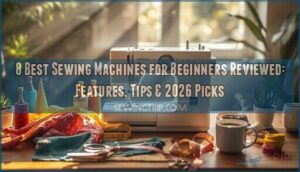
You’re staring at a pile of fabric, a Pinterest board full of projects, and absolutely no idea which machine won’t make you want to quit by Tuesday. The sewing machine aisle feels like a minefield of jargon—automatic needle threaders, computerized stitch libraries, sergers that sound more like spacecraft than household tools.
Here’s the truth: the wrong machine can turn your creative ambitions into expensive closet decoration, while the right one becomes your ticket to custom curtains, altered jeans, and that satisfying feeling of making something with your own hands.
Understanding what separates a beginner-friendly workhorse from a frustrating paperweight comes down to a handful of features that actually matter, and knowing which models deliver those features without draining your wallet or demanding an engineering degree to operate.
Table Of Contents
Key Takeaways
- Your first machine should match your actual projects and budget rather than chasing advanced features you won’t use—mechanical models keep things simple with hands-on control, while computerized options offer automatic threading and broader stitch libraries that grow with your skills.
- Essential beginner-friendly features include automatic needle threaders that cut setup frustration by 90%, drop-in bobbin systems for quick changes, adjustable speed controls (600-1100 stitches per minute), and at least 15-30 built-in stitches covering utility and decorative work.
- The Brother CS6000i and Singer 7258 Stylist dominate beginner recommendations by balancing affordable pricing ($150-250), reliable performance on multiple fabric types, and user-friendly designs that won’t overwhelm newcomers or demand engineering degrees to operate.
- Regular maintenance separates machines that last from expensive closet decorations—oil mechanical models every 8-12 hours of use, clean lint weekly from feed dogs and bobbin areas, and practice on scrap fabric before tackling real projects to master tension and stitch quality without wasting materials.
Key Features for Beginner Sewing Machines
Choosing your first sewing machine is all about finding features that make learning smooth and frustration-free. You want a model that matches your pace and helps you build confidence with every project.
A simple sewing machine for learning focuses on essential stitches and easy threading rather than overwhelming you with advanced features you won’t use yet.
Here’s what to look for as you compare beginner-friendly options.
Focus on must-have features like automatic tension settings and built-in stitches that make learning to quilt with a machine less overwhelming for newcomers.
Mechanical Vs. Computerized Controls
You’ll face a fork in the road right away: mechanical machines give you direct control with dials and switches, while computerized models offer a digital interface packed with automatic needle threading and speed settings.
Computerized models also give you access to built-in stitch selection menus that let you preview and pick from dozens of decorative patterns with a single tap.
Mechanical systems keep things simple—fewer tech headaches, straightforward thread tension adjustments.
If you’re drawn to that hands-on control, the Singer Talent 3323 gives you manual tension dials without sacrificing beginner-friendly design.
Computerized controls reveal broader stitch selection and memory features, perfect for experimenting as your confidence grows.
Built-in Stitches and Stitch Variety
Once you’ve picked your control style, stitch variety becomes your creative playground. Most beginner sewing machines deliver 15 to 60 built-in stitch options, from straight and zigzag utility stitches to decorative patterns that jazz up hems and seams.
Models like the Brother CS5055 offer adjustable width and length for stitch customization, letting you tackle different fabric compatibility needs and sewing techniques without breaking a sweat.
Ease of Use and User-Friendly Design
Beyond stitch variety, user-friendly controls and interface clarity separate frustrating machines from confidence-builders. Look for beginner sewing tips like a large, labeled stitch selector dial, LED guidance panels, and ergonomic design that puts frequently used buttons within easy reach.
These sewing machine features for beginners deliver sewing simplicity, earning strong beginner feedback and ensuring ease of use as you master new techniques.
Automatic Needle Threader and Bobbin System
Clean controls are just the start—you also want threader mechanism and dropin bobbin designs that eliminate fumbling. Modern automatic needle threader systems, like the one on the Brother CS5055, save you 5–15 seconds per session and cut threading errors by 90–95%. Reliable bobbin winding accuracy and simple bobbin maintenance keep you sewing, not troubleshooting:
- Front-loading bobbins for easy visibility
- See-through cases to check thread direction
- Anti-backlash features preventing wobble
- Quick-release latches for fast changes
Adjustable Sewing Speed and Presser Foot Options
Speed control lets you dial down from 1100 to 600 stitches per minute, giving you sewing accuracy on tricky fabrics—a breakthrough for beginner sewing projects. Foot pressure and presser feet variety determine stitch quality. Brother machines usually ship with zigzag, buttonhole, and satin-stitch feet, so you can swap fast and tackle different sewing techniques without fumbling.
| Feature | Why It Matters for Beginners |
|---|---|
| Adjustable speed dial | Controls pace for learning and precision |
| Start/stop button | Sews without pedal, reducing fatigue |
| Presser foot kit (3+ feet) | Deals with varied fabrics and projects |
| Snap-on foot system | Tool-free changes save setup time |
| Foot pressure adjustment | Handles thick or slippery materials |
How to Choose a Beginner Sewing Machine
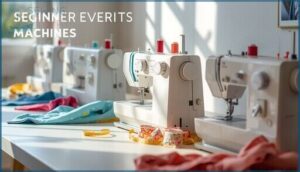
You’ve got options—maybe too many if you’re staring at rows of machines wondering where to start. The right beginner sewing machine isn’t about bells and whistles, it’s about matching your actual needs with what you’ll pay, use, and grow into.
If fumbling with thread sounds like a deal-breaker, beginner-friendly automatic threading machines can save you the frustration and get you sewing faster.
Here’s how to cut through the noise and pick a machine that won’t collect dust in your closet.
Assessing Your Sewing Goals
Before you pick your first sewing machine, define what you’ll actually create—garment making, quilting, or quick alterations—because your sewing objectives drive every feature you’ll need.
Estimate your weekly sewing time for realistic project planning, then conduct an honest skill assessment to match machine capabilities with your current level.
Set goal goals for progressing from basic seams to sophisticated techniques, establishing a timeline that keeps you motivated without overwhelming your schedule.
Budget Considerations for Beginners
Most beginner sewing machines fall between $100 and $250, giving you solid features without the financial sting of premium models.
Budget planning becomes straightforward when you factor in annual accessory costs of $20–$60 for feet and maintenance.
Smart savings strategies include buying refurbished units that cut upfront expenses by 20–40%, letting you invest more in fabric and creative freedom.
Portability and Machine Size
A heavyweight machine chains you to one workspace, but compact designs weighing under 10 pounds put freedom in your hands. Brother and similar brands now offer sewing machines for beginners measuring 12–16 inches wide, delivering serious space savings in your creative zone.
Travel cases protect your investment during transport, while foldable footprints reduce storage demands by 40%, letting you sew anywhere inspiration strikes.
Included Accessories and Add-ons
Your accessory kits determine whether you’ll tackle projects right out of the box or hunt for missing presser feet. Most sewing machines for beginners bundle essential sewing notions—zipper feet, buttonhole attachments, and extra bobbins—saving you 30–50 dollars in immediate purchases.
Check sewing machine reviews for specific accessory details before buying.
- Storage options with labeled compartments prevent needle chaos
- Universal presser feet compatibility unlocks aftermarket upgrades
- Metal frames and quality bobbin types signal long-term durability
Evaluating Brand Reputation
Brand loyalty doesn’t guarantee beginner success—warranty coverage and customer support do. Singer and Brother USA dominate market trends with 2–5 year warranties, while Janome balances reputation with accessible service networks. Consumer reviews reveal that sewing machines for beginners fail less often when brands offer phone support and replacement parts within 48 hours.
| Brand | Warranty Length | Support Channels |
|---|---|---|
| Brother USA | 1–3 years | Phone, email, chat |
| Singer | 2–5 years | Phone, online resources |
| Janome | 1–3 years | Authorized service centers |
Top 8 Sewing Machines for Beginners
You’ve narrowed down what matters in a beginner machine, so now it’s time to see what’s actually worth your money.
The eight models below cover everything from compact portables to full-featured computerized machines, giving you options whether you’re stitching hems or tackling your first quilt.
Each one brings something different to the table, so you can pick the machine that fits your goals and budget.
1. Brother Computerized Sewing Machine
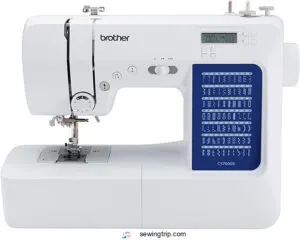
If you’re ready to take control of your sewing journey, the Brother CS7000X delivers computerized controls that won’t intimidate you. With 70 stitch options and an LCD user interface, this machine from Brother USA puts powerful features in your hands without overwhelming complexity.
You’ll adjust sewing speed with confidence, tackle projects on the sturdy metal frame that ensures machine durability, and rely on the automatic needle threader when threading feels tedious. It’s built for beginners who refuse to settle for limitations.
| Best For | Beginners and hobbyists who want computerized features like automatic needle threading and 70 built-in stitches without dealing with a steep learning curve. |
|---|---|
| Built-in Stitches | 70 |
| Weight | 14 pounds |
| Automatic Needle Threader | Yes |
| Material | Metal |
| Power Source | 120V AC |
| Buttonhole Function | 7 auto-size |
| Additional Features |
|
- The automatic needle threader and drop-in bobbin system save time and reduce frustration during setup
- 70 stitches plus 7 one-step buttonholes give you plenty of creative options as your skills grow
- Sturdy metal frame and wide workspace handle everything from delicate fabrics to larger quilting projects
- The automatic needle threader can be finicky to use and may require practice to get right
- Only one bobbin comes included, so you’ll need to buy extras if you switch thread colors often
- Some plastic components may not hold up as well as metal parts with heavy or long-term use
2. Singer Sewing And Quilting Machine
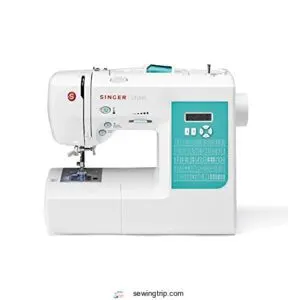
The Singer 7258 Stylist gives you 203 stitch applications and quilting techniques that’ll liberate your creativity from day one. You won’t struggle with threading—the automatic needle threader manages that grunt work while you focus on mastering sewing projects for beginners.
This sewing machine includes sewing speed control through a straightforward dial, plus it manages everything from delicate fabric selection to thick denim without hesitation.
For any Singer machine review, sewists praise the one-step buttonhole and extended table that make beginner projects feel like second nature.
| Best For | Beginners and hobby sewers who want a versatile machine with plenty of stitch options for garment sewing, quilting, and home decor projects without breaking the bank. |
|---|---|
| Built-in Stitches | 203 |
| Weight | 22 pounds |
| Automatic Needle Threader | Yes |
| Material | Metal |
| Power Source | 120V AC |
| Buttonhole Function | One-step |
| Additional Features |
|
- 203 stitch applications give you tons of creative options right out of the box
- Automatic needle threader and one-step buttonhole make setup and common tasks quick and frustration-free
- Handles both lightweight fabrics and thicker materials like denim, making it adaptable for different projects
- Some plastic components may wear out faster than metal parts with regular use
- Bobbin loading takes practice and can be fiddly for newcomers
- Not built for heavy-duty or industrial sewing, so it has limits with continuous thick-fabric work
3. Nex Portable Sewing Machine
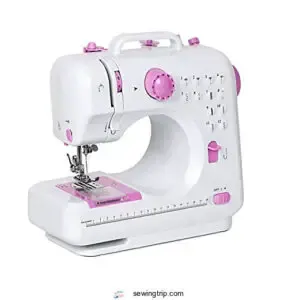
The NEX portable machine shifts gears toward true freedom—you can toss this 5-pound wonder in your bag and conquer sewing basics anywhere. With 12 built-in stitches and LED lighting, you’ll handle hemming, mending, and DIY projects without anchoring yourself to a sewing room.
Machine durability concerns surface in reviews, though, as users report thread tangling and needle breakage on thicker fabrics. For lightweight cotton and knits, fabric compatibility holds up well. User experience varies wildly, making this portable sewing machine a gamble for beginners seeking reliable performance.
| Best For | Beginners and hobbyists who need a lightweight, travel-friendly machine for simple projects like hemming, mending, and light crafting with cotton or knit fabrics. |
|---|---|
| Built-in Stitches | 12 |
| Weight | 5 pounds |
| Automatic Needle Threader | No |
| Material | Metal |
| Power Source | AC Adapter |
| Buttonhole Function | No |
| Additional Features |
|
- Compact 5-pound design makes it incredibly portable for sewing on the go or in small spaces
- 12 built-in stitches plus LED lighting give you solid versatility for basic projects
- Reverse sewing capability and automatic mode help beginners learn foundational skills quickly
- Thread tangling and tension issues reported by multiple users, especially on thicker materials
- Needles may break after a few months of use, limiting longevity
- Plastic components and limited speed control make it unsuitable for heavy-duty or professional work
4. Singer Portable Sewing Machine
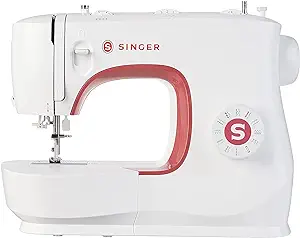
Looking for more power without sacrificing portability? The Singer MX231 packs 23 built-in stitches with 97 applications into an 11.8-pound frame—enough muscle for denim and decorative work, yet light enough to stash away.
You’ll master sewing basics fast with the built-in needle threader and adjustable stitch width, though some beginners struggle with unclear instructions.
This portable sewing machine manages quilting and garment construction better than ultralight models, making it a solid choice for beginner projects that demand real versatility.
| Best For | Beginners and hobbyists who want a versatile machine that can handle everything from basic repairs to quilting and decorative stitching without being too heavy to move around. |
|---|---|
| Built-in Stitches | 97 |
| Weight | 11.8 pounds |
| Automatic Needle Threader | Yes |
| Material | Metal/Plastic |
| Power Source | AC/DC |
| Buttonhole Function | One-step |
| Additional Features |
|
- 23 built-in stitches with 97 applications give you plenty of options for different projects and fabric types
- Built-in needle threader and front-load bobbin system make setup quick and frustration-free
- Lightweight at 11.8 pounds but still powerful enough to work with denim and heavier fabrics
- Instructions and quick start guide can be confusing for beginners trying to learn the machine
- Self-threading needle and bobbin features don’t always work smoothly and may need manual adjustments
- Hand wheel has limited grip, which makes it harder to push through tougher seams or thicker fabric layers
5. Juki Portable Thread Serger Machine
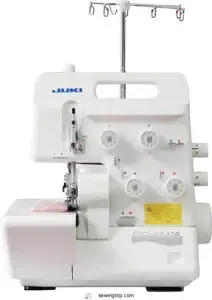
Want to finish edges like a pro without the learning curve? The Juki MO-654DE serger delivers professional seam finishing with preset tensions that take the guesswork out of thread management, making it surprisingly approachable for beginners ready to level up.
This compact powerhouse handles everything from delicate knits to heavy fabrics at speeds up to 1500 stitches per minute, with color-coded threading guides that simplify setup.
At 15 pounds, you’ll get genuine serger benefits without the intimidation—though you may need practice adjusting tensions for specialized projects.
| Best For | Sewers ready to move beyond basic machines who want professional edge finishing on everything from lightweight knits to heavy fabrics without spending weeks mastering tension adjustments. |
|---|---|
| Built-in Stitches | N/A (Serger) |
| Weight | 15.18 pounds |
| Automatic Needle Threader | No |
| Material | Aluminum |
| Power Source | 120V AC |
| Buttonhole Function | No |
| Additional Features |
|
- Preset tensions and color-coded threading make it genuinely beginner-friendly compared to most sergers
- Handles a wide range of fabrics at impressive speeds (up to 1500 stitches per minute) with automatic rolled hem capability
- Compact and portable at 15 pounds, so you can actually move it around your workspace or take it to classes
- No scrap bin included means you’ll need to manage fabric trimmings separately
- International users may need to buy voltage converters or step-down transformers
- Threading and tension adjustments can still frustrate beginners on certain projects despite the helpful guides
6. Brother Lightweight Sewing Machine
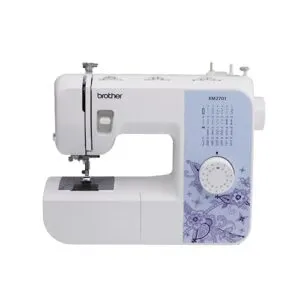
Take command of your sewing journey with the Brother GX37, a lightweight design powerhouse that won’t pin you down to one spot. At just 10.14 pounds, this full-size machine gives you the freedom to move between workspace and storage while delivering 37 built-in stitches and speeds up to 850 stitches per minute—faster than most beginner projects demand.
Brother USA backs it with a 25-year chassis warranty, and the included six presser feet plus automatic needle threader mean you’ll spend less time wrestling with machine accessories and more time conquering beginner projects that build real skills.
| Best For | Beginners who need a portable, easy-to-use machine for garment sewing, hemming, and basic repairs without getting overwhelmed by advanced features. |
|---|---|
| Built-in Stitches | 27 |
| Weight | 12.6 pounds |
| Automatic Needle Threader | Yes |
| Material | Metal |
| Power Source | 120V AC |
| Buttonhole Function | One-step |
| Additional Features |
|
- Automatic needle threader and quick-set bobbin system cut down on frustrating setup time so you can focus on actually sewing
- 37 built-in stitches and one-step buttonhole give you enough variety to grow your skills without drowning in options you won’t use yet
- Lightweight 10.14-pound frame makes it easy to move between rooms or take to classes, while the 25-year chassis warranty shows Brother stands behind the build quality
- Mechanical dial controls mean you can’t save custom stitch settings or adjust speed electronically like you could on computerized models
- The 850 stitches-per-minute max speed is decent but falls short if you eventually want to tackle high-volume projects quickly
- No advanced features like built-in fonts or memory functions, so you’ll outgrow it if you move into decorative embroidery or complex quilting
7. KPCB Mini Sewing Machine
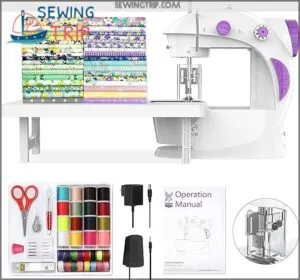
Don’t let portability compromise your potential—the KPCB Mini Sewing Machine proves you can start DIY sewing projects anywhere with its 3-pound frame and compact 10″D x 9″W design.
This best sewing machines entry point delivers double-thread construction for up to five fabric layers, plus an extension table that transforms cramped spaces into workable zones.
You’ll master beginner projects with included tutorial videos, bobbins, and measuring tape, though serious sewists should note this portable sewing benefits package suits smoother cloths better than heavyweight materials.
| Best For | Beginners, children, and seniors who want an affordable, lightweight machine for small sewing projects, simple repairs, and crafting in tight spaces. |
|---|---|
| Built-in Stitches | N/A |
| Weight | 3 pounds |
| Automatic Needle Threader | No |
| Material | Plastic |
| Power Source | AC Adapter |
| Buttonhole Function | No |
| Additional Features |
|
- Weighs only 3 pounds and packs into a compact 10″D x 9″W footprint, making it easy to store in closets or take to classes
- Comes with everything you need to start—bobbins, scissors, measuring tape, needle threader, tutorial videos, and even fabric bundles
- Double-thread design handles up to 5 layers of fabric with adjustable speeds and a foot pedal for hands-free control
- Struggles with thicker or heavier fabrics and has no tension upgrade, limiting it to smoother cloths
- Durability concerns—some users report broken or malfunctioning machines that may require manual thread management
- Not built for heavy-duty or professional work, so it’s really just for occasional, light sewing tasks
8. Brother Sewing And Embroidery Machine
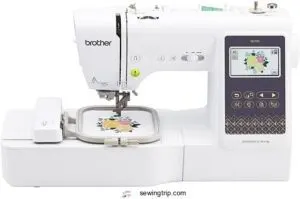
Break free from basic stitching with the Brother sewing and embroidery machine, which combines 103 built-in stitches and 135 embroidery designs in one powerhouse unit. You’ll navigate projects through the 3.7″ touchscreen, while wireless LAN connectivity lets you upload custom patterns without computers or cables.
The automatic needle threader manages bobbin management, though Brother USA’s 15.6-pound machine demands desk space and patience for its learning curve.
Thread options multiply through compatible Artspira patterns, making this beginner-friendly investment grow alongside your evolving skills despite occasional machine durability concerns from users.
| Best For | Beginners and intermediate crafters who want to explore both sewing and embroidery without buying separate machines, especially if you’re ready to invest time learning the features. |
|---|---|
| Built-in Stitches | 110 |
| Weight | 11.8 pounds |
| Automatic Needle Threader | Yes |
| Material | Metal/Plastic |
| Power Source | AC/DC |
| Buttonhole Function | One-step |
| Additional Features |
|
- Wireless connectivity and the Artspira app make it easy to transfer custom embroidery designs without needing a computer or dealing with cables.
- The automatic needle threader and jam-resistant bobbin save time on setup, so you can focus more on actual sewing and embroidery.
- You get a solid variety built in—103 stitches, 135 embroidery designs, and 10 fonts—giving you plenty of creative options right out of the box.
- The 4″ x 4″ embroidery area and limited throat space make it tough to handle larger quilting or embroidery projects.
- Some users report durability issues and frustrations with customer support, which could be a headache down the road.
- There’s a noticeable learning curve, and you might need a subscription to Brother’s design system to unlock the full range of features.
Comparing Mechanical Vs. Computerized Models
Choosing between mechanical and computerized models can feel overwhelming when you’re just starting out, but understanding the key differences puts you in control. Each type brings its own strengths and trade-offs that affect how quickly you’ll master your craft, how much upkeep you’ll handle, and whether your machine can grow with your skills.
Let’s break down what really matters so you can make the right call for your sewing journey.
Pros and Cons for Beginners
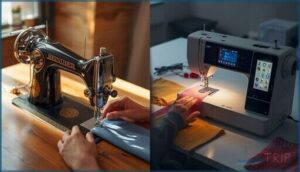
Choosing between mechanical and computerized models shapes your entire sewing journey. Mechanical machines offer lower Sewing Machine Costs and straightforward controls that help you master fundamental skills without digital distractions, though they demand more manual adjustments. Computerized options prevent common beginner mistakes through automatic features and programmable sequences, but their higher price tags and learning curves can overwhelm newcomers in the Sewing Community.
| Aspect | Mechanical Machines | Computerized Machines |
|---|---|---|
| Initial Investment | Budget-friendly, ideal for testing interest | Higher cost but feature-rich |
| Skill Development | Builds hands-on thread management expertise | Automates tension and stitch selection |
| Fabric Selection | Manual adjustments teach material handling | Presets simplify multi-fabric projects |
Learning Curve and Usability
Your first week with a sewing machine reveals who’s really in control. Mechanical models demand you master each dial and lever, building muscle memory through deliberate practice—research shows tactile controls reduce mental workload and accelerate skill building. Computerized interfaces offer instant error tolerance and guided feedback systems, though LCD menus can overwhelm beginners craving straightforward portability and ease of use.
Mechanical machines build mastery through hands-on control, while computerized models automate the learning curve—but menus can overwhelm beginners seeking simplicity
| Learning Factor | Mechanical Advantage | Computerized Advantage |
|---|---|---|
| Setup Time | Minimal steps, visible controls | Menu navigation required |
| User Experience | Hands-on mastery builds confidence | Automated features reduce errors |
| Interface Design | Tactile dials provide direct feedback | Digital screens offer guided prompts |
| Error Tolerance | Manual troubleshooting teaches mechanics | Built-in alerts prevent common mistakes |
| Skill Building Pace | Slower initial progress, deeper understanding | Faster early wins, delayed fundamentals |
Maintenance Requirements
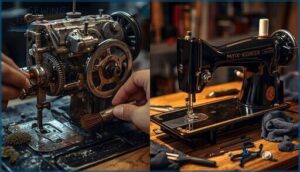
Mastering controls means nothing if your machine won’t fire up when you need it. Mechanical models demand hands-on sewing machine maintenance—you’ll oil metal parts every 8–10 hours, brush lint from feed dogs weekly, and replace needles based on fabric protection needs. Computerized types hide their guts behind plastic shields, requiring fewer machine oil tips but costlier repairs when electronics fail.
| Maintenance Task | Mechanical Frequency | Computerized Frequency |
|---|---|---|
| Oiling and lubrication | Every 8–10 hours of use | Minimal (self-lubricating parts) |
| Lint removal and cleaning | Weekly bobbin maintenance | Monthly electronic sensor checks |
| Needle replacement intervals | After 8–12 hours or skipped stitches | Same schedule, automated alerts available |
Upgrade Potential as Skills Grow
Your first machine won’t last forever, but some grow with you. Mechanical models cap out fast—Brother mechanical types max around 30 stitches—while computerized machines release Feature Expansion through firmware updates and memory presets. That’s Long Term Value: adjustable stitch width, programmable patterns, and attachment compatibility turn Beginner purchases into decade-long investments supporting sophisticated Sewing Techniques and project Sewing Versatility.
| Upgrade Aspect | Mechanical Models | Computerized Models |
|---|---|---|
| Skill Growth Paths | Limited to manual adjustments, fixed stitch library | Programmable patterns, automatic tension, memory settings |
| Feature Expansion | Requires accessory purchases only | Firmware updates release new capabilities |
| Attachment Compatibility | Standard presser feet, basic quilting guides | Walking foot, embroidery hoops, software integration |
| Sewing Versatility | Light to medium fabrics, simple projects | Heavy fabrics, decorative work, complex sequences |
| Upgrade Options | Replace entire machine when outgrown | Modular upgrades preserve initial investment |
Essential Tips for Beginner Sewists
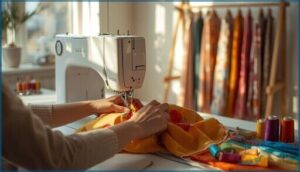
You’ve got your machine picked out, but owning the right equipment is just the starting line. The real turning point happens when you master the habits that separate frustration from flow, turning those first wobbly stitches into confident seams.
Let’s walk through three practical strategies that’ll help you take control of your sewing journey from day one.
Basic Maintenance and Cleaning
Your sewing machine craves attention like a classic motorcycle—regular care keeps it roaring through projects. Master these essentials to maintain peak performance:
- Dust Removal and Thread Tension: Clear lint from the needle plate area after each session using a soft brush, then verify balanced stitches with scrap tests.
- Bobbin Care: Wind evenly, insert correctly, and clean the case regularly to prevent jams.
- Machine Lubrication and Oil Checks: Apply oil only at manufacturer-specified intervals with proper sewing machine oil.
Practicing on Scrap Fabric
You’ve cleaned your machine—now put it through its paces. Grab a 6×6-inch scrap of washed, pressed medium-weight fabric and thread it with a contrasting color so you can actually see what’s happening.
Run straight seams to nail down your tension and foot pressure, recording every quirk your beginner sewing machine throws at you.
These practice exercises transform raw fabric selection into stitch quality mastery—no guesswork, just control.
Starting With Simple Sewing Projects
Your machine’s ready—time to build real skill. Tackle beginner projects with light to medium-weight fabrics, sticking to rectangles and clean seams that don’t mock your thread types or pattern choices. Here’s your roadmap to sewing basics mastery:
- Complete 1–2 small DIY sewing projects weekly to lock in muscle memory and stitch consistency.
- Choose beginner-labeled patterns and fabric selection to sidestep technical landmines.
- Press between every step for crisp, professional edges that prove you’re serious about sewing for beginners.
Frequently Asked Questions (FAQs)
What is the best basic sewing machine for home use?
For beginners, Brother mechanical models deliver the best home sewing experience. Offering reliable straight and zigzag stitches, automatic needle threaders, and lightweight portability, these machines fit tight spaces without breaking your budget or overwhelming your learning curve.
Which sewing machine has the least problems?
Picture your first project gliding smoothly—no jams, no frustration. Basic mechanical models from Brother and Singer consistently show excellent machine reliability in user experience surveys, with lower error rates, minimal repair costs, and outstanding durability tests among beginner sewing machines.
What is the most reliable brand of sewing machine?
Brother and Janome dominate reliability rankings in consumer studies, with Brother USA leading the pack for beginner-friendly durability.
Singer also scores high marks for warranty coverage and consistent performance across user reviews.
How to choose a sewing machine for beginners?
Start with your project goals—hemming curtains needs different features than quilting.
Match your budget to must-have basics like automatic threading, then prioritize ease of use over flashy extras you won’t touch.
What is the best beginner sewing machine?
The Singer Making the Cut Machine tops our sewing machines for beginners list. It balances machine durability with sewing machine basics, offering straightforward fabric selection support and thread types guidance that help you master sewing for beginners safely.
Which Brother Sewing Machine is best for beginners?
For absolute beginners, the Brother CS6000i stands out with its simple LCD panel and 60 built-in stitches, offering the perfect balance of easy-to-use features and versatility to master your first projects.
What is the best sewing machine for quilting?
When you’re piecing together your first quilt, ample sewing space and built-in quilting stitches become your best allies. Brother HC1850’s 70 stitches, stable thread tension, and quilting accessories deliver reliable results through thick batting layers.
Is a sewing machine good for beginners?
You’ll find that sewing machines for beginners deliver consistent stitches and reduce hand fatigue, letting you master techniques faster.
Built-in tutorials and automatic features make learning straightforward, so you won’t feel overwhelmed.
How often should I oil my sewing machine?
Keep your machine running smooth as silk by oiling every 8 to 12 hours of sewing or once every six months—whichever comes first—using only light, non-detergent sewing machine oil on manufacturer-specified parts.
Which fabrics work best for practice sewing?
Start with 100% cotton muslin or broadcloth—stable grain makes them forgiving for mastering thread tension and basic sewing techniques.
Denim and canvas work great for topstitching practice, while cotton blends help you control material stretch without frustration.
Conclusion
Your first project won’t land on a runway, but choosing from the best sewing machines for beginners reviewed here means it won’t end up in the trash either. The difference between a machine gathering dust and one you actually use boils down to honest assessment: know your projects, respect your budget, and prioritize features that eliminate frustration instead of creating it. Your creative independence starts the moment you thread that first needle.