This site is supported by our readers. We may earn a commission, at no cost to you, if you purchase through links.
The first thing most beginners sew falls apart within a week. A crooked seam here, a skipped stitch there—and suddenly that promising pillowcase looks like abstract art.
But here’s what nobody tells you: that’s exactly how every skilled sewist started.
Threading a needle and making something real with your hands rewires the way you see fabric, clothing, even the curtains in your living room.
Once you know a few fundamentals, the gap between "total beginner" and "I made this" closes faster than you’d expect.
These 40 easy sewing project ideas for beginners will take you from your first straight stitch to handmade gifts, home décor, and beyond.
Table Of Contents
- Key Takeaways
- Essential Sewing Tools for Beginners
- Simple Clothing Projects to Start With
- Beginner-Friendly Accessories to Sew
- Quick Home Decor Sewing Ideas
- Practical Sewing Projects for Everyday Use
- Easy Quilting Projects for Novice Sewers
- Beginner-Friendly Sewing Projects for Kids
- Handmade Gift Ideas for New Sewers
- Baby Sewing Projects for Beginners
- Upcycling Sewing Ideas for Beginners
- Frequently Asked Questions (FAQs)
- Conclusion
Key Takeaways
- Starting with the right tools — a basic sewing machine, fabric scissors, measuring tape, and a good iron — sets you up to actually enjoy beginner projects instead of fighting through them.
- Cotton is your best friend as a beginner because it’s stable, forgiving, and easy to cut cleanly, making everything from pillowcases to tote bags feel doable on your very first try.
- Small, fast projects like scrunchies, drawstring bags, and fabric napkins build real skills quickly, and that early confidence is what carries you into bigger, more exciting projects.
- Upcycling old clothes and fabric scraps into new things — mittens from a sweater, a pillowcase from a shirt — is one of the smartest ways to practice sewing without spending a dime.
Essential Sewing Tools for Beginners
Before you sew a single stitch, you need the right tools in your corner. The good news is you don’t need a whole craft store — just a few key pieces that’ll carry you through almost every beginner project.
Once you’ve got the basics down, a simple win like learning to sew a pillowcase from scratch puts every one of those tools to good use right away.
Here’s what belongs in your starter setup.
Basic Sewing Machine
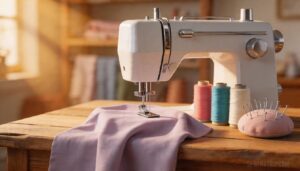
Think of your sewing machine as a creative partner — one that rewards you every time you understand it a little better. For sewing machine basics for beginners, start by getting comfortable with four essentials:
- Stitch Length Adjustment controls seam strength and fabric handling
- Thread Tension Balance keeps stitches even on both sides of your fabric
- Presser Foot Types let you tackle zippers, edges, and thick layers
- Feed Dog Maintenance ensures smooth, consistent fabric movement
Master these, and easy sewing projects suddenly feel less intimidating. Regular bobbin winding techniques and proper threading make beginner sewing project ideas genuinely enjoyable — not frustrating. You’ve got this! Understanding how the feed dogs advance fabric is essential for consistent stitching.
Fabric Scissors and Rotary Cutter
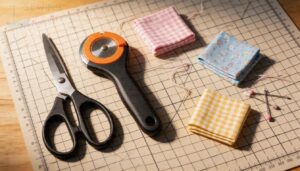
Once your machine is humming, the next thing you need is a clean cut. Fabric scissors with ergonomic grips reduce hand fatigue, while blade sharpness keeps edges crisp — no fraying, no frustration.
A rotary cutter with a safety guard pairs perfectly with a cutting mat for fast 15‑minute sewing projects. Keep up with blade maintenance, and your tools will last for countless beginner sewing project ideas ahead.
Measuring Tools
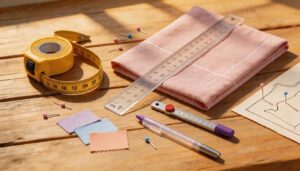
Good cuts mean nothing without good measurements — that’s where your toolkit really earns its keep.
Tape Measure Precision starts with a flexible retractable tape, perfect for curved seams and pattern drafting.
Seam Gauge Techniques help you nail consistent hem depths every single time.
Here are your four must-haves:
- Retractable tape measure — flexible, dual-sided, reads metric and imperial
- Clear plastic ruler — see your fabric markings right through it
- Seam gauge — marks small distances for clean, even hems
- Fabric marker — transfers pattern markings without permanent stains
Pins and Needles
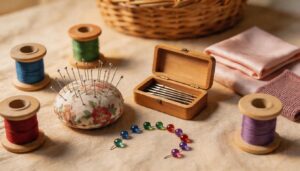
Once measurements are locked in, it’s time to meet the tools that actually hold your work together.
Pins and needles are the backbone of sewing basics — pick the wrong one, and even beginner sewing patterns fall apart quickly.
| Pin/Needle Type | Best For |
|---|---|
| Glass Head Pins | Delicate and lightweight fabrics |
| Ball Point Needles | Knits and stretchy materials |
| Sharp Needles | Quick sewing projects and general hand stitching techniques |
| Quilting Needles | Thick or layered fabric stacks |
Think of needle selection like posture breaks — small adjustments that prevent bigger problems.
Wrong needle choice creates nerve compression-style tension in your seams.
Keep a simple symptom log of what works per fabric, note Vitamin B12 deficiency-level gaps in your kit, and restock before starting an essential sewing tools collection.
Iron and Ironing Board
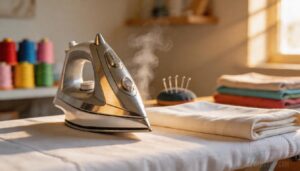
Your iron and ironing board quietly do the heavy lifting in sewing basics. Press each seam as you sew — it’s one of those sewing tips that separates the messy from the polished.
Look for a board with adjustable height, non-slip feet, and a heat-resistant cover for stability.
Use your iron’s steam settings carefully for crisp edges.
Good iron safety habits, like resting it on the built-in shelf, protect both you and your fabric.
Simple Clothing Projects to Start With
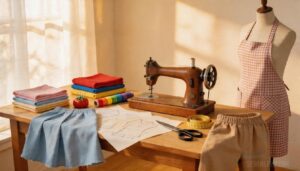
Making your first piece of clothing feels like a real achievement — and it’s closer than you think.
You don’t need a fashion degree or a fancy pattern to pull it off.
Here are five beginner-friendly clothing projects that prove a sewing machine and a little confidence go a long way.
Elastic-Waist Skirt
elastic waist skirt might just be the confidence booster your beginner sewing journey needs. It’s one of those easy sewing patterns that actually looks polished without demanding flawless results.
Fabric weight selection matters here — cotton lawn or poplin holds shape beautifully and sews smoothly.
You’ll cut your panels flat, sew two straight seams, then fold the top edge down for casing construction.
Elastic insertion is simple: thread soft braided elastic through, overlap the ends, and stitch them together. A waistband topstitch along the casing edge keeps everything neat and stable.
Fit adjustment is easy too — just size your elastic snugly. This quick sewing project delivers real, wearable results fast.
A-Line Wrap Skirt
Once you’ve nailed the elastic-waist skirt, the A-line wrap skirt is the natural next step in your beginner sewing projects‘ journey. It’s a simple skirt with a gorgeous A-line flare and a wrap front that ties at the side — adjustable, flattering, and genuinely fun to make.
Fabric Drape Choices shape everything here. Linen blends feel breezy and relaxed, while rayon creates fluid movement.
Wrap Closure Options range from ties to snaps. Fit Adjustments are easy since the wrap overlap accommodates sizing naturally. Try Length Variations from knee to midi, then explore Styling Suggestions like tucked tops or block heels!
One-Hour Sundress
A sundress in under an hour? Yes, it’s completely possible — and honestly, it’s one of the most rewarding beginner sewing projects you’ll tackle.
Fabric Choice matters here: cotton lawn, chambray, or rayon drapes beautifully and stays cool all summer long.
These quick sewing projects under an hour work best when your simple dress skips zippers and darts entirely. Use an elastic waist for easy Fit Adjustments without any fuss. Smart Seam Techniques like straight stitching with a light seam allowance keep things moving fast.
Time-Saving Tips like a narrow double-fold hem and pre-cut fabric panels make Fast Finishing feel easy. These easy sewing projects for beginners prove that stylish and simple really do go hand in hand.
Pillowcase Dress
Two rectangles of fabric — that’s really all a pillowcase dress takes. Fabric Choice makes a big difference here, so reach for lightweight cotton in fun Seasonal Prints.
Length Adjustments are simple, since you just trim the panels longer or shorter. Tie Styles range from sweet bows to clean knots at the shoulders. You can even explore Layered Variants for extra flair.
- Sew side seams and leave armhole openings
- Fold and stitch a casing for shoulder ties
- Hem the bottom edge to your preferred length
Easy Apron Pattern
An apron might just be the most satisfying beginner sewing project idea you’ll tackle.
Start with Fabric Selection — cotton and linen are your best friends here. A smart Cutting Layout keeps waste low and stress lower. Add thoughtful Pocket Placement, dial in Strap Adjustability for a perfect fit, and finish with clean Hem Finishing.
Follow a free apron pattern or the best apron pattern you can find, and you’re done in 30 minutes.
Beginner-Friendly Accessories to Sew
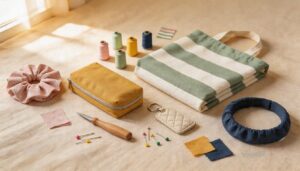
Accessories are where sewing gets really fun — small projects, fast results, and stuff you’ll actually use every day. Each one on this list takes just a little fabric and a short stitch to finish.
Here are five beginner-friendly accessories worth making first.
Infinity Scarf
The infinity scarf is one of those beginner-friendly sewing projects that looks impressive but takes almost no effort. Pick your fabric choice wisely — jersey knit drapes beautifully, while fleece adds cozy warmth.
Nail your stitch type (a zigzag works great for stretch), experiment with length variations and color blocking, and simple finishing techniques seal the deal. Honestly, this DIY scarf might become your favorite quick fabric craft project.
Fabric Headbands
Once your scarf is done, fabric headbands are the next great win in your lineup of Easy Sewing Projects for Beginners. They’re fast, fun, and seriously wearable.
Here’s what makes them such smart, quick fabric craft projects and DIY fabric accessories:
- Stretch Fabric Choices, like jersey and cotton lycra, adapt to any head shape comfortably
- Elastic Free Fit uses built-in stretch for a clean, snag-free interior
- Reversible Designs give you two completely different looks from one piece
- Reflective Safety fabric makes evening workouts safer and stylish
Follow simple Care Instructions — gentle wash, air dry — and they’ll last forever.
Scrunchies and Hair Ties
After headbands, scrunchies feel like a natural next step — and honestly, they’re one of the most satisfying DIY designer scrunchies you’ll ever make. Free scrunchie patterns are everywhere, so getting started costs almost nothing.
Your fabric choices shape everything: satin and silk protect hair overnight, velvet grips thicker strands, and cotton scraps keep things breathable.
Using fabric scraps projects your stash into something useful. Wide elastic types reduce breakage and spread tension evenly — a real win for hair health.
Simple Tote Bag
From scrunchies to something you’ll use every single day — a simple tote bag is one of the best beginner sewing project ideas out there.
Fabric choices like cotton canvas or denim keep things sturdy.
Smart capacity planning means it fits a laptop plus your daily essentials.
Add lining options for a polished finish, handle reinforcement at attachment points for durability, and closure variations like a snap for security.
Drawstring Bag
Once you’ve tackled a tote, a simple drawstring bag is your next quick win — and honestly, it might become your most-used make. Two straight seams plus a cord channel are all it takes. Fabric Selection is everything here:
- Cotton canvas for a sturdy everyday bag with a Reinforced Bottom
- Waterproof nylon for swim gear or beach days
- Festive Branding Prints for charming handmade gifts
Closure Types vary too — single or double cords both work beautifully. These quick and easy sewing ideas deliver real results fast.
Quick Home Decor Sewing Ideas

Your home is the perfect place to show off your new sewing skills. A few straight seams are all it takes to make something that actually changes how a room feels.
Here are five easy projects to get you started.
Envelope-Style Cushion Covers
Envelope pillow covers are one of the best quick and easy sewing ideas for freshening up a room fast. No zippers, no stress — just clean overlapping fabric panels that hide your cushion insert beautifully. Your overlap length should be 4 to 6 inches for a snug fit.
| Step | Key Detail |
|---|---|
| Front Fabric Alignment | Center your pattern or motif |
| Seam Allowance | Use ¼ to ½ inch throughout |
| Topstitch Reinforcement | Secure the envelope opening edge |
| Pressing Techniques | Press seams flat before stitching |
These beginner sewing projects genuinely feel like a win every single time.
Easy Pillowcases
Pillowcases might just be the most satisfying beginner sewing project ideas you’ll ever try — and the burrito method pillowcase makes it even easier than you’d expect. Roll your fabric, stitch, flip, and done.
Your fabric choices matter here: cotton breathes beautifully, while microfiber resists wrinkles fast.
Standard size variations run 20 by 26 inches for most pillows. An envelope closure keeps things tidy without a zipper.
Care instructions are simple — warm wash, low dry.
Simple Table Runner
A table runner might be the fastest home upgrade you’ll ever sew. Widths generally run 12 to 20 inches, so your length options are flexible — measure your table and add a 6-to-12-inch overhang on each side.
Your fabric choice matters too: cotton and linen lay flat and sew beautifully.
Try these quick wins:
- Color schemes: solids, stripes, or seasonal prints
- Hem styles: double-turn or bias binding for clean edges
- Embellishment ideas: simple topstitching or embroidered corners
Fabric Napkins
Cloth napkins are one of those projects that feel fancy but take just 15 minutes to make. Cut your fabric to 20 by 20 inches — cotton and linen blends are perfect fabric choices since they win the absorbency comparison hands down. Hem styles like the double-turned edge give you crisp, clean corners every time.
Care tips are simple: warm wash, low dry, iron slightly damp. Try the triangle or napkin ring fold techniques to dress up any table.
Designing reusable kitchen accessories doesn’t get more beginner-friendly than this.
Basic Curtains
Ready to give your windows a serious glow-up? Basic curtains are one of the most rewarding home decor sewing projects you can tackle. With solid fabric selection tips and a little know-how, you’ll have custom panels in no time.
- Rod height guidelines: Mount your rod 4–6 inches above the frame for maximum light.
- Length measurement methods: Measure floor-to-rod for clean, custom-fit panels.
- Pleat style options: Rod pocket and pencil pleat are perfect beginner-friendly starts.
Practical Sewing Projects for Everyday Use
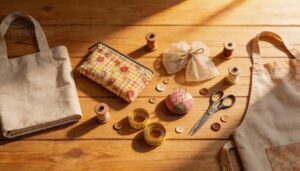
Sewing doesn’t have to stop at pretty — it can actually make your daily life easier too. Some of the most satisfying projects are the ones you reach for every single day.
Here are five practical makes worth adding to your lineup.
Phone-Charging Station
Taming a nest of tangled cords is easier than you think — and a sewn phone‑charging station is your secret weapon. Cut sturdy fabric, stitch a few pockets, and suddenly your port configuration makes sense.
Here’s why you’ll love this quick craft project:
- Simplifies power management at your desk
- Customizable security features keep cords in place
- Follows simple installation guidelines — no tools needed
- Clean user interface means everything’s in reach
DIY home organization sewing wins again!
Zipper Pencil Pouch
A zipper pencil pouch is one of those beginner sewing projects that actually gets used every single day. It’s a fast 15-minute sewing project, and once you nail it, you’ll want to make ten more.
| Feature | Beginner Option | Upgrade Option |
|---|---|---|
| Material Choices | Polyester or cotton | Laminated or canvas |
| Zipper Types | Basic coil zipper | Molded nylon zipper |
| Size Variations | 8–9 inches standard | Custom binder-fit size |
| Customization Options | Solid fabric | Printed or clear vinyl |
Free sewing patterns for a simple zipper pouch are everywhere online. Try a 10-minute pencil roll first, then add a lining for a polished finish. Wipe it clean with a damp cloth — easy maintenance tips like that keep it looking sharp for years.
Fabric Koozies
Now that your pencil pouch is sorted, let’s talk koozies.
Fabric koozies are quick craft projects you’ll actually reach for every day.
Pick your insulation materials — foam or InsulBrite both work great — then choose your size variations for cans or bottles.
Add closure options like Velcro, try a collapsible design for easy storage, and personalize with custom printing.
Easy handcrafts don’t get more satisfying than this.
Pattern Weights
After the quick win of fabric koozies, here’s another tool that’ll change how you cut forever — pattern weights.
Instead of wrestling with pins on slippery fabric, just set these little guys down and cut freely. Here’s what makes them so practical:
- Metal Alloy Options are lead-free and durable
- Flat Base Stability keeps pieces from shifting
- Felt Bottom Protection prevents fabric snags
- Weight Storage Bags keep your kit tidy
- DIY Rice Weights cost almost nothing to make
Beginner sewing projects suddenly feel so much smoother.
Reusable Grocery Bags
Reusable grocery bags might just be the most satisfying beginner project you’ll ever sew. Canvas or cotton works beautifully — both hold up through hundreds of trips to the store. That’s material sustainability you can actually feel in your hands.
| Feature | Why It Matters |
|---|---|
| Reinforced Grips | Holds 20–50 lb load capacity |
| Insulated Linings | Keeps perishables cold longer |
| Foldable Design | Tucks into a purse easily |
| Reusable Produce Bags | Zero waste sewing practices in action |
beginner-friendly sewing techniques and tips, you’ll finish in 15 minutes flat. Upcycling fabric scraps into functional items never felt this good.
Easy Quilting Projects for Novice Sewers
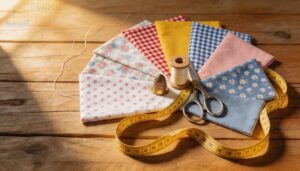
Quilting might sound intimidating, but your first project doesn’t need to be a king-size masterpiece. A few straight seams and some fun fabric combos are honestly all it takes to get started.
Here are five beginner-friendly quilting projects that’ll build your skills one satisfying stitch at a time.
Strip Quilt
A strip quilt is one of the simplest, most satisfying places to start your quilting journey. You cut long strips, sew them side by side, and suddenly you’ve got a cozy, colorful quilt top. These easy sewing patterns are true beginner-friendly sewing techniques and tips in action.
- Strip Fabric Selection: Stick to cotton with similar weight for smooth, even stitching
- Color Sequencing: Repeat a pattern or go scrappy — both look stunning
- Chain Piecing: Sew strips back-to-back without cutting thread to save serious time
- Binding Techniques: A machine-sewn binding wraps everything up clean and fast
Subway Tiles Quilt
Think of the Subway Tiles Quilt as the strip quilt’s cooler, more polished sibling. Using the Strip Piecing Technique, you sew rectangular units into a Staggered Brick Layout that feels modern and intentional. Tile Color Blocking lets you play with contrast — navy on cream, teal on gray — without overthinking it.
| Element | Beginner Tip |
|---|---|
| Low Loft Batting | Keeps the quilt flat and tile-like |
| Minimalist Binding | Straight edges finish cleanly and fast |
Simple quilting projects for beginners don’t get much more satisfying than this.
Easy 1-2-3-4 Baby Quilt
Count to four and you’ve basically got this quilt figured out. The Easy 1-2-3-4 Baby Quilt is one of those simple quilting projects for beginners that actually delivers — a sweet 38×38-inch finished piece built from 2½-inch squares in a Patch Block Layout.
Baby sewing patterns don’t get more beginner-friendly than this.
- Use Half Square Triangles and Seam Allowance Consistency for a crisp, even grid
- Low Loft Batting keeps it soft and drapable for little ones
- Finish with a Simple Binding Technique for clean, polished edges
Simple Patchwork Pillow
Fabric scraps are basically a puzzle waiting to be solved — and a patchwork pillow is your perfect first move. Arrange 6 to 9 equal squares in a Grid Layout, press every Seam with your iron, and you’ve got a Pillow Cover that looks intentional and polished. Smart Fabric Coordination keeps the whole thing cohesive.
| Step | Detail | Beginner Tip |
|---|---|---|
| Cutting | 2–4 inch squares | Use a quilter’s ruler |
| Batting Choices | Optional light batting | Adds shape and plush feel |
| Binding Techniques | Envelope-style back | No zipper needed |
| Seam Pressing | Press open at intersections | Keeps corners crisp |
Quilted Pot Holders
Quilted pot holders might just be the smartest beginner project in your sewing lineup.
Your Fabric Choices — cotton prints, scraps, linen blends — pair beautifully with Batting Options like Insul‑Bright for serious Heat Resistance up to 450°F.
Try fun Quilting Patterns such as a Christmas tree potholder or log cabin hexi potholders.
Clean Binding Techniques finish the edges neatly, and these reusable kitchen accessories double as easy sewing patterns that make genuinely useful, gift‑worthy quick 15‑minute sewing projects.
Beginner-Friendly Sewing Projects for Kids
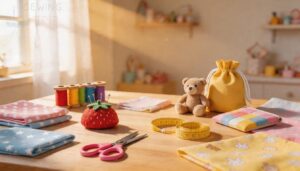
Kids absolutely love something made just for them — and you’ll love how fast these projects come together. Soft fabrics, simple shapes, and forgiving seams make this category a sweet spot for beginners.
Here are four kid-friendly projects worth adding to your list.
Soft Toy Animals
Stitching soft toy animals is one of those projects that feels like pure magic — you start with a flat piece of fabric and end up with something a child will drag everywhere for years. A simple cat softie is a great first pick.
Keep these essentials in mind:
- Fabric Selection — minky or velour feels soft and cuddle-ready
- Safety Eyes — use plastic-backed eyes to prevent choking hazards
- Stuffing Methods — polyester fiberfill shapes evenly and stays lightweight
- Embroidered Features — stitched noses and mouths are safer than glued-on pieces
- Size Options — start around 6–8 inches for manageable seams
Free easy sewing patterns, beginner-friendly sewing techniques and tips, and fabric scraps projects make this surprisingly fast. Reinforce every seam — little hands pull hard!
Fabric Hair Bows
Once you’ve nailed soft toy animals, hair bows feel like a fun little reward. These beginner sewing projects come together fast — usually in under 30 minutes.
Your Material Choices matter: cotton prints for everyday wear, satin for photos, velvet for special occasions.
Size Proportions range from tiny 2-inch clips to bold 6-inch statement pieces.
For Attachment Methods, alligator clips grip best, while elastic headbands work great for babies.
Add pearls or rhinestones as Decoration Ideas, and follow simple Care Instructions — gentle wash, air dry, done.
Simple Doll Clothes
Once you’ve made those hair bows, doll clothes are your next fun adventure. These beginner sewing projects are genuinely addictive — tiny outfits from fabric scraps utilization that take under an hour each.
Miniature Fabric Choice matters more than you’d think. Lightweight cotton and felt make simple sewing stitches much easier on small seams.
Scale Pattern Drafting sounds technical, but it’s just resizing rectangles. Start with a basic skirt or bodice shape.
Here’s what makes doll clothes so rewarding:
- Tiny Stitch Techniques build real precision for bigger projects later
- Cuff Elastic Use keeps outfits easy for little hands to manage
- Micro Button Placement teaches confident detail work without much pressure
- Baby sewing patterns scale down beautifully for 18‑inch dolls
- Handmade accessories like ribbon sashes finish each look perfectly
Easy Fabric Book Cover
From doll clothes to book covers — kids love putting their mark on everyday things. A fabric book cover is one of those fast 15‑minute sewing projects that feels way more impressive than the effort it takes.
Material Selection is simple: grab cotton canvas for the outside and smooth cotton lining inside. Straight stitches handle everything here.
Fit Adjustments just mean measuring your book first and adding an inch on all sides. Tuck in a ribbon Closure Option, and you’re done.
Handmade Gift Ideas for New Sewers
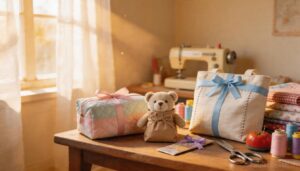
Handmade gifts hit differently — there’s something about knowing someone stitched it just for you. As a new sewer, you already have everything it takes to make something someone will actually love.
Handmade gifts hit differently because someone stitched them just for you
Here are five beginner-friendly gift ideas you can pull off in an afternoon.
Drawstring Gift Bags
Forget boring wrapping paper — drawstring gift bags are the gift inside the gift. With simple drawstring bag construction and beginner‑friendly sewing tutorials, you can whip these up fast. They’re one of the best quick sewing projects and gift making ideas out there.
Try these to get started:
- Fabric Choices: Cotton or velvet works beautifully, from small 4×6" favor bags to roomy 9×12" keepsake pouches
- Closure Options: Single or double drawstring with a satin ribbon feels polished every time
- Personalization Techniques and Size Variations: Add monograms, adjust dimensions freely, and embrace Sustainability Practices by reusing them year after year
Travel Manicure Kit
A travel manicure kit might just be the most thoughtful handmade gift you can sew this season. Stitch up a slim mini pouch pattern with a few divided pockets, and you’ve got something genuinely useful. Think Compact Tool Design — a snug case that holds stainless steel tools without rattling around.
| Kit Feature | Why It Matters |
|---|---|
| Stainless Steel Durability | Tools stay rust-free through every trip |
| Case Organization | Molded slots keep everything tidy |
| Hygiene Maintenance | Wipe-clean lining stays fresh |
| Travel Regulations | Slim case fits carry-on rules easily |
| Snap closure | Prevents spills mid-journey |
Pair it with a free card holder pattern insert, and you’ve got a gift worth keeping.
Scalloped Sunglasses Case
Your sunglasses finally deserve a case worth showing off. This scalloped edge design is one of those fun and easy beginner sewing projects that feels fancy but isn’t fussy — finished in about 15 minutes flat.
It measures roughly 7 inches long and uses a ¼‑inch seam allowance throughout.
Here’s what you’ll choose and customize:
- Padding options — fusible fleece keeps lenses scratch‑free without bulky seams
- Closure variations — try simple top stitching or add a snap
- Fabric choices — quilting cotton, faux leather, or a summer print
- Embellishment ideas — monograms, topstitching, or tiny felt details
Fabric Bookmarks
Fabric bookmarks are one of those easy bookmarks to sew that feel like a real win — especially when you’re using up scraps.
Cut a simple 2×6 rectangle, add lightweight interfacing for stiffness, and finish the edges cleanly.
Try quilted panels for a colorful front, or stitch in pocket designs to tuck slim notes inside.
Ribbon tassels, personalization options like embroidered initials, and sustainable fabrics make these quick DIY sewing projects genuinely thoughtful gifts for any book lover will treasure.
Lavender Sachets
Lavender sachets might just be the sweetest handmade gifts for kids and adults you’ll ever stitch up — and they’re done in under 15 minutes. With smart Fabric Selection like breathable cotton or linen, your DIY Patterns practically sew themselves.
- Add Scent Enhancers like a drop of essential oil or orris root powder to boost lasting fragrance
- Use Placement Strategies — dresser drawers, linen closets, or gym bags all benefit
- Build a simple Care Routine: air them out monthly and refresh the lavender every six to twelve months
Baby Sewing Projects for Beginners
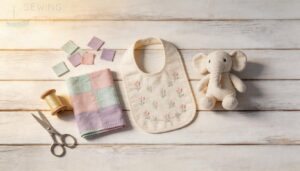
Baby items are some of the most rewarding things you can sew — tiny, quick, and genuinely useful from day one. You don’t need much fabric or experience, just a little patience and the right starting point.
Here are beginner-friendly baby projects worth adding to your list.
Baby Headband With Top Knot
A top knot baby headband might just be the sweetest 15-minute win in your sewing basket. Grab soft jersey or modal — safe fabric choices that feel gentle on newborn skin.
Use stretch stitch techniques so seams move with the band, and add elastic back trim for a secure, pinch-free fit.
Growth sizing means one headband works from newborn to toddler. Adjust knot height adjustment to go subtle or bold — totally your call.
Simple Baby Hat
Once you’ve nailed that headband, a simple baby hat is your natural next move. It’s one of the coziest hand-sewn gifts you can make — and a genuinely beginner-friendly sewing project idea that comes together fast.
Here’s your quick-start checklist:
- Fabric Selection — choose organic cotton jersey or bamboo viscose, around 180–200 gsm
- Size Adjustments — use a 14–15 inch circumference for newborns, adding 5–10% ease
- Stretch Stitching — a zigzag stitch keeps seams flexible without tearing
- Safety Finishes — flat, smooth seams protect delicate skin
Free knotted baby hat pattern tutorials make easy DIY sewing tutorials even more approachable for seasonal styles year-round.
Easy Baby Bib
Those adorable hats deserve equally cute outfit protection! A baby bib is one of the most satisfying handmade baby accessories tutorials you’ll ever try — quick, practical, and genuinely beginner‑friendly.
Look for a free baby bib pattern that includes a waterproof lining and pocket design to catch drips before they hit the floor. Adjustable neck closure fits babies from 3 to 24 months, so your work lasts. BPA‑free safety matters too — silicone material options are especially easy to wipe clean.
| Feature | Fabric Bib | Silicone Bib |
|---|---|---|
| Waterproof lining | Optional layer | Built-in |
| Adjustable neck | Snap or Velcro | Flexible fit |
| Pocket design | Sewn-in | Molded |
Baby and kids sewing patterns like this make beginner‑friendly sewing tutorials feel like a real win.
Burp Cloth Sets
Now that you’ve mastered the bib, burp cloths are your next easy win. New parents genuinely can’t have enough of them!
handmade baby accessories tutorials come together fast — think straight seams, a three-layer construction, and you’re done. Choose hypoallergenic fabrics like muslin cotton or bamboo blends for the outer layer, then add a terry or microfiber middle for serious absorbent materials.
Size variations run roughly 18 to 20 inches, giving great shoulder coverage. Always follow care instructions — prewash first, then machine wash warm.
These beginner-friendly sewing tutorials and baby sewing patterns make gifting feel genuinely personal.
Soft Baby Blocks
Burp cloths done? Now let’s make something baby can actually play with.
Soft blocks are one of the best baby sewing patterns around — small, forgiving, and genuinely useful.
Cut fabric scraps into squares, mix textures for Texture Exploration and Color Development, and stuff them with hypoallergenic fill.
Follow basic Fabric Safety Standards and use Washable Construction so parents can toss them in the wash easily.
The Montessori Design approach keeps things simple and open-ended.
These beginner-friendly sewing tutorials turn scraps into easy handmade gifts fast.
Upcycling Sewing Ideas for Beginners
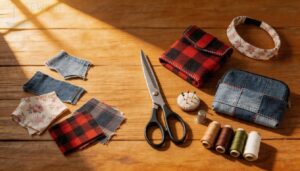
Old clothes don’t have to end up in a donation pile — sometimes the best fabric is already in your closet. With just a few cuts and stitches, you can turn forgotten pieces into something genuinely useful.
Here are five upcycling projects that are perfect for beginners ready to sew smarter.
T-Shirt to Tank Top Conversion
That old T-shirt stuffed in your drawer? It’s a tank top waiting to happen. With a few careful cuts and simple stitches, you can give it a whole new life. Here’s what the transformation looks like:
- Neckline reshaping — lower and curve the front edge, then finish with fabric bias binding to prevent fraying
- Armhole widening — cut evenly along both sides, fold the shirt in half to check symmetry
- Hem finishing — trim the length, then use a double-fold straight stitch for a clean edge
Side seam tapering pulls everything in for a flattering fit. These beginner-friendly sewing tutorials make upcycling fabric into functional items genuinely fun.
Jean Pocket Organizer
Those worn-out jeans in your closet are hiding a seriously useful beginner-friendly sewing project idea. Cut the pockets free, then arrange them in a staggered grid design on canvas backing fabric — you’ll be surprised how much storage fits in one glance.
Topstitch reinforcement keeps every pocket secure and neat. Mount it using your preferred hanging mount options, like a wooden dowel or fabric sleeve.
It’s a DIY accessory that doubles as a sewing organization and storage solution, your craft space actually needs.
Fabric Scrap Coasters
Those leftover scraps are about to become your new favorite project. With a simple patchwork design, you can build reusable fabric coasters using quilting techniques that even total beginners can handle — think small cotton squares layered over batting, then stitched together cleanly. Zero-waste sewing practices have never looked this cute.
Here’s what makes easy coasters so satisfying:
- Shape variations like circles or hearts keep things playful
- Topstitch styles add polish and hold eco-friendly fabrics together
- A coaster and placemat set makes a genuinely thoughtful handmade gift
Old Shirt to Pillowcase Transformation
That forgotten shirt in your closet? It’s a pillowcase waiting to happen.
Sleeve removal takes just minutes, and the shirt’s body becomes your front panel instantly. Use an envelope flap for a clean, no-zipper closure — total beginner-friendly sewing technique.
Matching thread keeps things tidy, and a decorative topstitch adds a polished touch. It’s upcycling fabric scraps into practical items without waste.
| Step | What You Do |
|---|---|
| Cut fabric | Remove sleeves and collar |
| Shape panel | Trace pillow dimensions |
| Sew back flap | Create envelope closure |
| Topstitch edges | Add decorative topstitch |
| Press and finish | Iron for crisp corners |
Repurposed Sweater Mittens
That sweater you never wear anymore? It’s basically a pair of mittens in disguise.
Wool and wool-blend sweaters are perfect for this project — they naturally insulate and resist odor with regular wear. A simple thumb gusset design gives your hands real mobility, and repurposing the sweater’s existing cuffs adds extra length without extra work. Tuck in fleece lining techniques for warmth you’ll actually feel.
Here’s why beginners love this zero waste sewing project:
- Mittens material selection is easy — thick, low-pill knits work best
- Wool insulation benefits mean naturally warm hands without bulk
- Thumb gusset design follows a basic hand-tracing pattern
- Cuff repurposing strategies save cutting time and look intentional
- Fleece lining techniques add cozy comfort with just a few straight seams
Frequently Asked Questions (FAQs)
How do I learn to sew for beginners?
Start small and build confidence. Grab sharp scissors, a basic machine, and a simple pattern.
Focus on stitch mastery, learn your fabric types, and practice routines daily — progress happens faster than you’d think.
What are easy sewing projects?
Easy sewing projects include tote bags, pillowcases, scrunchies, and drawstring bags — beginner-friendly sewing techniques and tips make these fast 15-minute sewing projects surprisingly satisfying, building real skills with every straight stitch you sew.
Are there any beginner sewing projects?
Simple pillowcases, tote bags, and elastic-waist skirts are perfect starting points.
These beginner-friendly sewing techniques and tips help you build real Sewing Skill Drills while creating things you’ll actually use every day.
Are these quick and easy sewing ideas free?
Good news — most of these ideas won’t cost you a thing. Free pattern libraries, community PDF downloads, and zero-cost tutorials are everywhere online, with printable checklists included.
What is the easiest thing to sew as a beginner?
Pillowcases are honestly the perfect starting point. You’re working with straight lines, a simple hem finish, and cotton fabric — that’s it.
Most beginners nail it on the first try, and that confidence carries you straight into your next project.
What little things can I sew?
small things are where the magic starts.
Try scrunchies, coin purses, fabric bookmarks, or a simple pin cushion. Mini appliques, bunting flags, and drawstring bags are equally satisfying — quick, cute, and totally addictive.
What is the easiest item of clothing to sew?
An elastic-waist skirt is your easiest first clothing win. No zippers, no buttons — just straight seams and a simple elastic casing.
Beginner-friendly sewing techniques and tips don’t get simpler than this.
What to make with a sewing machine for beginners?
Your sewing machine opens up a whole world of quick wins. Think simple pillowcases, infinity scarves, and trendy tote bags — all beginner-friendly projects that build real confidence with every stitch.
How long should I practice before starting projects?
Honestly? About a week or two of focused practice is all you need. Master straight stitches first, then get started. You’ll build real confidence faster by actually making things.
Whats the best fabric for complete beginners?
Cotton is your best friend here. It’s stable, forgiving, and cuts cleanly — no slipping, no drama.
Quilting Cotton, Cotton Broadcloth, and Poplin Woven are all solid starting points that keep your seams straight and your confidence climbing.
Conclusion
Just as a master builder starts with a single brick, your sewing journey begins with one stitch. You’ve now got 40 easy sewing project ideas to lay the foundation.
Remember, every skilled sewist was once a beginner. With these fun patterns and quick wins, you’ll be creating handmade gifts, home décor, and more in no time.
Start with simple projects and build your skills—easy sewing project ideas for beginners are just the beginning.
- https://www.sewcanshe.com/blog/diy-wristlet-key-fob
- https://www.craftpassion.com/sew-christmas-placemats-coasters/
- https://abeautifulmess.com/2019/11/reusable-makeup-wipe-diy.html
- https://sewcanshe.com/2014-11-13-easy-peasy-pincushions-with-baby-pom-poms/
- https://makeit-loveit.com/butterfly-hair-bow-tutorial