This site is supported by our readers. We may earn a commission, at no cost to you, if you purchase through links.
A sewing machine that squeaks, skips stitches, or strains through fabric isn’t broken—it’s thirsty.
Most sewists reach for oil out of habit, but oil alone won’t cut it when metal gears grind under load or motor ports run dry. That’s where grease earns its place, and knowing the difference between the two lubricants can add years to your machine’s life.
The wrong product on plastic gears causes swelling; invites heat buildup and thread-tension chaos.
Getting lubrication right comes down to knowing which parts need what, how much to apply, and when to do it.
Table Of Contents
- Key Takeaways
- Grease or Oil: Which to Use
- Choose The Right Machine Grease
- How to Grease a Sewing Machine
- Greasing Schedule and Common Mistakes
- Top 10 Sewing Machine Lubricants
- 1. Stainless Universal Sewing Machine Oil
- 2. Lange König Sewing Machine Oil Kit
- 3. SMAPHY Sewing Machine Oil Applicator
- 4. Brohood Sewing Machine Oil Extra Long Tip
- 5. Singer Sewing Machine Oil and Needles Bundle
- 6. WinUSD Sewing Machine Oil Kit
- 7. Singer Sewing Machine Oil
- 8. OAIEGSD Fine Light Sewing Oil Kit
- 9. Moxiaomo Clear Nonstaining Sewing Oil
- 10. Sewable Zoom Spout Sewing Machine Oil
- Frequently Asked Questions (FAQs)
- Conclusion
Key Takeaways
- Grease belongs on metal gears and high-load joints, while lightweight oil handles faster-moving parts like the bobbin shuttle and needle bar — using the wrong one in the wrong spot causes real damage.
- Match your grease to your gear material: lithium-based for metal, silicone or PTFE-based for plastic or nylon, since petroleum products swell nylon and throw off your stitch quality.
- Clean out old grease before adding new — lint mixed with dried lubricant turns into an abrasive paste that grinds gears down instead of protecting them.
- Your machine warns you when it’s running dry — squeaking, stiff needle movement, overheating, and uneven stitch tension all mean it’s time to lubricate before bigger damage sets in.
Grease or Oil: Which to Use

Using the wrong lubricant in the wrong place is one of the most common — and costly — mistakes sewists make. Grease and oil aren’t interchangeable; each has a job, and mixing them up can gum things up fast.
Using the right product in the right spot matters more than most people realize — this vintage sewing machine oiling guide breaks down exactly what goes where and why.
Here’s how to know which one your machine actually needs.
Parts That Need Grease
Grease belongs anywhere metal grinds against metal under load. That means your gear train pins, gear bushings, thrust washers, back gear assembly, and worm drive — anywhere sewing machine gears mesh and push against each other.
These spots need grease because it stays put and maintains a protective film longer than oil ever could, making it the right call for metal gear protection. A proper lubricant film reduces friction is essential for moving parts.
Parts That Need Sewing Machine Oil
Oil takes care of the lighter work. Your bobbin shuttle, needle bar, feed dogs, and rotary hook all need a single drop of lightweight sewing machine oil — not grease.
These parts move fast but carry less load than the gear train. Proper oil application technique keeps lubrication of moving parts clean and capillary-fed, preventing lint buildup that heavier lubricants would trap.
Why The Owner’s Manual Comes First
Before you reach for any lubricant, check your owner’s manual. It contains model-specific specs, lubrication charts, and safety instructions that your machine was actually engineered around.
Skipping it risks voiding warranty compliance or damaging parts.
It also details oil schedule frequency and maintenance log guidance — the real foundation of smart lubrication maintenance.
Your manual isn’t optional; it’s your starting point.
Vintage Versus Modern Machine Lubrication
Your machine’s age changes everything about how you lubricate it.
Vintage machines relied on heavier mineral greases — thicker viscosity differences meant the lubricant stayed put in loose, older gear housings. Maintaining vintage and modern sewing machines isn’t a one-size-fits-all job. Modern machines favor synthetic vs mineral sewing machine oils for better temperature sensitivity control and lubricant longevity.
Key contrasts to know:
- Viscosity — vintage gear lubrication for sewing machines needs heavier, tackier formulas.
- Material compatibility — older all-metal trains tolerate mineral bases; modern plastic gears need synthetic or PTFE.
- Historical formulations — early greases prioritized tackiness over precision; today’s options are engineered for specific materials.
- Application tools — precision applicator oils for detailed maintenance suit modern machines better than bulk manual reapplication.
When Grease is Better for Gears
Think of gear lubrication for sewing machines like choosing between butter and water — one clings, the other runs.
Grease wins at high load, low speed contact points like handwheel mechanisms, where staying power matters most.
It also manages dust exclusion, seal integrity, and noise dampening better than oil.
Synthetic grease and PTFE additives in sewing lubricants take gear wear prevention further by protecting plastic-to-metal surfaces without breaking down.
Choose The Right Machine Grease

greases work the same way, and using the wrong one can do more harm than good. Your gear material, age, and environment all play a role in what lubricant actually belongs inside it.
what to know before you pick one.
Lithium, Silicone, and PTFE Greases
Not all greases are created equal — and the wrong one can quietly wreck your gears.
- White lithium grease stays stable up to 130°C, resisting water washout in humid shops
- Silicone grease with PTFE covers a viscosity index ranging from –40°C to 200°C+
- PTFE additives improve film thickness and additive synergy, blocking metal-to-metal scuffing
- Precision applicator tips keep gear lubrication for sewing machines clean and controlled
- Shelf life management matters — store tubes cool and dry to preserve effectiveness
Grease for Metal Gear Assemblies
Metal gears demand more than basic oil — they need a grease that holds under pressure and heat.
| Property | Best Grease Type | Why It Matters |
|---|---|---|
| High Dropping Point | White lithium grease | Stays stable at operating temps |
| Shear Stability | Silicone grease with PTFE | Resists breakdown under load |
| Corrosion Inhibitors | PTFE coating formulas | Protects metal from rust |
| EP Additives | Lithium complex grease | Prevents gear tooth wear |
| Molybdenum Sulfide | Specialty moly grease | Reduces friction at start-up |
For gear lubrication in sewing machines, a silicone-based lubricant with EP additives manages shock loading without thinning out.
Grease for Plastic or Nylon Gears
Plastic or nylon gears crack under the wrong grease — petroleum-based products swell nylon over time, changing gear dimensions and causing skipped stitches. Always verify gear grease compatibility before applying anything.
Choose these for plastic or nylon gears:
- Silicone-based lubricant — ensures nylon gear compatibility without chemical attack
- PTFE-filled synthetic grease — delivers plastic gear film thickness of 1–5 microns
- Temperature-stable formulations — maintain performance from -40 to 120°C
- Low-tack grease with additive halogen avoidance — won’t embrittle nylon under stress
Heat, Moisture, and Rust Resistance
Your sewing machine’s gears face real threats: heat, condensation, and rust.
Smart coating selection means choosing greases with built-in corrosion inhibitors and anticorrosion properties — like PTFE-based or lithium formulas that deliver solid temperature stability and water resistance.
Humidity control matters too; damp workshops accelerate metal wear fast.
Look for anticorrosion properties and thermal barriers that maintain film strength across varying conditions, protecting material compatibility long-term.
Precision Tips and Clean Application
Getting the grease exactly where it needs to go makes all the difference. Use precision nozzle selection to target gear contact points directly, and apply lubricant in controlled grease bursts — never a continuous squeeze.
A lint-free cloth use keeps things tidy after application. Port cleaning tools clear old residue first, ensuring lubricant residue prevention.
Temperature-adjusted viscosity helps grease flow properly, so precision lubrication lands right every time.
How to Grease a Sewing Machine
Greasing your sewing machine isn’t complicated, but the order of steps matters more than most people realize. Skip one, and you risk trapping old gunk under fresh grease or overloading a gear with too much product.
Here’s exactly what to do, from the moment you unplug to your first stitch after.
Unplug The Machine and Access Gears
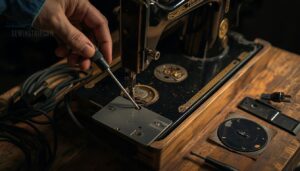
Before you touch a single gear, pull that plug from the wall — power isolation steps aren’t optional here.
Then work through access methodically:
- Remove the presser foot and needle plate
- Open the accessory tray to reach upper sewing machine gears
- Lay the machine on its right side for gear cover removal
- Use a small flat tool for gentle prying
- Wait five minutes for static discharge before touching parts
Now you’re ready.
Remove Lint and Old Grease First

With the machine open and static-discharged, don’t rush straight to the grease. Old lubricant mixed with lint forms a gritty paste that grinds gears instead of protecting them.
Start with lint brush methods on feed dogs and the bobbin area. Then use a nylon toothpick for gear tooth scraping — wood won’t nick metal.
A visual clean inspection confirms you’re ready when tooth valleys look clear.
Apply a Pea-sized Amount

Now that gear teeth are clean, how much grease you apply matters just as much as where you put it.
Too little won’t protect; too much attracts dust like a magnet — that’s where dust attraction control becomes critical.
Stick to a pea-sized amount every time:
- Use a precision applicator oil tip or dual-ended applicator oil nozzle for a precise grease dosage method
- Do a viscosity consistency check — grease should feel smooth, not runny like lightweight mineral oil or stiff like cold synthetic oil
- Always do a material compatibility check before applying near plastic parts
Grease Motor Ports and Gear Points

Now you’re ready to actually grease those ports. Insert your applicator tip directly into the motor port and apply steady, light pressure until a small bead appears — that’s your Lubricant Film Thickness signal to stop.
Port Seal Design keeps contamination out, so don’t force excess past the seal.
For vintage antique sewing machines, pick a low-melting point Motor Gear Lubricant that wicks naturally as the motor warms.
Run The Machine to Spread Lubricant
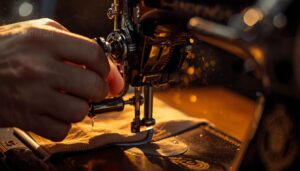
Running the machine is how the grease actually gets to work.
Start with Manual Wheel Rotation — turn the handwheel by hand a few times to begin distributing the lubricant.
Then do a Short Test Run at low Speed Settings for about 30 seconds.
This Warm-up Cycle lets the grease spread evenly, reduces gear friction, and sets you up for real stitch quality improvement.
Wipe Off Excess Before Sewing

Once the machine has run its warm-up cycle, grab a lint-free cloth and wipe down every exposed metal surface until no oily shine remains.
- Fabric Stain Prevention: Excess grease transfers to light-colored fabrics and leaves permanent marks
- Thread Tension Consistency: Oil film near tension discs throws off thread balance
- Needle Plate Cleanliness: Residue here causes skipped stitches and uneven needle heat distribution
- Lint-Free Wiping: A clean surface stops lint from sticking and building up fast
Greasing Schedule and Common Mistakes

Getting the grease right is only half the job — knowing when to reapply it matters just as much. Too little, and your machine wears down quietly; too much, and you’re inviting lint to every gear in the house.
Here’s what you need to know to stay on schedule and sidestep the most common mistakes.
How Often to Reapply Grease
How often should you reapply grease? It depends on how hard your machine works.
| Factor | Light Use | Heavy/Daily Use |
|---|---|---|
| Usage Hours Interval | Every 12 months | Every 3–4 months |
| Dust Exposure Impact | Standard schedule | Shorten by half |
| Temperature Effects | Stable viscosity | Reapply more often |
Seasonal maintenance helps too — schedule a check every 50 hours of operation. Operator frequency, environment, and proper grease selection for metal gears all shape your maintenance schedule for sewing machines.
Signs Your Machine Needs Lubrication
Your machine talks — you just have to listen. These four warning signs tell you lubrication is overdue:
- Squeaky Noise — friction reduction is failing; dry metal gears are rubbing directly.
- Stiff Needle Movement — resistance means machine wear reduction isn’t happening.
- Overheating Motor — heat builds fast without proper lubrication.
- Uneven Stitch Tension or Excessive Vibration — both signal internal drag affecting timing.
Problems Caused by Over-greasing
More isn’t better — it’s actually one of the most common mistakes when oiling sewing machines.
Excess grease churns inside the gear cavity, causing Temperature Rise that breaks down lubricant films fast. That heat leads to Seal Rupture, letting dirt and moisture in.
It creates Channel Blockage, starving gears of fresh lube. You also risk Increased Drag, higher energy draw, and even Electrical Short if grease migrates into motor windings.
Using The Wrong Lubricant Type
The wrong lubricant doesn’t just underperform — it actively damages your machine.
Petroleum-based greases cause Material Swelling in plastic gears, while silicone greases trigger Seal Degradation in rubber channels. A Viscosity Mismatch creates Film Inconsistency across gear surfaces, leaving some spots starved and others overloaded. Temperature Sensitivity worsens everything — the wrong formula breaks down fast under heat.
The wrong lubricant doesn’t just underperform — it actively destroys the machine it was meant to protect
Always match lubricant type to your machine’s materials.
Storing Grease for Longer Shelf Life
Good storage habits are just as important as picking the right formula.
Keep your grease between 40–75°F with humidity below 60% — temperature control and humidity management directly affect viscosity.
Seal containers tightly after every use, apply shelf-life labeling, and run a first-in, first-out rotation system.
Synthetic lubricant durability drops fast in heat or damp conditions, so store smart.
When Professional Service is The Safer Choice
Sometimes DIY lubrication isn’t worth the risk. Hidden Component Access is one big reason — technicians reach lubrication points behind covers you can’t safely open yourself.
They also handle Expert Viscosity Matching, Warranty Compliance, Liability Coverage, and Service Documentation:
- Pros verify lubricant compatibility with seals and bushings
- They review every safety data sheet before handling products
- Expert service protects your warranty during sewing machine repair
- Calibrated amounts prevent over-greasing and lint buildup
- Documentation helps resale value and future maintenance planning
Top 10 Sewing Machine Lubricants
Not all sewing machine lubricants are created equal, and picking the wrong one can do more harm than good. The ten options below cover a range of machine types, from modern computerized models to vintage all-metal gear trains.
Here’s what’s worth keeping on your workbench.
1. Stainless Universal Sewing Machine Oil
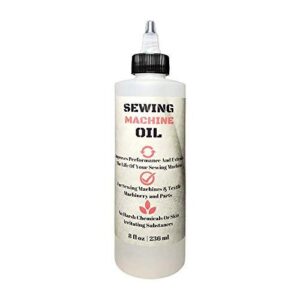
UniKitchen’s Stainless Universal Sewing Machine Oil covers a lot of ground for one bottle. At 8 fl oz, it’s a generous supply for home sewers who don’t want to reorder constantly.
The non-toxic formula works across major brands — Singer, Bernina, Kenmore — making it a practical shelf staple.
It’s light enough to reach tight pivot points without gumming, and the precision applicator tip keeps things clean.
For everyday maintenance, $11.99 gets you reliable corrosion protection and smoother stitches without overcomplicating your routine.
| Best For | Home sewers and hobbyists who want a reliable, no-fuss oil that works across multiple machine brands without needing to research compatibility every time. |
|---|---|
| Oil Volume | 8 fl oz |
| Oil Type | Mineral oil |
| Applicator Tip | Precision pour spout |
| Odorless Formula | Yes |
| Machine Compatibility | Singer, Bernina, Kenmore |
| Cleaning Brush | Not included |
| Additional Features |
|
- Works with all the big brands — Singer, Bernina, Kenmore — so you’re not stuck hunting for something machine-specific
- Non-toxic formula means no stress if you accidentally get it on your hands or fabric
- Precision applicator tip makes it easy to hit tight spots without making a mess
- 8 oz might run out fast if you’re running machines in a high-volume or professional setting
- A bit pricier than basic mineral oil, which does a similar job for some machines
- A few users found it didn’t fix existing mechanical issues — it’s maintenance oil, not a repair solution
2. Lange König Sewing Machine Oil Kit
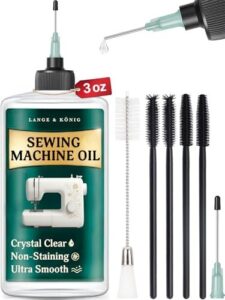
If precision is what you’re after, the Lange König Sewing Machine Oil Kit earns its spot. The clear, non-staining formula keeps your fabric safe during maintenance, while the fine needle tip applicator reaches tight shuttle mechanisms and gear points without guesswork.
It works well across major brands — Singer, Brother, Bernina — and the included cleaning brush helps you prep surfaces before oiling.
It’s compact, practical, and low-residue, making it a solid pick for regular upkeep without the mess.
| Best For | Home sewers and embroidery enthusiasts who want precise, mess-free lubrication for machines like Singer, Brother, or Bernina. |
|---|---|
| Oil Volume | 3.4 fl oz |
| Oil Type | Mineral oil (ISO VG-10) |
| Applicator Tip | Dual tips (1 in & 1.5 in) |
| Odorless Formula | Yes |
| Machine Compatibility | Sewing, serger, overlock |
| Cleaning Brush | 5 brushes included |
| Additional Features |
|
- Clear, non-staining formula so you’re not worrying about ruined fabric mid-maintenance
- Two applicator tips make it easy to reach tight spots like hooks, bobbins, and shafts
- Comes with cleaning brushes, so you can prep and oil in one go
- The cap can leak, so toss it upright in your bag at your own risk
- Not food-grade, so it’s a hard pass for anything near a kitchen
- Too thin for heavy-duty gearsets that need a thicker lubricant
3. SMAPHY Sewing Machine Oil Applicator
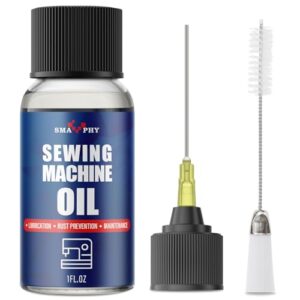
The SMAPHY applicator is built around one idea: get the oil exactly where it needs to go.
The 18-gauge needle tip is long enough to reach bobbin areas and needle bars without disassembly, and its drop-by-drop delivery means you won’t accidentally flood a mechanism.
The refillable bottle keeps things economical, and the included dual-ended brush doubles as a cleaning tool before you oil.
Clear oil, controlled flow, compact kit — it’s a straightforward tool that does its job without fuss.
| Best For | Home sewers and hobbyists who want a clean, precise way to oil their machine without making a mess. |
|---|---|
| Oil Volume | 1 fl oz |
| Oil Type | Mineral oil (paraffin) |
| Applicator Tip | Rotating built-in applicator |
| Odorless Formula | Yes |
| Machine Compatibility | General sewing machines |
| Cleaning Brush | Dual-ended brush |
| Additional Features |
|
- Crystal-clear, odorless mineral oil that won’t stain fabric or leave residue
- The rotating applicator and long brush tip make it easy to reach tight spots like needle bars and tension disks
- Non-toxic formula means you’re not dealing with harsh chemicals around your workspace
- The bottle leaks if stored on its side, so you have to be mindful about how you keep it
- The cap can be frustratingly hard to remove — sometimes you need a screwdriver just to open it
- The applicator needle is pretty short (~0.5 in), so it doesn’t play well with all nozzle attachments
4. Brohood Sewing Machine Oil Extra Long Tip
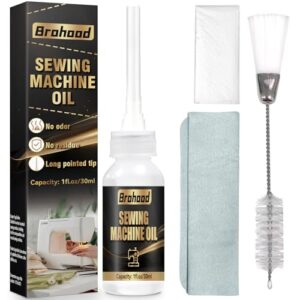
Brohood’s extra-long needle tip is the real selling point here — that 1.5-inch applicator reaches cam slots, gear teeth, and recessed linkage pins that shorter tips simply can’t touch. The oil itself is a clear, odorless mineral-synthetic blend that won’t stain fabric or leave sticky residue behind.
Drop-by-drop flow keeps you in control, so over-oiling isn’t a risk. The included dual-head brush manages pre-lube cleanup in the same session.
One small gripe: the 1 fl oz bottle runs out faster for heavy users.
| Best For | Sewists who need to oil hard-to-reach internal parts without making a mess or stopping mid-project. |
|---|---|
| Oil Volume | 1 fl oz |
| Oil Type | Mineral + synthetic oil |
| Applicator Tip | 1.5 in needle tip |
| Odorless Formula | Yes |
| Machine Compatibility | Singer and other models |
| Cleaning Brush | Dual-head brush |
| Additional Features |
|
- The 1.5-inch needle tip actually reaches the spots most oilers can’t — cam slots, gear teeth, recessed pins
- Clear, odorless formula won’t stain fabric or leave any sticky buildup
- Dual-head brush handles dust cleanup before you oil, so it’s a two-in-one tool
- The 1 fl oz bottle is pretty small — heavy users will burn through it fast
- Brush heads are short and won’t reach deep into tighter machine interiors
- The cap needs to be closed carefully or it’ll leak
5. Singer Sewing Machine Oil and Needles Bundle
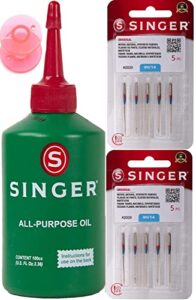
Three items in one box — that’s the Singer Sewing Machine Oil and Needles Bundle’s pitch, and it actually delivers.
You get 3.38 fl oz of Singer’s trusted sewing machine oil, a precision pour spout for controlled application, and 10 size 14/90 needles built for knits and synthetics.
A plastic bobbin rounds out the kit.
If you’re just getting started or want a no-fuss maintenance refresh, this bundle covers your basics without hunting down each piece separately.
| Best For | Beginners and casual sewers who want a simple, all-in-one maintenance kit without buying each piece separately. |
|---|---|
| Oil Volume | 3.38 fl oz |
| Oil Type | All-purpose mineral oil |
| Applicator Tip | Precision pour spout |
| Odorless Formula | Not specified |
| Machine Compatibility | Most household brands |
| Cleaning Brush | Not included |
| Additional Features |
|
- Three essentials in one box — oil, needles, and a bobbin — so you’re not hunting down each item on its own
- The precision pour spout makes oiling clean and easy, no mess, no guessing
- The oil pulls double duty and can also lubricate vacuum cleaners, typewriters, or bike chains
- 3.38 fl oz goes fast if you sew regularly — you’ll likely need to restock sooner than expected
- Ten needles won’t last long on bigger projects or heavy fabrics
- The bobbin is standard-sized, so it won’t fit industrial machines or models with non-standard dimensions
6. WinUSD Sewing Machine Oil Kit
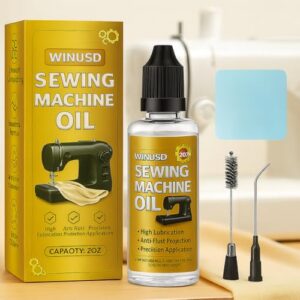
The WinUSD Sewing Machine Oil Kit keeps things simple — and that’s exactly what makes it useful.
You get 2 oz of clear, low-viscosity oil with a 38 mm bent-angle needle tip that reaches tight internal spots without any disassembly.
The kit also includes a dual-head cleaning brush set and a soft cloth for wiping up afterward.
One thing worth knowing: some customers report that the needle applicator arrives missing, so check the box before you start.
| Best For | Home sewers and hobbyists who want to keep their machine running smoothly without taking it apart. |
|---|---|
| Oil Volume | 2 fl oz |
| Oil Type | Mineral oil |
| Applicator Tip | 1.5 in bent-angle tip |
| Odorless Formula | Not specified |
| Machine Compatibility | Domestic and industrial |
| Cleaning Brush | Dual-head brush + cloth |
| Additional Features |
|
- The bent-angle needle tip gets into tight spots other applicators can’t reach
- Comes with a dual-head brush and cloth so you can clean before you oil
- Works with most machine types — domestic, industrial, sergers, and quilting machines
- Several customers report the needle applicator missing right out of the box
- The product description says "material: water," which is just confusing and raises trust questions
- Brush dimensions aren’t listed, so you’re guessing whether they’ll fit your machine’s openings
7. Singer Sewing Machine Oil
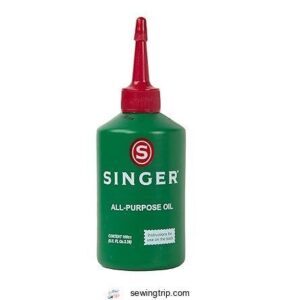
Singer’s own oil is a solid go-to when you want a trusted name behind the bottle. The 3.38 oz metal container has a leak-resistant screw cap and precision nozzle, so you control exactly where each drop lands — no mess, no guessing.
It’s clear, low-viscosity, and designed to reduce friction and noise in both vintage and modern machines.
It also works on bicycles, typewriters, and vacuum cleaners.
Just keep it for light household use — it’s not cut out for heavy-duty industrial jobs.
| Best For | Anyone who wants a trusted, no-fuss oil for keeping sewing machines, bikes, or small household gadgets running smoothly. |
|---|---|
| Oil Volume | 3.38 fl oz |
| Oil Type | Clear low-viscosity oil |
| Applicator Tip | Precision nozzle |
| Odorless Formula | Not specified |
| Machine Compatibility | Sewing and household |
| Cleaning Brush | Not included |
| Additional Features |
|
- Precision nozzle gives you full control — no drips, no waste
- Works on way more than just sewing machines (bikes, typewriters, vacuums)
- Helps protect metal parts on vintage and cast-iron machines from rust and wear
- 3.38 oz goes fast if you’re oiling frequently — and it’s not cheap per drop
- Some sewing machine users say it didn’t work as well as expected
- Not suitable for heavy-duty or industrial equipment
8. OAIEGSD Fine Light Sewing Oil Kit
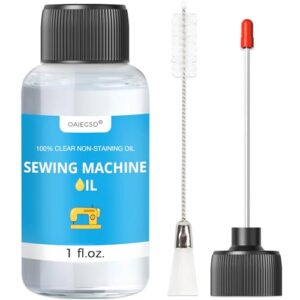
The OAIEGSD Fine Light Sewing Oil Kit punches above its size. Inside the small LDPE bottle, you get a clear, odorless mineral oil that won’t leave stains on your fabric or attract lint between sessions.
The 1.5-inch needle tip gives you pinpoint control over gears, feed dogs, and pivot points — no flooding, no guesswork.
A dual-ended cleaning brush is included, which is genuinely useful for clearing out lint before you oil. It’s compact at 1 oz, but more than capable for home use.
| Best For | Home sewers and small-shop users who want clean, precise lubrication without the mess. |
|---|---|
| Oil Volume | 1 fl oz |
| Oil Type | Mineral oil (paraffin) |
| Applicator Tip | 1.5 in needle tip |
| Odorless Formula | Yes |
| Machine Compatibility | Singer, Brother, Bernina, Juki |
| Cleaning Brush | Dual-ended brush |
| Additional Features |
|
- Clear, odorless mineral oil won’t stain fabric or gum up machine parts over time
- The needle-tip applicator gives you real control — one drop exactly where you need it
- Comes with a dual-ended brush so you can clean out lint before you oil, all in one kit
- At just 1 oz, heavy users will burn through it fast and need to reorder often
- No flexible hose or spray nozzle makes it tricky to reach deep internal shafts
- Not built for high-speed or high-temperature industrial machines that need OEM-spec lubricants
9. Moxiaomo Clear Nonstaining Sewing Oil
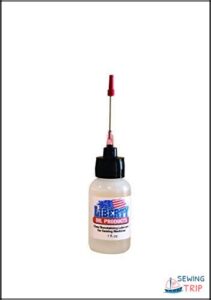
If you want something even simpler, the Moxiaomo Clear Nonstaining Sewing Oil gets the job done without fuss.
It’s a 1 fl oz stainless steel bottle with a needle-thin metal applicator tip — perfect for reaching tight spots on bobbin mechanisms and take-up levers.
The clear, low-odor formula won’t stain light fabrics or leave gummy buildup over time.
One small caveat: reseat the applicator tip carefully after each use, or it’ll detach on you mid-session.
| Best For | Sewists and hobbyists who need a precise, no-mess oil for sewing machines, sergers, or delicate equipment like film cameras and turntables. |
|---|---|
| Oil Volume | 1 fl oz |
| Oil Type | Clear lubricating oil |
| Applicator Tip | Metal needle tip |
| Odorless Formula | Yes |
| Machine Compatibility | Sewing, serger, embroidery |
| Cleaning Brush | Not included |
| Additional Features |
|
- Needle-thin applicator tip makes it easy to hit tight, hard-to-reach spots without over-applying
- Clear, low-odor formula won’t stain fabric or leave sticky buildup behind
- A single bottle lasts years — a little goes a long way with precision gear
- The applicator tip detaches easily if you’re not careful when reseating it
- Small bottle size means a higher upfront cost per ounce compared to bulk oils
- The metal tip can be a touch too wide for extremely fine precision points, so you may need a workaround like a paper clip
10. Sewable Zoom Spout Sewing Machine Oil
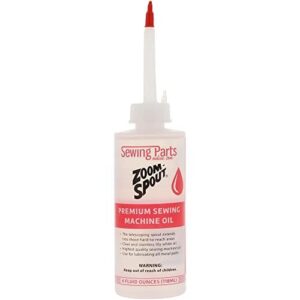
The Sewable Zoom Spout Sewing Machine Oil earns its spot here for one standout reason: that telescoping spout. It extends about seven inches, letting you reach deep into areas where a standard applicator simply can’t go — think older machines with cramped gear housings.
The 4 oz metal bottle holds a light, non-gumming, non-toxic oil that resists rust and keeps dust from settling on metal parts. It’s a practical pick for anyone maintaining multiple machines or tackling tricky vintage gear trains.
| Best For | Sewers and hobbyists who work with vintage or compact machines that are hard to oil with a regular applicator. |
|---|---|
| Oil Volume | 4 fl oz |
| Oil Type | Low-viscosity mineral oil |
| Applicator Tip | Telescoping zoom spout |
| Odorless Formula | Not specified |
| Machine Compatibility | Sewing and embroidery machines |
| Cleaning Brush | Not included |
| Additional Features |
|
- The telescoping spout reaches deep into tight spots most oilers can’t touch
- Light, non-gumming formula won’t leave sticky buildup on your machine’s metal parts
- Non-toxic and rust-resistant, so it actually helps extend your machine’s lifespan
- Only 4 oz per bottle, so heavy-duty maintenance will have you restocking often
- The extending nozzle takes a little practice — it’s easy to over-apply at first
- Bottle color varies, which makes it harder to identify at a glance
Frequently Asked Questions (FAQs)
What can you use to grease a sewing machine?
You can use sewing machine oil for most moving parts, or grease for gears and high-load joints.
Common options include white lithium, silicone, and PTFE-based greases, depending on your machine type.
Which singer is best for heavy fabrics?
This question falls outside the scope of this article.
For heavy fabrics, look into the Singer Heavy Duty 4452 or 4432 — both handle denim and canvas well with powerful motors and reinforced feed systems.
What kind of grease do you use on old sewing machines?
For vintage all-metal machines, white lithium grease or a specialty grease like SEW-RETRO works best.
These match the tolerances of older metal gear trains and won’t break down under heat or heavy load.
What to use to grease a sewing machine?
Think of it like cooking — the right ingredient makes all the difference. For most machines, use lithium-based grease on metal gears and sewing machine oil on faster-moving, lighter-load parts.
What is the best grease for sewing machines?
The best grease depends on your machine’s gear material. Lithium grease works well for metal gears, while silicone or PTFE-based grease is safer for plastic or nylon components.
Always check your owner’s manual first.
Can you use WD-40 on a sewing machine?
WD-40 is like a temporary fix — it loosens stuck parts but won’t last. It displaces existing lubricant, attracts lint, and leaves your machine dry over time.
Always follow up with proper sewing machine oil.
Can I use vaseline to lubricate my sewing machine?
No, don’t use Vaseline on your sewing machine. It’s sticky, attracts lint, and can degrade plastic parts over time. Stick to purpose-made sewing machine oil or grease instead.
How often should grease be applied to gears?
For typical home sewing, reapply grease every 6 to 12 months. If you sew daily or do free-motion quilting, move to quarterly applications. Always clean out old grease before adding fresh lubricant.
Can different machine parts require different greases?
Yes — different parts need different lubricants. Gears use lithium or PTFE grease, bearings take light oil, and motor ports need specialty grease. Always match the lubricant to the part.
What are signs of inadequate greasing?
Your machine will tell you when it’s thirsty.
Watch for unusual squealing, grinding noises, stiff movement, or excessive heat during use — these all signal dry or poorly lubricated components that need attention fast.
Conclusion
A home sewist once nursed a grinding vintage Singer back to life—not with repairs, but with the right grease applied to worn metal gears. That’s the quiet power of proper lubrication.
When you grease a sewing machine correctly, matching each lubricant to the right part, you’re not just silencing a squeak. You’re extending the machine’s working life by years.
Do it consistently, and your machine will run cleaner, quieter, and more reliably with every project.