This site is supported by our readers. We may earn a commission, at no cost to you, if you purchase through links.
A dull needle tears fabric instead of piercing it cleanly, and a single skipped stitch on a French seam can unravel hours of careful work. Most sewers focus on their machine brand or fabric choice, but the accessories running that machine quietly determine whether a project succeeds or falls apart at the hem.
The right needle for denim won’t work on chiffon—and wrong thread tension leaves puckers no amount of pressing will fix. These details underscore how critical it is to align tools with materials and techniques.
Ultimately, choosing the right sewing machine accessories comes down to matching each tool to your fabric, your machine, and your project—before you ever hit the foot pedal.
Table Of Contents
- Key Takeaways
- Best Sewing Machine Accessories Reviewed
- 1. Universal Sewing Machine Needle Set
- 2. Eoehro Polyester Sewing Thread Set
- 3. Brexfire Magnetic Seam Guide Sewing Machine
- 4. Tigari Magnetic Seam Guide with Clip
- 5. Colorful Stainless Steel Sewing Pins
- 6. Universal Magnetic Seam Guide for Sewing
- 7. Singer Portable Sewing Storage Organizer
- 8. Assorted Polyester Sewing Thread
- 9. Singer Sewing Machine Lubricant Oil
- 10. Lohas Select Sewing Chalk Markers
- Essential Accessories for Better Stitching
- Accessories by Sewing Project Type
- Maintenance and Organization Accessories
- Choosing Compatible Sewing Accessories
- Frequently Asked Questions (FAQs)
- Conclusion
Key Takeaways
- Matching your needle, thread, and presser foot to the specific fabric you’re working with matters more than the machine brand you’re using.
- A dull needle or the wrong bobbin class can silently wreck your stitches before you ever realize the accessory is the problem.
- Seam guides, chalk markers, and storage organizers are low-cost tools that consistently deliver cleaner results and save real time on every project.
- Regular oiling and needle replacement every 8–10 hours keep your machine running smoothly and help you avoid repairs that cost far more than the upkeep.
Best Sewing Machine Accessories Reviewed
Finding the right accessories can make or break your sewing experience, so it helps to know which ones actually earn their place in your kit.
Speed is one area where small adjustments pay off big—these sewing machine speed control tips can help you stay precise without sacrificing momentum.
The picks below cover everything from needles and thread to seam guides and storage, chosen for their everyday usefulness and solid performance. Here’s what made the cut.
1. Universal Sewing Machine Needle Set
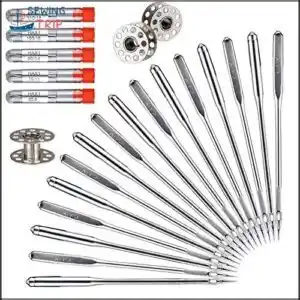
The Universal Sewing Machine Needle Set is one of those purchases that quietly makes everything easier. Offering 50 needles across five sizes—from 65/9 to 110/18—it ensures you’re prepared for projects ranging from delicate silks to heavy canvas, eliminating mid-project scrambles for the right needle.
Each needle is crafted from high-strength steel with a polished finish that reduces friction and minimizes thread fraying, ensuring smooth, reliable performance.
The flat-back shank is designed to fit most home sewing machines, including popular brands like Singer, Brother, and Janome, guaranteeing broad compatibility.
For organization, the set includes five storage tubes, keeping needles sorted by size and readily accessible for any task.
| Best For | Home sewers who work across a range of fabrics and want a reliable stash of needles without constant reordering. |
|---|---|
| Material | High-strength steel |
| Primary Use | Machine sewing |
| Compatibility | Most household machines |
| Package Quantity | 50 needles + extras |
| Skill Level | Beginner to advanced |
| Reusable | Yes |
| Additional Features |
|
- Covers five needle sizes, so you’re ready for anything from thin silk to heavy coats—no mid-project panic
- High-strength steel with a polished finish means smooth stitching and less thread fraying
- Comes with storage tubes and bobbins, so everything stays organized and easy to grab
- Won’t work on industrial or large-scale machines, so it’s strictly a home-use set
- Some users run into thread fraying under heavy feed conditions and have to fiddle with tension settings
- The needle length runs slightly long for some compact machines, so it’s worth double-checking fit before you commit
2. Eoehro Polyester Sewing Thread Set
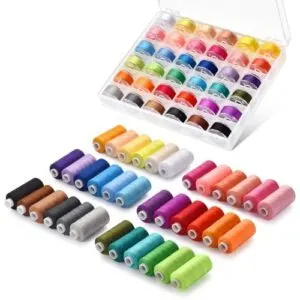
Once you’ve got the right needle, you need thread that can keep up. The Eoehro Polyester Sewing Thread Set delivers 36 colors across 72 spools — two per color — giving you 400 yards each to work with.
The 100% polyester construction resists fraying and manages fabrics from lightweight cotton to denim without skipping a beat.
Pre-wound bobbins come included, so you’re ready to sew right away. It’s a solid all-in-one kit for quilting, garment repairs, and everyday projects.
| Best For | Sewers of all skill levels who want a ready-to-go thread collection for quilting, repairs, and everyday projects without hunting down individual colors. |
|---|---|
| Material | 100% polyester |
| Primary Use | Machine & hand sewing |
| Compatibility | Most domestic machines |
| Package Quantity | 72 spools + bobbins |
| Skill Level | Beginner to advanced |
| Reusable | Yes |
| Additional Features |
|
- 36 colors with two spools each means you’ve got plenty of thread before you ever need to restock.
- Pre-wound bobbins save you setup time — just load and sew.
- Strong polyester construction handles everything from thin cotton to denim without fraying or breaking mid-seam.
- Some machines don’t play nice with it — thread breakage can pop up depending on your tension settings.
- Polyester doesn’t love high heat, so be careful when ironing seams on delicate projects.
- 72 spools is a lot — if you only need a handful of colors, you’ll need somewhere to store the rest.
3. Brexfire Magnetic Seam Guide Sewing Machine
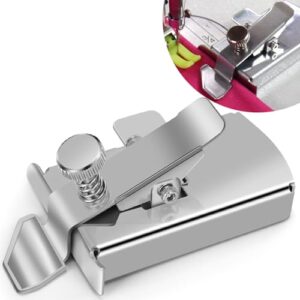
Keeping your seams straight requires more than good thread—you need a reliable guide. The Brexfire Magnetic Seam Guide (Model SG-01) snaps onto your machine’s metal throat plate without tools, thanks to a strong neodymium magnet that holds firm through long seams.
Its stainless-steel body ensures smooth fabric flow without snagging, while the built-in clip keeps edges precisely aligned during stitching.
Whether piecing quilts or hemming trousers, it repositions in seconds and leaves zero residue, offering versatile, hassle-free performance for any project.
| Best For | Sewers and quilters of all skill levels who want clean, consistent seams without the hassle of pinning or eyeballing every stitch. |
|---|---|
| Material | Stainless steel |
| Primary Use | Seam guidance |
| Compatibility | Most sewing/quilting machines |
| Package Quantity | 1 guide |
| Skill Level | Beginner to advanced |
| Reusable | Yes |
| Additional Features |
|
- Snaps on and off in seconds — no tools, no fuss, and it repositions whenever you need it
- The stainless-steel body glides smoothly so your fabric feeds without catching or snagging
- Built-in clip keeps layers lined up, which is a real time-saver on longer seams
- Bulkier or multi-layer fabrics can throw off the magnet’s grip, so it’s not a sure thing for heavy-duty projects
- Only works if your machine has a metal throat plate — some models just won’t play nicely with it
- No instructions in the box, so first-timers will need to look up how to set it up on their own
4. Tigari Magnetic Seam Guide with Clip
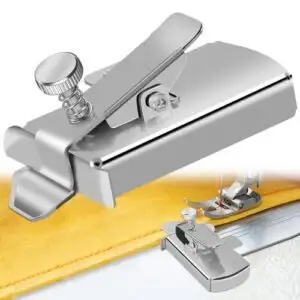
The Tigari Magnetic Seam Guide with Clip enhances control with a built-in clip mechanism that grips fabric edges directly, offering precision beyond basic magnetic guides.
Constructed from stainless steel with an embedded neodymium magnet, its smooth edges prevent snags on delicate fabrics.
Graduated seam markings—including 1/4 and 1/2 inch—allow effortless seam allowance adjustments.
It requires a metal needle plate for secure attachment.
| Best For | Quilters and home sewists who want consistent, accurate seams without constantly stopping to reposition fabric. |
|---|---|
| Material | Stainless steel |
| Primary Use | Seam guidance |
| Compatibility | Most domestic machines |
| Package Quantity | 1 guide |
| Skill Level | Beginner to advanced |
| Reusable | Yes |
| Additional Features |
|
- The neodymium magnet locks onto metal needle plates with a strong, steady hold — no sliding mid-seam.
- Stainless steel build means it’ll hold up through years of regular use without rusting or bending.
- The integrated clip grips fabric edges directly, which is a real help when working with thicker or multi-layer materials.
- Not safe for newer computerized or electronic machines — the strong magnet can mess with the electronics.
- Only works with metal needle plates, so some machines will need an extra sticky-magnet accessory.
- Max seam width tops out around 3 cm, which may feel limiting depending on your project.
5. Colorful Stainless Steel Sewing Pins
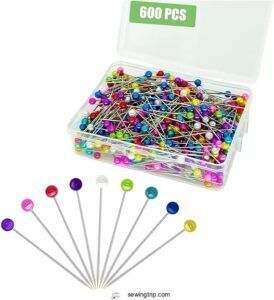
Color-coded precision — that’s what makes the Sunenlyst PP532108 set stand out.
Each bobbin slots into its own labeled spot, so you’ll never waste time hunting through a tangled mess—a game-changer for anyone serious about smart thread and bobbin organization.
Each 1.42-inch stainless steel pin ensures a solid grip across multiple fabric layers, whether you’re working with denim or delicate silk.
The six pearlized head colors aren’t just decorative—they help you spot dropped pins quickly and organize projects efficiently.
With 600 pins in a clear, reusable box and a lifetime guarantee, this set is built for quilters, garment sewers, and crafters alike.
| Best For | Quilters, garment sewers, and crafters who need a large supply of sharp, easy-to-spot pins for working through multiple fabric layers. |
|---|---|
| Material | Stainless steel |
| Primary Use | Fabric pinning |
| Compatibility | Universal |
| Package Quantity | 600 pins |
| Skill Level | Beginner to advanced |
| Reusable | Yes |
| Additional Features |
|
- Six bright pearlized colors make dropped pins easy to find and help keep projects organized at a glance.
- Sharp stainless steel tips glide through everything from thin silk to heavy denim and quilting batting.
- 600 pins with a lifetime guarantee is great value, especially for high-volume sewers or gift-giving.
- Some pins have shown up blunt or with missing plastic heads, so quality can be a little inconsistent.
- The storage box runs shallower and longer than it looks in some product photos, which can make organizing a bit awkward.
- Pin count is based on weight, so you might get slightly more or fewer than the advertised 600.
6. Universal Magnetic Seam Guide for Sewing
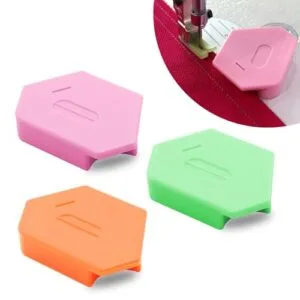
Straight seams start with the right setup, and this three-piece magnetic seam guide set makes that easy.
Each ABS plastic guide snaps firmly onto any metal needle plate — no screws, no fuss — and withstands normal stitching speeds. The color-coded orange, pink, and green pieces allow seamless switching between seam widths in seconds.
At $9.99 for the set, it’s a practical pick for beginners seeking consistency or experienced sewers wanting faster, repeatable results without measuring every pass.
| Best For | Beginners learning to sew straight lines and experienced sewers who want quick, consistent seam allowances without stopping to measure. |
|---|---|
| Material | ABS resin |
| Primary Use | Seam guidance |
| Compatibility | Most metal-plate machines |
| Package Quantity | 3 guides |
| Skill Level | Beginner to advanced |
| Reusable | Yes |
| Additional Features |
|
- Snaps onto any metal needle plate in seconds — no tools, no fuss
- Three color-coded guides make it easy to switch between seam widths mid-project
- At $9.99 for the set, it’s a genuinely affordable way to improve stitch consistency
- Won’t work on plastic or non-metal needle plates without a separate sticky-metal plate
- The magnet holds strong — sometimes a little too strong, making it tricky to reposition
- The ABS plastic feels a bit cheap compared to higher-end sewing accessories
7. Singer Portable Sewing Storage Organizer
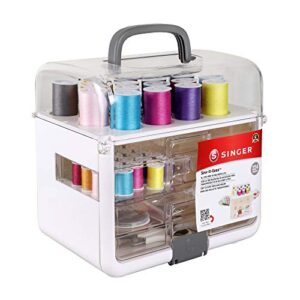
When your supplies are scattered across three drawers and a mystery pile, the Singer Portable Sewing Storage Organizer (Model S01771) becomes your best friend. At $42.99, it offers a practical solution for organizing your essentials.
This 3.75-lb case holds 42 thread spools, needles, scissors, pins, and more, with transparent panels so you can actually see what you have. Its three removable, rearrangeable drawers allow flexible configuration to suit your project needs, ensuring everything stays organized and accessible.
Compact enough for classes or caravan trips, yet sturdy enough to keep everything in its place, this organizer combines portability with durability, making it an ideal companion for sewists on the go.
| Best For | Beginners just getting into sewing and experienced sewists who want a travel-ready kit that keeps everything in one place. |
|---|---|
| Material | ABS/steel/plastic |
| Primary Use | General sewing |
| Compatibility | Universal |
| Package Quantity | 42 spools + accessories |
| Skill Level | Beginner to advanced |
| Reusable | Yes |
| Additional Features |
|
- Comes fully stocked with 42 thread spools and all the basics, so you’re ready to sew right out of the box.
- The transparent lid and panels mean you can spot what you need at a glance — no more digging around.
- Three removable, rearrangeable drawers let you set it up however works best for your projects.
- The plastic build can feel a little flimsy, so it needs some gentle handling.
- Only one color option for the case, which might not suit everyone’s taste.
- The thread colors included may not match your current projects, so extra spools could be on your shopping list.
8. Assorted Polyester Sewing Thread
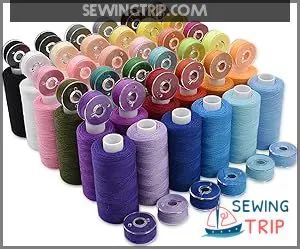
If you’ve ever stopped mid-project because you ran out of a matching color, this thread set solves that problem before it starts.
You get 36 polyester spools (360 yards each) plus 36 pre-wound Class 15 bobbins — totaling roughly 9.4 miles of thread for just $11.88. The colors are bright and varied, and the polyester holds up through washing without fading.
The ready-wound bobbins save real setup time, but note this set won’t work with Singer Futura embroidery machines.
| Best For | Home sewers and hobbyists who want a reliable variety of colors on hand without spending much or prepping bobbins themselves. |
|---|---|
| Material | 100% polyester |
| Primary Use | Machine & hand sewing |
| Compatibility | Most domestic machines |
| Package Quantity | 36 spools + 36 bobbins |
| Skill Level | Beginner to advanced |
| Reusable | Yes |
| Additional Features |
|
- 36 pre-wound bobbins mean you can jump straight into a project — no winding, no fuss.
- Bright, varied colors cover most everyday sewing needs, from repairs to simple embroidery.
- At $11.88 for 9.4 miles of thread, the value is hard to beat.
- The thread runs a bit thin, so it can snap on heavy fabrics or at high sewing speeds.
- Not compatible with Singer Futura embroidery machines.
- Not the right pick for upholstery or any project that needs heavyweight thread.
9. Singer Sewing Machine Lubricant Oil
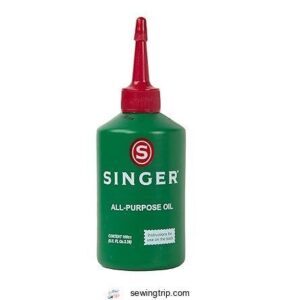
A well-oiled machine isn’t just a saying — it’s the difference between smooth stitches and a grinding halt. Singer’s lubricant oil comes in a compact 3.38 fl oz metal bottle, designed for high-speed mechanical parts like gears, pivots, and needle bars.
Applying a few drops every 8–12 hours of sewing keeps friction down and noise out. It’s odorless, clean, and works on multiple appliances too.
Just don’t use it on high-speed industrial machines — it’s built for household use.
| Best For | Home sewers and hobbyists who want to keep their machines running quietly and smoothly without a lot of fuss. |
|---|---|
| Material | Metal |
| Primary Use | Machine maintenance |
| Compatibility | Low-speed machines |
| Package Quantity | 1 bottle |
| Skill Level | Beginner to advanced |
| Reusable | Yes |
| Additional Features |
|
- Works on way more than just sewing machines — bikes, vacuums, small appliances, you name it
- Odorless and clean, so no mess or weird smells while you’re working
- A little goes a long way, so that small bottle lasts longer than you’d expect
- Not the right fit for industrial or high-speed machines
- The 3.38 oz size can run out fast if you’re maintaining equipment regularly
- The "5 pack" label confusion might make you think you’re getting more than you are
10. Lohas Select Sewing Chalk Markers
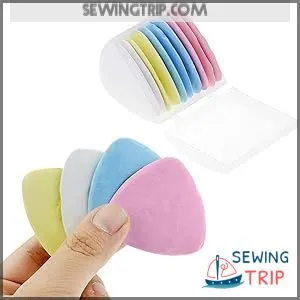
Marking fabric accurately is one of those small things that makes a big difference. The Lohas Select Chalk Markers come in a set of 10 triangle-shaped pieces — two each in blue, red, yellow, and white — stored neatly in a clear plastic box for $5.69.
The triangle tip lays down thin, crisp lines on light and dark fabrics alike, and a quick dip in water wipes them clean.
Handle them gently, though — they’re thin and can snap under rough pressure.
| Best For | Home sewers, tailors, and hobbyists who need clean, removable markings on a variety of fabric colors. |
|---|---|
| Material | Plastic/chalk |
| Primary Use | Fabric marking |
| Compatibility | All fabric types |
| Package Quantity | 10 chalk pieces |
| Skill Level | Beginner to advanced |
| Reusable | Yes |
| Additional Features |
|
- Triangle tips make thin, precise lines — great for pattern tracing on both light and dark fabrics
- Four colors let you mark multiple pattern sections at once without confusion
- Marks wash off easily with just water, so there’s no guessing about permanent damage
- The chalk pieces are thin and snap easily, especially if they’ve been jostled around during shipping
- The plastic case doesn’t latch shut on its own — you’ll need a rubber band to keep it closed
- Broken pieces pile up fast if you’re not careful, which means you go through the set quicker than expected
Essential Accessories for Better Stitching
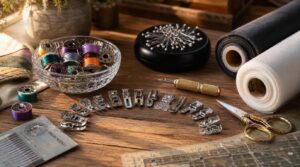
Some accessories don’t just help — they change the way your whole machine performs. Getting the right ones means fewer frustrations, cleaner results, and more confidence at the table.
Here’s what belongs in every serious sewist’s setup.
Sewing Machine Needles
Needles are the heartbeat of your machine — pick the wrong one and skipped stitches soon follow. Needle anatomy matters: the scarf, eye, and point all affect how thread moves through fabric.
Pick the wrong needle and your machine’s heartbeat skips
For ultra‑delicate fabrics such as silk or chiffon, a size 60/8 needle works best. Use this quick guide for smarter needle size selection:
- Light fabrics — 60/8 to 70/10
- Medium fabrics — 80/12 to 90/14
- Heavy denim/canvas — 100/16 to 110/18
- Knits — ballpoint needle, any compatible gauge
Watch for sharpness indicators like skipped stitches or fraying thread — they signal replacement time. Smart storage solutions, like a protective case, keep your needles dry and ready for sewing machine maintenance.
Quality Sewing Threads
Just like the right needle sets you up for clean stitches, the thread you choose finishes the job. Fiber Strength varies by material — polyester leads for durability, while cotton suits natural fabrics best. Core Spun Construction gives you both smoothness and tensile toughness in one strand. Always check Colorfastness testing results before committing to a thread, especially for garments that’ll see regular washing.
| Thread Type | Best For | Key Benefit |
|---|---|---|
| Polyester | Synthetics & blends | Lint Resistance, high Fiber Strength |
| Cotton | Natural fabrics | Soft seams, good needle and thread compatibility |
| Core Spun | Mixed-fabric projects | Balanced Thread Tension, minimal fraying |
| Nylon | Leather & stretch | Elasticity, abrasion resistance |
| Embroidery Rayon | Decorative sewing | Sheen, smooth feeding through sewing accessories |
Keeping Thread Tension consistent prevents puckering — a common frustration even experienced sewers hit. These sewing supplies are small investments that seriously affect your finished results.
Compatible Bobbins
Thread choices matter, but the wrong bobbin can unravel everything. Your Bobbin Size Guide begins with identifying your machine’s class—Class 15, L-style, or M-style—as each fits differently. Compatibility directly impacts Tension Matching Tips: a misfit bobbin disrupts the bobbin case, leading to skipped stitches.
During installation, verify the Rotation Direction to ensure proper alignment. Consistent Cleaning & Storage habits preserve Material Compatibility, maintaining performance over time.
Presser Foot Basics
Just as the right presser foot keeps tension balanced, the right presser foot keeps your stitching on track. Shank types determine compatibility — low or high shank — so check yours before buying.
Pressure settings, toe design, and heel function each affect how fabric feeds.
Options like a sewing machine walking foot, side cutter presser foot, circular embroidery presser foot, or elastic sewing machine foot handle specific jobs well.
A simple cleaning routine keeps every presser foot type performing consistently.
Seam Guides
Seam guides don’t get much attention, but they quietly determine whether your seam allowance stays consistent from start to finish. You’ll find three main Guide Types worth knowing:
- Magnetic guides snap onto the needle plate instantly
- Adjustable guides lock at widths from 1/4 to 1/2 inch
- Clip-on guides swap out mid-project without tools
Material Compatibility and machine accessory compatibility both matter — check your needle plate before buying.
Accessories by Sewing Project Type
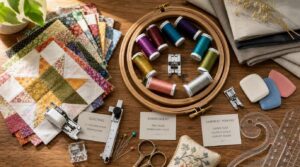
Not every project needs the same tools, and accessories should match what you’re actually making. A quilt, custom-fitted jacket, or embroidered tote bag each requires distinct feet and guides tailored to their unique demands.
Here’s a breakdown of what works best for each type of project, ensuring your setup aligns perfectly with your creative goals.
Garment Sewing Tools
Garment construction calls for tools that keep your work precise from the first cut to the final press. A seam gauge measures hems and allowances with accuracy, while pinking shears and a rotary cutter handle clean edges on woven fabric.
Tracing wheels transfer pattern lines quickly, and a tailor ham shapes curved seams perfectly.
Pair these sewing tools with the right presser foot types for clean, professional results.
Quilting Accessories
Quilting accessories make the difference between a quilt that looks homemade and one that looks handcrafted. The right tools keep every layer flat, straight, and stitch-ready.
- Rotary Cutters (28mm–60mm) paired with Quilting Rulers for razor-clean patchwork cuts
- Batting Selection in low-loft cotton or poly blends for smooth machine quilting
- Basting Sprays and Quilt Assembly Clips to lock your quilt backing and sandwich in place
- A Free Motion Quilting Foot for use with Machine Quilting Templates for fluid, even stitching
These quilting accessories turn quilt making from guesswork into a reliable process.
Embroidery Project Supplies
Embroidery work lives or dies by your setup. Your embroidery machine needs the right machine embroidery accessories to perform well — starting with stabilizers. Stabilizer types range from tear-away for woven fabrics to cut-away for knits.
Hoop selection matters too; embroidery hoops run from 4×4 to 8×14 inches. Choosing the correct size ensures design placement and fabric stability during stitching.
Add a bobbin winder, embroidery scissors, a circular embroidery presser foot, and metallic embroidery thread with a proper needle for clean results. These tools collectively enhance precision and finish quality.
Heavy Fabric Essentials
Heavy fabrics don’t forgive weak setups. You will need heavy-weight needles, walking feet, and reinforced seam guides to keep thick denim or canvas moving smoothly. These tools ensure stability and prevent bunching during stitching.
Strong bobbin carriers handle the extra thread tension without skipping, while UV-resistant thread holds up in outerwear and upholstery long-term. This combination maintains structural integrity under stress and resists environmental degradation.
Matching your presser feet and tension settings to the material weight makes all the difference. Proper calibration prevents needle breakage, skipped stitches, and uneven seams, ensuring professional results.
Beginner Sewing Kits
Starting your sewing journey doesn’t have to feel overwhelming. A well-stocked beginner sewing kit puts essential kit items—needles, thread, pins, scissors, and bobbins—right in your hands from day one. Affordable kits usually run $15–$40, and portable kit cases keep everything organized.
Most include instruction booklets and practice materials so you can build real skills fast.
- Jump-start DIY sewing with color-coded thread sets
- Follow creative patterns using included fabric chalk markers
- Reference your sewing machine accessories guide for compatible add-ons
- Shop any online sewing store for curated starter bundles
Maintenance and Organization Accessories
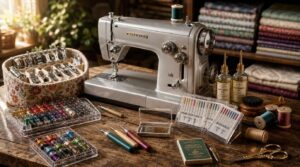
A well-maintained machine sews better and lasts longer — it’s that simple. Keeping your workspace organized saves time and reduces the frustration of hunting for the right needle or bobbin mid-project.
Here are the maintenance and organization accessories worth having on hand.
Sewing Machine Oil
Keeping your machine well-oiled is one of the simplest ways to avoid costly repairs. Mineral vs silicone oils both work effectively, but silicone withstands heat and high speeds better.
For application, use one small drop per moving part—excess oil may cause fabric staining.
Lubrication frequency depends on use: heavy sewers require more frequent oiling.
Always check your manual for safety compatibility before purchasing lubricants.
Cleaning Brushes
Oil keeps things running—brushes keep things clean. Brush material selection matters: nylon bristles resist solvents and dry fast, while natural fibers are gentler on delicate parts.
- Bristle durability holds up through regular use without shedding
- Ergonomic handle design reduces strain during tight-corner cleaning
- Specialized brush uses include clearing lint from feed dogs and bobbin cases
Replace brushes when bristles start fraying.
Storage Organizers
Once your brushes are back in their drawer, where does everything else go?
Modular Bins, Wall Pegboards, Drawer Dividers, a Portable Tote, and Thread Caddies each solves a different storage and transport problem.
Clear bins let you spot contents fast, while drawer dividers sort pins and bobbins cleanly.
For sewing workspace optimization, a well-chosen sewing kit setup makes your sewing accessories selection visible and ready.
Replacement Needles
Once your workspace is sorted, don’t overlook what’s actually in your machine.
Replacement needles matter more than most people realize. Needle Materials, Point Geometry, and Eye Size all affect stitch quality directly. Here’s what to track:
- Replace after 8–10 sewing hours
- Match needle gauge to your fabric weight
- Choose titanium coating for coating durability on dense materials
- Pick ball points for knits, sharp points for wovens
Right needles mean smooth even stitches every time — wrong ones don’t.
Thread Storage
Good thread storage isn’t glamorous, but it saves you from a tangled mess mid-project. Use thread box organization systems with labeled slots and magnetic strips to keep bobbins within reach.
Spool storage solutions, like 24-spool towers, prevent snags and keep colors visible.
Wall rack systems free up desk space, while traveling thread cases protect your sewing kits on the go.
Thread labeling tips — noting type, length, and needle size — make sewing-accessory selection and online shopping for sewing parts faster every time.
Choosing Compatible Sewing Accessories
Getting the right accessories starts with knowing your machine inside and out. Compatibility isn’t just a technicality — it’s the difference between a smooth stitch and a frustrating afternoon.
Here’s what to check before you buy.
Check Machine Model
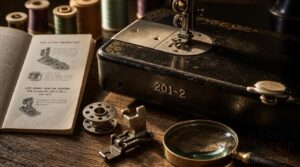
Your machine’s model number is the starting point for everything else. Model Identification begins on the chassis or manual — confirm the brand through Manufacturer Verification, and use Year Code Lookup to pinpoint when it was built.
Check Electrical Specs on the label, review Warranty Terms, and verify compatibility before purchasing anything.
This includes ensuring compatibility with compatible bobbins, a Low Shank Snap-On Adapter, or a Side Cutter Presser Foot.
Match Needle Type
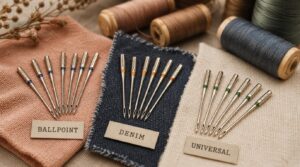
Needle type is one of those details that make or break a project.
Start with Fabric Needle Pairing — ballpoint for knits, denim for heavy layers, universal for everyday woven fabrics. Needle Shank Compatibility matters too: most machines use the 130/705H standard, but always verify.
Get Size Fabric Matching right, and you’ll experience fewer skipped stitches, break fewer needles, and spend less time on machine troubleshooting.
Choose Correct Bobbins
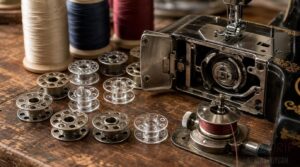
The wrong bobbin can quietly sabotage your stitches before you even notice. Bobbin Size Matching is non-negotiable — Class 15, L-style, and M-style each fit specific machines, and bobbin size compatibility directly affects sewing part compatibility.
- Bobbin Material Types: plastic for home machines, metal for heavier thread loads
- Bobbin Tension Adjustment: too tight bunches the fabric; too loose creates loops underneath the fabric
- Bobbin Winding Techniques: fill evenly, no loose tails, test on scrap first
- Bobbin Storage Solutions: label by thread type and size to avoid mix-ups
Check your manual before your next sewing accessory selection.
Compare Presser Feet
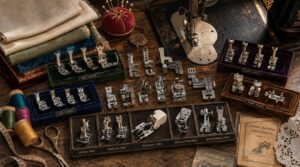
Shank compatibility determines whether a presser foot snaps on cleanly or doesn’t fit at all. Check if your machine uses a low-shank snap-on adapter before buying.
Consider specialty functions like the Side Cutter Presser Foot or Ruffler Presser Foot for specific tasks.
Material durability, price-performance, and user feedback help you sort the keepers from the throwaways.
Prioritize Fabric Needs
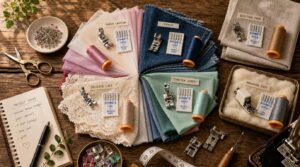
Your fabric choices shape every accessory decision that follows. Match your tools to what you’re actually sewing.
- Fabric Weight drives needle size and presser foot selection
- Fiber Breathability and Care Compatibility affect thread and stabilizer choices
- Colorfastness Testing matters when pairing dyes with natural fibers
- Sustainable Sourcing and fabric stretch management guide extension tables and quilting foot accessories
Frequently Asked Questions (FAQs)
Which singer is best for heavy fabrics?
Singer’s Heavy Duty models deliver serious chest voice power for dense fabrics.
Their riveted metal frames and high-torque motors handle denim, canvas, and leather with the vocal stamina your projects demand.
What are must haves for sewing?
Every sewing kit needs a few non-negotiables: Fabric Scissors, a Measuring Tape, Seam Ripper, Pin Cushion, and Thread Organizer.
These basics keep your workflow smooth before you even touch the machine.
What is the most sought after singer model?
In 2026, Taylor Swift holds the top spot as the most sought-after singer model, driven by chart-topping records, massive social media impact, and smart brand partnership strategies.
These strategies span music, acting, and global tours, solidifying her dominance across multiple industries.
Where can I buy sewing machine parts & accessories?
You don’t have to hunt high and low.
Online marketplaces, brand websites, and local dealers all carry sewing machine parts, often with free returns and solid shipping policies for quick, easy ordering.
Where can I find replacement parts for my sewing machine?
You can find sewing machine replacement parts through official manufacturer sites, authorized dealer networks, online parts marketplaces, vintage specialty shops, and local repair shops.
Each offers OEM or compatible options matched to your exact machine model.
What is the oldest name in sewing supplies?
Singer Heritage stretches back to 1851, making it the oldest name most sewers recognize. Elias Howe’s 1846 invention sparked the Oldest Name Debate, but Singer’s staying power is hard to argue with.
Where can I buy sewing supplies?
You can find sewing supplies through online stores in Germany like Bal Haberdashery, local fabric shops, specialty haberdashers, hardware retailers, or wholesale buying channels.
Each of these sources offers different price points and selection depth, catering to varied needs and budgets.
What are the sewing machine accessories?
Sewing machine accessories are everywhere once you know what to look for.
You’ll regularly use presser feet, bobbins, and needles, a Sewing Machine LED Light, a Sewing Machine Cover, and an Adjustable Tension Dial.
What accessories do I need for sewing?
You’ll need needles, presser feet, quality thread with Thread Color Matching options, bobbins, Fabric Stabilizers, Embroidery Hoops, a Needle Threader, and a Sewing Machine Cover to keep your setup protected and ready.
What is a sewing attachment?
Think of a sewing attachment as your machine’s secret weapon — a clip-on add-on that manages precise tasks like hemming, binding, or tucking.
This tool ensures cleaner edges and reduced fabric waste every time, streamlining your sewing process with efficiency and precision.
Conclusion
Every seasoned sewer eventually discovers that the machine itself is only half the equation. The right sewing machine accessories—matched carefully to your fabric, project, and technique—close the gap between frustration and a clean finish.
Test that theory next time you swap a dull needle for the correct type, or swap mismatched thread for quality polyester. The difference won’t just show in your seams. You’ll feel it in every stitch.
- https://www.singer.com/collections/singer-presser-feet-attachments?srsltid=AfmBOoqJSSiOh0AH8F_Uq5Iln1VhoSHXwUNUb-nzl-9Xugp1jc0GvuBQ
- https://www.sewingbeefabrics.co.uk/sewing-machine-feet-guide/
- https://www.sewingdocacademy.com/blog/bobbins
- https://www.sailrite.com/sailrite-fabricator-presser-feet?srsltid=AfmBOoo5SQPFWVkZye6a3adqBK5OR9CIuSPU63kwhTMKmYXxLSiYUbb4
- https://www.jjneedles.com/needles-guide