This site is supported by our readers. We may earn a commission, at no cost to you, if you purchase through links.
commercial sewing machine running at 6,500 stitches per minute can cut an 8-hour denim job down to under 2 hours — that’s not an upgrade, that’s a different category of tool entirely.
Most sewers hit a wall when their home machine starts skipping stitches through heavy canvas or stalls on a leather seam.
At that point, the machine isn’t the bottleneck — the wrong machine is.
Commercial grade sewing equipment runs 8 to 12 hours straight, processes 15 layers of denim without flinching, and stays in production for decades.
The ten machines ahead are built for that kind of work.
Table Of Contents
- Key Takeaways
- What is Commercial Grade Sewing?
- Top 10 Commercial Grade Sewing Machines
- 1. Juki DDL-8700 Industrial Sewing Machine
- 2. Juki TL2000Qi Sewing Quilting Machine
- 3. Janome 1600PQC High Speed Sewing Machine
- 4. Juki DU-1181N Industrial Sewing Machine
- 5. Juki MO68174S Industrial Overlock Machine
- 6. Juki TL-2010Q Lockstitch Sewing Machine
- 7. Juki Computerized Sewing Machine
- 8. Lumina Sienna Heavy Duty Serger
- 9. Juki DDL8700H Industrial Sewing Machine
- 10. Brother PQ1600S Sewing Quilting Machine
- Key Commercial Sewing Machine Features
- Match Machines to Sewing Projects
- Buying Considerations Before Upgrading
- Maintenance and Workflow Tips
- Frequently Asked Questions (FAQs)
- Conclusion
Key Takeaways
- Commercial‑grade machines run 8–12 hours straight, push through 15 layers of denim, and last 20–50 years — a home machine simply can’t compete with that kind of stamina.
- The gap between 600 stitches per minute (home) and 6,500 (commercial) doesn’t just save time — it changes what you can realistically produce in a single shift.
- Matching the right machine to your material matters as much as speed — walking‑foot systems own leather and upholstery, while lockstitch machines carry garment and denim work.
- A well‑maintained commercial machine, oiled every 8–12 hours and professionally serviced every few months, will outlast and outperform a string of cheaper replacements over any career.
What is Commercial Grade Sewing?
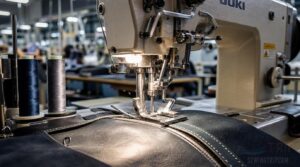
Commercial grade sewing is built around one thing — keeping up with real production demands, day after day. These machines run longer, stitch faster, and handle materials that would stop a home machine cold. Here’s what sets them apart and who actually needs one.
One feature worth understanding is how a knee lifter works on a sewing machine — it frees both hands for guiding heavy fabric without breaking your rhythm.
Definition and Key Traits
Commercial grade sewing means machines built for one thing — production. They run 8 to 12 hours straight, stitch up to 6,500 times per minute, and push through 15 layers of denim without flinching.
Cast-iron frames, steel gears, and all-metal construction give them a lifespan of 20 to 50+ years — some factories still run machines from the 1960s.
Home Vs Commercial Machines
Home machines top out around 600–1,500 stitches per minute — commercial sewing machines push past 6,500. That gap doesn’t just save time; it changes what you can produce in a day.
A professional heavy duty sewing machine also runs continuously while domestic machines overheat. Add in all-metal vs. plastic builds, and the durability difference becomes obvious fast.
Common Professional Applications
Speed matters, but so does range. Once you step into commercial sewing operations, the applications span far beyond basic garments. Think boat sails, horse saddles, upholstery panels, denim workwear, and leather goods — all stitched consistently, shift after shift.
- Garment manufacturing runs overlock and flatlock machines for clean edge finishing
- Leather and upholstery rely on walking-foot systems for slippery, heavy materials
- Batch processing on denim processes 15 layers in a single pass.
Who Needs Commercial Equipment
Not every business sews the same thing — or at the same pace.
Hair salons and barbershops depend on commercial sewing machines for durable capes and uniforms that hold up through daily use. Textile manufacturers need industrial sewing machines for high-volume runs.
Upholstery and leather shops, footwear brands, and fashion studios scaling commercial garment production all share one need: equipment built to last.
Regular preventive maintenance extends a machine’s longevity.
Top 10 Commercial Grade Sewing Machines
Not every machine belongs on a professional floor — but the right one can change how much you produce and how long you last doing it. This list covers ten commercial grade machines that hold up across real trades, from garment work to leather and quilting. Here’s what made the cut.
1. Juki DDL-8700 Industrial Sewing Machine
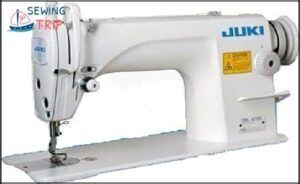
The Juki DDL-8700 is a straight-stitch workhorse built for shops that need reliable speed on light to medium fabrics — gowns, uniforms, jerseys, and denim included. It runs at 5,500 stitches per minute and comes fully packaged with a cast-iron table, stand, motor, and magnetic sewing light.
At $1,029, you’re getting a complete workstation without hunting for parts.
Just note it’s not suited for leather or thick upholstery.
| Best For | Small alteration shops and light-production workrooms that sew gowns, uniforms, jerseys, or denim and need a fast, ready-to-run setup without sourcing individual parts. |
|---|---|
| Max Stitch Speed | 5,500 spm |
| Stitch Type | Straight only |
| Frame Material | Cast iron |
| Price | $1,029.00 |
| Weight | 150 lb |
| Work Light | Magnetic LED |
| Additional Features |
|
- Screaming fast at 5,500 stitches per minute — great for keeping production moving
- Comes as a complete unit (table, stand, motor, light included) so you’re up and running right away
- Low vibration design makes long shifts a lot easier on the operator
- Not built for leather or heavy upholstery — stick to light to medium fabrics
- The clutch motor is still pretty loud despite the noise reduction
- No printed manual, and some units arrive with cosmetic damage or missing parts worth inspecting carefully
2. Juki TL2000Qi Sewing Quilting Machine
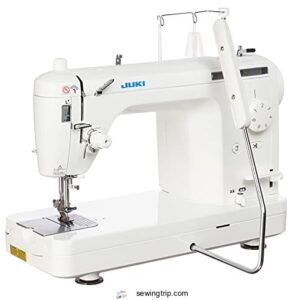
When quilting is your craft and scale is your goal, the Juki TL2000Qi steps up where home machines fall short. It runs at 1,500 SPM with a die-cast aluminum frame that keeps vibration low across long seams — king-size quilts, canvas layers, heavy vinyl.
The 9-inch arm clearance gives you real workspace, and the knee lift keeps your hands free.
At $899, it’s a focused straight‑stitch machine built for serious output.
| Best For | Quilters and sewists tackling large or heavy projects who need speed, stability, and a wide workspace — and don’t need anything beyond a clean straight stitch. |
|---|---|
| Max Stitch Speed | 1,500 spm |
| Stitch Type | Straight only |
| Frame Material | Aluminum die-cast |
| Price | $899.00 |
| Weight | 25.4 lb |
| Work Light | Integrated LED |
| Additional Features |
|
- Runs up to 1,500 SPM with an aluminum frame that keeps things smooth and steady, even on thick layers
- The wide throat and included extension table make king-size quilts and bulky fabrics actually manageable
- Knee lift keeps your hands on the fabric while you work — a genuine time-saver on long seams
- Straight stitch only — no zigzag, no decorative options, so it’s a one-trick pony by design
- No variable speed control means you’re managing pace entirely through foot pressure, which takes getting used to at full speed
- The automatic needle threader gets mixed reviews, and some handy accessories (like a free-motion foot) cost extra on top of the $899 price tag
3. Janome 1600PQC High Speed Sewing Machine
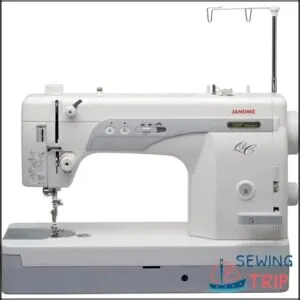
The Janome 1600P-QC runs at 1,600 SPM — fast enough for production quilting, canvas layers, or long straight seams without bogging down. Its 9" × 6" throat space gives you real room to move bulky work, and the knee lift keeps your hands on the fabric where they belong.
At $1,599, you get auto thread cut, a separate bobbin winder, and a metal frame that holds steady under hours of use.
| Best For | Quilters, production sewers, and small-business owners who need a fast, reliable straight-stitch machine that can handle heavy fabrics and long sessions without slowing down. |
|---|---|
| Max Stitch Speed | 1,600 spm |
| Stitch Type | Straight only |
| Frame Material | Metal/Plastic |
| Price | $1,599.00 |
| Weight | 31 lb |
| Work Light | Not specified |
| Additional Features |
|
- Blazing 1,600 SPM speed with a big 9" × 6" throat — serious room for bulky quilts and layered fabric
- Auto thread cutter and separate bobbin winder keep your workflow moving without constant interruptions
- Knee lift and needle up/down control make long sessions a lot easier on your hands
- Needle-up/down function is always on — no way to turn it off, which can feel annoying if you’re used to a mechanical machine
- Free-motion sewing requires a plate swap or add-on since the feed dogs don’t drop
- Small bobbin runs out fast, and some users have reported the occasional electronic glitch with limited support to fall back on
4. Juki DU-1181N Industrial Sewing Machine
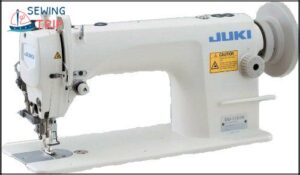
The DU-1181N is built for materials that eat lesser machines alive — leather, canvas, heavy upholstery, thick saddle straps. Its "top-and-bottom feed" pulls multi-layer work through evenly, so you don’t fight puckering or shifting seams. Stitch length reaches 9 mm, and the "automatic lubrication system" keeps it running shift after shift with minimal fuss.
At 2,000 SPM with a quiet servo motor, it processes serious volume without rattling your workspace.
| Best For | Makers and small shop owners working with heavy materials like leather, canvas, and upholstery who need reliable, high-volume stitching in a home or residential workshop setting. |
|---|---|
| Max Stitch Speed | 2,000 spm |
| Stitch Type | Straight only |
| Frame Material | Metal |
| Price | N/A |
| Weight | N/A |
| Work Light | Included |
| Additional Features |
|
- Top-and-bottom feed handles thick, multi-layer materials without puckering or shifting
- Quiet servo motor runs up to 2,000 SPM — solid output without disturbing the neighbors
- Built-in lubrication system means less maintenance hassle over long work sessions
- Big and heavy — delivery and setup is a whole project, often taking several hours
- No automatic thread cutter, and some users run into bobbin issues or missing parts out of the box
- The manual is a mixed bag of Chinese and English with gaps, so expect to lean on video tutorials
5. Juki MO68174S Industrial Overlock Machine
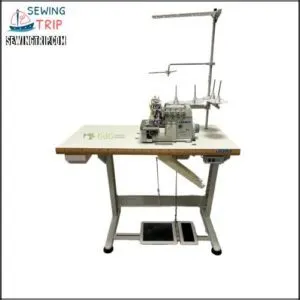
When raw edges are the problem, the MO68174S is your answer. This four-thread overlock machine processes everything from stretchy knits to woven cotton — finishing seams cleanly without fraying or puckering.
Its differential feed system adjusts for fabric behavior, so lycra and denim edges come out smooth every time. Color-coded threading paths cut setup time, and the metal frame keeps vibration low during long runs.
At $1,949, it’s built for shops that can’t afford sloppy edges.
| Best For | Garment shops and production sewers who need clean, consistent edges on everything from lightweight knits to heavy denim. |
|---|---|
| Max Stitch Speed | N/A |
| Stitch Type | Overlock/Safety |
| Frame Material | Metal |
| Price | $1,949.00 |
| Weight | 150 lb |
| Work Light | Not specified |
| Additional Features |
|
- Handles a wide range of fabrics without re-threading, making it great for high-volume work
- Metal frame and low-noise design hold up to long shifts without beating up your ears
- Differential feed keeps stretchy and heavy fabrics smooth and pucker-free
- Assembly is a headache — instructions are unclear, and professional setup can add around $400
- Some buyers report the foot pedal missing from the box, which means chasing down customer service before you can even start
- A few users feel the "advanced overlock/safety-stitch" label is oversold compared to real-world performance
6. Juki TL-2010Q Lockstitch Sewing Machine
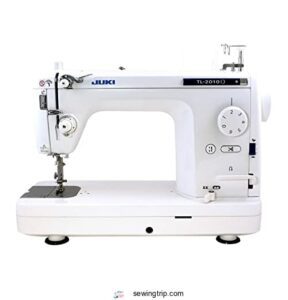
If straight stitching is the backbone of your production work, the Juki TL-2010Q is hard to beat.
It runs up to 1,500 stitches per minute, processes denim, canvas, and quilting layers without skipping, and fits a tabletop setup — all at $1,199.
The knee lifter and auto thread trimmer keep your hands on the fabric, not the controls.
It’s a semi-industrial workhorse built for tailors, bag makers, and quilters who need consistent results, fast.
| Best For | Tailors, bag makers, and quilters who do high-volume straight-stitch work and need a fast, reliable machine that handles heavy fabrics without fuss. |
|---|---|
| Max Stitch Speed | N/A |
| Stitch Type | Straight only |
| Frame Material | Aluminum |
| Price | $1,199.00 |
| Weight | 38 lb |
| Work Light | Limited built-in |
| Additional Features |
|
- Runs up to 1,500 stitches per minute and powers through denim, canvas, and thick quilting layers without skipping a beat
- The knee lifter and auto thread trimmer are genuine time-savers — your hands stay on the fabric where they belong
- All-metal build feels solid and lasts, and it’s portable enough to take to a retreat or job site
- Straight stitch only — no zigzag or decorative options, so it can’t replace a full-featured machine
- The needle threader has a learning curve, and tension can take some trial and error to dial in
- At 38 lbs, "portable" is relative, and it needs regular oiling to stay quiet and jam-free
7. Juki Computerized Sewing Machine
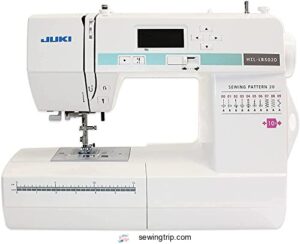
The TL-2010Q manages your straight-stitch needs — but sometimes production demands more flexibility.
The Juki Computerized Sewing Machine gives you 20 built-in stitch patterns, an LCD control panel, and a 7-point feed dog system that manages lycra, denim, and quilting layers without losing control. The auto needle threader and 1-step buttonhole function cut setup time down fast.
At 18.1 lb, it’s light enough to move, solid enough to trust on long sessions.
| Best For | Sewists of all skill levels who want a versatile, computer-guided machine that handles everything from delicate fabrics to heavy denim and quilting projects. |
|---|---|
| Max Stitch Speed | N/A |
| Stitch Type | Multi-stitch |
| Frame Material | Aluminum |
| Price | N/A |
| Weight | 18.1 lb |
| Work Light | Bright LED |
| Additional Features |
|
- 20 stitch patterns plus an LCD panel make it easy to dial in the right setting without guessing
- The auto needle threader and 1-step buttonhole save real time, especially during long sessions
- The 7-point feed dog handles tricky fabrics like lycra and thick quilt layers with solid control
- Some buyers have run into defects and found manufacturer repair support frustrating and costly
- There’s no dedicated thread-cutter button — you have to trigger it manually, which slows things down
- It’s built in Taiwan, not Japan, which surprised some buyers expecting traditional Juki build standards
8. Lumina Sienna Heavy Duty Serger
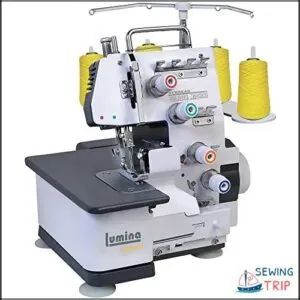
Stitch patterns are great — but sometimes a garment lives or dies by its edges.
The Lumina Sienna Heavy Duty Serger performs 3- and 4-thread overlock stitching up to 1,250 stitches per minute, trimming and finishing raw edges in one clean pass. The metal frame keeps vibration low, and color-coded thread paths mean you’re set up fast, not frustrated.
It’s compact enough for a small shop, capable enough for canvas, denim, and upholstery work.
| Best For | Sewers and small-shop makers who regularly work with heavy fabrics like denim, canvas, or upholstery and want professional edge finishing without a steep learning curve. |
|---|---|
| Max Stitch Speed | 1,250 spm |
| Stitch Type | Overlock |
| Frame Material | Metal |
| Price | N/A |
| Weight | 17.6 lb |
| Work Light | Built-in LED |
| Additional Features |
|
- Handles heavy-duty materials with ease — denim, canvas, upholstery — without breaking a sweat at up to 1,250 stitches per minute.
- Color-coded threading and a factory-threaded setup make getting started way less intimidating, even for beginners.
- Compact footprint and suction-cup feet mean it fits in tight spaces and moves when you need it to.
- The foot pedal takes serious pressure, and there’s no dedicated slow-speed setting — so controlling pace takes some getting used to.
- Customer support is email-only, and the manual has conflicting info on oiling, which can leave you guessing on maintenance.
- Replacement blades and spare parts aren’t easy to find, and there are some reports of tension-bolt and internal component issues over time.
9. Juki DDL8700H Industrial Sewing Machine
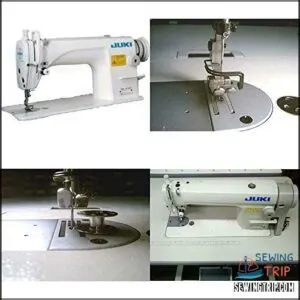
If the Lumina Sienna manages your edges, the Juki DDL8700H manages everything in between — heavy seams, thick layers, and long production runs without complaint. It punches through leather, denim, canvas, and saddle material at up to 5,500 stitches per minute, with a servo motor that keeps noise low and speed precise.
The 11-inch arm space gives you room to move big pieces — upholstery panels, sailcloth, or stacked denim — without fighting the machine.
| Best For | Small shops, upholstery workers, and leather crafters who need a workhorse machine that handles heavy materials day in and day out. |
|---|---|
| Max Stitch Speed | 5,500 spm |
| Stitch Type | Straight only |
| Frame Material | Plastic/Steel |
| Price | $1,069.61 |
| Weight | N/A |
| Work Light | Not specified |
| Additional Features |
|
- Blazes through leather, denim, and canvas at up to 5,500 stitches per minute — fast enough for real production work.
- The servo motor keeps things quiet and gives you smooth, precise speed control, even on thick multi-layer projects.
- 11 inches of arm space means you’re not wrestling big panels or quilt sections into the machine.
- Ships in three boxes with no printed instructions — you’re on your own figuring out assembly via YouTube or a pro.
- Missing parts and flimsy wood screws have tripped up some buyers right out of the gate.
- Straight stitch only, and no walking foot included — so certain heavy-fabric jobs may need extra accessories.
10. Brother PQ1600S Sewing Quilting Machine
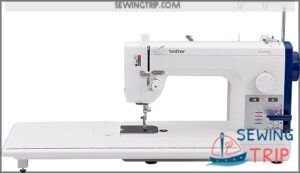
Where the DDL8700H powers through heavy production, the Brother PQ1600S manages quilting and large fabric runs with quiet precision.
At 1,500 stitches per minute, it’s built for quilters and small-batch sewers who need speed without industrial bulk. The pin-feed mechanism keeps layers synchronized — no shifting, no distortion.
A generous 11.1" × 23.3" extension table and built-in knee lifter free your hands for complex, flowing seams.
At $999.99, it’s a focused tool for serious quilting work.
| Best For | Quilters and small-batch sewers who need speed, workspace, and precise fabric control without going full industrial. |
|---|---|
| Max Stitch Speed | 1,500 spm |
| Stitch Type | Straight only |
| Frame Material | Metal/Plastic |
| Price | $999.99 |
| Weight | 24 lb |
| Work Light | Not specified |
| Additional Features |
|
- Blazing 1,500 spm straight-stitch speed with a massive extension table — great for large quilts and layered projects.
- Pin-feed mechanism keeps multiple fabric layers moving together, so nothing shifts or puckers mid-seam.
- Knee lifter and free-motion quilting foot let you work hands-free, which is a genuine game-changer for intricate designs.
- The bobbin case has no thread-level indicator, and the auto-cutter tends to leave the bobbin thread too short — expect some re-threading frustration.
- The automatic needle threader can be finicky, especially with thin or budget thread.
- At 24 lb and $999.99, it’s a serious commitment — not ideal for beginners or anyone who needs to move their machine around often.
Key Commercial Sewing Machine Features
Speed and build quality matter, but the right features are what separate a machine that lasts a shift from one that lasts a career. Before you buy, there are five things worth understanding about how these machines actually work. Here’s what to look for.
Stitch Speed and Power
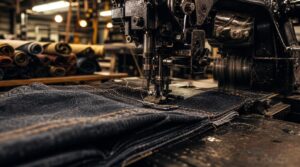
Speed is where commercial sewing machines earn their place on the floor. Industrial sewing machines run between 1,000 and 6,500 stitches per minute — far beyond what any home machine can hold.
- High speed stitching cuts a 50-pair denim job from 8 hours to under 2
- Torque control keeps the needle moving through canvas, leather, or stacked layers without stalling
- Power efficiency drops with a servo motor, using up to 70% less energy while maintaining variable speed across the full range
That combination of industrial motor power and precision makes commercial sewing machines the right call for serious production work.
Servo Vs Clutch Motors
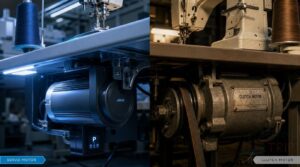
The motor you choose shapes everything — how quiet your shop stays, how your bills look, and how much control you have at the pedal.
Servo motors run on demand, drawing power only when you’re stitching, cutting energy use by up to 70%. They’re quieter, smoother, and give you variable speed control from near-zero to full pace.
Clutch motors run constantly, delivering raw torque for leather, canvas, or sails — but they’re louder and less precise.
Metal Frame Construction
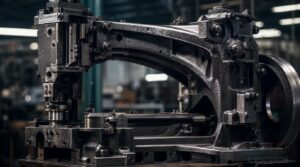
The frame is the machine’s backbone — and on a commercial sewing machine, that means cast‑iron and steel, not plastic. Industrial frame construction gives you vibration resistance, alignment stability, and the kind of durability that keeps machines running for 20 to 50‑plus years.
Many factories still run frames built in the 1960s, which tells you everything about how heavy duty sewing machines are built to last.
Bed Type and Workspace
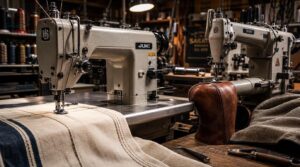
The bed type shapes what you can actually sew. A flatbed accommodates most garments and quilts, while a postbed or cylindrical bed lets you maneuver boots, saddles, or curved upholstery seams that a flat surface can’t reach.
Standard beds run 16 to 30 inches wide — wider means less fabric bunching on heavy canvas or sail material. Bed width clearance of at least 6 inches on all sides keeps your hands free and your workflow clean.
Safety and Control Features
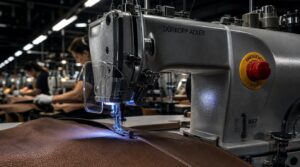
Control features on a commercial machine aren’t an afterthought — they’re what keep you working safely at 5,000 stitches per minute. Interlock switches shut the machine down the moment a guard opens. Light curtain barriers stop operation instantly if your hand crosses the needle zone. Emergency stop buttons are tested monthly and placed where you can hit them without looking.
Speed limit programming lets you dial in safe operating ranges for thick leather or delicate canvas. Pair that with real-time stitch monitoring, and you catch tension problems before they become costly repairs.
Match Machines to Sewing Projects
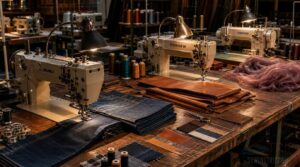
The right machine doesn’t just handle your fabric — it’s built around the specific work you do every day.
Whether you’re running denim through a production line or finishing leather edges on upholstery, the match between machine and project is what keeps quality consistent and downtime low.
Here’s how different commercial machines line up with the most common professional sewing jobs.
Garment Production
Garment production lives or dies on stitch precision and speed. A high-speed lockstitch machine manages the full sequence — from assembling shoulder seams to finishing hems — without skipping a beat across hundreds of units per shift.
Here’s what keeps commercial garment production running tight:
- Fabric selection process — match fiber content to machine tension settings before cutting begins
- Pattern grading techniques — sized templates guide consistent cutting across every panel
- Quality control checks — verify seam allowances and thread tension throughout the run
- Seam finishing methods — lockstitch finishes hold under repeated washing and wear
Production workflow optimization starts with the right machine for the job.
Quilting and Long Seams
Quilting demands something different from your machine — long, unbroken seam lines across wide panels where even minor fabric creep compounds into misalignment. Fabric stabilization before you sew is non-negotiable. A walking foot feeds layers evenly, while seam alignment stays true when you alternate sewing directions row by row.
| Technique | Purpose | Best Tool |
|---|---|---|
| Stitch Length 2.0–2.5mm | Balances strength and prevents puckering | Quilting machine |
| Pressing Techniques | Sets seams flat without warping | Hot dry iron |
| Long Arm Quilting | Manages large panels smoothly | Commercial sewing machine |
A sewing and quilting machine with a servo motor keeps stitches consistent across every inch — making it one of the best industrial sewing machines 2026 has for precision quilt work. A professional heavy duty sewing machine built for this purpose simply holds the line.
Denim and Workwear
Precision quilting keeps fabric honest — denim production demands something tougher altogether. Heavy duty sewing through 12–16 oz workwear fabric means your machine can’t hesitate. Dedicated denim machines stitch at 5,500 SPM, powering through double or triple-stitched seams, riveted pockets, and reinforced belt loops without skipping a beat.
- Bar-tacked stress points hold up under tool belts and hard daily use
- 15 layers of denim in a single pass — no bunching, no thread breaks
- High-speed industrial workwear production cuts 50-pair runs from 8 hours to under 2
Leather and Upholstery
Denim pushes hard — leather pushes back harder.
Walking-foot lockstitch machines feed material from both sides, keeping full grain and top grain hides moving without slipping or bunching. That consistent feed matters whether you’re stitching saddles, coach seats, or upholstery panels where seam integrity determines how long the piece lasts under daily stress.
Serging and Seam Finishing
Where leather demands brute feed, seam finishing demands control.
Industrial overlock machines wrap raw edges in 3–6 mm stitches — trimming and enclosing in one pass. Use differential feed control to prevent knit stretch or gathered waves.
Flat felled seams double-stitch denim; French seams encase delicate fabric edges cleanly.
Each finish type has its machine.
Buying Considerations Before Upgrading
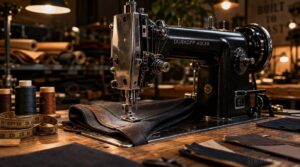
Picking the right commercial machine isn’t just about speed — it’s about matching the tool to your actual workload. A few key factors will separate a smart investment from an expensive mistake. Here’s what to think through before you commit.
Production Volume Needs
Before you buy, ask yourself one honest question: how many pieces do you actually need to finish each day?
Production volume shapes every decision — machine count, shift scheduling, and how hard each unit runs. Key factors to map out:
- Daily output targets set your minimum machine count
- Line balancing prevents bottlenecks at busy stations
- OEE monitoring reveals real productive time versus lost time
- Demand forecasting guides capacity before peak seasons hit
- Continuous use ratings confirm which machines handle full shifts
Size your floor to the work, not the other way around.
Fabric Thickness Capacity
Not every machine processes every material — and that gap can wreck a production run fast. Needle penetration force determines whether your machine drives cleanly through stacked canvas, saddle leather, or heavy workwear without skipping.
Know your material weight ratings upfront.
Thickness measurement guides presser foot choice and stitch length, keeping fabric tension control consistent across every layer you feed through.
Space and Table Footprint
Most operators underestimate how much floor space a commercial setup actually claims. A standard industrial table runs 47 × 22 inches, but your total footprint — chair included — reaches roughly 60 × 36 inches, with at least 48 inches of overhead clearance needed.
Plan around these essentials:
- 3 feet of clearance on all sides for safe movement
- Adjustable-height tables to reduce back and shoulder strain
- Under-table cable management to keep your work surface clean
- Wheeled bases for portable industrial sewing machines when layouts shift
Stationary industrial sewing machines need a permanent, level surface — proper leveling prevents vibration that quietly ruins stitch quality over time.
Budget and Long-term Value
The cheapest machine isn’t always the best deal. Long‑term value comes down to cost per stitch, energy use, and how rarely you call a repair technician.
A well‑built industrial machine — all‑metal frame, servo motor — can run for 20 to 50 years with service intervals every three to five years, making the initial investment far more cost‑effective than replacing cheaper units repeatedly.
A well-built industrial machine can run 20 to 50 years, making its upfront cost far cheaper than replacing lesser machines repeatedly
Accessories and Attachments
The right accessories can double what your machine can do. Presser foot types — zigzag, walking, ball hemmer, step shirring — let one machine handle leather, knits, and decorative edging.
Extra-large aluminum bobbins reduce thread changes during long runs. A proper thread stand setup keeps feeding smoothly at high speeds. Some setups even support CNC integration for automated, repeatable stitch patterns.
Maintenance and Workflow Tips
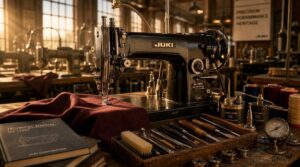
A great machine only stays great if you treat it right. Commercial-grade equipment is built to last decades — but that lifespan depends entirely on how well you maintain it. Here’s what every serious operator should keep in mind.
Cleaning and Lubrication Schedule
A dirty machine is a slow machine.
Daily Cleaning Checklist Work starts at the needle plate and feed dog — clear lint after every shift, then wipe all surfaces with a lint‑free cloth.
Follow your Lubrication Frequency Guidelines based on material load, apply oil only to manufacturer-specified Oil Application Points, and log every service in your Maintenance Log with date and initials.
Needle and Thread Checks
Once the machine is clean and oiled, your next check is the needle and thread.
Replace needles every 8 hours of high-speed sewing — a bent or dull needle causes skipped stitches and fabric snags.
Match needle eye size to thread type, and always log changes in your Needle Replacement Log to keep shifts consistent and traceable.
Tension and Stitch Adjustments
Good needles mean nothing if your tension is off.
Thread Tension Balance starts at mid-range, then fine-tune on scrap fabric before touching your actual project. Stitch length adjustment matters too — longer stitches on denim need higher tension; shorter ones on delicate fabric need less.
What keeps it all consistent:
- Bobbin Tension Settings complement your top thread — a small screw makes the difference
- Presser Foot Pressure controls how fabric feeds at speed
- Stitch density shifts when you switch materials or thread brands
- Fabric Thread Match reduces tension drift across long seams
Table Leveling and Vibration
A stable sewing table does more for your stitch quality than most operators realize.
Leveling feet adjustment is your first move — use a spirit level and dial each foot until the surface sits within a 0.5 mm tolerance.
After that, vibration isolation pads under the feet absorb the rhythmic energy your commercial sewing machine sends through the floor on every run.
Professional Servicing Intervals
Once your table is level and vibration-free, the next thing keeping your machine reliable is a consistent servicing rhythm.
- Oil every 8–12 hours of operation to keep hook races and needle clamps moving cleanly
- Inspect belts every 40–60 hours — slippage builds heat fast
- Clean feed dogs daily before each shift starts
- Major service every 3–4 months for high-volume garment or denim work
- Log every service visit — date, hours run, tasks completed
A proper maintenance log protects your warranty and proves the machine’s history if anything fails.
Frequently Asked Questions (FAQs)
What safety training do industrial sewing operators need?
Every needle is a sword — respect it. Operators need Lockout Tagout Training, Emergency Shutdown Drills, PPE usage guidelines, ergonomic posture training, and a clear incident reporting protocol before touching any industrial sewing machine.
How much floor space do commercial machines require?
Most commercial sewing machines need a footprint of 40–60 inches wide and 25–45 inches deep, plus at least 36 inches of clearance around them for fabric flow and safe movement.
Can commercial machines handle leather and vinyl materials?
Yes — commercial machines handle leather and vinyl with ease. Walking-foot systems, thick needles, and high-torque motors keep heavy material feeding smoothly without slipping, tearing, or skipping stitches.
Whats the average lifespan of industrial sewing equipment?
Industrial sewing machines last 20 to 50 years with consistent maintenance. Regular lubrication, timely needle checks, and professional servicing every 6–12 months keep component wear low and motors running strong for decades.
What certifications do industrial sewing operators typically need?
Most operators need a competency exam and hands-on training verification. OSHA 10 or 30 safety credentials are commonly required, covering machine guarding and needle hazards — especially for long-shift industrial sewing work.
How do noise regulations affect commercial sewing workspaces?
Noise limits — commonly 85 dBA over 8 hours — apply directly to your workspace. Clutch motors hit 85+ dB, so servo-motor machines are often the smarter, compliant choice.
Are commercial machines compatible with computerized pattern software?
Most commercial machines speak the language of modern design software. USB pattern transfer, CADCAM integration, and network loading are standard on higher-end models — supporting DST, PES, and JEF formats straight from your design suite.
Can one machine handle both garment and upholstery work?
Yes — one machine can, but it needs the right specs. Look for a high torque motor, a walking foot system, wide throat space, and adequate needle clearance to move cleanly between apparel and upholstery work.
Conclusion
sail maker in Maine switched to commercial‑grade sewing equipment after his home machine shredded three needles on a single mainsail seam.
Six months later, he’d doubled his output and taken on contracts he used to turn away.
That’s what the right machine actually does — it doesn’t just keep up, it broadens horizons.
Pick the machine that matches your workload, maintain it consistently, and it’ll outlast every deadline you throw at it.
- https://sewingmachineman.substack.com/p/pros-and-cons-of-industrial-sewing
- https://www.dainessewing.com/blog/industrial-vs-domestic-sewing-machines-is-it-worth-the-upgrade
- https://www.quiltingboard.com/vintage-antique-machine-enthusiasts-f22/stitches-per-minute-t258038.html
- https://www.applegreencottage.com/best-heavy-duty-sewing-machines
- https://www.goldstartool.com/blog/what-is-the-difference-between-industrial-and-domestic-sewing-machines.htm