This site is supported by our readers. We may earn a commission, at no cost to you, if you purchase through links.
Threading a needle by hand is a small task that quietly eats your time—two minutes here, three minutes there, until a full afternoon project has burned an hour in setup alone. Misthreading errors drop by roughly 40% when you switch to an automatic threader, and setup time cuts nearly in half.
That’s not a minor convenience; it’s the difference between finishing a hem before dinner and leaving it crumpled on the chair.
Choosing a machine with auto threader means fewer frustrations, smoother momentum, and more time doing the actual sewing. The four machines below deliver exactly that.
Table Of Contents
Key Takeaways
- Switching to an automatic needle threader cuts misthreading errors by about 40% and slashes setup time to nearly half, so you spend less time fussing and more time actually sewing.
- The Singer Heavy Duty 4423 tops the lineup for heavy fabrics, running at 1,100 stitches per minute with a stable metal frame — nearly double the speed of most beginner machines.
- A metal frame isn’t just about durability — it absorbs vibration at high speeds and keeps stitches consistent, making it a smarter long‑term buy than a plastic-bodied machine.
- Auto threader hooks are tiny and precise, so cleaning them every 40–60 sewing hours with a soft brush prevents lint buildup that’s the most common cause of failure over time.
Best Sewing Machines With Automatic Threader
Finding the right machine doesn’t have to feel like searching for a needle in a haystack. The four picks below cover a solid range of needs, from lightweight everyday sewing to heavier project work. Here’s what made the cut.
If you’re curious how these picks stack up against the bigger picture, this breakdown of the main types of sewing machines lays out exactly where each one shines.
1. Brother Computerized Sewing Machine
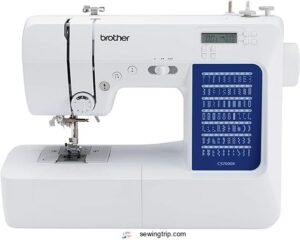
The Brother CS7000X is a computerized sewing workhorse that removes the guesswork from every session. Its automatic needle threader hooks your thread in seconds — no squinting, no frustration. With 70 built-in stitches displayed on a clear LCD, finding the right stitch takes just a few taps.
Seven one-step automatic buttonhole styles handle everything from lightweight cotton to heavier denim. The jam-resistant drop-in bobbin keeps your setup clean and tangle-free, so you spend less time troubleshooting and more time creating.
At 14 pounds with a metal frame construction, the CS7000X absorbs vibration well at its 750-stitch-per-minute maximum speed. That stability matters when you’re pushing through thick seams.
It hits the sweet spot between entry-level machines and high-end computerized models — practical enough for beginners, capable enough for quilters and experienced sewers.
| Best For | Beginners and hobbyists who want an easy-to-use machine that can also handle quilting and heavier fabrics as their skills grow. |
|---|---|
| Needle Threader | Automatic |
| Machine Weight | 14 lbs |
| Built-in Stitches | 70 stitches |
| Frame Construction | Metal |
| Target Skill Level | Beginner to Advanced |
| Fabric Capacity | Light to Heavy |
| Additional Features |
|
- The automatic needle threader and drop-in bobbin make setup quick and painless — great if you hate fussing with thread before you even start.
- 70 built-in stitches plus an LCD display means you’re not flipping through a manual just to find the right setting.
- Lightweight and compact enough to store easily, but the metal frame keeps it steady when you’re sewing through thick denim or multiple layers.
- It’s US-only (120V), so not ideal if you travel or plan to use it internationally.
- The 750 stitches-per-minute max won’t satisfy anyone who needs industrial-level speed or heavy-duty performance.
- The lightweight build can slide around on smooth surfaces — you’ll probably want a non-slip mat underneath it.
2. Brother Lightweight Sewing Machine
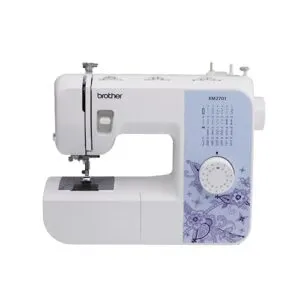
If the CS7000X feels like a lot of machine, the Brother XM2701 takes things back to basics — without dropping the features that actually matter.
At 12.6 pounds, it’s light enough to carry between rooms or tuck into a closet without a second thought. The automatic needle threader still does its job cleanly, cutting out the squinting and fumbling that slows down your setup.
You get 27 built-in stitches, covering hemming, zigzag, stretch, and decorative work for everyday projects. There’s no LCD screen here — stitch selection stays mechanical and simple, which honestly suits beginners just fine.
The frame leans on plastic construction, so don’t push it through heavy denim or stacked canvas layers. For light to medium fabrics, though, it processes sessions smoothly at up to 800 stitches per minute.
| Best For | Beginners and casual sewers who want a reliable, easy-to-use machine for everyday light to medium fabric projects. |
|---|---|
| Needle Threader | Automatic |
| Machine Weight | 12.6 lbs |
| Built-in Stitches | 27 stitches |
| Frame Construction | Plastic |
| Target Skill Level | Beginner |
| Fabric Capacity | Light to Medium |
| Additional Features |
|
- At 12.6 pounds, it’s genuinely easy to move around, store, or take to a class without any hassle.
- The automatic needle threader and drop-in bobbin make setup quick — great when you just want to sit down and sew.
- 27 built-in stitches cover most everyday needs, from basic hems to decorative work, without overwhelming you with options.
- The lightweight build can slide around on your table when you pick up speed, which gets annoying fast.
- Heavy fabrics like thick denim or leather are a no-go — push it too hard and you’ll run into trouble.
- It’s only built for U.S. outlets at 120V, so if you’re outside the States, you’re on your own for warranty support.
3. Singer Simple Sewing Machine
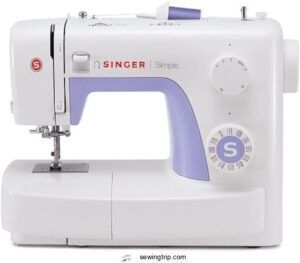
The XM2701 keeps things simple, but if you want more stitch options at a similar price, the Singer Simple 3232 is worth a close look.
It packs 110 stitch applications into a 12.6-pound machine with a solid metal frame — not the plastic build you’d expect at this price point. The automatic needle threader manages setup fast, and the one-step buttonhole makes garment work feel far less fiddly.
Stitch control stays mechanical, with no LCD screen to figure out. That’s actually a plus if you want to sit down and sew without a learning curve.
Stick to light and medium fabrics here. Canvas and leather will push it past its comfort zone.
One thing to watch: clean the threader regularly. Lint buildup inside the hook mechanism is the most common reason it stops catching thread reliably within a few months of regular use.
| Best For | Beginners and casual sewers who want more stitch variety and a sturdy build without jumping to a computerized machine. |
|---|---|
| Needle Threader | Automatic |
| Machine Weight | 12.6 lbs |
| Built-in Stitches | 110 applications |
| Frame Construction | Metal |
| Target Skill Level | Beginner |
| Fabric Capacity | Light to Medium |
| Additional Features |
|
- 110 stitch applications in a solid metal frame — more versatility than you’d expect at this price
- Automatic needle threader and one-step buttonhole make setup and garment work quick and easy
- Lightweight at 12.6 lb, so it’s easy to move around or take with you
- Not built for heavy fabrics like canvas or leather — stick to light and medium materials
- The automatic needle threader needs regular cleaning or lint buildup will cause it to fail
- Decorative stitch options are limited compared to higher-end machines, and some users report occasional belt alignment issues
4. Singer Heavy Duty Sewing Machine
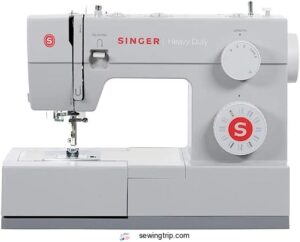
If the Singer Simple felt a little underpowered for your projects, the Singer Heavy Duty 4423 is the step up worth considering.
With its all-metal frame and stronger motor, it handles thicker fabrics with ease, though if you’re weighing other heavy-duty options, this in-depth Juki DX7 comparison review is worth a look too.
It runs at 1,100 stitches per minute — nearly double what most entry-level machines can manage. The 14.6-pound metal frame stays planted during high-speed runs, and the automatic needle threader means you’re not squinting before you’ve even started.
You get 97 stitch applications and a top-drop bobbin system that keeps thread tension consistent. One-step buttonhole makes garment work straightforward, and the adjustable presser foot pressure manages everything from lightweight cotton to stiff canvas.
A few things to watch: the LED light runs dim for detail work, and the foot pedal is sensitive until you get used to it.
| Best For | Sewers who regularly work with heavy fabrics like denim or leather and want a reliable machine that can keep up without slowing down. |
|---|---|
| Needle Threader | Automatic |
| Machine Weight | 14.6 lbs |
| Built-in Stitches | 97 applications |
| Frame Construction | Metal & Steel |
| Target Skill Level | Beginner to Intermediate |
| Fabric Capacity | Light to Heavy |
| Additional Features |
|
- Screams through fabric at 1,100 stitches per minute — a big jump from entry-level machines
- Sturdy metal frame keeps things stable, even at full speed
- Adjustable presser foot pressure handles everything from sheer fabric to stiff canvas
- The foot pedal is touchy and takes some practice before you feel in control
- LED lighting is dim, which makes detail work harder than it should be
- The instruction manual is thin — expect to supplement it with YouTube tutorials
Why Choose an Auto Threader Machine
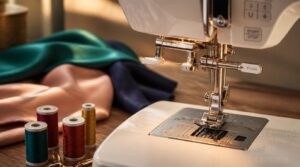
An automatic threader does more than save you a few seconds — it changes how the whole sewing experience feels. Whether you’re new to the machine or just tired of squinting at a tiny needle eye, the benefits add up fast. Here’s why so many sewers won’t go back to threading by hand.
Faster Project Setup
Every minute you spend fumbling with a needle is a minute stolen from actually creating. That’s where automatic needle threading technology changes the game.
Every minute spent fumbling with a needle is a minute stolen from actually creating
- Auto threader cuts setup time by 2–3 minutes per project
- Color-coded threading paths reduce misthreading by 40 percent
- Drop-in bobbin placement speeds up bobbin swaps by 50 percent
- Quick-start preset menus let you stitch immediately after powering on
Less Eye Strain
Squinting at a tiny needle eye isn’t just annoying — it’s exhausting.
Automatic needle threading technology removes that close-up strain entirely, letting your eyes relax between stitches.
Studies show manual threading can consume up to 15 minutes per project, and repeated squinting builds visual fatigue fast.
For anyone managing needle threading frustration, this single feature makes every sewing session noticeably more comfortable.
Beginner-Friendly Threading
When you’re just starting out, threading a needle can feel like the hardest part of the whole project.
Automatic threading mechanism fixes that instantly. Here’s what it does for you as a beginner:
- One-touch convenience loads the thread in seconds
- Thread path guidance on the LCD prevents misthreading
- Cuts setup time savings by roughly 50 percent
- Built-in guides support beginner error prevention
- Simplifies ease of thread change between colors
Senior Sewing Accessibility
Sewing shouldn’t become a struggle as your hands and eyes age. Today’s best machines are built with seniors in mind. High-contrast displays make stitch options readable at a glance. Ergonomic button spacing prevents accidental presses, and the automatic needle threader manages what used to demand sharp eyesight and steady fingers.
kangaroo pockets facilitate access
| Feature | Benefit for Seniors |
|---|---|
| Adjustable pedal sensitivity | Matches individual strength and stability |
| Audible feedback cues | Confirms threading without visual checking |
| Dexterity-friendly controls | Reduces hand fatigue during long sessions |
Accessibility for vision-impaired users improves further with adjustable work lamps that brighten fabric without glare.
Fewer Threading Delays
Nothing kills momentum faster than a stuck thread. An automatic threader keeps seam starts quick, cutting setup time by 60 to 90 seconds per project.
That adds up fast across multi-step quilts or batch sewing. Threading mechanism reliability means fewer interruptions and steadier creative flow.
Pair it with an automatic thread cutter, and frustration drops while sewing efficiency climbs.
Key Features to Compare Before Buying
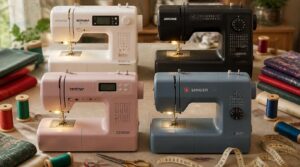
An auto threader is a great start, but it’s not the only thing that matters. The right machine balances a few key features that affect your everyday sewing experience. Here’s what to check before you buy.
Stitch Variety
More stitches don’t always mean more value. What matters is real stitch variety, not just a big stitch library size. Look for:
- Essential utility stitches for repairs
- Decorative embroidery motifs for flair
- Quilting texture patterns for layers
- Garment finishing techniques for hems
Specialty stitch applications add versatility of stitch options beyond the basics. Built-in decorative stitches make every project shine.
One-Step Buttonholes
Buttonholes are where stitch variety really earns its keep.
A one-step automatic buttonhole sews the whole opening in one pass, sized right for your button, with even stitch density and a reinforced end to prevent fraying. It even accommodates fabric compatibility, adjusting for denim or delicate linings. Precision placement comes built-in, so every buttonhole lines up cleanly, every single time.
LCD Stitch Selection
Once you’ve nailed your buttonhole sizing, choosing your next stitch becomes just as straightforward. The LCD stitch display shows each pattern as a small icon alongside numeric width and length values, so you can identify stitches at a glance. Navigate between stitch modes — utility, decorative, stretch — without guessing.
Here’s what the LCD puts at your fingertips:
- Visual stitch previews update instantly as you scroll, showing exactly how each pattern will look before you sew a single stitch
- Width and length adjustments display as numeric values that change the on-screen preview in real time, giving you precise control
- LCD error indicators flash when an invalid combination is selected, keeping you from costly mistakes mid-project
Drop-in Bobbin System
Once the LCD locks in your stitch, the next thing that can slow you down is the bobbin. A drop-in bobbin system fixes that fast.
You drop the bobbin straight into its compartment, follow the thread path arrow, and you’re done.
Transparent cover benefits include seeing your thread level at a glance — no guessing, no stopping mid-seam.
Free-Arm Sewing
Now that your bobbin’s sorted, there’s one more feature worth checking before you buy: free-arm sewing.
The free arm removes the flatbed extension, leaving a narrow cylinder your fabric wraps around. That makes sewing sleeves, cuffs, and pant hems far easier — no bunching, no wrestling with excess fabric. You just guide the tube straight around the arm and stitch.
Build Quality, Fabric Handling, and Portability
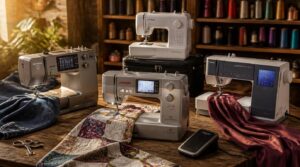
A sewing machine’s frame, weight, and fabric range shape how far your projects can go. Whether you’re quilting, hemming jeans, or moving your machine between rooms, these details matter more than most buyers expect. Here’s what to look at across five key areas.
Metal Vs Plastic Frame
The frame inside your sewing machine does more than hold parts together — it shapes how well the machine withstands stress over time.
Metal internal components absorb vibration better, keeping stitches consistent at higher speeds. A plastic construction may wobble when pushing through denim or canvas.
For machine longevity and structural rigidity, a metal frame is simply the smarter long-term investment.
Machine Weight
Weight is one of those specs that’s easy to overlook — until you’re carrying your machine to a class or setting it up on a wobbly folding table.
Lightweight portable sewing machines commonly fall under 5 kg, making them easy to transport. Midweight models range from 6 to 9 kg, balancing portability vs stability nicely for most home sewers.
Denim and Canvas Handling
Denim and canvas will test any machine quickly. Denim uses a twill weave that flexes, while canvas has a plain weave that stays rigid — both demand a stable metal frame and the right setup.
Pre-wash both fabrics first to reduce shrinkage and stiffness.
Then reach for a 90/14 to 110/18 needle and set a longer stitch length to avoid perforating thick seams.
Quilting Table Support
A quilt can feel like it has a mind of its own — pulling, shifting, and testing your setup at every seam. That’s why quilting table support matters as much as the machine itself.
Look for these features before you commit:
- Stable support feet with non-slip grip to prevent sliding
- Weight-bearing rails underneath to handle bulky quilt loads
- Ergonomic table height between 28 and 34 inches
- Expandable workspace options like foldable extension leaves
Quiet Sewing Performance
Noise is the hidden thief of a good sewing session.
Machines built with brushless motor technology cut mechanical noise by up to 40 percent, so your creative flow stays uninterrupted.
Add vibration dampening tech like rubberized feet and acoustic chassis panels, and your table stops rattling entirely.
For quiet home sewing, electronic speed control keeps starts smooth and nearly silent.
Auto Threader Maintenance and Troubleshooting
Even the best auto threader won’t last long without a little basic care. A few simple habits keep it working smoothly and save you from mid-project frustration. Here’s what you need to know to maintain yours and fix common issues fast.
Cleaning Threader Hooks
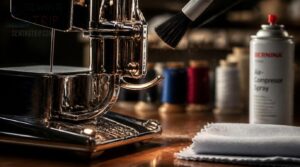
Think of your automatic needle threader mechanism as a tiny, precise instrument — even a little lint can throw it off.
- Brush out debris with a soft nylon brush after every session
- Use compressed air for hard-to-reach hook areas
- Clean every 40–60 sewing hours, or after heavy fabric work
- Wipe with a lint-free cloth after any solvent application
- Only lubricate the hook if your manual explicitly allows it
Needle Size Compatibility
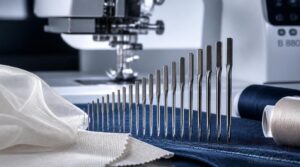
Once the hook is clean, the right needle keeps your needle threader working smoothly. Your automatic needle threader mechanism needs standard flat-shank needles — commonly system 130/705 H.
Fabric weight matching and thread type pairing both drive your needle gauge selection.
| Fabric Type | Needle Size | Thread Type |
|---|---|---|
| Silk / satin | 60/8–70/10 | Nylon monofilament |
| Woven cotton | 80/12–90/14 | Polyester or cotton |
| Denim / canvas | 90/14–110/18 | Heavy topstitching |
Always confirm needle system verification before swapping needles. Shank style compatibility directly protects your needle insertion tool and automatic threader.
Common Threading Problems
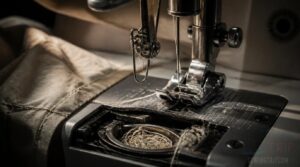
Even with the right needle in place, threading problems can still sneak up on you. Cross threading happens when thread enters at an angle, causing the automatic needle threader to miss the eye entirely. Don’t force it — forcing bends the tiny hook. Back off, realign the thread, and try again gently.
Thread tension is another quiet troublemaker. Uneven tension causes skipped stitches or snapping near the needle, especially on delicate fabrics. Drop both needle and bobbin tension slightly and test on a scrap first.
Check your bobbin path too. Lint buildup or a misinserted bobbin creates jams that ripple upward, disrupting the whole thread feed. Worn thread guides add friction, fraying your thread before it ever reaches the needle.
Replacement Threader Parts
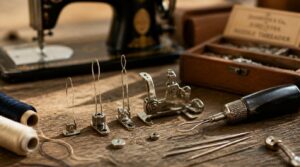
When a threader hook bends or breaks, you don’t need a whole new machine. Many brands sell replacement threader parts separately — hooks, levers, and guides are usually available through the manufacturer or third‑party suppliers.
The Dritz 253 Machine Needle Inserter Threader is a reliable handheld backup when your built‑in automatic needle threader needs repair downtime.
Warranty and Support
Once your replacement parts are sorted, it’s worth knowing what backup your machine already comes with. Sewing machine warranty terms vary — most cover 1 to 3 years for parts and labor, though Janome’s 25-year limited warranty stands out.
- Confirm warranty coverage before buying
- Register your machine promptly
- Keep your claim documentation handy
- Note that needles and bobbins are consumable exclusions
Frequently Asked Questions (FAQs)
Is an automatic needle threader worth it?
Yes, it’s worth it. An automatic needle threader cuts setup time, eases vision fatigue, and flattens learning curves for beginners. It keeps your sewing workflow smooth, boosting project efficiency and everyday sewing convenience without fumbling over tiny needle eyes.
What are the three factors to consider when choosing a sewing machine?
Picking the right machine could honestly make or break your sewing hobby. Three things matter most: your budget constraints, your skill level, and your project goals. Match these to sewing machine features and durability for a smart, beginner-friendly choice.
How do I know which embroidery machine to buy?
Match your embroidery design library and digitizing skill level to your goals, check fabric hoop sizes, stitch density requirements, and thread tension settings, confirm the automatic needle threader and computerized sewing features fit your workflow.
Can auto threaders handle thick or specialty threads?
Thick threads test the eye of the needle.
Your automatic needle threader manages standard thread fine, but specialty threads—metallic fraying, embroidery floss limitations, monofilament tangling—cause bulk thread jams; check needle eye sizing and thread tension control.
Do auto threaders work with twin needles?
Twin needle compatibility varies—most automatic threaders guide one eye at a time, so eye alignment and needle size limitations often force manual threading. Test stitches carefully first to manage thread tangles before sewing your project.
How long does an auto threader typically last?
Most automatic needle threaders last 3 to 5 years with regular maintenance, though daily heavy use and component wear cut that to 1 to 3 years. Warranty length and upkeep boost durability, cutting replacement costs.
Are replacement auto threader parts expensive?
Not necessarily. Small parts like hooks cost $5–$15, while complete assemblies run $60–$ Aftermarket options drop prices considerably, though labor often costs more than the parts themselves.
Can you bypass auto threader for manual threading?
Yes — and it’s easier than you’d think. Most machines let you skip the auto threader entirely. Just raise the needle, follow the manual threading path, and guide the thread through the eye by hand.
Should sewing machine threaders be oiled or lubricated?
Most sewing machine threaders don’t need oiling. In fact, applying oil to the thread path attracts lint and causes stitch issues. Clean with a dry brush instead, and only lubricate a stiff pivot point if your manual allows it.
How should sewing machines be stored to prevent corrosion?
Think of rust as a silent thief. Store your machine in a cool, dry space, cover it with breathable cotton, and tuck in silica gel packets — replacing them every three to six months keeps metal internal components corrosion-free.
Conclusion
Imagine this: you sit down with a project that’s been waiting on the chair all week, thread your needle in under five seconds, and actually finish well before dinner. That’s not coincidence—it’s exactly what choosing a machine with auto threader quietly delivers every single time.
Less setup builds real momentum. Real momentum turns half-finished hems into done projects.
Needle’s already threaded. The only question left is fabric goes under the foot first.
- https://academichelpexpress.blog/2024/08/please-use-the-bulleted-points-and-the-rubric-below-to-guide-your-work-your-pa/
- https://x.com/godofprompt/status/1990526288063324577
- https://www.onelook.com/?loc=olthes1&w=subpoint
- https://www.sciencedirect.com/science/article/pii/S0749208123000268
- https://www.scribd.com/document/356795007/Research-Methods-Knowledge-Base