This site is supported by our readers. We may earn a commission, at no cost to you, if you purchase through links.
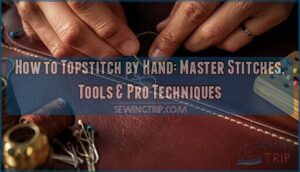
Machine topstitching looks immaculate until you’re working with delicate silks, thick leather, or any fabric that fights back against your machine’s feed dogs.
Hand topstitching gives you absolute control—you dictate every stitch’s length, tension, and placement without wrestling with presser feet or bulky seams.
This technique separates rushed home sewers from craftspeople who understand that some garments demand the precision only your fingertips can deliver.
Master the right needles, thread choices, and basic stitches, and you’ll discover decorative possibilities no sewing machine can replicate.
Your hands become the tools, transforming raw fabric edges into crisp, professional seams that withstand scrutiny at any distance.
Table Of Contents
Key Takeaways
- Hand topstitching gives you absolute control over stitch length, tension, and placement on difficult fabrics like silk and leather, where machines struggle with feed dog limitations.
- Professional results depend on matching your needle type and size (7-9 for most projects) to your fabric weight, using waxed thread for a smooth glide, and maintaining consistent 3.0-3.5mm stitch spacing.
- Master four essential stitches—running stitch for visible lines, backstitch for strength, half loop for decorative borders, and blanket stitch for edge finishing—to handle any topstitching challenge without a machine.
- Practice tension control and secure your work with 2-3 backstitches at start and finish points, keeping working thread under 18 inches to prevent tangles and always testing techniques on fabric scraps first.
Essential Tools for Hand Topstitching
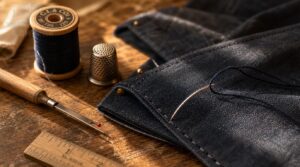
You can’t topstitch cleanly by hand without the right tools in your kit. The needle, thread, and a few smart extras make the difference between struggling through every stitch and working with control and confidence.
If you’re shopping for a machine instead, focus on features that give you precision and ease like adjustable stitch length and presser foot pressure.
Here’s what you need to set yourself up for success.
Choosing The Right Hand Sewing Needles
You’ll master hand stitching when you match your needle to the job. For woven fabrics and general topstitching, grab sharps needles—they’re your reliable workhorse.
Working on heavier material? Chenille needles cut through thick layers without protest. Milliners needles excel at long, visible topstitch lines, while betweens deliver precise, tight stitches.
Needle sizing matters too: choose 7-9 for most projects, ensuring thread compatibility and smooth hand sewing techniques. For a deeper dive into the different hand sewing needle types, check out this thorough guide.
Selecting Strong and Smooth Thread
Your needle deserves thread that won’t quit mid-seam. Look for high tensile strength in polyester or cotton-polyester blends—they hold through washing and wear. Thread lubrication matters: smooth, waxed surfaces glide through fabric without knotting.
Fiber types and thread sizing guide your choices:
- Core-spun threads balance strength with softness
- Filament threads deliver clean, consistent topstitch lines
- Finer weights prevent puckering on delicate weaves
Strong thread transforms hand sewing techniques from fragile to bulletproof. Understanding thread classification and construction will also help you make the best choices for your projects.
Using Beeswax or Thread Conditioner
Strong thread deserves a smoother glide. Beeswax or synthetic conditioner types coat your thread, reducing friction and preventing tangles during hand stitching.
Draw the thread across the wax block two or three times for even thread coating. This simple wax application transforms your hand sewing technique—stitches sit straighter, stitch smoothing improves, and hand stitching techniques flow faster with less drag through fabric.
Marking and Measuring Tools for Precision
Now you’re ready to lay down invisible guidelines with precision rulers and tailors chalk.
A flexible measuring tape wraps around curves, while marking gauges and scribing tools deliver crisp reference lines for your hand sewing technique.
Caliper readings help you gauge even spacing between needle and thread passes, turning your sewing guide into a roadmap for impeccable topstitch alignment.
Keeping Fabric Taut With Hoops or Pins
Before you pierce fabric with your handsewing needle, lock down every inch with a hoop or straight pin at the fabric edge—drum-tight tautness control prevents puckering and keeps your hand gathering technique impeccable.
- Hoop tension should feel firm when tapped, no fabric stretch or sag allowed
- Pin placement every two inches anchors seams and stops shifting mid-stitch
- Stitch stability depends on even pull across the entire working surface
- Rehoop after breaks to restore tautness and maintain crisp, professional lines
Step-by-Step Guide to Hand Topstitching
Hand topstitching isn’t something you wing—it’s a process that starts before you ever push the needle through.
You’ll prep your materials, lock in your stitches, keep your lines straight, and finish clean. Here’s how to do it right, step by step.
Preparing Fabric and Thread
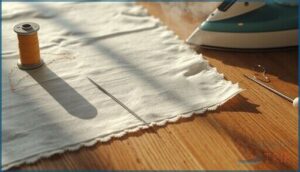
Before you thread your handsewing needle, prepare your fabric with care. Straighten the fabric edge and check grain alignment to prevent distortion.
Pre-wash if needed, then press edges flat. Serge or zigzag raw edges for edge finishing. Cut strong thread twice your stitching length, run it through beeswax, and you’re ready for tension control and fabric preparation mastery.
Starting and Securing Your Stitch
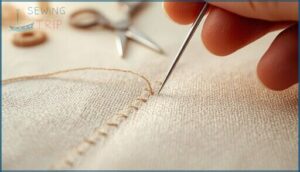
Precision starts at the beginning. Position your needle 1/4 inch from the fabric edge, pierce cleanly, then execute 3 to 4 backstitches before resuming forward.
This backstitch reinforcement locks your thread without bulky knots, giving you total control over stitch tension and thread management. Keep your tail 2 to 3 inches long, trim close after securing stitches, and you’ve mastered knot techniques for handstitching that won’t unravel.
Creating Even, Straight Topstitch Lines
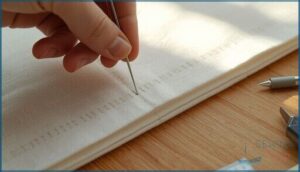
Stitch alignment doesn’t happen by accident—you build it with every pass. Mark your stitch line 1/8 inch from the edge using chalk or a straight pin, then hold the fabric taut to prevent shifting.
Maintain 3.0 to 3.5 millimeter stitch length and steady thread tension as you guide the needle. This stitch control transforms hand stitching into crisp, consistent topstitch patterns that rival machine work.
Finishing and Securing The Final Stitch
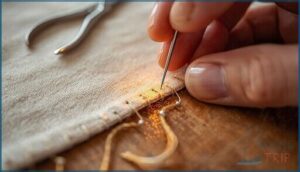
Your final anchor determines whether topstitches hold or unravel under stress. Lock your work with 2 to 3 backstitches directly over the last stitch, keeping them 2 to 3 millimeters short to avoid bulk.
Five Stitch Reinforcement steps guarantee lasting edge finishing:
- Execute tight backstitches for securing stitches and tying knots in hand sewing
- Bury thread tails using proper thread management techniques
- Apply finishing techniques suited to your fabric weight
- Maintain stitch control through consistent loop formation
- Press seams to set hand sewing stitches permanently
Mastering Common Hand Topstitch Stitches
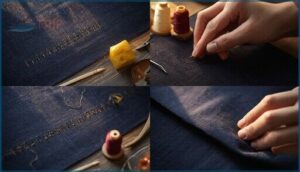
You don’t need a sewing machine to create clean, professional topstitching.
A few essential hand stitches give you complete control over strength, spacing, and decorative detail.
Let’s break down the four stitches that’ll transform your handwork from basic to polished.
Running Stitch for Visible Topstitching
Want to make your topstitch by hand stand out? The running stitch creates bold, visible lines perfect for decorative stitching and design impact.
Space each stitch 1/16 to 1/8 inch apart for length consistency that reads as intentional. Pair this hand sewing technique with flat edges on any fabric type. Keep your line straight, your tension even, and watch stitch visibility transform ordinary seams into statement details.
Backstitch for Strength and Precision
When durability matters, backstitch technique is your go-to hand sewing technique. Each stitch overlaps the previous one, interlocking threads that resist unraveling under stress.
Thread selection matters—pair heavier fabrics with waxed polyester for maximum stitch consistency. Control stitch tension by keeping it snug but not tight, preventing puckering while maintaining precision control.
Start with a secure knot, work backward through each hole, and you’ll create hand stitches that rival machine strength.
Half Loop Topstitch for Decorative Borders
Beyond strength, decorative border work transforms garments with personality. Half loop top stitch creates looped stitches that form delicate embroidery and decorative stitches along edges.
Master these topstitch patterns:
- Anchor with a small backstitch at your border design starting point
- Guide thread through shallow arcs for consistent loop formation
- Keep loops uniform height with steady stitch variations
- Match fabric selection to thread weight for clean definition
These hand stitches add vintage charm to hems and cuffs.
Blanket Stitch for Edges and Embellishments
Where loops need more presence, blanket stitch delivers. This hand sewing technique locks fabric edges with evenly spaced loops—perfect for edge finishing on felt and wool.
Thread your embroidery needle, anchor at the corner, then create consistent stitch variations along the border. Corner handling requires a pivot stitch to maintain clean decorative borders.
These fabric embellishments add polished detail to appliqués and hems through precise embroidery and decorative stitches.
Achieving Professional Results by Hand
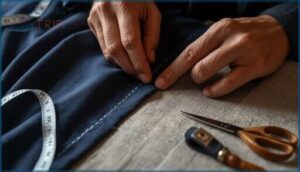
You’ve learned the stitches, now it’s time to make them look professional.
The difference between amateur and expert hand topstitching comes down to consistency, control, and knowing how to fix what goes wrong. Master these four techniques and your hand-stitched seams will rival anything a machine can produce.
Professional hand topstitching demands consistency, tension control, and troubleshooting skills that turn amateur seams into machine-quality work
Maintaining Consistent Stitch Length
Hand stitch rhythm and stitch measurement are make-or-break for crisp hand sewing stitches. You’ll master stitch length control faster than you’d think, and thread conditioning with beeswax keeps drag smooth while sewing by hand.
Here’s how to nail consistent hand sewing techniques:
- Mark 0.2 to 0.5 mm guides on fabric tension lines with chalk for visible tracking
- Practice steady finger rhythm with scrap weaves before tackling your project
- Check actual stitch length every few passes using a measuring gauge
Controlling Tension for Smooth Lines
Precision transforms when you master tension control and fabric grip while sewing by hand. Use a fingertip grip on the needle shaft, relax your wrist, and let fabric advance naturally with gentle hand guidance. Check thread tension by lightly tugging both ends after each stitch.
| Tension Element | Control Method | Result |
|---|---|---|
| Needle pressure | Fingertip grip, gentle hold | Steadier hand stitches |
| Wrist position | Relaxed, fluid motion | Smooth line progression |
| Fabric feed | Nontensioned, natural advance | Even stitch length |
| Thread pull | Light tug, equalize bite | Balanced sewing control |
| Fabric surface | Tauting finger test | Proper hand sewing techniques |
Matching Thread and Fabric for Best Results
Thread color matching starts with choosing a shade one step darker than your fabric—it disappears into seams and folds. Pair cotton thread with cotton fabrics, silk thread with silk or polyester, and synthetic blends with polyester for fiber compatibility.
Weight matching matters: light fabrics need 50-weight thread, medium fabrics use 40 to 50, heavy fabrics demand 40 or thicker. Test finish selection on scraps first.
Troubleshooting Uneven or Loose Stitches
Frustration sets in when your topstitches look sloppy, but stitch tension usually holds the answer. Rethread from scratch, check for needle damage, and match stitch length to fabric weight—longer stitches prevent crowding.
Thread breakage signals weak thread or fabric stretch pulling too hard. Test on scraps while troubleshooting sewing issues, adjusting your hand sewing techniques until every stitch by hand lands clean and even.
Top 5 Products for Hand Topstitching
You can’t topstitch like a pro without the right tools in your kit. The difference between a clean, durable line and a frustrating mess often comes down to quality thread, sharp needles, and a few smart accessories.
Here are five essential products that’ll advance your hand topstitching from beginner to confident.
1. Gutermann Cotton Thread Set
You need thread that won’t let you down mid-seam, and Gutermann’s cotton set delivers exactly that. With 26 spools of mercerized 100% cotton in assorted colors, you get rich hues that stay vibrant through washing and handling.
The 50-weight thread glides smoothly through fabric, perfect for visible topstitching on cotton and linen. Each 250-meter spool gives you plenty of length for extended projects. The portable plastic box keeps your threads organized, whether you’re stitching at home or on the go.
| Best For | Sewers who want reliable, high-quality cotton thread in a variety of colors for topstitching, quilting, and general garment construction. |
|---|---|
| Material | Cotton and plastic |
| Brand | Gutermann |
| Weight | 11.2 ounces |
| Primary Use | Sewing and quilting |
| Country of Origin | Germany |
| Quantity | 26 spools |
| Additional Features |
|
- 26 spools of mercerized cotton thread that stays vibrant through washing
- Smooth 50-weight thread works beautifully on cotton and linen fabrics
- Comes with a portable storage box to keep everything organized
- Higher price point compared to synthetic thread options
- Smaller 250-meter spools mean you’ll run out faster on big projects
- Some customers have reported receiving polyester instead of cotton
2. Clover Fine Quilting Pins
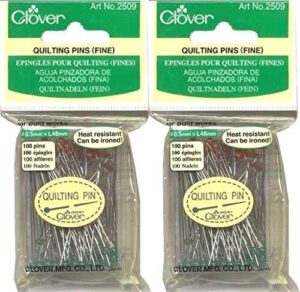
When you’re pinning delicate fabric before topstitching, you need pins that won’t leave marks or melt under your iron. Clover Fine Quilting Pins feature heat-resistant glass heads and slim 0.5mm shafts that glide through cloth without snagging.
At 1-7/8 inches long, they reach through multiple layers while staying sharp through countless uses. You get 200 pins across two boxes in red, green, and silver. The fine gauge means minimal distortion, and you can press right over them without worry.
| Best For | Quilters and sewers working with delicate fabrics who need heat-resistant pins that won’t leave marks or melt during pressing. |
|---|---|
| Material | Glass |
| Brand | CLOVER |
| Weight | 1.44 ounces |
| Primary Use | Quilting and sewing |
| Country of Origin | N/A |
| Quantity | 200 pins |
| Additional Features |
|
- Heat-resistant glass heads let you iron right over them without melting
- Ultra-fine 0.5mm thickness glides through delicate fabrics without snagging or leaving holes
- Stay sharp through heavy use and come in a generous 200-pin pack
- Cost more than standard sewing pins
- 1-7/8 inch length may be too long for some projects or personal preferences
- Glass heads can break if accidentally hit by a sewing machine needle
3. Beeswax Thread Wax and Conditioner for Sewing
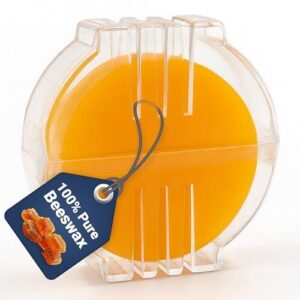
Knots and snags slow you down when you’re stitching visible topstitching seams. Kraftex Beeswax Thread Wax conditions your thread with a silk-like glide, cutting friction so you can pull through tight weaves without fraying or tangling.
Run your thread along the paraffin surface, then smooth it between your fingers to spread the coating thin. The wax strengthens fibers, adds subtle shine, and gives you control for precise lines. At 0.634 ounces, the tin fits in your sewing kit and lasts through dozens of projects.
| Best For | Hand sewers and embroiderers who want smoother stitching with less friction and fewer tangles on visible seams. |
|---|---|
| Material | Paraffin |
| Brand | Kraftex |
| Weight | 0.634 ounces |
| Primary Use | Hand sewing and embroidery |
| Country of Origin | N/A |
| Quantity | 1 block |
| Additional Features |
|
- Conditions thread for a silk-like glide that cuts through tight weaves without fraying
- Adds subtle shine and strengthens fibers for cleaner, more controlled topstitching
- Compact 0.634-ounce tin fits easily in any sewing kit and lasts through many projects
- Wax doesn’t always stick well to thread, especially on longer lengths
- Can be wasteful if you apply too much or don’t smooth it properly
- May not be strong enough if you prefer a heavier coating or synthetic options
4. Ghi Magic Thread Conditioner
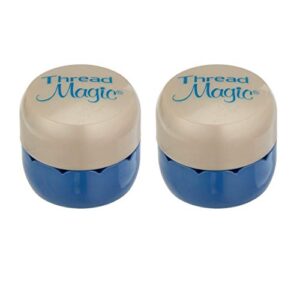
Ghi Magic Thread Conditioner keeps your thread from snagging on dense fabric or tight weaves. Pull your length through the polyester-blend compound once, and you’ll feel instant smoothness that outlasts plain wax.
The blue-ivory formula prevents knotting in metallic or delicate threads, so you stitch longer without stopping to untangle. Each two-pack holds twenty-five yards of coating, and the compact size slips into any pouch.
It’s hypoallergenic, leaves no residue on finished seams, and works with cotton, silk, and polyester without melting or discoloring fabric.
| Best For | Hand sewers and embroiderers who work with metallic, delicate, or slippery threads that tend to tangle during detailed projects. |
|---|---|
| Material | Polyester Blend |
| Brand | ghi |
| Weight | N/A |
| Primary Use | Hand or machine sewing |
| Country of Origin | N/A |
| Quantity | 2-pack (25 yards each) |
| Additional Features |
|
- Prevents knotting and tangling in difficult threads like metallic and nylon without leaving residue on finished work
- Works across multiple fabric types (cotton, silk, polyester) and won’t discolor or melt material
- Compact two-pack design offers 25 yards per item and fits easily in sewing kits or project bags
- Limited to 25 yards per item, which may require frequent replacement for heavy users
- Some sewers report it works “pretty good” rather than being exceptional compared to alternatives
- May not perform equally well across all thread types or specialty fabrics
5. Clover Gold Eye Milliners Needles
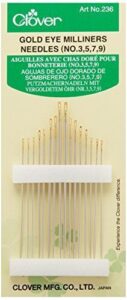
Clover Gold Eye Milliners Needles in sizes 3, 5, 7, and 9 give you the reach and control that shorter needles can’t match. The long, slender shaft glides through layered fabric without dragging, and the smooth gold eye lets you thread silk or polyester in seconds—no threader needed.
You’ll work faster on pleating, ribbon embroidery, and French knots because the sharp point pierces dense weaves cleanly. Sixteen needles per card means you won’t run out mid-project, and the tempered alloy steel holds up through thick topstitching without bending.
| Best For | Sewists and quilters who need long, sharp needles for pleating, ribbon embroidery, French knots, and working through multiple fabric layers with precision. |
|---|---|
| Material | Alloy Steel |
| Brand | Clover |
| Weight | 0.16 ounces |
| Primary Use | Quilting and embroidery |
| Country of Origin | United States |
| Quantity | 16 needles |
| Additional Features |
|
- Long shaft and sharp point glide through dense or layered fabrics without snagging or bending
- Smooth gold eye threads easily with silk, polyester, and fine threads—no threader required
- Sixteen needles per card in four sizes (3, 5, 7, 9) give you plenty of backups for different projects
- Some users report the eye size runs smaller than expected, making threading harder with thicker threads
- May still need a needle threader if you’re working with certain fibers or have vision challenges
- Long length takes getting used to if you’re accustomed to shorter hand-sewing needles
Tips and Tricks for Beginners
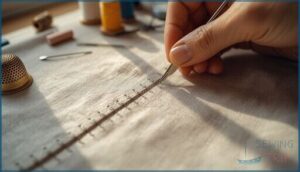
You don’t need years of experience to create clean, professional topstitching by hand. A few practical habits and awareness of common pitfalls will save you time, frustration, and wasted fabric.
Here’s what every beginner should know before threading that first needle.
Practicing on Fabric Scraps
Scrap fabric selection is your practice ground—where mistakes cost nothing and skills sharpen fast. Choose pieces at least 2 inches wide, contrasting thread color choices to reveal every stitch, and iron them flat before you begin. This builds muscle memory in hand sewing techniques without wasting good material.
- Test stitch tension control on smooth woven scraps to see puckering immediately
- Practice fabric grain management by aligning threads before pinning or clamping
- Use dark scraps to evaluate spacing in hand sewing stitches clearly
- Log your scrap sizing techniques and needle choices to track real progress
How to Tie Secure Knots
Once your hand stitches look clean on scraps, you’ll need knots that don’t slip mid-seam. Start with a double overhand knot—wrap thread twice around your finger, slide it off, then pull tight for friction management. For extra knot security, pass the needle back through the knot base before trimming, locking tension control so rope materials or delicate thread won’t unravel under load testing during wear.
| Knot Type | Best Use | Security Level |
|---|---|---|
| Double Overhand | Starting hand sewing techniques | High |
| Loop-Through Anchor | Finishing seams invisibly | Very High |
| Figure Eight Stopper | Heavy fabric or stress points | Maximum |
Avoiding Thread Tangles and Breakage
Nothing derails a perfect topstitch faster than a snarl of thread or a snap mid-seam.
Thread management starts before you pierce fabric—run your strand through beeswax or thread conditioner to coat fibers and reduce friction. Keep working length under 18 inches to prevent knotting, and match thread weight to fabric density for breakage control.
If tangles form, pause, untwist gently, and reset your stitch tension before continuing.
Simple Mistakes to Watch Out For
Even seasoned stitchers skip essential steps when they’re racing to finish a seam, and those small slips show up fast in hand topstitching.
Watch for inconsistent tension that creates fabric puckering, uneven stitches from rushed spacing, and thread breakage from pulling too hard.
Mastering these sewing techniques means slowing down, checking your stitch length every few inches, and troubleshooting before problems compound into visible flaws.
Frequently Asked Questions (FAQs)
How to make a perfect top stitch?
Perfect topstitching demands rhythm—like playing piano, your hands build muscle memory.
Select size 7-9 needles, match thread weight to fabric, maintain even tension, and mark consistent guide lines to achieve professional stitch quality every time.
What are some common mistakes to avoid when hand stitching?
You’ll wreck your topstitch if you ignore needle selection, tension control, and fabric puckering.
Thread breakage and stitch unevenness happen when you skip these hand sewing techniques—troubleshooting common hand sewing mistakes starts here.
Are there any special techniques for stitching different types of fabrics?
Yes. Knits need ball point needles for fabric stretch. Silk embroidery requires fine needles.
Leather stitching uses waxed thread. Velvet handling demands slip stitches. Denim reinforcement needs thicker thread—different fabric types and stitches require adapted hand sewing techniques.
What are some tips for achieving even and consistent stitch lengths?
Control stitch length by marking a guideline with chalk, measuring each stitch with a ruler, and establishing a steady hand-stitch rhythm.
Practice on scraps maintains precision marking and fabric stability for uniform hand sewing techniques.
Can you topstitch curved seams by hand?
Absolutely—curved seams respond beautifully to hand stitch control.
Use shorter stitch lengths along the curve, clip seam allowances to reduce bulk, and guide your thread with steady fingers for smooth topstitch variations and stitch visibility.
How do you topstitch thick denim effectively?
Thick denim demands strong topstitch thread and a sharp denim needle.
Increase your stitch length to 0–0 mm, tighten thread tension control slightly, and press seams flat before you start stitching by hand.
Whats the ideal stitch spacing for topstitching?
Start with 1/4 inch spacing for medium fabrics—that’s your baseline. Lighter textiles need 1/8 inch for crisp stitch patterns, while heavy denim demands 3/16 to 1/4 inch to handle fabric weight without puckering.
Can topstitching replace machine stitching for jeans?
Hand stitching won’t outlast machines on jeans. Backstitch improves stitch durability, but denim abrasion demands machine consistency.
For decorative accents, hand sewing techniques shine—just reinforce high-wear zones with proper thread selection and topstitching techniques.
How do you fix skipped stitches mid-project?
Rethread your needle and check thread tension first. Switch to a fresh, sharp needle sized for your fabric choice, then adjust stitch length.
These troubleshooting steps prevent breakage and restore even hand sewing.
Conclusion
Machine stitching might feel faster, but it won’t give you the finesse your best work deserves. When you topstitch by hand, you’re claiming full creative authority—every thread placement answers to your fingertips, not a motor’s rhythm.
Practice these stitches on scraps until muscle memory takes over, then watch your garments transform. You’ve learned the techniques that separate acceptable craftsmanship from outstanding. Now put needle to fabric and prove what your hands can build.