This site is supported by our readers. We may earn a commission, at no cost to you, if you purchase through links.
Most people buy a mini sewing machine, use it twice, and shove it into a closet next to the breadmaker. The idea sounds great—compact, affordable, ready to handle quick repairs without dedicating half a room to a full-size machine. But the gap between the promise and the reality can be brutal.
The Varmax Mini Sewing Machine sits in that crowded space where budget meets ambition, and it’s worth knowing exactly what you’re getting before you hand over your money.
For beginners, travelers, and small-space crafters, this one has some genuine strengths—and a few honest limitations that no product listing will tell you upfront.
Table Of Contents
Key Takeaways
- The Varmax Mini shines for beginners, travelers, and quick repairs on light fabrics like cotton and polyester, but it hits a hard wall with heavy denim, thick canvas, or multi-layer projects.
- Its dual power options (AC adapter or AA batteries), built-in LED, and included extension table give you more real utility out of the box than the $50 price tag suggests.
- You only get one straight stitch — no zigzag, no buttonhole — so if your projects go beyond basic seams and simple hems, this machine will frustrate you fast.
- Think of it as a capable companion tool for on-the-go fixes and beginner practice, not a replacement for a full-size machine when the work gets serious.
Varmax Mini Sewing Machine Overview
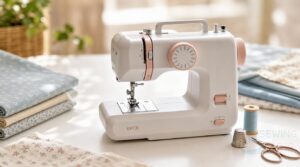
The Varmax Mini is a small, lightweight sewing machine built for people who don’t need anything fancy — just something that works.
It’s a solid pick for anyone looking to dive into small sewing machine projects without lugging around bulky equipment.
It’s aimed at beginners, travelers, and anyone short on space.
Here’s what you need to know about how it’s put together before we get into the details.
Compact Tabletop Design
The Varmax keeps things refreshingly simple with its low-profile silhouette and edge control layout that never crowds your desk. Its non-slip foot pads hold firm on smooth surfaces, and the integrated handle grip makes moving it genuinely one-handed.
Here’s what makes the compact design work:
- Stable flat-footed base
- Edge-grouped controls
- Built-in carry handle
- Dust-resistant housing
- Travel-ready cable management system
6.9 × 3.5 × 8.6-inch Footprint
That compact design translates directly into numbers you can actually picture. At 6.9 × 3.5 × 8.6 inches, this portable mini sewing machine slips into a travel bag without a fight and leaves real Desk Space Efficiency on your table.
| Dimension | Measurement |
|---|---|
| Length | 6.9 inches |
| Width | 3.5 inches |
| Height | 8.6 inches |
| Base Area | ~24 sq in |
| Shelf Storage Fit | Yes |
Height Clearance Concerns are basically nonexistent — it tucks under most shelves easily.
2.83. pound Lightweight Build
The Varmax Mini Sewing Machine weighs just 2.83 pounds, proving that size alone doesn’t define portability. Its lightweight, low-center-of-gravity design ensures stable operation on any flat surface, making it a reliable choice for diverse environments.
This compact build prioritizes ergonomic handling, significantly reducing fatigue during extended use. The thoughtful engineering minimizes strain, allowing users to sew comfortably for longer periods without compromise.
Even the battery weight remains minimal, enhancing overall travel convenience. This attention to detail transforms the machine into effortlessly portable equipment, ideal for sewing on the go.
Metal Body Construction
That lightweight feel doesn’t mean flimsy. The metal body relies on smart gauge selection—thin yet rigid panels—alongside spot weld techniques that ensure tight seams and a corrosion-resistant finish designed to withstand travel and humidity.
Heat dissipation remains controlled, while corner reinforcement absorbs everyday impacts to protect internal components.
- Resists flexing during stitching
- Corrosion-resistant finish for long-term durability
- Corner reinforcement absorbs everyday knocks
Best Use Cases for Beginners and Travelers
Who’s this machine actually built for? Think beginners learning the basics, travelers doing rapid garment repairs mid-trip, or apartment dwellers making small-space crafting work. It’s a natural fit for classroom projects, on-the-go alterations, and travel sewing kits where full setups aren’t practical.
| Use Case | Why It Works |
|---|---|
| Travel sewing | Battery power, compact sewing equipment |
| Classroom projects | Simple controls, budget-friendly price |
| Quick repairs | Fast threading, built-in cutter |
| Small apartments | Tiny footprint, easy storage |
| On-the-go alterations | Portable, lightweight build |
Key Features and Specifications
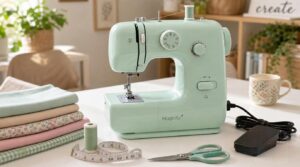
Before you decide if this machine is right for you, it helps to know exactly what you’re working with.
The Varmax Mini packs a surprising number of features into its small frame. Here’s a closer look at what it actually offers.
Double-thread Straight Stitch System
The Varmax uses a double-thread system — one needle thread on top, one looper thread below — to form a genuine lock stitch. That’s not just marketing. Needle-looper synchronization pulls both threads into the fabric for a seam that actually holds.
For hobbyist sewing and quick repairs, that’s plenty.
Keep up with thread path cleaning and use regular needle and bobbin sizes, and stitch length stays consistent.
Two-speed Control Settings
The machine offers two speed settings (low and high), with ergonomics are simple enough to prevent fumbling mid-seam.
Switching between them becomes genuinely intuitive once you understand sewing machine speed control techniques that match each setting to the task at hand.
Shifting between speeds is smooth, with no jarring jumps that could snap the thread. Beginners will want to stick to the low setting for better control.
At high speed, operations move quickly, so the indicators are clear and safety mechanisms prevent accidental rapid switching during stitching.
AC/DC Adapter and AA Battery Power
One of the standout perks of this portable sewing machine is its dual power options. Plug it into the wall using the ETL-certified AC/DC adapter, or drop in four AA batteries when you’re away from an outlet. This power source flexibility is genuinely handy for travel or classes.
These adapters usually cover a wide input voltage range; ensuring they work with most international outlets. Just make sure your adapter’s voltage compatibility and current rating match — adapter safety isn’t worth gambling on.
Built-in LED Sewing Light
Sewing in dim light is a quick way to ruin good fabric. That’s why the built-in LED on this mini sewing machine is a genuine win. It focuses directly over the needle, giving you clear color rendering without eye strain. LEDs in lightweight design machines like this also sip battery power rather than draining it.
Dust protection and longevity warranty coverage round out a budget-friendly little feature done right.
Automatic Bobbin Winding
Running out of bobbin thread mid-seam is genuinely annoying — this mini sewing machine resolves that with a built-in bobbin winder that activates automatically when powered on. The winding spindle maintains consistent bobbin tension, while overfill protection and an automatic stop prevent over-winding.
Thread traverse keeps layers even, ensuring seamless stitching. These technical features combine to deliver reliable performance.
For portable sewing and a budget-friendly accessory bundle, this machine offers a subtly useful feature for beginners, balancing practicality with affordability.
Manual Thread Tension Adjustment
Beyond bobbin winding, getting your stitches to actually look right comes down to tension — and the Varmax gives you a manual tension screw to dial that in. Here’s what to keep in mind for Thread Path Optimization and Fabric Specific Settings:
- Tension Dial Calibration — Start at the middle setting and test on scrap fabric first.
- Upper Thread Balance — Even stitches mean both threads are pulling equally; adjust incrementally.
- Troubleshooting Stitch Nests — Thread bunching underneath usually signals upper tension is too tight.
- Needle Size Matters — Match your needle to your fabric so thread flows cleanly.
- Budget-friendly Mini Sewing Machines — Don’t expect a numbered dial, but the screw works fine for basic bobbin tension needs.
Built-in Thread Cutter
Once the tension is sorted, the built-in thread cutter eliminates the need to search for scissors after each seam. Positioned on the machine body behind a safety guard, it ensures efficient cutting while protecting fingers and fabric from snags.
The cutter handles standard polyester and cotton threads effectively, but avoid forcing thick threads through it. Maintenance is minimal; however, replace the blade when cuts become uneven or ragged.
Cuff Slot for Sleeves and Trouser Hems
The cuff slot eliminates guesswork in garment alterations. It guides cylindrical fabric—like sleeves and trouser hems—through a mini sewing machine, ensuring clean hem alignment and pleat formation without bunching.
Slot placement accuracy is critical: carefully position fabric edges for a smooth finish.
The tool works best with stable wovens; fabric handling limitations become apparent with stretchy knits or heavy layers.
Included Accessories and Setup
The Varmax doesn’t just ship with the machine and a power cord — you actually get a decent starter kit right out of the box. What’s included can make a real difference in how quickly you get sewing, especially if you’re just starting out.
Here’s what comes with it and what to expect from setup.
Extension Table for Added Workspace
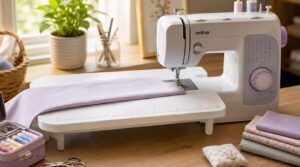
One of the best sewing machine accessories in the box is the extension table — and it genuinely earns its spot. It snaps on via a quick release mechanism, no tools needed, and instantly gives you more room to work. For limited workspace sewing, that extra surface matters.
- Fabric alignment stays true with the built-in edge ruler
- Ergonomic height matches your machine’s foot for comfortable long sessions
- Surface material benefits include smooth gliding without snagging
It folds flat for portability and storage, making this a surprisingly capable portable sewing station for a tiny workspace.
Foot Pedal and Pedal-free Operation
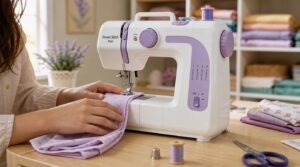
The Varmax ships with a foot pedal, but here’s what makes it genuinely handy: you don’t have to use it. The machine offers hands-free control, allowing you to guide fabric with both hands while operating at a fixed speed.
| Feature | Foot Pedal | Pedal-Free |
|---|---|---|
| Speed Control | Variable | Fixed |
| Hands Available | One | Both |
| Knee Fatigue Reduction | Minimal | Significant |
This design is perfect for sleeves, tight hems, or anyone exploring mini sewing machines on the go.
Bobbins, Needles, and Needle Threader
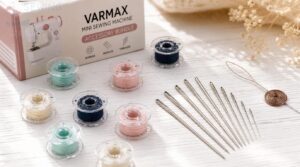
Everything you need to get started comes right in the box. The accessory bundle for beginners includes bobbins, needles, and a needle threader — essential sewing accessories for Mini Sewing Machines.
Focus on bobbin orientation tips (thread feeds counterclockwise) and bobbin tension adjustment for cleaner stitches. Needle size matching to your fabric also matters, ensuring optimal performance.
The included threader type simplifies needle and thread setup, making the process truly painless.
Beginner Instruction Guide
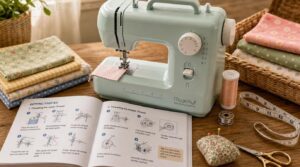
If you’ve never threaded a machine before, the included instruction guide has your back. It walks you through Threading Procedure, Safety Setup, and bobbin loading with clear step-by-step numbered actions — no guesswork needed.
Quick Start Tips help you avoid common mistakes early on, and Practice Swatches let you test before committing to real fabric.
For a budget-friendly, portable sewing kit, that’s a genuinely thoughtful touch.
Optional Expanded Accessory Bundles
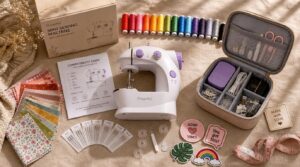
Want to stretch what this little machine can do? Expanded accessory bundles are worth a look. You’ll find Additional Needle Sets, Premium Thread Packs, and Travel Storage Cases bundled together — offering solid bundle cost savings compared to buying separately.
Most include an accessory compatibility guide, so there’s no guesswork. For budget-friendly DIY sewing projects, these accessories make your mini sewing machine genuinely more capable from day one.
Startup Video Support
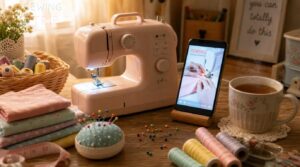
Getting started doesn’t have to mean stumbling through a manual alone. The Varmax includes a startup video that walks you through setup like a step-by-step guide from a friend — covering threading, bobbin loading, and basic operation.
Think of it as a mini video blog for your sewing hobby, making those first DIY sewing projects far less intimidating right out of the box.
Threading and Bobbin Loading Basics
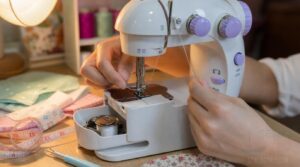
Threading this mini sewing machine correctly is what separates smooth stitches from a tangled mess. Front loading threading requires inserting the bobbin with the thread unwinding to the right, guiding it through the case slit, and clicking it firmly into place. Conversely, top loading threading operates oppositely: the thread unwinds to the left. Always verify bobbin orientation first, as this ensures proper alignment.
Proper thread tension adjustment and bobbin winding safety are critical for maintaining seamless operation. These steps prevent jams and ensure the machine runs smoothly, avoiding disruptions during use.
Sewing Performance by Fabric
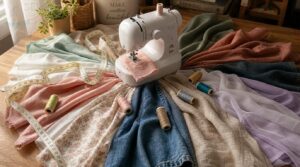
Here’s where things get real — how the Varmax actually manages fabric is what separates a useful machine from a frustrating one. Like most mini-machines, it has a sweet spot, and knowing where that line sits will save you a lot of headaches.
Here’s how it performs across the fabrics you’re most likely to reach for.
Cotton and Polyester Performance
Cotton and polyester are where this mini sewing machine genuinely earns its keep. Both fabrics run through smoothly, and you’ll notice clean, consistent stitches without much fuss.
Polyester’s natural heat tolerance and moisture-wicking properties make it forgiving at both speed settings. Cotton performs well too, just watch for shrinkage after washing.
For budget-friendly fabric compatibility, this machine delivers exactly what beginners need.
Felt, Silk, and Thin Canvas Handling
Felt, silk, and thin canvas each bring their own quirks to this little machine. Felt compression heat helps fibers bind cleanly, and the Varmax manages it without skipping. Silk sheen layering needs careful interlayer tension balancing — proceed slowly. Thin canvas priming beforehand prevents puckering. Monitor your needle penetration depth on these lighter materials.
Soft Jeans and Light Denim Use
Soft jeans sit in a sweet spot for this mini sewing machine. Light denim — usually 8 oz or less — offers enough give for clean, straight stitches without overwhelming the motor. Stretch comfort comes naturally here, as the low fabric density aids breathability benefits and easy maneuvering.
Keep these five tips in mind:
- Use a fresh needle for cleaner penetration
- Set tension manually for elastane blends
- Sew slowly for fit adjustments near seams
- Follow care tips — wash light denim cold
- Consider seasonal layering projects like hemming lighter jeans
Heavy Denim and Thick Canvas Limitations
Heavy denim is where this machine waves the white flag. Anything over 8 oz pushes the motor toward overheating, and you’ll notice stitch skipping almost immediately. Thread bunching underneath? That’s the tension struggling to keep up.
Thick canvas poses the same challenge. Needle breakage becomes a real risk, and without a walking foot option, portability versus performance stops being a tradeoff — performance just loses.
Multi-layer Fabric Challenges
Stack two or three fabric layers together, and the Varmax starts to sweat. Stitch bulk builds fast, and layer alignment becomes tricky when the feed struggles to grip evenly. Here’s what happens in practice:
- Delamination risk rises when stitching can’t penetrate all layers cleanly
- Breathability trade-offs worsen as compressed layers trap heat
- Thermal insulation imbalance causes uneven seam tension
- Limited stitch options mean no zigzag to anchor layers securely
Small Throat Space Restrictions
The throat space on this mini sewing machine is genuinely tight — and that affects more than just comfort. Limited fabric width means larger pieces won’t maneuver easily, and curved seam control becomes a real challenge.
Wrist fatigue creeps in quickly when you’re fighting for positioning. Fabric jamming is a common complaint, and throat maintenance matters more here than on full-size machines. It’s one of the honest limited fabric options trade-offs you accept with a tiny workspace.
Stitch Quality Expectations
When this mini sewing machine hits its sweet spot — lightweight cotton, polyester, felt — stitch density uniformity and needle bite consistency are genuinely solid. You get clean seam edge cleanliness and good thread break prevention on compatible fabrics.
But puckering avoidance becomes tricky on silk or thin materials. Limited stitch options and no stitch length adjustment mean you’re working within real boundaries from the start.
Varmax Mini Sewing Machine Pros
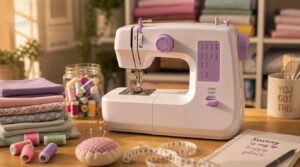
The Varmax has its fair share of limitations, but there’s a reason beginners keep reaching for it. A few things genuinely stand out — especially for someone just starting out or working with a tight budget.
Here’s what it gets right.
Affordable Price for Hobby Sewing
At roughly $50, the Varmax sits squarely in budget-friendly territory for hobby sewing. It’s one of the more affordable options when you factor in what comes in the box — no scrambling for extras right away. Here’s what makes the price work:
- Budget Starter Kits include bobbins, needles, and a needle threader
- Cost-effective Accessories ship with the machine itself
- Value Pack Bundles offer expanded kits for gradual upgrades
- Economical Power Options — AA batteries cut electricity costs on short projects
- Low-cost Maintenance thanks to simple manual tension controls
Solid budget sewing solutions don’t get much simpler.
Portable for Travel and Classes
Think of it as your sewing kit that actually fits in a bag. The Varmax’s lightweight build and carry handle make it a genuine travel sewing machine — easy to pack, easy to set up.
Its compact travel packaging keeps accessory organization simple, while its classroom-quiet operation ensures you won’t disturb others nearby.
For portable crafting tools at a budget-friendly price, portability versus performance in sewing equipment rarely tips this cleanly in favor of portability.
Battery-powered Convenience
No outlet nearby? No problem. The AA battery pack gives you up to two hours of continuous sewing — real Travel Sewing Freedom for classrooms, hotel rooms, or a park bench.
Battery Swap Ease means you’re never stuck waiting. With Quiet Operation and Extended Run Time, this lightweight, budget-friendly machine ensures portability without compromising performance.
It delivers steady stitching on light fabrics, making it perfect for on-the-go projects.
Easy Storage in Small Spaces
Running on batteries is great — but what makes this machine a true keeper is how little room it takes up. The metal body stays flat on a vertical shelf system or slides under a bed without warping.
- Under-bed storage keeps your desk clear
- Lightweight build makes it easy to reposition
- Compact sewing machine footprint fits into tight closets
- Travel-friendly sewing solutions for classes or trips
Its versatility extends to travel carry case compatibility, collapsible accessory box storage, or wall-mounted rack organization.
Useful for Quick Repairs
Storing it neatly is one thing — but having it ready when a seam gives out mid-trip? That’s where this mini sewing machine earns its keep. Fast hem fixes, urgent seam repair, on-the-fly patching — it tackles them without a full setup.
When a seam gives out mid-trip, this little machine is already packed and ready to fix it
| Repair Task | Feature Helping | Time Saved |
|---|---|---|
| Fast hem fixes | Cuff slot | Minutes |
| Quick thread trimming | Built-in cutter | Seconds |
| Urgent seam repair | Battery power | Immediate |
| Immediate stitch adjustment | Tension screw | Quick tweak |
| On-the-fly patching | Extension table | Less fumbling |
Portable wardrobe repairs have never been this straightforward with a budget-friendly sewing machine built for sewing machine durability on the go.
Beginner-friendly Basic Controls
Quick repairs build confidence — and so do controls that don’t intimidate you. The Varmax keeps it simple from the start:
- Side power switch for instant on/off access
- Start‑stop button eliminates pedal dependency
- Bobbin ready indicator shows when winding is done
- Two-speed setting suits your pace
- Manual tension dial for easy fabric adjustments
Ergonomic control layout, quick setup — this handheld sewing machine just makes sense.
Extension Table Improves Stability
Simple controls are a great start — but give your hands more room to work, and everything clicks. The extension table that comes with this mini sewing machine deploys quickly, with reinforced rails and locking mechanisms keeping it rock-solid. Cross-bracing strength underneath reduces wobble, ensuring stability during use.
Ball-bearing slides enable smoothly opening the table, while mid-span support keeps your fabric flat. This precision ensures your seams actually go where you aim, eliminating guesswork and enhancing accuracy.
Varmax Mini Sewing Machine Cons
No machine is perfect, and the Varmax is no exception. Before you buy, it’s worth knowing where it falls short. Here are the cons you should weigh before deciding.
Only One Straight Stitch Option
The Varmax offers only a straight stitch, making it suitable for beginner seam precision on simple projects. Stitch length control helps manage basic tasks, but fabric compatibility narrows quickly once you attempt anything beyond fundamental seams.
For creativity, edge stitching strategy becomes your sole option. If you aspire to DIY decorative alternatives, this mini sewing machine will not meet those needs.
No Zigzag or Buttonhole Stitches
Beyond straight stitching, you face significant limitations. The stitch variety limits are real—no zigzag means elastic fabric challenges become the sewer’s responsibility, not the machine’s. Knits and stretchy materials require zigzag stitches to ensure durability.
Buttonhole substitutes like reinforced slit openings serve as workarounds, but they remain cumbersome and time-consuming. These alternatives demand precision and patience, particularly for beginners.
Edge finishing and decorative stitch workarounds exist, though they require extra effort. Beginners must invest additional time and care to achieve satisfactory results with these techniques.
Limited Motor Power
The motor on this mini sewing machine gets the job done — but only up to a point. Torque limitations show up fast when you push past lightweight fabrics. Here’s what to expect:
- Motor heat buildup kicks in during longer sessions
- Battery endurance drops noticeably on high speeds
- Stitch consistency suffers when layers stack up
Overload protection saves the motor, but portability versus performance in sewing equipment is a real trade-off here.
Not Ideal for Thick Fabrics
Thick denim as a wall — this machine hits it and bounces back. Feed dog grip weakens on bulky layers, causing fabric drift and skipped stitches. Needle deflection increases the risk of thread breakage mid-seam. The tiny workspace makes maneuvering large pieces genuinely awkward.
| Fabric Type | Performance | Main Issue |
|---|---|---|
| Cotton/Felt | Smooth | None |
| Soft Jeans | Acceptable | Minor skipping |
| Heavy Denim | Poor | Needle deflection, jams |
Low Speed May Feel Fast
Even the low speed on this mini sewing machine can catch you off guard. The perceived motor hum, tactile feedback through the fabric, and visual needle cue all combine to create a speed illusion — your brain registers movement faster than it actually is.
That cognitive rhythm trips up beginners constantly. It’s a quirky sewing machine ergonomic issue you don’t expect from a budget-friendly, lightweight sewing device.
Tiny Workspace for Larger Projects
The small throat space is a real bottleneck. Maneuvering a curtain panel or a quilt block through this machine feels like threading a ship through a keyhole.
You’ll want a foldable workbench, compact cutting mat, and wall-mounted storage just to compensate. A rolling tool cart helps, but adjustable overhead lighting won’t fix the core limitations of a tiny workspace in sewing projects.
Mixed Customer Review Feedback
Customer feedback on this mini sewing machine reveals touchpoint polarity — one buyer gives five stars, another gives one, with nothing in between. That sentiment nuance highlights a real divide. People love the portability but hate the limitations, reflecting a classic feature trade-off.
Most improvement requests focus on motor power and stitch variety, which emerge as genuine loyalty indicators worth watching. These recurring themes underscore areas where enhancements could significantly impact user satisfaction.
Not a Full-size Machine Replacement
Beyond the mixed reviews, there’s a bigger reality to accept: this machine was never meant to compete with a full-size model.
Torque deficiency kicks in quickly when tackling continuous seam challenges on thicker materials. Limited garment capacity, restricted stitch length, and an inadequate durability ceiling further underscore its constraints, positioning it as a companion tool—not a replacement.
Its true strength lies in portability, making it unsuitable for production work.
Frequently Asked Questions (FAQs)
What is the most trouble-free sewing machine?
For a trouble-free experience, look for a mini sewing machine with easy-to-use controls, consistent tension, and simple maintenance.
Reliable build quality and a solid warranty length ensure smooth, stress-free daily use.
Does Hobby Lobby have mini sewing machines?
Yes, Hobby Lobby carries mini sewing machines, but they’re dollhouse accessories — tiny 1:12 scale decorative pieces, not functional tools. For actual sewing, you’ll want a real machine like the Varmax.
How long does the battery power last?
On AA batteries, expect about 5 to 2 hours of light sewing. Runtime decreases at high speeds or in heat.
The LED adds minimal drain — the motor is your real battery life variation factor.
What warranty does Varmax offer buyers?
Varmax usually backs its machines with a one-to-two-year warranty covering defects in materials and workmanship. Keep your proof of purchase handy — you’ll need it to start any claim.
Can children safely use this machine?
With adult supervision, kids can use this mini sewing machine safely. Keep needles stored away, maintain a stable workspace, and use the low-speed setting to manage power and reduce risks.
Is replacement parts availability an issue?
Generic parts like needles and bobbins are easy to find, but proprietary components vary by regional stock. Lead time variability and third-party compatibility mean sourcing specific pieces can take time.
How loud is the machine during operation?
It runs with a steady background hum — noticeable but not disruptive. Battery vs AC makes little difference in noise level.
For a budget-friendly mini sewing machine, the noise mitigation is surprisingly reasonable.
Conclusion
The theory that any sewing machine can replace a full-size model doesn’t hold up here. Reviews of the Varmax mini sewing machine tell a consistent story: it delivers exactly what it promises—and nothing more. For quick repairs, travel projects, and beginner practice, it earns its place.
However, push it past light fabrics or tight deadlines, and you’ll feel its limits fast. Know what you need, buy accordingly, and this compact machine won’t let you down.
- https://skinnyfatties.com/best-mini-sewing-machine/
- https://sewingmachinefinder.com/sewing-machines/varmax-sewing-machine-review/
- https://www.sewingmachinefun.com/how-to-use-a-mini-sewing-machine/
- https://www.ebay.com/p/18032713879
- https://cayman.desertcart.com/products/44248446-varmax-201-mini-sewing-machine-with-extention-table-and-led-light-for-handcraft-sewing-lesson