This site is supported by our readers. We may earn a commission, at no cost to you, if you purchase through links.
Crack open almost any sewing box and you’ll spot a debate stitched right into the fabric: Brother or Singer? Maybe your grandmother’s sturdy Singer still hums along, decades after its first hem. Or perhaps you’ve watched a Brother zip through modern projects, all LCD screens and automatic threaders.
Choosing between these two giants isn’t just about nostalgia or shiny features—it’s about finding a machine that fits your hands, your pace, and the way you like to create.
Whether you’re tackling denim or dreaming up embroidery, the real difference lies in the details that matter most to you.
Table Of Contents
- Singer Vs Brother: Company Backgrounds
- Comparing Key Features and Technology
- Performance and Durability Comparison
- Ease of Use: Singer Vs Brother
- Price and Value for Money
- Customer Reviews and Support
- Best Uses: Matching Machines to Needs
- Top 10 Singer and Brother Sewing Machines
- 1. Singer Quantum Stylist Sewing Machine
- 2. Brother Sewing And Quilting Machine
- 3. Brother Computerized Sewing Machine
- 4. Singer 7258 Sewing and Quilting Machine
- 5. Heavy Duty Sewing Machine
- 6. Brother High Speed Sewing Machine
- 7. Brother Strong Tough Sewing Machine
- 8. Brother SE600 Sewing Embroidery Machine
- 9. Singer Heavy Duty Embroidery Machine
- 10. Brother Lightweight Sewing Machine Model
- Frequently Asked Questions (FAQs)
- Conclusion
Singer Vs Brother: Company Backgrounds
Singer and Brother have shaped the sewing world in different ways over the decades. If you’re wondering how their stories and reputations stack up, you’re in the right spot.
Let’s walk through what sets each brand apart.
History and Evolution of Singer
Legacy runs deep in Singer sewing machine history. From Isaac Singer’s 1851 patent to Global Expansion in Scotland and China, Singer sewing machines shaped the history of sewing machines. Early Innovations like the first electric model and Slant-o-Matic zigzag machine set standards. Singer received recognition at the World’s Fair in 1855.
Wartime Production, Social Impact, and Modernization Efforts keep Singer sewing machine features highly relevant.
History and Evolution of Brother
While Singer laid the groundwork, Brother sewing machine history brings its own flavor. Starting in 1908 with repairs, Brother’s early origins led to Japan’s first home sewing machine by 1932. Brother’s commitment to innovation is clear from their early sewing endeavors.
Global expansion followed—factories in Taiwan, Vietnam, and the UK. Technological milestones include computerized models and projectors, while production scale soared to 70 million units.
| Early Origins | Global Expansion | Technological Milestones |
|---|---|---|
| 1908 repair shop | UK acquisition (1968) | First electronic (1979) |
| 1928 first model | Taiwan plant (1978) | LCD, projector features |
| 1932 home machine | Vietnam plant (2012) | Memory card embroidery |
| Domestic focus | 17 global factories | Software integration |
Brand Reputation and Legacy
If you’ve ever asked someone about sewing machine brands, Singer vs Brother is the classic debate. Brand perception runs deep—Singer was once second only to Coca-Cola in global fame, while Brother’s steady innovation timeline brought lasting market dominance. Both names carry enduring value, shaped by historical impact and loyal users.
Singer’s legendary fame and Brother’s forward-thinking innovation have made these brands icons in the sewing world, each with loyal followings
| Historical Impact | Enduring Value |
|---|---|
| Singer: Iconic | Brother: Reliable |
| Market dominance | Decades of use |
| Brand perception | Innovation timeline |
Comparing Key Features and Technology
When you’re choosing between Singer and Brother, the features and tech can make all the difference. Each brand brings something unique to the table, from classic mechanics to smart innovations.
Let’s look at what sets their machines apart.
Mechanical Vs Computerized Machines
Ever wondered how control differences shape your sewing experience? Mechanical vs computerized machines—it’s more than just dials versus screens. Singer vs Brother models highlight:
- Manual controls versus digital automation features
- Stitch selection: dial-up basics or menu-driven variety
- Durability factors: simple mechanics or electronic complexity
- Market trends favoring computerized machine productivity and customization
Your project, your pick.
Built-in Stitches and Embroidery Options

Stitch Pattern Variety is where Singer vs Brother machines really show their colors. Brother sewing machines often include 60–130 builtin stitches, with buttonhole styles and font options bundled in.
Singer embroidery machines, like the SE9180, offer up to 250 stitches and 150 embroidery design options, plus stitch customization. If embroidery designs or customization matter, Singer’s range is hard to beat.
LCD Displays and User Interface
How easily can you navigate a modern sewing machine? With Brother’s vibrant LCD screen and touchscreen accuracy, you get real-time design editing, multi-language interface options, and wireless connectivity—all designed for display customization and ease of use.
Singer’s tutorial integration and immediate feedback boost accessible design, making features and functionality accessible whether you’re a beginner or seasoned sewist.
Automatic Functions and Accessories
Think of automatic functions as your backstage crew. Brother’s sophisticated automatic needle threader, quick-set bobbin systems, and digital stitch selection save you time and hassle. Singer’s universal threader and snap-on presser feet simplify tricky tasks, while automatic buttonholes and thread cutting boost efficiency. Both brands pack accessories for every challenge, letting you focus on creativity, not mechanics.
Performance and Durability Comparison
When you’re picking a sewing machine, how it performs and holds up over time really matters. Let’s look at how Singer and Brother stack up in speed, strength, and build quality.
Here’s what you should know before making your choice.
Stitch Speed and Motor Strength
When you’re comparing Singer vs Brother, SPM Differences and Motor Wattage often tip the scales. Singer’s heavy-duty motors reach up to 1,100 SPM and 90 watts, powering through thicker fabrics. Brother’s high-speed sewing models excel at precision, topping out at 1,500 SPM. Speed Control on both brands ensures stitch quality and accuracy, maximizing sewing machine performance.
| Brand | Max SPM | Typical Motor Wattage |
|---|---|---|
| Singer | 1,100 | 70–90 |
| Brother | 1,500 | 50–70 |
| Singer | 750–850 | 60–70 |
| Brother | 850 | 50–70 |
| Singer | 750 | 50–60 |
Heavy-Duty Capabilities
Ever tried sewing six layers of denim? That’s where heavy duty sewing machines show their true colors. Singer’s full metal frame boosts stability, while Brother’s reinforced build manages thick material. Both brands offer specialized presser feet and a range of stitch applications. Here’s how they stack up:
| Brand | Frame Stability | Use Ratings |
|---|---|---|
| Singer | Full Metal | “Best in Class” |
| Brother | Reinforced Mix | Reliable on Denim |
Longevity and Component Quality
When comparing Singer vs Brother, durability hinges on material construction. Older Singer machines boast all-metal frames and a lifespan exceeding 40 years, while models after 1990 average 10–15 years due to plastic gears. Brother units generally last 5–25 years, with computerized versions facing electronic failures around 8–12 years.
Here’s the quality and durability breakdown:
| Brand | Metal Frames (Pre-1970) | Expected Lifespan (Modern) | Warranty Coverage |
|---|---|---|---|
| Singer | Yes (Vintage) | 10–15 years | 12 months–25 years |
| Brother | Limited | 5–25 years | 2–25 years |
| Failure Analysis | Plastic gear failure (54%) | LCD/circuit issues | Faster repair turnaround |
Vintage Singer models retain 40–60% resale value, while post-1990 machines from both brands depreciate 60–75% within five years. Brother’s modular design aids self-service repairs—62% of users found them easier to fix. For longterm reliability, older metal-frame Singers win; modern Brother machines offer quicker component replacement.
Ease of Use: Singer Vs Brother
When you’re just starting out, how easy a machine is to thread or adjust can make all the difference between finishing a project and walking away frustrated. Both Singer and Brother design their machines with ease of use in mind, but they approach threading systems, bobbin loading, and control layouts in slightly different ways.
Let’s look at how each brand approaches the practical details that shape your day-to-day sewing experience.
Beginner-Friendly Features
When you’re starting out, the learning curve matters. Both Brother and Singer design entry-level machines with straightforward controls—oversized dials, automatic needle threader features, and clear stitch selection. Brother vs Singer becomes a question of preference: Brother models often include on-device visual aids for error prevention, while Singer emphasizes simple setup with fewer stitches to master. Either way, you’ll find comfortable sewing within reach.
| Feature | Brother Beginner Machines | Singer Beginner Machines |
|---|---|---|
| Stitch Selection | Oversized, clearly labeled dials | Simple dial controls (8–23 stitches) |
| Automatic Features | Automatic needle threader, one-step buttonholes, built-in thread cutters | Automatic needle threader, one-step buttonholes, Drop & Sew bobbin system |
| Visual Aids | Printed built-in guides on machine body | Online classes and Sewing Assistant App |
| Weight & Portability | Around 12 pounds (e.g., XM2701) | Compact, usually under $300 |
| User Interface | Logical button placement, automatic tension adjustment | Minimized vibration and noise for comfort |
Threading and Bobbin Systems
Once your machine is set up, threading becomes your daily ritual. Singer’s figure-six threading path works reliably across 90% of applications, though threading errors cause most tension headaches. Brother’s numbered step-by-step system cuts mistakes to under 15%. Both offer automatic needle threaders—Singer’s hits 85% reliability, Brother’s exceeds 90%. Quickset bobbins simplify loading, but bobbin winding alignment matters: proper tension prevents looping and skipped stitches every time.
| Feature | Brother Threading | Singer Threading |
|---|---|---|
| Threading Path | Numbered step-by-step guides (reduces errors to <15%) | Figure-six pattern with manual guides (70–80% of issues are user error) |
| Automatic Needle Threader | 90%+ accuracy; one-touch on computerized models | 85%+ reliability; optimized for needle size 11/75+ |
| Bobbin System | SA156 plastic bobbins; drop-in with arrow alignment marks | Class 15 metal or Class 66 plastic; top-loading with visual diagram |
| Bobbin Tension | Automatic tension discs (22% fewer manual adjustments) | Manual screw adjustment for precision control |
| System Compatibility | Genuine bobbins extend machine life 20%; transparent covers boost satisfaction 15% | Brand-specific bobbins reduce failure rates to <5% when properly matched |
Presser Foot Adjustments and Controls
Once you’ve mastered threading, presser foot adjustments come next. Singer leans into manual dials for pressure control, offering a broad adjustment range—perfect for thick denim or delicate voile. Brother sewing machine features include both dials and digital settings, with foot lift height and shank compatibility favoring easy swaps for specialized feet.
| Feature | Singer |
|---|---|
| Pressure Control | Manual dial |
| Adjustment Range | Wide |
| Foot Lift Height | 8–10 mm |
| Shank Compatibility | Low/high, adapters |
| Specialized Feet | Broad selection |
Price and Value for Money
Your budget matters, and both Singer and Brother deliver solid options whether you’re shopping entry-level or ready to invest in something more complex.
The value you get at each price point depends on which features actually matter for your sewing projects.
Let’s break down what you can expect to pay and what you’ll get in return.
Entry-Level to High-End Model Pricing
Both brands offer wide pricing tiers that reshape market segmentation. Entry-level sewing machines start under $200—Brother’s LX3817 hits just under $100, while Singer’s M1500 ranges $170–$190.
Mid-range computerized models like Brother’s SE600 land around $379–$600.
High-end machines diverge sharply: Brother’s flagship embroidery units exceed $8,000, whereas Singer’s top picks stay closer to $500–$1,200, reflecting distinct brand perception and value proposition strategies.
Features Offered at Each Price Point
Entry-level features under $200 include 15–60 stitches, automatic needle threaders, and drop-in bobbins—think Singer’s Simple 3337 or Brother’s CS6000i.
Mid-range capabilities ($200–$500) add LCD displays, 205+ stitches, and wide extension tables.
High-end connectivity appears above $500: Brother’s SE700 and Singer’s SE9100 deliver WiFi design transfer, 150W+ motor power, and touchscreen controls, redefining the Singer vs Brother comparison for serious sewists.
Budget-Friendly Options
You’ll find great value in budget models under $150. Brother’s LS14s at $99 delivers 14 stitches and solid performance metrics, while Singer’s Start 1304 ($150–$200) adds simplified threading for new sewists.
Entry-level pricing doesn’t mean compromising—the Brother AE1700 ($120) packs 17 stitches and a free arm. User ratings confirm these low-budget sewing machines match affordability with reliable stitching across basic fabrics.
Customer Reviews and Support
When you’re investing in a sewing machine, knowing what other users think—and how well a company stands behind its product—can make or break your decision. Both Singer and Brother have earned loyal followings, but their customer experiences differ in subtle ways.
Let’s look at what real users say, how warranties stack up, and which brand delivers better support when things go wrong.
User Ratings and Common Feedback
When you compare Brother vs Singer in customer reviews, you’ll see Brother machines consistently pull ahead with average ratings around 4.4 out of 5 stars, edging past Singer’s 4.2. Positive feedback for Brother highlights ease of use and strong value perception, while Singer earns praise for heavy-duty performance.
Negative feedback often centers on setup challenges rather than core defects, with feature satisfaction driving both brands’ loyal followings.
Warranty and After-Sales Service
You’ll find both brands offer a reassuring 25-year limited warranty on the machine head, though the fine print differs. Brother covers parts and labor for one year, while Singer extends free parts for the full 25 years but limits free labor to year one.
After-sales service through authorized repair centers ensures your warranty stays valid, with onsite options available for eligible Brother models and certified Singer technicians protecting your coverage.
Customer Service Comparison
When you need support, a Singer vs. Brother customer service comparison reveals striking differences. Brother offers multi-channel accessibility—phone, email, chat—though wait times can stretch beyond 55 minutes.
Singer’s response rates fell short in 2024–2025, with customers reporting unreturned calls and delayed resolutions.
Brother’s escalated staff conduct improved inquiry resolution satisfaction, while Singer faced repeated complaints about unprofessional interactions and poor communication timeliness, impacting their online reputation.
Best Uses: Matching Machines to Needs
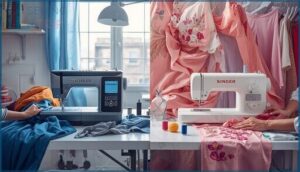
Choosing between Singer and Brother isn’t just about brand loyalty—it’s about finding the right tool for your specific projects.
Different sewing tasks demand different machine capabilities, from the motor strength needed for heavy fabrics to the stitch variety required for decorative work.
Let’s break down which brand excels in the scenarios you’ll encounter most often.
General Sewing and Garment Construction
If you’re building a wardrobe from scratch, both Singer and Brother machines handle garment sewing with solid precision. Singer vs Brother comes down to fabric handling: Singer’s heavy-duty models excel with multilayer seams and alterations on thick denim, while Brother’s computerized options shine in pattern matching and seam types for everyday clothing construction. Your garment fit goals will guide the choice.
- Singer offers enhanced piercing power for thick fabrics and multilayer work
- Brother provides wider stitch variety for diverse seam types and garment details
- Both brands maintain under 3% seam uniformity deviation during extended garment construction
Quilting and Embroidery Capabilities
When quilting or embroidery dominates your project list, hoop size and stitching speed separate casual crafters from serious makers. Brother machines generally deliver larger embroidery fields—up to 11 5/8″ x 18 1/4″—and speeds reaching 1,500 stitches per minute for free-motion quilting.
Singer’s SE9180 counters with 150+ embroidery designs, multi-hoop automation features, and design connectivity through mySewnet Wi-Fi, streamlining fabric handling across intricate quilting machine features.
Portability and Space Considerations
Moving beyond hoop size, compact designs matter when your sewing corner doubles as a dining table. Brother’s portable models generally weigh under 13 lbs—lighter than Singer’s comparable units—making them easier to tuck into closets or carry to classes.
Both brands offer storage solutions and travel machines that fit small spaces, though Brother delivers more portable sewing machine options under $200, balancing ease of use with affordability in tight quarters.
Top 10 Singer and Brother Sewing Machines
You’ve seen how Singer and Brother stack up across features, performance, and price—now it’s time to look at the actual machines that stand out.
We’ve pulled together ten models that represent the best of what both brands offer in 2025, from budget-friendly basics to complex computerized options. Here’s what made the cut.
1. Singer Quantum Stylist Sewing Machine
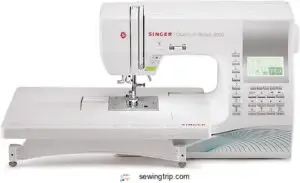
The Singer Quantum Stylist 9960 stands out with 600 built-in stitches and a maximum speed of 850 stitches per minute, offering impressive stitch variety and motor performance for any project.
You’ll appreciate its user friendliness through features like automatic needle threading and a top drop-in bobbin system. For quilting benefits, the included extension table provides ample workspace.
This Singer sewing machine generally retails between $400–$600 and comes with a 25-year warranty, delivering great long-term value. Customer ratings consistently hover around 4.6 out of 5 stars across major retail platforms.
Best For: Sewers who want a versatile machine with tons of stitch options and automatic features, whether you’re just starting out or have years of experience.
- 600 built-in stitches and 850 stitches per minute give you plenty of creative options and speed for any project
- Automatic needle threader and top drop-in bobbin make setup quick and eliminate frustrating manual threading
- Strong value with a 25-year warranty and consistent 4.6-star ratings showing it holds up over time
- Weighs over 18 lbs, so it’s not the easiest to move around or transport to classes
- Plastic construction might feel less sturdy compared to older all-metal machines, even though it performs well
- Learning curve to use all 600 stitches and features means you’ll need to spend time with the manual and tutorials
2. Brother Sewing And Quilting Machine
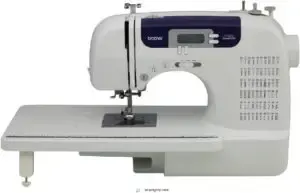
The Brother CS6000i brings 60 built-in stitches and a 2.0″ LCD display that makes stitch selection straightforward for your quilting projects. You’ll find quilting features like a wide table, walking foot, and spring-action quilting foot included—perfect for handling larger pieces.
At 850 stitches per minute, it outpaces many Singer models in speed. The automation extends to needle threading and a drop-in bobbin system, cutting setup time.
With a 25-year warranty and retail pricing around $150–$200, this Brother sewing machine delivers excellent value for quilting and general sewing alike.
Best For: Beginners and intermediate sewists looking for an affordable, feature-rich machine that handles both everyday sewing and quilting projects without breaking the bank.
- 60 built-in stitches with LCD display and automatic needle threader make it easy to jump between different projects quickly
- Comes with a wide table and specialized quilting feet (walking foot and spring-action foot) so you can tackle larger quilts right out of the box
- 25-year limited warranty and fast 850 stitches-per-minute speed give you solid long-term value at a budget-friendly price point
- Plastic construction may not hold up as well as metal-bodied machines for heavy or commercial use over many years
- The included hard case feels cheap and flimsy according to multiple users, so you might want to invest in better storage
- Manual is generic and not model-specific, which can make it harder to learn advanced features without looking up tutorials online
3. Brother Computerized Sewing Machine
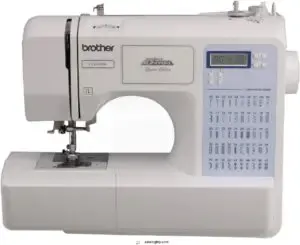
Digital precision meets practical design in Brother computerized sewing machines. With LCD technology for easy stitch selection, motor capacity up to 850 stitches per minute, and jam-resistant bobbin systems, you get smooth performance every time.
Models like the Brother CS6000I and SE600 shine in market performance and user satisfaction, offering reliable component quality and adaptable features. If you value straightforward controls, automatic threading, and a lightweight build, Brother sewing machine technology is a smart choice for mastering projects with confidence.
Best For: Beginners and experienced sewers who want a reliable, easy-to-use machine with digital controls, automatic features, and enough stitch variety to handle everything from basic repairs to quilting projects.
- Automatic needle threader and drop-in bobbin system save time and reduce setup frustration, especially for new users
- Wide range of built-in stitches (50-180 depending on model) and included feet give you flexibility for different fabrics and techniques
- Strong motor performance up to 850 stitches per minute with consistent tension control, plus a 25-year limited warranty on internal mechanisms
- Needle stops in the down position by default, which some sewers find inconvenient
- Plastic components like the bobbin reel and cleaning tools can feel flimsy and may break with heavy use
- No carrying case included, so you’ll need to buy one separately if you plan to transport it to classes
4. Singer 7258 Sewing and Quilting Machine
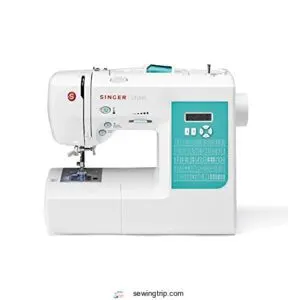
With 203 stitch applications and seven automated buttonhole styles, the Singer Stylist 7258 delivers multifaceted quilting features without the learning curve. Power durability comes standard with a 750 stitch-per-minute motor and Optimum Power Control that adjusts to thick layers.
You’ll find user convenience built into every detail—automatic needle threading, drop-in bobbin monitoring, and LED lighting that keeps your workspace clear.
Market reception has been strong, earning a Consumer Digest Best Buy award for balancing performance with accessibility in one complete sewing machine package.
Best For: Beginners, hobbyists, and fashion students who want an easy-to-use, versatile sewing machine for clothing, quilting, and home décor projects.
- Wide range of stitches and automated features simplify sewing and quilting tasks
- Automatic needle threader and drop-in bobbin make setup quick and hassle-free
- Portable, sturdy design with included accessories and extension table
- Some parts are plastic and may wear out with heavy use
- Not intended for industrial or heavy-duty sewing projects
- Manual may not be included in the box, so you may need to use online resources
5. Heavy Duty Sewing Machine
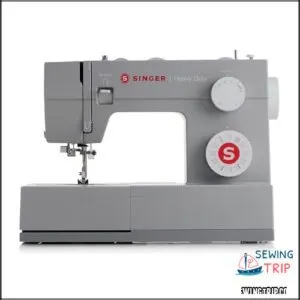
When you need brute force for thick seams or Denim Layers, heavy-duty sewing machines like the Singer 4452 and Brother ST371HD step up.
With a Metal Frame and higher Motor Amperage, the Singer 4452 packs 1,100 spm Stitch Power, easily handling multiple layers and tough fabrics.
Brother’s ST371HD offers versatility for Fabric Thickness, but under Singer vs Brother scrutiny, Singer’s build and speed win for durability.
If your projects demand reliability and muscle, these heavy-duty machines won’t let you down.
Best For: Home sewists who need a sturdy, reliable machine for heavy fabrics like denim, canvas, or quilting projects.
- Strong motor and metal frame handle thick layers with ease
- Fast stitch speed saves time on big projects
- Easy to use and maintain, even for beginners
- May jam or break thread with certain spool setups
- Fewer advanced features than high-end models
- Not always compatible with international power outlets
6. Brother High Speed Sewing Machine
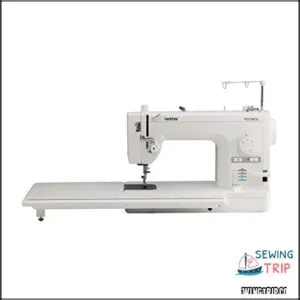
Ever wish your stitches could keep pace with your creativity? The Brother PQ1500SL delivers High-speed Benefits—up to 1,500 stitches per minute—making it a favorite for Quilting Applications and anyone craving Stitch Precision. Its sturdy build and feed system tackle thick layers with ease, a demonstration of Durability Factors.
User Feedback highlights the extra-large workspace and easy-to-use controls, setting this model apart in any sewing machine comparison. When you’re weighing Brother and Singer comparison, the PQ1500SL’s specialized sewing machine features and offerings stand out.
Best For: Experienced quilters and serious sewists who need fast, precise straight stitching for large or layered projects.
- Exceptionally fast sewing speed for efficient project completion
- Large workspace and sturdy build handle bulky quilts and thick fabrics
- Reliable precision with advanced feed system and adjustable controls
- Limited to straight stitching with no decorative or buttonhole options
- Threading mechanism can be tricky, especially with cheaper threads
- Not beginner-friendly due to specialized features and setup
7. Brother Strong Tough Sewing Machine
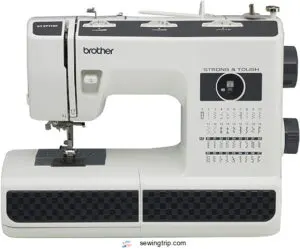
Tough jobs call for tough machines. The Brother ST371HD—often compared with the Brother ST531HD—stands out among heavy-duty machines, thriving on heavy-duty fabrics like denim and canvas. Its 800 stitches per minute offer solid stitch performance for everyday mending or multi-layer projects.
With a smooth threading system and practical machine dimensions, you’ll find setup refreshingly simple. The metal frame and needle plate boost stability, while the generous warranty context reflects Brother’s confidence.
In the Singer vs. Brother debate, this model earns its stripes for durability.
Best For: Sewers who need a reliable machine for heavy-duty projects like hemming jeans, working with canvas, or tackling thick fabrics at home.
- Handles thick fabrics and multiple layers with ease, thanks to a strong motor and metal frame.
- Simple to set up and use, with automatic needle threading and a drop-in bobbin.
- Comes with six presser feet and a free arm, making it versatile for all kinds of sewing projects.
- Not designed for delicate or very stretchy fabrics like nylon.
- Some users report issues like missing stitches or a burning smell during use.
- Customer support and warranty service can be hit or miss.
8. Brother SE600 Sewing Embroidery Machine
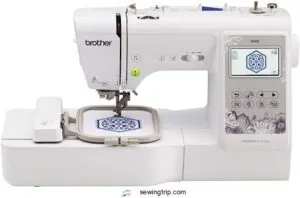
Looking for a machine that balances creativity and convenience? The Brother SE600 is a standout embroidery machine, blending a 4″ x 4″ Embroidery Field with 80 built-in embroidery designs and a 3.2″ Touchscreen Display for easy editing. You’ll appreciate the USB Import feature—custom designs are just a click away.
With a Stitch Speed of 710 per minute and a generous 25-year Warranty Length, this model makes embroidery accessible for beginners and hobbyists. In the Brother vs Singer debate, it’s an all-around favorite.
Best For: Beginners, hobbyists, and small business owners who want a versatile and user-friendly sewing and embroidery machine for creative projects at home.
- Intuitive touchscreen and easy-to-use features make learning simple.
- USB port lets you import custom designs for unlimited creativity.
- Durable build with a long 25-year warranty for peace of mind.
- Bulky size can be tough to store in small spaces.
- Limited 4″ x 4″ embroidery area restricts larger projects.
- Not designed for heavy-duty or commercial use.
9. Singer Heavy Duty Embroidery Machine
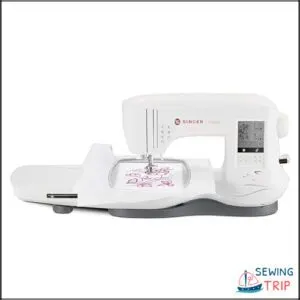
Switching gears from Brother’s SE600, Singer’s Heavy Duty Embroidery Machine brings muscle to your creative toolkit. With automatic stitch optimization and a motor engineered for thick fabrics, you’ll notice the difference in stitch quality—especially on denim and layered projects.
The LCD touch screen is handy, but some users wish for better software compatibility and a less bulky design. Occasionally, reports of motor overload and quality control issues pop up, so check reviews.
In the Singer vs. Brother debate, Singer’s heavy-duty machines hold their ground for demanding embroidery tasks.
Best For: Home sewists and embroidery enthusiasts who want a sturdy machine that can handle thick fabrics and versatile projects.
- Handles heavy fabrics like denim and layered quilts with ease.
- Offers 250 sewing stitches, 200 embroidery designs, and automatic stitch optimization.
- Simple setup with an LCD touch screen and automatic needle threader.
- Bulky size may be inconvenient for small spaces.
- Limited compatibility with external embroidery software and accessories.
- Some users report motor overload and occasional quality control issues.
10. Brother Lightweight Sewing Machine Model
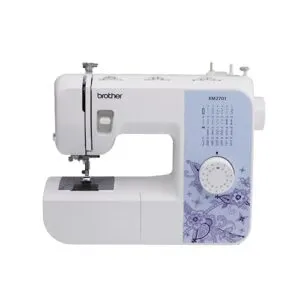
If you need a machine that’s easy to carry and store, Brother’s lightweight models—like the GX37 or LX3817—fit the bill. Portability factors and material construction keep these machines under 11 lb, ideal for classrooms or small spaces.
With practical stitch variety and simple controls, they’re made for everyday sewing, quick repairs, or beginner projects.
The Brother CS6000I stands out among budget models for its LCD display and 60 built-in stitches, offering solid value across pricing tiers for portable, lightweight Brother sewing machines.
Best For: Beginners, hobbyists, and anyone who needs a lightweight, portable sewing machine for everyday projects or sewing classes.
- Easy to carry and store thanks to its lightweight design
- Simple controls and built-in features that help beginners get started quickly
- Handles a variety of fabrics and everyday sewing tasks well
- Limited number of built-in stitches compared to pricier models
- Spool pin may feel flimsy and can break with rough use
- May require watching tutorials to master threading and other setup steps
Frequently Asked Questions (FAQs)
Which is better Brother or singer?
Choosing between Singer and Brother sewing machines boils down to brand comparison and feature prioritization. Singer offers strong performance and durability, while Brother excels in user experience and technology.
Your overall value depends on your performance expectations and sewing needs.
What is the most reliable brand of sewing machine?
Regarding brand reliability and mechanical robustness, Singer stands out for component quality and long-term durability.
User satisfaction and longevity verdicts consistently favor Singer in sewing machine brands comparisons, especially for heavy-duty use and consistent performance.
Do Singer and Brother sewing machines use the same bobbins?
Let’s not dance around it—Singer and Brother sewing machines often share Bobbin class types, mainly Class Yet, cross-brand usage isn’t foolproof.
Manufacturer guidance stresses matching bobbins exactly, since physical differences can cause bobbin tension and sewing machine repair headaches.
Who makes Brother sewing machines?
Brother sewing machines are made by Brother Industries, a Japanese multinational with manufacturing locations in Japan, China, Taiwan, and Vietnam.
Their global production network facilitates high-volume output, reflecting the brand’s evolution, market share, and strong presence in the sewing machine industry.
How do Singer and Brother compare in terms of customer service?
Singer’s customer service often frustrates users with slow response and unresolved issues. In contrast, Brother stands out for better support accessibility, higher satisfaction levels, faster warranty support, and more effective problem resolution—making it a peer comparison favorite among sewing machine owners.
What are the key differences in the warranty policies of Singer and Brother?
If you think all warranties are created equal, think again. Warranty Duration varies—Singer sewing machine heads get up to 25 years, while Brother sewing machines offer 3–5 years.
Coverage Scope, Claim Process, and Repair Limits differ by region and model.
Which machines are best for small home businesses?
For small home businesses, machines like the Singer Quantum Stylist 9960 and Brother SE700 balance versatility, production volume, and feature requirements.
Their compact footprints suit space constraints, while durable functions support diverse business needs on a startup budget.
How easy is it to find replacement parts?
Finding replacement parts is rarely a wild goose chase. Part Availability is strong for most models, with online Sourcing Methods, competitive Replacement Costs, and responsive customer service.
Brand Support and Market Trends keep sewing machine accessories and repair options within easy reach.
Are Singer or Brother machines quieter during operation?
If you’re sensitive to noise, computerized Brother sewing machines usually run quieter than mechanical Singer models. Lower Decibel Levels, reduced Vibration Transfer, and improved Sound Quality make Brother’s Computerized Quiet a standout for shared spaces and focused performance.
What maintenance routines do these machines require?
Routine cleaning is your bread and butter—clear lint from bobbin areas every sewing day. Oiling needs differ: Singer often requires monthly oiling, while many Brother models don’t. Needle care, regular servicing intervals, and brand specifics boost durability and repair ease.
Conclusion
Stitch by stitch, feature by feature, value by value—your choice between Brother vs Singer sewing machines is shaped by what matters most to you. Whether you lean toward classic reliability or modern convenience, each brand offers a toolkit for creativity and mastery.
Let your projects guide your decision, your hands confirm the fit, and your ambitions set the pace. The right machine isn’t just a purchase; it’s an invitation to sew your vision into reality, one thoughtful seam at a time.
- https://www.alliedmarketresearch.com/sewing-machine-market-A11452
- https://www.globenewswire.com/news-release/2023/01/24/2593892/0/en/Sewing-Machine-Market-size-is-expected-to-reach-US-7198-9-million-by-2029-with-Top-Key-Players-Data-Brother-Feiyue-and-More-117-Pages-Report.html
- https://www.bajajfinserv.in/singer-sewing-machine-price-guide
- https://sewingworker.com/singer-sewing-machine-models-and-prices/
- https://thegnomestudio.com/janome-vs-brother/