This site is supported by our readers. We may earn a commission, at no cost to you, if you purchase through links.

Pins are sneaky little troublemakers. They poke holes in silk, distort your grainline, and send rotary blades into a tailspin when you roll over one by accident. I switched to pattern weights two years into sewing and genuinely wondered why nobody told me sooner.
Pattern weights for beginners sounds fancy, but the concept is refreshingly simple — small, heavy objects that hold your paper pattern flat against fabric so you can cut without wrestling it into place. No stabbing required.
Once you know how to use them, cutting feels less like a battle and more like the satisfying, controlled process you always hoped sewing would be.
Table Of Contents
Key Takeaways
- Pattern weights hold your fabric flat without pins, which means no puncture holes, no grainline drift, and a rotary cutter that actually glides instead of snagging on hidden metal.
- Slippery and delicate fabrics like silk, satin, and chiffon genuinely need weights — pins distort them, but a flat weight just sits there and lets you cut cleanly.
- You don’t need to buy anything fancy: a few stacked metal washers wrapped in cotton scrap (or even a full spice jar) work just as well as a commercial set for a fraction of the cost.
- The real payoff isn’t just faster cuts — it’s that your finished pieces actually match when you go to sew them together, because nothing shifted while you were cutting.
What Are Pattern Weights?
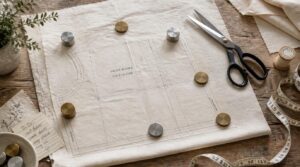
Pattern weights are small, heavy objects you place on top of your fabric to hold a paper pattern in place while you cut — no pins required. They press the pattern flat so it doesn’t shift, which means cleaner cuts and a lot less frustration, especially when you’re just starting out. Here’s what you need to know about them.
If you want to take your skills further, techniques like adding ruching to a pattern become much easier when your fabric stays perfectly still under reliable pattern weights.
Beginner-friendly Definition
Think of pattern weights as small, flat tools that sit on top of your paper pattern pieces and hold them still against the fabric — no pins needed. They come in metal, glass, or plastic. Simple to use, quick to move, and totally beginner-friendly:
- No puncture holes in delicate fabric
- Faster setup than pinning every edge
- Reusable across your whole cutting session
- Compatible with rotary cutters and mats
How They Hold Patterns
So how do pattern weights actually hold things in place? It comes down to two things: weight distribution and surface friction. The flat base — often soft felt or non-slip rubber — grips the fabric below while the weight pushes down evenly.
No single pressure point. Just steady, calm contact along the pattern edge, keeping everything exactly where you placed it.
Pins Versus Weights
Pins have been the default forever — poke, secure, repeat. But they poke you too, and they poke your fabric.
Here’s what actually separates them:
- Weights grip without piercing — zero puncture holes, ever
- Faster setup — place and lift versus insert and pull
- Safer rotary cutting — no hidden pins to nick your blade
- Better precision — flat contact keeps grainlines true
Best Beginner Uses
So when do weights actually shine for beginners? Right away, honestly.
They’re perfect for slippery fabric management — silk and satin just slide around under pins, but a weight holds everything flat.
They also make precision corner cutting so much easier, since you’re not wrestling with puckered fabric or chasing a shifting pattern piece across your mat.
Why Beginners Should Use Them
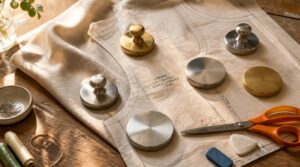
Switching from pins to weights is honestly one of those small changes that makes a surprisingly big difference — especially when you’re just starting out. There are a few solid reasons beginners swear by them, and they all come back to cutting faster, safer, and with less frustration. Here’s what makes pattern weights worth keeping on your table.
Faster Fabric Cutting
Switching from pins to weights is like trading a traffic jam for an open highway. Weights keep your fabric flat and perfectly still, so your rotary cutter glides the full length of a piece in one smooth pass — no stopping, no repositioning.
Pattern weights keep fabric flat and still, letting your rotary cutter glide the full length in one smooth pass
That alone can cut your prep time nearly in half. The pattern weights replace pins method also safeguards your fingers while keeping layers aligned.
Fewer Pin Holes
Every time you push a pin through fabric, you’re leaving a tiny scar. On silk, chiffon, or lace, those puncture holes don’t close up — they’re permanent.
That’s why sewing pattern weights are such a must-have: lay them down, hold everything flat, lift them off.
Your fabric stays completely untouched, looking exactly as gorgeous as the day you bought it. 瑱
Less Fabric Distortion
Pins pull. Even a little. And that tiny tug while you’re cutting can throw your grainline alignment completely off — especially on bias-cut pieces, where fabric loves to stretch sideways the second you look away.
Weights just sit there. No pull, no distortion. Your fabric stays flat, your edges stay true, and your pattern pieces actually match when you go to sew them together.
Safer Rotary Cutting
Here’s a fact that catches a lot of beginners off guard: rotary blades cut fingers just as easily as fabric. That little wheel is no joke.
Using pattern weights instead of pins removes a real hazard from your workflow:
- Engage the safety lock after every single cut
- Dull blades require extra pressure — and that’s when slips happen
- Stand with feet shoulder-width apart and always cut away from your body
- Pins hiding under fabric can deflect your blade, causing kickback
- Dispose of old blades in a sturdy blade case, never loose in the trash
Weights keep your pattern flat and your hands where they belong — away from the blade.
Reusable Sewing Tool
Think about every other sewing tool you own — how many of them last forever? Pattern weights do.
Whether you buy them or DIY your own, a good set holds up through hundreds of projects with zero wear. Wipe them down, store them in a small tin, and they’re ready again tomorrow.
Genuinely one of the best cost-effective sewing tools you’ll ever own.
Best Fabrics for Pattern Weights
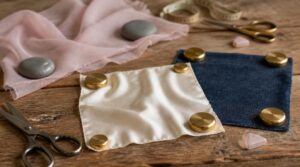
Pattern weights aren’t a one-size-fits-all tool — some fabrics genuinely need them more than others. Whether you’re wrestling with slippery silk or managing thick denim layers, knowing when to reach for your weights makes all the difference. Here are the fabric types where they really earn their place.
Delicate Fabric Cutting
Delicate fabrics — silk, chiffon, lace — punish you fast if you’re careless. Sewing pattern weights hold these fragile pieces flat without leaving a single pinhole, which is everything when you’re working with fabric that costs a fortune per yard.
- Use sharp scissors or a rotary cutter for minimizing edge fraying
- Cut with long, smooth strokes for preventing fiber stress
- Lay tissue paper underneath for stabilizing sheer textiles
- Align pieces carefully for maintaining grain accuracy
- Choose soft stabilizers to prevent avoiding fabric puckering
Slippery Fabric Control
Slippery fabrics — satin, charmeuse, silky jersey — have a mind of their own. Weave texture and surface sheen are the real culprits: tightly woven, high‑luster fabrics have almost no micro‑grip, so they shift the second you look away.
That’s why sewing pattern weights are a real lifesaver here. They hold everything flat without adding the distortion that pins cause.
Thick Fabric Layers
Thick layers — denim, canvas, quilting sandwiches — shift just as easily as satin, only with more muscle behind them. Stacked fabric layers can slide 15–30% more under cutting pressure, which throws your grain line right off.
A few well‑placed weights anchor everything so your pattern pieces actually stay put while you cut.
Knits and Stretch Fabrics
Knits are a whole different animal. Stretch fabric distortion sneaks up on you — the moment you pin or press down unevenly, your jersey or ribbed knit shifts just enough to throw off the cut.
Weights distribute pressure evenly without pulling, so your weft knit’s horizontal stretch stays where you put it.
Quilting Cotton Projects
Quilting cotton is wonderfully stable quilting cotton — it holds its shape, it doesn’t slide around, and it rewards precision. That’s exactly why fabric grain consistency matters so much when you’re piecing quilt blocks together.
- Place weights at each corner
- Secure long edges before cutting
- Check grainline alignment twice
- Lift cleanly without dragging
Top 6 Pattern Weight Essentials
Whether you’re just starting out or looking to upgrade your cutting setup, having the right tools makes a real difference. I’ve rounded up six essentials that work beautifully together — from weights that actually hold your pattern flat to the cutters and scissors that get the job done cleanly.
Here’s what I’d recommend keeping in your sewing kit.
1. Quilted Bear Fabric Pattern Weights
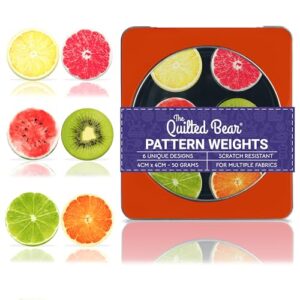
If you want a pattern weight that pulls double duty — functional and fun — the Quilted Bear QB-OD2 is worth a look. You get 6 high-density plastic discs in a cute "Funky Fruit" print, tucked into a handy tin. They’re scratch-resistant, so your fabric and pattern paper stay safe.
They work well for quilting, dressmaking, and paper crafts. Just know they can feel light on bigger pieces, and that first-time packaging? A little stubborn.
| Best For | Quilters, dressmakers, and paper crafters who want a pin-free, beginner-friendly way to hold patterns in place without sacrificing style. |
|---|---|
| Material | High-density plastic |
| Pieces Included | 6 weights + tin |
| Primary Function | Pattern stabilization |
| Skill Level | Beginner to expert |
| Craft Compatible | Quilting, dressmaking, paper crafts |
| Multi-Purpose | Weights, paperweights, décor |
| Additional Features |
|
- Scratch-resistant finish keeps fabric and paper surfaces safe during cutting
- Versatile enough for quilting, dressmaking, paper crafts, and more
- Fun "Funky Fruit" design adds a little personality to your workspace
- May feel too light for larger or heavier pattern pieces
- First-time packaging can be tricky to open
- The internal plastic holder has been known to crack in some units, so handle with care
2. Wisemen Glass Pattern Weights
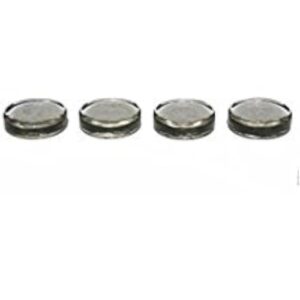
Glass weights feel like a little luxury — and the Wisemen Glass Pattern Weights kind of are. Each lead-free, food-grade glass disc weighs around 5.5 oz and sits flat without snagging your fabric. The best part? They’re transparent, so you can actually see the print or plaid underneath while you cut. 犯
Just handle them carefully. They’ll crack if dropped on a hard floor. And on heavy denim? You’ll want something beefier.
| Best For | Sewers and crafters working with delicate fabrics like silk or satin who want a pin-free way to hold patterns in place while cutting. |
|---|---|
| Material | Lead-free glass |
| Pieces Included | 4 discs |
| Primary Function | Pattern stabilization |
| Skill Level | Beginner to expert |
| Craft Compatible | Quilting, dressmaking, paper crafts |
| Multi-Purpose | Weights, anchors, hand-washing aid |
| Additional Features |
|
- Transparent glass lets you see your fabric’s print or pattern clearly while you work
- Lead-free, food-grade glass means they’re safe to handle and non-toxic
- Ultra-smooth surface glides across fabric without snagging or leaving marks
- Too light to hold down heavy fabrics like denim or canvas
- Glass can crack or break if dropped on a hard floor
- Larger than some users expect for a pattern weight
3. Fiskars 45mm Rotary Fabric Cutter
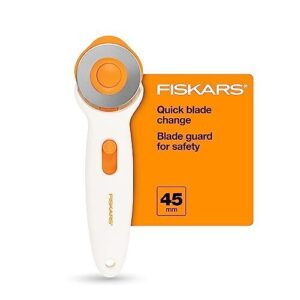
If you’ve been using scissors to cut fabric, the Fiskars 45mm Rotary Cutter might just change your life. Seriously. It glides through multiple layers in one smooth pass — fabric, felt, vinyl, you name it.
The ambidextrous handle works whether you’re a lefty or a righty, and the sliding blade lock means no accidental nicks between cuts. Blade replacement needs zero tools. Quick snap, done.
Your pattern weights hold everything flat, and this cutter does the rest. ✂️
| Best For | Quilters, sewists, and crafters who regularly cut multiple layers of fabric, felt, or vinyl and want cleaner edges with less effort than scissors. |
|---|---|
| Material | Stainless steel & titanium carbide |
| Pieces Included | 1 rotary cutter |
| Primary Function | Rotary fabric cutting |
| Skill Level | Beginner to expert |
| Craft Compatible | Quilting, sewing, fabric crafts |
| Multi-Purpose | Fabric, felt, vinyl, quilting |
| Additional Features |
|
- Cuts through multiple layers of fabric, felt, and vinyl in a single smooth pass for faster, cleaner results
- Ambidextrous design works for both left- and right-handed users, with a sliding lock for safe storage between cuts
- Tool-free blade replacement makes maintenance quick and hassle-free
- Blade can dull faster on thick or abrasive materials, adding to long-term replacement costs
- The lifetime warranty doesn’t cover the blade itself — the part most likely to need replacing
- Not suited for deco mesh or specialty meshes, with some users reporting the blade stalls on these materials
4. Fiskars Large Self Healing Cutting Mat
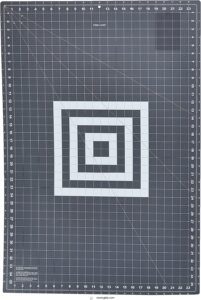
Every rotary cutter needs a worthy partner, and the Fiskars Large Self-Healing Mat is exactly that. At 24 × 36 inches, it accommodates full bolt-width cuts without you shuffling the fabric around mid-cut.
The self-healing polymer surface closes right back up after your blade passes — so it stays smooth and accurate for a long time. Grids with 30°, 45°, and 60° bias lines are printed on both sides, too. Fewer rulers, less guesswork.
| Best For | Quilters, sewists, and crafters who work with large fabric pieces or need precise angled cuts without constantly repositioning their material. |
|---|---|
| Material | Self-healing polymer |
| Pieces Included | 1 cutting mat |
| Primary Function | Protected cutting surface |
| Skill Level | Beginner to expert |
| Craft Compatible | Quilting, sewing, scrapbooking |
| Multi-Purpose | Fabric, paper, gift-wrapping |
| Additional Features |
|
- Massive 24 × 36-inch surface handles full bolt-width cuts in one go — no shuffling, no frustration
- Self-healing polymer bounces back after cuts, keeping the surface smooth and accurate over time
- Built-in 30°, 45°, and 60° grid lines on both sides mean you can ditch extra rulers for most cuts
- The size and weight (2.6 lbs) can feel bulky in a cramped workspace or if you need something portable
- Sticker residue from packaging can stick to the surface if you’re not careful removing it
- Deep cuts in the same spot repeatedly will wear down the self-healing layer faster than normal use
5. Gutermann Sew All Thread Set
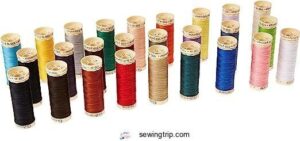
Thread might feel like an afterthought when you’re building out your pattern-cutting kit — but the Gutermann Sew-All Thread Set earns its spot on this list. You get 26 spools of 100% polyester thread in a tidy, compact case, which means you’re rarely scrambling for a matching color mid-project.
Micro Filament Technology keeps each spool strong and smooth, with minimal lint. Less lint equals a cleaner machine. Simple as that. 淋
| Best For | Sewists of all skill levels who want a reliable, color-rich thread collection in one organized, travel-friendly case. |
|---|---|
| Material | 100% polyester |
| Pieces Included | 26 spools |
| Primary Function | Thread supply |
| Skill Level | Beginner to expert |
| Craft Compatible | Quilting, sewing, repair work |
| Multi-Purpose | Garments, quilts, repairs |
| Additional Features |
|
- 26 colors in one box means you’ll almost always have a match on hand, whether you’re quilting, mending, or starting something new
- 100% polyester thread is tough and flexible, holding up well across different fabric types without snapping mid-seam
- The clear, compact case keeps every spool visible and easy to grab — no digging through a tangled drawer
- The lid has no latch, so you’ll want a rubber band or strap if you’re tossing it in a bag
- The plastic case is a bit fragile — it can crack if it’s not packed carefully during shipping or travel
- Some spools arrive cross-wound, which can cause tension issues on certain spool holders, and a few may have loose thread from handling
6. Gold Heavy Duty Tailor Scissors
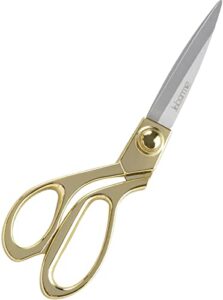
Good scissors are honestly the unsung hero of a clean project. These gold heavy-duty tailor scissors feature an 8-inch stainless steel blade with precision grinding — which means smooth, confident cuts through denim, corduroy, and thick multiple layers without fraying. The bent ergonomic handle keeps your hand comfortable during long cutting sessions. ✂️
Fair warning: they’re heavier than standard scissors. But for most beginners, that weighted balance actually helps control your cuts.
| Best For | Tailors, dressmakers, and serious crafters who regularly cut through heavy fabrics and want a durable, professional-grade scissor that reduces hand fatigue over long sessions. |
|---|---|
| Material | Stainless steel |
| Pieces Included | 1 pair |
| Primary Function | Straight fabric cutting |
| Skill Level | Beginner to professional |
| Craft Compatible | Tailoring, dressmaking, crafts |
| Multi-Purpose | Fabric, leather, ribbon, carpet |
| Additional Features |
|
- Precision-ground stainless steel blades deliver clean, fray-free cuts through tough materials like denim, leather, and carpet
- Ergonomic bent handle with weighted balance reduces hand fatigue during extended use
- Versatile enough for professional tailoring, craft projects, and even ribbon-cutting ceremonies
- Heavier than standard scissors, which can feel tiring or cumbersome for some users
- Blade resistance may be a challenge for those with limited hand strength
- Not ideal for ultra-delicate or fine-weave fabrics that call for a lighter, more precise tool
Easy Washer Pattern Weights
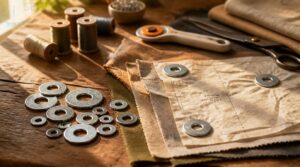
Making your own pattern weights doesn’t get much easier than grabbing a handful of metal washers from the hardware store. They’re cheap, heavy, and honestly do the job better than you’d expect for something that costs less than a cup of coffee. Here’s exactly how to turn them into weights you’ll actually use.
Choose Metal Washers
When you think about DIY pattern weights, metal washers are honestly one of the best-kept secrets in sewing accessories.
I love large fender washers, especially — they’re wide, flat, and heavy enough to hold slippery fabric without budging.
Stainless steel washers resist rust beautifully, so they’ll last through years of projects without that gross orange staining on your fabric.
Stack for Extra Weight
One single washer might not cut it for heavier fabrics. That’s where stacking metal washers come in — just layer two or three together to hit your desired mass without making the stack too tall.
Keep the stack low and flat.
Balanced weight distribution matters more than raw height, so a wide, stable stack beats a wobbly tower every time.
Wrap With Fabric
Now that your stack feels solid, it’s time to give it a fabric jacket.
Grab a fabric scrap — cotton works great — cut a small square, center your washer stack on it, and fold the edges up like you’re wrapping a tiny gift.
This keeps scratchy metal off your fabric and gives you something pleasant to handle. 淋
Glue or Stitch Edges
Once your fabric-wrapped stack is ready, you need to seal those edges so nothing unravels mid-project.
Adhesive bonding is the quickest fix — a dab of heat-activated glue, pressed firmly, locks the fold flat.
Prefer something more durable? A few hand stitches along the edge win every time. Stitching the edges prevents glue migration onto your good fabric.
Either way works beautifully.
Test Before Cutting
Before you commit your real fabric to the blade, test on scrap first. A quick run on a similar leftover piece confirms your grainline placement, blade pressure, and cutting speed are all dialed in.
- Catch misaligned grain before it wastes good yardage
- Check blade depth produces a clean, fray-free edge
- Verify your washer weights hold without any shifting
- Note what worked for next time
Sewn Fabric Pattern Weights
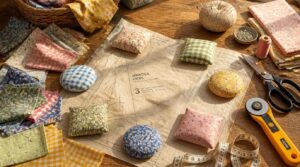
Sewn fabric pattern weights are honestly one of the most satisfying beginner projects — you get to use up fabric scraps and make something genuinely useful for your cutting table.
The process is simpler than it sounds, and once you make a few, you’ll want a whole set.
Here’s exactly how to pull them together, step by step.
Cut Cotton Rectangles
Grab some scrap cotton and cut yourself a rectangle — 20 cm × 10 cm (or about 4 in × 8 in) works perfectly for a beginner’s DIY pattern weight. Nothing fancy needed here. Quilting cotton is ideal since it’s sturdy, easy to handle, and won’t fray wildly when you’re working with it.
Sew Pouch Seams
Fold your rectangle in half with right sides together, then sew down both short sides and across the bottom using a ½ inch seam allowance. Always backstitch at each end — that’s your insurance against unraveling.
Clip the corners to cut down on bulk, and finish raw edges with a zigzag stitch if your machine does it. Makes turning so much cleaner.
Add Rice or Pellets
Now your pouch is ready for the good stuff.
Spoon in dry uncooked rice using a small funnel — it’s the easiest filler to source and surprisingly dense. For longer‑lasting weights, poly pellets resist moisture and won’t clump.
Fill each pouch about two‑thirds full so it’s firm but still pliable enough to lie flat on your cutting mat.
Close With Ladder Stitch
Pinch the open edges together and use a ladder stitch to seal the pouch invisibly. Take small, even bites into each folded edge — equal spacing is everything here.
Keep your tension light; pull too tight and the fabric puckers. When you reach the end, bury the knot inside the fold. Done. No raw edges, no escaping rice. 瑱
Attach Ribbon Loops
A small ribbon loop at the corner turns your weight into a proper tool — easy to grab, easy to hang. Cut a 4-inch strip, fold it in half, and stitch it into a corner seam before you close up.
Use nylon jaw pliers if you’re crimping a metal ribbon end onto it.
No fraying, no fuss.
No-Sew Pattern Weight Ideas
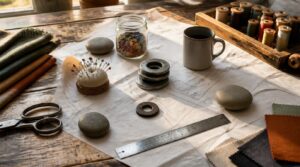
Not everyone wants to pull out a needle and thread just to make a pattern weight, and honestly? You don’t have to. There are some surprisingly clever no-sew options that work just as well, using stuff you probably already have at home. Here are a few of my favorites to get you started.
Wrapped Washer Weights
Metal washers wrapped in cotton or canvas make surprisingly sturdy DIY pattern weights — no sewing machine needed.
Just cut a fabric square, center your washer, fold the edges over, and secure everything with a few hand stitches or fabric glue.
Cotton or canvas fabric grips better than slippery materials and won’t scratch your fabric underneath.
Glass Jar Lids
Glass jar lids — screw-on, flip-top, or clamp-style — make surprisingly clever no-sew weights. They’re flat, heavy, and already sitting in your kitchen.
- Silicone gasket lids grip fabric without slipping
- Flip-top and clamp lids add extra heft for thicker cuts
- Transparent glass lids let you see the pattern underneath
Aquarium Gravel Pouches
If jar lids feel a little too rigid, aquarium gravel pouches are your next best option.
Fill a small mesh or woven bag — roughly 4×6 inches — with aquarium gravel, seal it with the built-in Velcro or zipper closure, and you’ve got a surprisingly capable DIY pattern weight that holds flat without marking your fabric.
Clay-covered Washers
Clay-covered washers take the aquarium gravel idea in a completely different direction. Here, fired clay fused onto metal does the heavy lifting — literally and figuratively.
- Surface friction keeps patterns from sliding
- Clay absorbs tiny amounts of moisture, reducing paper curl
- Baked coating makes them durable for repeated use
- Decorative texture helps with print alignment
- Zero sewing required
Heavy Household Objects
You probably already own a few perfect pattern weights and don’t even know it. Heavy household objects — a full spice jar, a smooth river stone, even a stack of large metal washers — work surprisingly well in a pinch.
| Object | Approximate Weight |
|---|---|
| Large fender washer stack | 4–8 oz |
| Filled spice jar | 6–10 oz |
How to Use Pattern Weights
Once you’ve got your weights ready, using them is honestly the easiest part of the whole process. There’s a simple rhythm to it that you’ll pick up fast — place, align, cut, done. Here’s exactly how to work through each step.
Place on Pattern Corners
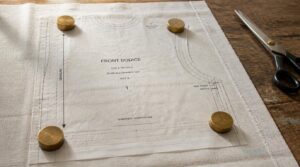
Think of pattern corners as your anchor points — the spots where everything either holds steady or goes sideways. Drop a weight on each corner first. That keeps the pattern from curling up or drifting while you cut.
- Start at top-left corner to set grainline direction
- Place weights on all four corners before touching the center
- Check corner-to-fabric grain alignment before adding more weights
- Use flexible corner weights on curved edges to maintain contact
- Mark corners with chalk dots for pattern piece anchoring reference
Secure Long Edges
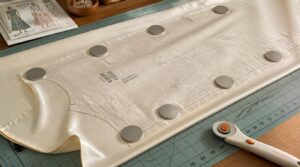
Once your corners are anchored, the long edges are where fabric loves to drift. Space weights every 6–8 inches along each edge — especially on bias edges, which stretch and curl the moment you look away.
Smooth, flat weights glide right under your rotary cutter without snagging silky or delicate fabric. Your cutting mat holds the rest, gripping everything from below while the weights press down from above.
Align With Grainline
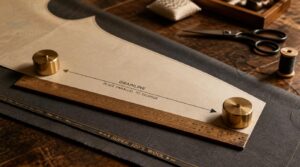
The grainline is basically your pattern’s compass — get it wrong and your finished garment twists, pulls, or hangs off-center. Place weights along the grainline arrow to lock it parallel to the selvage before you cut a single inch. A quick ruler check at both ends of the arrow confirms you’re true.
Cut With Rotary Cutter
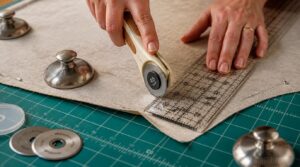
With your weights locked and grainline true, now it’s time to actually cut. Close the blade lock before repositioning — seriously, a rolling open blade is a bad surprise. Then guide your 45 mm rotary cutter smoothly along a clear acrylic ruler:
- Keep blade against ruler edge
- Use continuous, smooth strokes
- Swap dull blades immediately
Store Weights Neatly
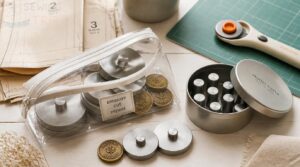
Good storage turns a scattered pile into a proper sewing tool kit. A clear zip bag is my go-to — you can see everything at a glance.
Label each weight with its gram count so you’re never guessing. Magnetic tins cling to metal surfaces and stop round weights from rolling off your cutting table entirely. Neat tools, faster starts. 淋
Frequently Asked Questions (FAQs)
What is the best filling for pattern weights?
Think of fillers like choosing between a snack and a meal — both work, but density matters. Poly pellets win for longevity and moisture resistance. Rice is budget-friendly but attracts pests over time.
Are pattern weights worth it?
Yes — pattern weights are worth it. They cut faster, protect fabric, and skip pin damage. Even a DIY set pays off quickly. For beginners, they’re one of the smartest early tool investments you’ll make.
How many pattern weights does a project need?
Start with 4 weights for small projects, 6–8 for medium pieces, and bump up to 10–12 for large pattern sections. Slippery fabrics? Add more — they need extra help staying honest.
What fillers work best inside homemade weights?
Rice is cheap and easy to find, but steel shot beads pack the most weight in the least space. Glass beads feel smooth, aquarium gravel works fine, and poly pellets resist moisture best.
Can pattern weights replace a cutting mat entirely?
No, they can’t. Weights hold your pattern still, but they don’t protect your blade or give you a stable cutting surface. You still need your mat. These two tools work together.
Are commercial or handmade weights more cost-effective?
Handmade wins upfront cost — washers and fabric scraps cost almost nothing. But commercial weights last longer, with engineered finishes and predictable replacement cycles. For casual home sewing, DIY fabric weights genuinely deliver better value.
How do you clean fabric pattern weights after use?
After cutting, just wipe fabric weights with a damp cloth to lift lint and dust. Spot clean with mild soap and cold water, then air dry fully before storing to prevent mold.
Conclusion
The smallest tool change creates the biggest cutting transformation. Swapping pins for pattern weights for beginners sounds almost too simple to matter — yet it rewires how the whole process feels.
Suddenly, fabric behaves. Lines stay true. That rotary cutter glides instead of fights.
What used to feel like controlled chaos becomes something you actually trust. Whether you buy weights or make them from washers and rice, the result is identical: cleaner cuts, calmer hands, and a sewing table that finally feels like yours.