This site is supported by our readers. We may earn a commission, at no cost to you, if you purchase through links.
Most dog collars fail at the hardware—not because of cheap buckles, but because the stitching gives out first. A collar taking the force of a 70-pound dog lunging at a squirrel needs seams that don’t budge, and that starts with the right machine.
Sewing nylon webbing or leather isn’t like hemming a pair of jeans. The materials are thick, slippery, and unforgiving, and a standard home machine will stall, skip stitches, or snap needles before you finish the first strap.
Knowing which machine manages these materials well saves you money, frustration, and a lot of broken thread.
Table Of Contents
- Key Takeaways
- Top 10 Sewing Machines for Dog Collars
- 1. Singer Heavy Duty 4452 Sewing Machine
- 2. Brother CS6000i Sewing and Quilting Machine
- 3. Brother PQ1500SL Sewing and Quilting Machine
- 4. Singer Heavy Duty 6700C Computerized Sewing Machine
- 5. Brother ST371HD Heavy Duty Sewing Machine
- 6. Singer HD500 Classic Sewing Machine
- 7. Singer Heavy Duty 4411 Sewing Machine
- 8. Juki DDL8100 Industrial Sewing Machine
- 9. Beamnova Heavy Duty Leather Sewing Machine
- 10. Lupengshop Industrial Manual Leather Sewing Machine
- Best Machine Types for Dog Collars
- Essential Features for Collar Sewing
- Walking Foot Benefits for Webbing
- Best Stitches for Strong Collars
- Dog Collar Materials and Compatibility
- Needles, Thread, and Accessories
- Buying Criteria by Skill Level
- Cost, Speed, and Business Use
- Frequently Asked Questions (FAQs)
- Conclusion
Key Takeaways
- The stitching fails before the hardware does, so you need a machine with a strong motor, full metal frame, and a walking foot to keep thick nylon or leather collars from falling apart.
- Your skill level and weekly output should drive your machine choice — beginners do well with the Singer 4452 or Brother CS6000i, while high-volume makers need an industrial machine like the Juki DDL-8100.
- The box stitch and bar tack are the two stitches that matter most around buckles and D-rings, since they spread load across the seam instead of stressing one thread line.
- Nylon webbing is the best starting material for new collar makers — it’s tough, dries fast, and forgiving enough to learn on before you move to leather or Biothane.
Top 10 Sewing Machines for Dog Collars
Whether you’re just starting out or already running a small collar business, the right machine makes all the difference. This list covers ten options across every budget and skill level — from beginner-friendly home machines to heavy-duty industrial workhorses.
If you also work with stretchy fabrics or need clean finished seams, check out this guide to serger machines for home sewers — a great companion to any collar-making setup.
Here’s what made the cut.
1. Singer Heavy Duty 4452 Sewing Machine
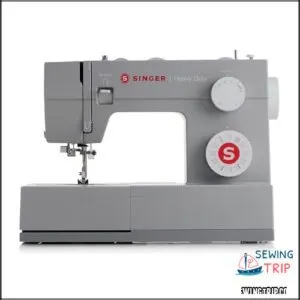
The Singer Heavy Duty 4452 is a solid starting point for anyone making dog collars at home. Its 60-watt motor pushes through nylon webbing and canvas without stalling, hitting up to 1,100 stitches per minute. You get 32 built-in stitches, ensuring versatility for various projects.
The machine features a full metal frame for durability and a top-drop bobbin that’s easy to monitor mid-project, streamlining workflow.
At $219.99, it also includes a walking foot right out of the box — a must-have for feeding slippery webbing evenly, enhancing precision and ease of use.
| Best For | Home crafters and hobbyists who regularly work with heavy fabrics like denim, canvas, or nylon webbing and want a durable, versatile machine without jumping to industrial-grade equipment. |
|---|---|
| Stitch Count | 110 applications |
| Frame Material | Full metal |
| Max Stitch Speed | Not specified |
| Included Feet | Walking, non-stick, zipper, button |
| Power Source | 110V US plug |
| Warranty | Not specified |
| Additional Features |
|
- Powerful motor punches through thick, layered materials without stalling — great for collars, bags, and upholstery
- Comes loaded with useful accessories (walking foot, quilting guide, extra bobbins) so you’re not buying extras on day one
- Top-drop bobbin with a clear cover makes it easy to check thread levels and swap bobbins fast
- Knobs and dials aren’t well-labeled, so expect to keep the manual nearby until you get familiar with the settings
- Can get noisy at high speeds, and zig-zag stitches on stretchy fabrics don’t always come out clean
- Ships with a US plug only — international buyers will need a voltage converter or adapter
2. Brother CS6000i Sewing and Quilting Machine
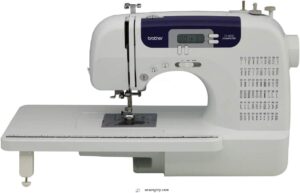
The Brother CS6000i offers 60 built-in stitches and runs up to 850 stitches per minute, making it ideal for decorative collar work. Its walking foot ensures smooth feeding of nylon webbing, reducing puckering on layered straps. The drop-in bobbin allows easy monitoring during projects, enhancing usability.
At around $300, this machine is a budget-friendly mid-range option. However, its plastic housing may show wear under heavy, continuous use, a consideration for frequent sewers.
| Best For | Beginners, hobbyists, and quilters who want a versatile, easy-to-use machine without spending a fortune. |
|---|---|
| Stitch Count | 60 stitches |
| Frame Material | Plastic housing |
| Max Stitch Speed | Not specified |
| Included Feet | 9 presser feet |
| Power Source | 120V AC US only |
| Warranty | 25-year limited |
| Additional Features |
|
- 60 built-in stitches plus 7 one-step buttonhole styles cover everything from basic seams to decorative finishing
- Automatic needle threader and drop-in bobbin make setup quick and frustration-free
- Comes loaded with 9 presser feet, a quilting table, and a hard travel case — solid value for the price
- Plastic housing can wear down under heavy, continuous use — it’s not built like a tank
- The built-in work light is pretty dim, which makes detailed or large-scale projects harder to see
- Some users run into tension and bobbin-winding quirks that need occasional fiddling to fix
3. Brother PQ1500SL Sewing and Quilting Machine
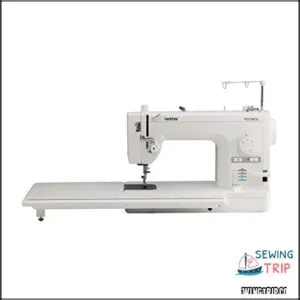
If the Brother PQ1500SL is what you’re after, it delivers up to 1,500 stitches per minute — faster than the CS6000i. That extra pace makes a real difference when you’re cranking out multiple collars in one session.
Built on a full metal frame, the machine minimizes vibration and ensures tight stitching, even on thick layers. This robust construction enhances stability during intensive use.
The walking foot manages nylon webbing smoothly, while the 8-inch work area provides ample space to maneuver bulky straps without resistance.
| Best For | Experienced sewists and quilters who work with large, heavy, or delicate fabric projects and need a fast, reliable machine built to handle serious volume. |
|---|---|
| Stitch Count | Straight stitch |
| Frame Material | Metal with plastic |
| Max Stitch Speed | 1,500 SPM |
| Included Feet | Walking, zipper + 5 more |
| Power Source | 110V US only |
| Warranty | 25-year limited |
| Additional Features |
|
- Stitches up to 1,500 per minute, cutting down time significantly on big quilts or multi-layer projects
- Precision Pin Feed system handles delicate fabrics like knits and velvet without leaving feed-dog marks
- Comes with seven specialized feet, a knee-lifter, and a wide extension table — solid setup for quilting right out of the box
- No low-bobbin indicator, so you won’t know you’re running out of thread until it actually happens
- The automatic needle threader struggles with thicker or lower-quality thread, which gets annoying fast
- Loud at full speed and not beginner-friendly — the threading, bobbin loading, and pace can feel overwhelming if you’re just starting out
4. Singer Heavy Duty 6700C Computerized Sewing Machine
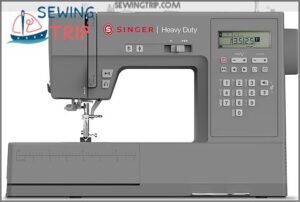
If the PQ1500SL is built for raw speed, the Singer 6700C brings brains to the table. It runs at 600 stitches per minute and packs 411 built-in stitches, offering real options for decorative collar patterns. The LCD screen simplifies switching between settings, while its high-torque metal frame motor powers through denim, leather, and nylon webbing without stalling. At $329.99, the inclusion of a walking foot delivers solid value for a computerized machine.
| Best For | Sewers who want computerized versatility and the power to handle heavy fabrics like denim and leather without spending a fortune. |
|---|---|
| Stitch Count | 411 applications |
| Frame Material | Metal chassis |
| Max Stitch Speed | Not specified |
| Included Feet | 10 presser feet |
| Power Source | 110-120V AC US |
| Warranty | Not specified |
| Additional Features |
|
- 411 built-in stitches with an LCD screen makes it easy to switch between everyday, decorative, and lettering patterns on the fly.
- The high-torque metal frame motor pushes through thick materials — denim, leather, canvas — without skipping or stalling.
- Comes with 10 presser feet right out of the box, so you’re not scrambling for add-ons before your first project.
- Some users run into thread breakage and tension issues early on, which can be frustrating when you’re just getting started.
- The LCD screen can look dim in person compared to what you see in product videos, making stitch icons harder to read.
- No printed manual included — everything runs through the CREATIVATE app, which isn’t ideal if you prefer flipping through a physical guide.
5. Brother ST371HD Heavy Duty Sewing Machine
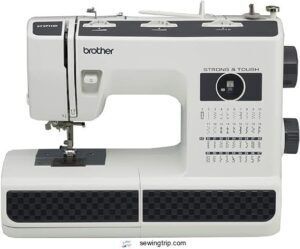
The Brother ST371HD punches above its $189.99 price tag, offering exceptional value. Its sturdy construction features a metal interior frame that minimizes vibration during demanding tasks, such as sewing thick materials like nylon or canvas collar straps.
This machine provides 37 stitches, including zigzag and straight options ideal for webbing seams. Setup is streamlined with an automatic needle threader and a convenient drop-in bobbin, ensuring quick preparation for projects.
While its speed of 800 stitches per minute doesn’t match industrial machines, it reliably handles regular collar projects with ease, delivering consistent performance for hobbyists and professionals alike.
| Best For | Hobbyists, beginners, and small-shop sewers who regularly work with heavy fabrics like denim or canvas and want a reliable, no-fuss mechanical machine without spending a lot. |
|---|---|
| Stitch Count | 37 stitches |
| Frame Material | Heavy-duty metal |
| Max Stitch Speed | 800 SPM |
| Included Feet | 6 sewing feet |
| Power Source | 120V US only |
| Warranty | 25-year limited |
| Additional Features |
|
- Handles thick, heavy-duty materials really well — denim, canvas, faux fur — without choking or skipping stitches.
- Setup is genuinely easy: the automatic needle threader and drop-in bobbin save a ton of time, especially if you’re just getting started.
- At $189.99 with a 25-year warranty and lifetime support, the long-term value is hard to argue with.
- Foot pressure isn’t adjustable, so thin or delicate fabrics can be tricky to work with.
- No computerized features at all — if you want embroidery or saved stitch settings, you’ll need to look elsewhere.
- The bobbin size doesn’t match older Brother models, so spare bobbins you already have may not work.
6. Singer HD500 Classic Sewing Machine
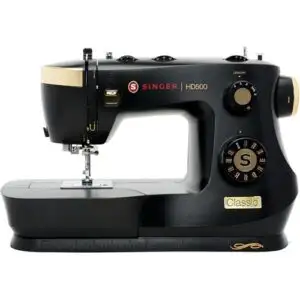
If you want a classic look without giving up serious power, the Singer HD500 delivers both. Its full metal frame keeps vibration low while you push through thick nylon webbing or denim collar straps.
You get 23 built-in stitches, adjustable stitch length up to 4 mm, and a top drop-in bobbin that’s easy to monitor mid-project.
The built-in needle threader speeds up setup to. It’s a reliable everyday machine for hobbyists making sturdy, good-looking collars.
| Best For | Hobbyists and home sewers who regularly work with heavy fabrics like denim, canvas, or multiple layers and want a powerful, stable machine without a steep learning curve. |
|---|---|
| Stitch Count | 32 stitches |
| Frame Material | Full metal |
| Max Stitch Speed | Not specified |
| Included Feet | 5 presser feet |
| Power Source | 120V AC US model |
| Warranty | Not specified |
| Additional Features |
|
- 50% more motor power than standard models means you can push through thick fabrics and multi-layer projects without the machine stalling out
- The full metal frame keeps things steady at high speeds, so you get cleaner stitches and less vibration even during long sewing sessions
- Auto needle threader and top drop-in bobbin make setup quick and beginner-friendly — less fussing, more sewing
- No printed manual included — you’ll need to download the PDF from Singer’s site, which can be annoying mid-project
- The needle position selector has been known to get stuck on the left setting, and fixing it usually means a trip to a repair shop
- The plastic bobbins that come in the box can float during fast stitching — worth grabbing metal replacements if you’re doing heavy-duty work
7. Singer Heavy Duty 4411 Sewing Machine
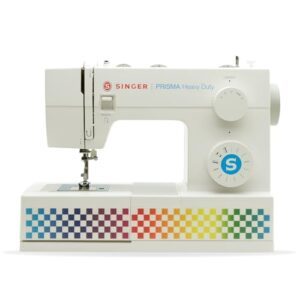
If budget is a real concern, the Singer Heavy Duty 4411 is worth a close look. It runs up to 1,100 stitches per minute and manages thick nylon webbing without bogging down. The metal frame keeps vibration low, and the stainless steel bed plate moves fabric smoothly.
You get 11 built-in stitches, adjustable stitch length, and a top drop-in bobbin for easy monitoring.
It’s a solid, no-fuss choice for hobbyists making sturdy dog collars at home.
| Best For | Hobbyists and beginners who want a reliable, no-frills machine that handles heavy fabrics like denim and canvas without breaking the bank. |
|---|---|
| Stitch Count | 69 applications |
| Frame Material | Metal and plastic |
| Max Stitch Speed | 1,100 SPM |
| Included Feet | Multiple presser feet |
| Power Source | 110-120V AC US |
| Warranty | Not specified |
| Additional Features |
|
- Powerful motor hits up to 1,100 stitches per minute, so it chews through thick materials without slowing down
- Metal frame construction keeps things sturdy and reduces vibration during long sewing sessions
- Comes with a solid accessory bundle (worth ~$60) so you’re not scrambling to buy extras right away
- Only 11 stitch patterns, so if you want fancy decorative options, you’ll outgrow it fast
- No automatic needle threader, which gets old quickly if you’re sewing for hours
- US plug only — not a great fit if you’re outside North America
8. Juki DDL8100 Industrial Sewing Machine
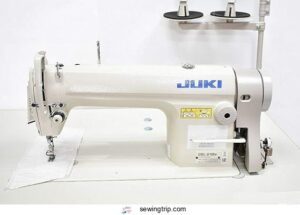
The Juki DDL-8100 is a serious step up from any home machine. It runs at 4,500 stitches per minute and tackles thick nylon webbing or multi-layer leather without flinching. This industrial workhorse handles demanding materials effortlessly.
The machine features an auto-lubricating hook for minimal maintenance and a knee-operated foot lift for hands-free control—critical when maneuvering stiff materials like collar straps. These design choices prioritize efficiency and precision during complex tasks.
It’s a single-needle lockstitch machine, lacking a walking foot, but excels in high-volume production. For collar manufacturing, its robust performance and reliability justify its place in any serious workshop.
Pairing it with bonded nylon thread for heavy-duty sewing keeps seams smooth and durable even through long production runs.
| Best For | Small shop owners or serious hobbyists who need industrial-grade speed and durability for high-volume garment, upholstery, or leather work. |
|---|---|
| Stitch Count | Single lockstitch |
| Frame Material | Industrial steel |
| Max Stitch Speed | 4,500 SPM |
| Included Feet | No walking foot |
| Power Source | 110V single-phase |
| Warranty | Not specified |
| Additional Features |
|
- Blazing fast at 4,500 stitches per minute — handles thick, tough materials without breaking a sweat
- Auto-lubricating hook and knee-operated foot lift keep things running smoothly with less fuss
- Comes with a large 48×20 in work table, LED lamp, and a solid accessory kit right out of the box
- No walking foot and single-needle only — not the right pick if your work needs more than a basic lockstitch
- Heavy and bulky at 57 lbs, so setup usually takes two people and some patience
- Assembly can be a headache — no printed manual, and some units have arrived with missing screws or table damage
9. Beamnova Heavy Duty Leather Sewing Machine
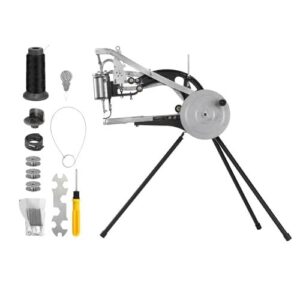
The Beamnova Heavy Duty Leather Sewing Machine punches above its weight for a home-based collar maker. It manages leather up to 4 mm and denim up to 6 mm, ensuring most collar projects remain within its capabilities.
The servo motor runs quietly and stays cool during extended sessions, enhancing durability and user comfort. Included accessories—a walking foot, open toe foot, and Teflon foot—provide a solid foundation for diverse tasks.
A standout feature is the stitch length adjustment up to 6 mm, which allows for precise control over seam quality, especially on thick materials like straps. This versatility makes it a reliable choice for demanding projects.
| Best For | Crafters, cobblers, and hobbyists who work with leather, canvas, or heavy fabrics and need a portable machine that doesn’t require a dedicated workspace. |
|---|---|
| Stitch Count | Multi-material stitch |
| Frame Material | Alloy steel |
| Max Stitch Speed | Not specified |
| Included Feet | Not specified |
| Power Source | Not specified |
| Warranty | Not specified |
| Additional Features |
|
- Handles a wide range of materials — leather, denim, canvas, rubber — making it genuinely versatile for shoe repair, bag making, and garment work.
- Lightweight aluminum column and freestanding tripod design make it easy to move between a workshop, shop floor, or job site.
- Low-noise operation and efficient bobbin system help produce tight, consistent stitches — especially handy for detailed leatherwork.
- Assembly can be a headache; screws need careful tightening and some units arrive with misaligned gears or bent arms right out of the box.
- The included manual is reportedly vague, so expect some trial-and-error before you get clean stitches.
- Bobbin tension can run too tight on some units, causing thread to pop or stitching to fail until you dial things in.
10. Lupengshop Industrial Manual Leather Sewing Machine
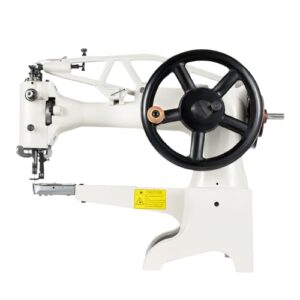
The Lupengshop Industrial Manual Leather Sewing Machine delivers full control over every stitch, built on a solid cast-iron frame to handle thick leather and nylon webbing without wobbling. Its 360° rotatable presser foot enables stitching in any direction, ideal for curved collar edges.
While it tops out at 500 SPM, it’s better suited for occasional projects than high-volume production. Weighing nearly 60 lbs, it requires a sturdy bench for stable operation.
| Best For | Leather crafters and small-shop owners who need precise, quiet stitching on thick materials like shoe uppers, patches, and curved collar edges. |
|---|---|
| Stitch Count | Omnidirectional stitch |
| Frame Material | Cast iron |
| Max Stitch Speed | 500 SPM |
| Included Feet | Rotating presser foot |
| Power Source | Manual/electric |
| Warranty | Not specified |
| Additional Features |
|
- The 360° rotating presser foot makes it easy to stitch curves and tight angles without repositioning your work
- Cast-iron build keeps things rock solid—no vibrating or shifting when you’re pushing through heavy leather
- Quiet motor means you can run it at home without driving everyone around you crazy
- Hand-cranking for long sessions will wear you out faster than an electric machine would
- At nearly 60 lbs, this thing isn’t going anywhere—you’ll need a serious bench to park it on
- Cast iron can rust if you’re not careful about maintenance, and you’re stuck with white if the color matters to you
Best Machine Types for Dog Collars
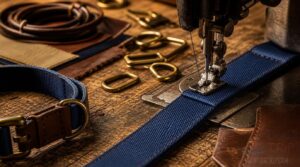
Not every sewing machine is built the same, and that gap really shows when you’re pushing through double-layer nylon or thick leather. The right machine type can mean the difference between clean, strong collars and a frustrating pile of jammed thread.
Here’s a look at the main types worth knowing before you buy.
Heavy-duty Home Sewing Machines for Beginners
For beginners, a heavy-duty home machine is the smartest starting point. The SINGER Heavy Duty 4452 Sewing Machine and Brother CS6000i Sewing and Quilting Machine both offer entry-level torque, simple needle threading, and an easy-to-navigate interface, making them ideal for first-time users.
Each machine includes a walking foot and affordable accessories, ensuring budget-friendly options for collar projects.
Their high stitch speed capability reaches up to 1,100 stitches per minute, enhancing efficiency for beginners.
Computerized Machines for Decorative Collar Stitching
Computerized machines unlock a new dimension of collar creativity beyond the basics. Their extensive stitch library and Touchscreen UI allow you to preview designs before sewing a single stitch. Key features include:
- Pattern Library with 100+ built-in designs
- USB Transfer for custom patterns you create
- Digital Preview via LCD screen interface
Automated Thread Tension and computerized sewing controls ensure clean decorative stitching across every collar.
Straight-stitch Machines for Speed and Consistency
While computerized machines shine at decoration, straight-stitch machines excel when speed and clean seams matter most. Gear-Driven Motors ensure precise needle timing and reduce flex at high stitching speeds—with some models reaching 1,500 stitches per minute.
Tension Calibration, Needle Stabilization, and Bobbin Path Efficiency collaborate to deliver consistent, high-quality results. These technical features make straight-stitch machines indispensable for demanding tasks.
For dog collar production, heavy-duty straight-stitch models are hard to beat, combining durability with the precision required for industrial-grade output.
Industrial Machines for Thick Leather and Webbing
When you’re stitching thick leather or stacked nylon webbing, an industrial sewing machine changes everything. Servo Motor Control keeps your speed steady without overheating, ensuring consistent performance.
Gear Train Design pushes through multiple layers without stalling, providing the power needed for demanding materials.
Precision Feed Calibration paired with a walking foot eliminates slipping, guaranteeing smooth, accurate stitching.
A rigid metal frame cuts vibration, enhancing stability during operation.
Built-in Maintenance Scheduling keeps your heavy-duty leather stitching running longer, optimizing longevity and reliability.
Manual Leather Machines for Occasional Collar Making
If you only need a collar or two each week, a manual leather machine fits your workflow just right. Hand Crank Operation keeps noise level management a non-issue, and workbench integration is simple on any solid table.
The learning curve is gentle, and with the right leather needle and heavy-duty needles, your metal-frame machine manages dog collars cleanly every time.
When to Choose Domestic Versus Industrial Models
Choosing between domestic and industrial comes down to your output goals. For occasional batches, a domestic machine covers your space requirements without the overhead. But if you’re scaling up, an industrial sewing machine wins on longevity expectations and lower maintenance frequency.
Power consumption drops considerably with servo motors too. Your upgrade path should match your weekly collar count, not your wishlist.
Essential Features for Collar Sewing
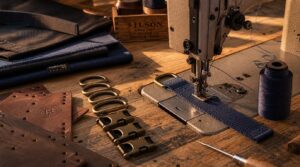
Not every sewing machine can handle the demands of a dog collar — thick webbing, stacked layers, and heavy hardware all push a machine to its limits.
The right features make the difference between a collar that holds and one that falls apart on your first big dog.
Here’s what to look for before you buy.
Strong Motor for Thick Nylon and Leather
A weak motor is your worst enemy when sewing double-layer nylon or thick leather. For dog collar manufacturing, you need a sewing machine motor power of at least 500–750 watts. Servo control provides torque consistency and smooth speed regulation without noise, while built-in cooling technology ensures longer motor runtime. These features collectively enable handling real fabric thickness without stalling mid-seam.
A weak motor is your worst enemy when sewing thick nylon or leather — aim for at least 500 to 750 watts
Full Metal Frame for Reduced Vibration
A plastic frame might hold up fine for quilting cotton — but dog collar materials are a different beast. Full metal frame construction cuts vibration by up to 40 percent, keeping your needle aligned stitch after stitch.
Rigid frame construction and vibration damping technology mean quieter operation and fewer skipped stitches.
Metal construction also resists warping over time, so your machine stays accurate through years of heavy-duty construction work.
High Presser-foot Lift for Stacked Materials
When stacking nylon webbing or leather for dog collars, a high presser foot lift makes a real difference. Standard machines offer around 5–6 mm clearance, but heavy-duty sewing machines can reach 12 mm or more, accommodating multiple fabric layers. Always test layer thickness with scraps before sewing.
The walking foot mechanism pairs effectively with these tasks, ensuring smooth fabric feeding. Regular maintenance of the lift mechanism is critical to preserving accurate foot pressure adjustment over time.
Adjustable Stitch Length and Width
Think of stitch length and width as the dials that control everything. For dog collars, stitch length adjustment matters a lot — bar tack points need 0.5–1.0 mm, while nylon webbing seams run best at 2.5–3.0 mm.
Stitch width adjustment shapes edge security. A Digital Stitch Display helps with Stitch Length Calibration and Width Dial Precision, so your material-specific settings stay consistent every time.
Reverse Stitching for Seam Reinforcement
Once your stitch length is dialed in, Start lock and End reinforcement do the real holding work. Four to six short backstitches anchor each seam so it won’t creep or unravel under load.
Backstitch density matters most at buckle zones — that’s where stress peaks.
Balanced needle tension and steady feed coordination keep your dog collars’ seam strength and seam durability consistent every single time.
Drop-in Bobbin Visibility for Fewer Interruptions
Running out of thread mid-seam is frustrating, especially on thick webbing. A drop-in top bobbin with a transparent bobbin cover lets you see exactly how much thread is left before you start a new seam. Clear bobbin window visibility acts as a built-in thread shortage alert.
Jam-proof bobbin designs and visual tension monitoring keep your workflow moving without unexpected stops.
Durable Feed System for Smooth Material Movement
Beyond thread visibility, how your machine grips and moves material matters just as much. A precision feeding system with ratcheting rollers gives you 15–40% more grip on nylon webbing. Feed dog precision and V-shaped guides keep your collar centered within a hair’s width.
Cam clamps hold layers flat, while surface coatings cut resistance.
Pair that with a walking foot on a heavy-duty metal frame, and fabric tension control stays rock solid.
Walking Foot Benefits for Webbing
A walking foot is one of those features that makes a real difference once you start sewing nylon webbing. Without it, layers shift, stitches skew, and collars end up looking uneven — especially around buckles and D-rings.
Here’s what you need to know about why it matters and when you actually need one.
Why Nylon Webbing Slips While Sewing
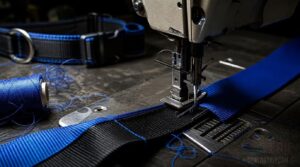
Nylon webbing looks easy to sew — until it doesn’t.
The smooth coating creates a Coating Slip Factor that lets layers glide instead of grip.
Add Tension Mismatch between your bobbin and upper thread, and the webbing shifts sideways.
The Needle Angle Effect pushes material off-line near hardware.
Weak Feed Dog Bite and Edge Grip Loss make every stitch a guessing game.
How a Walking Foot Feeds Layers Evenly
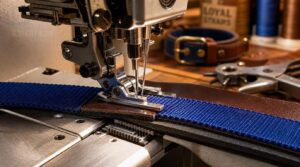
A walking foot solves the slip problem by using Synchronized Feed Dogs above and below your fabric. The top feed moves in sync with the bottom, giving you Even Layer Advancement through every stitch.
Pressure Balance Control keeps all layers moving as one unit.
The Treaded Foot Grip holds nylon webbing and leather firmly, while Layer Thickness Compensation adjusts automatically — no shifting, no skipped stitches.
Preventing Puckering on Thick Collar Straps
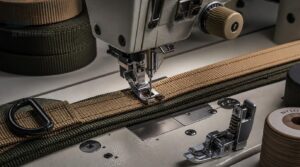
Puckering usually starts before you even thread the machine. Moisture removal from straps matters — damp webbing shifts under the needle and throws off layer alignment instantly. Keep your presser foot adjustment snug but not crushing. Consistent tension across every layer stops edge rolling before it starts.
These small steps are the real importance of a walking foot for thick fabrics — they make stitch quality control easy.
Improving Stitch Consistency Around Hardware
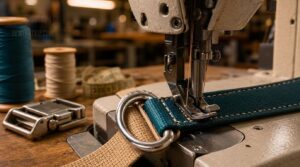
Hardware is where stitch consistency gets tricky. A walking foot keeps synchronized feed motion steady, preventing layers from shifting around buckles or D-rings.
Follow these five steps for reliable results:
- Set balanced thread tension before each hardware pass
- Use heavy duty needles for precise needle entry
- Maintain hardware clearance control near edges
- Lock in uniform stitch length throughout
- Trust your metal frame to support thread tension management
When a Walking Foot is Essential
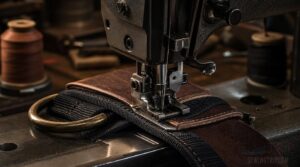
Some projects demand a walking foot — no exceptions. Multi-layer leather, heavy canvas projects, and slip-prone fabrics will fight you without one.
When you’re doing high-speed stitching through stacked nylon and hardware zones, precision seam alignment breaks down fast without proper feeding.
The importance of a walking foot for thick fabrics is simple: it keeps every layer moving together, so your seams land exactly where they should.
Alternatives for Machines Without Walking Feet
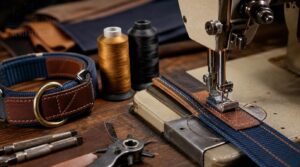
No walking foot? You’ve still got options. A dual feed system or pressure feed foot can mimic even feeding on slick nylon webbing.
An ankle presser with a textured sole improves grip on heavy-duty materials.
Adjust the shank offset for thick leather layers.
A knee lift lets you manage fabric compatibility on the fly without losing control of your seam.
Best Stitches for Strong Collars
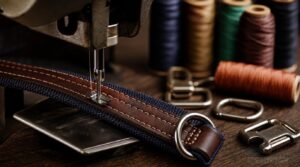
Not every stitch do the same job on a dog collar.
Some hold buckles under pressure while others keep edges from fraying or add a personal touch. Here are the stitches worth knowing before you start sewing.
Straight Stitch for Basic Collar Seams
The straight stitch is your foundation — simple, flat, and reliable for joining collar layers cleanly.
Set your stitch length between 2.0 and 3.0 mm for solid fabric compatibility across nylon and leather. Good tension balance keeps seams tight without puckering.
- Backstitch at both ends for secure edge finishing
- Check needle wear regularly to avoid skipped stitches
- Maintain speed consistency for even seam allowance throughout
Triple Stitch for High-stress Reinforcement
When one line of stitching isn’t enough, triple stitch steps in. It runs three parallel thread paths through your collar material, and the load sharing mechanics mean tension spreads evenly instead of stressing one spot. For heavy duty dog collars, that redundancy is most beneficial around high-pull areas.
Use backstitch reinforcement at both ends, and keep stitch density impact in mind — 3 to 4 stitches per millimeter works well. Thread tension optimization is critical to avoid puckering between lines.
Zigzag Stitch for Flexible Edge Security
Triple stitch manages pull strength, while zigzag stitch manages edge integrity. On nylon webbing, edges fray quickly without Edge Lock Reinforcement. A zigzag stitch for heavy material seals fibers under each pass, preventing fraying.
For optimal results, set Zigzag Width Adjustment between 2.5 and 5.0 mm. Apply proper Thread Tension Management and use a Ballpoint Needle Selection (size 90/14). These parameters ensure Stitch Density Control, which is critical for durability in dog collars when using heavy-duty sewing machines.
Box Stitch for Buckle and D-ring Areas
Where zigzag manages edges, the box stitch manages hardware points. Around buckles and D-rings, Load Distribution Geometry matters most. A box stitch spreads tension across four sides instead of one thread line — that’s what keeps collars intact under real pulling force.
Your Box Stitch Size usually runs 6–10mm per side. Use Corner Backstitch to lock every angle. A sharp needle — Needle Point Sharpness is non-negotiable here — prevents fraying at corners.
- Keep each side of your box equal length for balanced load distribution
- Use bonded nylon thread rated for high tensile strength
- Run 2–4 interior rows to increase resistance without bulk
- Apply Edge Sealant Application around hardware contact points
- Select a heavy‑duty sewing machine with walking foot support for clean, even stitching
These stitch types that guarantee durable dog collars depend on sewing machine features that affect stitch quality — especially consistent feed and motor torque. Choosing the best sewing machine for dog collar production means finding one that holds tight corners without skipping.
Bar Tack Stitch for Load-bearing Points
Bar tacks are your secret weapon at load-bearing points. Your Placement Strategy should target buckle holes and D-ring junctions — exactly where fabric tears first.
Stitch Density and Thread Tension work together to lock fibers tight without puckering.
Think of it as Reinforcement Geometry: multiple passes over a 6–12mm patch distribute stress broadly.
Failure Testing confirms a clean bar tack holds firm after repeated pulls.
Decorative Stitches for Custom Dog Collars
Decorative stitching turns a plain collar into something unique. Your machine’s adaptable stitch library opens up real customization options for custom-made dog collars — from Contrast Stitch Colors to Metallic Thread Accents that catch the light.
- Use UV‑Resistant Thread for lasting color outdoors
- Apply Embroidery Hooping Techniques to keep nylon flat
- Follow Monogram Placement Tips to avoid the buckle zone
- Switch to an embroidery needle for cleaner fills
- Use free-arm capability to maneuver tight collar curves
Stitch Length Settings for Thick Materials
Stitch length matters more than most people realize. For thick dog collars, set your adjustable stitch length between 3.5 and 4.5 mm. Longer seam spacing prevents stitch density from weakening the fabric.
Proper needle clearance and thread tension balancing keep seams smooth through bulk material feed. These specifications are essential for sewing thick fabrics and heavy-duty materials for dog collars.
Dog Collar Materials and Compatibility
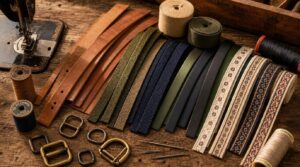
The material you pick shapes everything — how the collar holds up, how it feels on your dog, and how easy it is to sew. Not every machine manages every material the same way, so knowing what you’re working with matters before you buy.
Here’s a look at the most common collar materials and what each one demands from your machine.
Nylon Webbing for Everyday Dog Collars
Nylon webbing is the go-to material for everyday dog collars — and for good reason. It’s tough, dries fast, and holds up through mud, rain, and rough play.
For real durability, look for a 600 to 900 denier selection. UV protection keeps colors sharp outdoors, while reflective options improve night visibility.
Colorfastness testing ensures colors won’t bleed after washing. Eco-friendly webbing options are also available now.
Leather for Premium and Durable Collars
Full Grain Leather is the premier choice for premium dog collars. It’s dense, wear-resistant, and improves with age. Vegetable Tanning produces leather that develops a rich patina over time, resisting cracking.
Aim for a leather thickness of 3–6mm to ensure stability. Proper edge finishing prevents fraying under repeated buckle stress, maintaining durability.
For exotic leathers like buffalo, use machines with strong material compatibility. Setups like the CB4500 or BEAMNOVA Leather Stitching systems handle specialized stitching techniques effectively.
Biothane for Waterproof Outdoor Collars
Biothane is basically leather’s tougher, waterproof cousin. It withstands saltwater, mud, and rain without cracking or absorbing odors, making Odor Control and Mold Prevention non-issues. It stays flexible across temperatures, so Temperature Stability is built in.
Add Reflective Add-ons or UV Resistance strips easily.
Use heavy‑duty needles, a walking foot attachment, and match your machine’s material compatibility for clean, durable stitching.
Canvas for Casual Handmade Collars
Canvas is a great pick for casual, handmade collars — especially if breathable comfort and lightweight wear matter to you. Stick with 8 to 10 oz duck canvas for solid fabric thickness handling.
A heavy-duty sewing machine with a metal frame and walking foot ensures layers feed smoothly during construction.
Add DIY embellishments like patches, and prioritize eco-friendly sourcing and smart pattern selection to create a collar that’s uniquely yours.
Cotton Overlays for Decorative Designs
Cotton overlays let you turn a plain collar into something personal. Their matte finish looks clean and understated — no shine, just style.
You can customize them with dye sublimation printing or free-motion embroidery for truly one-of-a-kind results.
Here’s what makes cotton overlays work well:
- Tight plain weave prevents fraying at curved edges
- Fabric layering with interfacing stops puckering near hardware
- Mercerized luster finishes add color depth without bulk
- Multilayer feeding stays smooth with a walking foot
- Integrating decorative stitches into functional collars becomes simple with free-arm capability
Matching Machine Strength to Material Thickness
Not every machine can handle every material. Torque Matching matters here — your motor needs enough grunt to push heavy-duty needles through thick stacks without stalling.
| Material | Layer Count Limits |
|---|---|
| Nylon webbing | Up to 6 layers |
| Leather | Up to 4 layers |
| Biothane | Up to 3 layers |
| Canvas | Up to 5 layers |
| Cotton overlay | Up to 8 layers |
A metal frame manages Vibration Dampening naturally, ensuring clean and consistent needle penetration. Heat Management becomes critical during extended operation — industrial machines maintain cooler temperatures longer.
Materials Beginners Should Avoid at First
Some materials will fight you every step of the way when you’re just starting out. Skip these five for now:
- Heavy denim — stalls low-torque motors fast
- High-stretch knit — skips stitches without stretch needles
- Ultra-light webbing — curls, shifts, and frays easily
- Silk lining — slips and puckers under pressure
- Vinyl coating — melts under needle heat
Stick with standard nylon webbing first. Master that before tackling leather collars or thick fabrics.
Needles, Thread, and Accessories
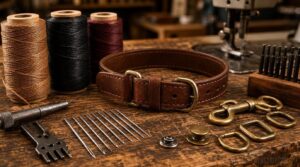
Your machine is only as good as what you put in it. The right needles, thread, and accessories can mean the difference between clean, strong collars and skipped stitches or broken seams.
Here’s what you actually need to get the job done right.
Best Needle Sizes for Nylon Webbing
The right needle is crucial for your collar seams. For nylon webbing, Size 18 is the recommended starting point—it effectively penetrates dense layers without skipping stitches.
Sharp vs. ballpoint needles matter significantly: nylon’s fused fibers require a sharp universal tip, not a ballpoint. Always verify Needle Eye Clearance to ensure heavier thread passes freely.
| Webbing Thickness | Needle Size |
|---|---|
| Light nylon (1–2 layers) | Size 14 |
| Standard webbing | Size 16 |
| Thick webbing (3–4 layers) | Size 18 |
| Extra-thick/double webbing | Size 20 |
| Heavy canvas blend | Size 21 |
Thread and needle pairing is straightforward: heavier thread demands a larger eye. Follow Needle Longevity Tips by replacing needles every 2,000 stitches to maintain clean seams.
Leather Needles for Thick Collar Projects
Leather dog collars demand a needle built for the job. A leather needle with a Chisel Tip cuts cleanly through dense hides without tearing fibers. Forged from High Carbon steel, these needles stay sharp longer on your sewing machine for thick fabrics.
Keep these habits in mind:
- Use Dedicated Needle Sets for leather only
- Do Burr Inspection before every session
- Match needle size to thread for proper Thread Compatibility
- Replace every 2–3 projects for lasting stitch durability
Bonded Nylon Thread for Collar Strength
Thread choice quietly makes or breaks a collar. Bonded nylon thread is the go-to for nylon webbing and heavy-duty leather because its protective coating delivers serious Abrasion Resistance, Heat Tolerance, and Chemical Resilience.
The uniform diameter ensures Dimensional Stability and Uniform Stitching across every seam.
It also addresses material compatibility challenges with nylon, leather, and bioplastic collars and navigates heavy-gauge thread handling without breaking or jamming.
Heavy-duty Presser Feet for Stable Feeding
Your presser feet can make or break how smoothly thick straps feed through the machine. Heavy-duty metal feet stay firm under pressure and resist deformation on nylon webbing far better than plastic ones. A walking foot keeps layers moving evenly.
Teflon-coated soles glide over slick materials without sticking. Look for adjustable pressure settings and universal foot adapters to enhance your machine’s versatility.
Clips Instead of Pins for Thick Straps
Pins can shift thick webbing and leave marks — clips are a smarter move. Metal jaw clips lock nylon and leather flat without surface damage, giving you clip safety and better clip material match across heavy-duty layers.
Space them every 2–3 inches for solid clip positioning. Release one at a time ahead of your walking foot, and your clip workflow optimization keeps feeding smooth and seams clean.
Edge Guides for Straight Collar Stitching
An edge guide is your secret weapon for ruler-straight collar stitching. It attaches to your presser foot and locks fabric at a fixed distance from the needle. Adjustable settings let you dial in your seam width exactly.
For Guide Alignment, test on scrap fabric first. This ensures precision before working on your actual project.
Metal guides offer better material compatibility with leather and webbing, especially when paired with a walking foot. This combination enhances durability and control for heavier materials.
Hardware Tools for Buckles and D-rings
Getting buckles and D-rings positioned right makes or breaks a collar’s durability. The right tools take the guesswork out of hardware placement entirely.
- Clamp Grip Strength holds buckle tongues up to 6 mm securely during bar tacking
- D-ring Alignment rails keep hardware parallel for consistent four-point buckle placement
- Punch Hole Consistency with adjustable punches (2–8 mm) enables clean prong replacement options and press die accuracy
Buying Criteria by Skill Level
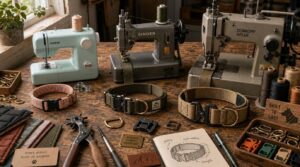
Not every machine fits every maker — a weekend hobbyist and a small business owner need very different things.
The right choice depends on where you’re starting and how far you want to go.
Here’s what to look for at each level.
Beginner-friendly Features for First Collars
Your first collar doesn’t need a complicated machine. Look for Color‑Coded Dials, a top drop‑in bobbin, and an automatic needle threader — these small features save big frustration. A Portable Carry Case and Auto Power‑Off make it practical anywhere.
| Feature | Why It Helps Beginners |
|---|---|
| One‑Touch Stitch | Selects stitches instantly |
| Quick‑Start Templates | Reduces setup guesswork |
| Built-in Stitches | Covers collar basics easily |
| LED Lights | Improves stitch visibility |
A solid budget‑friendly option manages your first collars confidently.
Mid-range Features for Frequent Sewing
Once you’re making collars regularly, a budget-friendly option starts showing its limits fast. Look for a metal frame, steady motor heat management, and thread tension consistency — these keep your work clean session after session.
An automatic needle threader and easy needle change ease and reduce downtime. More built-in stitches and better sewing speed let you produce confidently without burning out your machine.
Heavy-duty Requirements for Leather Collars
Leather collars demand more than your average machine can handle. You need a metal frame, a walking foot, and heavy-duty needles — no shortcuts here. Material thickness and stitch density both matter for safe, lasting seams.
- Edge reinforcement keeps stitching from splitting under load testing
- Hardware integration around buckles requires box stitching and strong feed
- The CB4500 best-selling heavy-duty leather sewing machine manages all of it
The CB4500 best-selling heavy-duty leather sewing machine handles these challenges effectively.
Commercial Features for Small Pet Businesses
Running a small pet business means production efficiency isn’t optional — it’s everything. You need commercial sewing equipment built for daily runs of 8 to 12 collars per hour.
Servo motors improve energy efficiency and cut noise during long shifts. Factor in maintenance plans, warranty management, and operator training from day one.
A solid ROI calculation turns your heavy-duty sewing machine into a real business asset.
Stitch Options Worth Paying More For
Some stitch options are genuinely worth the extra cost when you’re making dog collars that need to last.
- Bar tack stitch technique locks buckle points under real load
- Programmable stitch patterns let you repeat decorative and structural seams consistently
- Stitch density control prevents gaps in high-stress zones
- Heavy gauge thread handling keeps thread tension stable on thick webbing
- Built-in stitches like triple and box stitches eliminate manual setup
Double needle and multi-needle setups add seam allowance precision that basic machines simply can’t match.
Build Quality and Warranty Considerations
A full metal frame isn’t just a selling point — it’s what keeps your machine stitching straight after thousands of collars. Metal frame durability matters more than most buyers realize. Heavy duty construction and servo motor longevity reduce component wear resistance issues over time.
Check warranty coverage limits carefully and confirm repair service availability in your area before buying.
Common Buying Mistakes to Avoid
Underbudgeting accessories — needles, feet, and thread — add up fast. Assuming material compatibility without testing is another costly error. Both mistakes highlight the importance of thorough preparation and financial planning.
Don’t choose price over features just to save upfront. Always run a machine test before committing to a purchase. These steps ensure long-term value and functionality.
Ignoring the service network in your area risks turning small repairs into long delays. Prioritize accessibility to maintenance support for uninterrupted workflow.
Cost, Speed, and Business Use
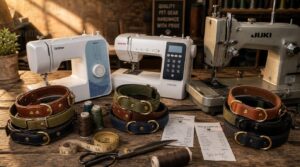
Picking the right machine comes down to how often you sew and what you want to get out of it. A hobby sewist and a small business owner have very different needs — and very different budgets.
Here’s a breakdown to help you find the right fit.
Budget Machines for Occasional Collar Projects
You don’t need to spend a fortune to start making dog collars at home. Budget-friendly options in the $150–$350 range handle nylon webbing and light leather surprisingly well. Their portable design makes switching workspaces easy, and low-noise motors keep your home workshop peaceful.
Easy maintenance, spare parts availability, and real energy savings make these the best value for casual DIY dog collar projects.
Mid-range Machines for Regular Production
Mid-range machines like the Singer Heavy Duty 4452 Sewing Machine and Brother CS6000i Sewing and Quilting Machine hit the sweet spot for regular collar production. They offer sewing speeds up to 1,100–1,500 spm, programmable acceleration, and a boost mode for long straight seams. These features ensure efficient performance for demanding tasks.
Noise reduction technology and consistent thread tension enhance usability, while manageable service intervals minimize downtime. Together, these qualities make them a genuinely smart, budget-friendly option for growing your craft.
Industrial Machines for High-volume Sewing
When volume picks up, industrial machines for dog collars and leashes become the real workhorses. Servo Motor Precision keeps torque steady through thick nylon and leather without stalling. Automated Thread Trimming cuts cycle time on every seam. Closed-Loop Cooling prevents overheating during long runs.
Features like Remote Machine Monitoring and Rapid Changeover Programming help your production efficiency stays high — shift after shift.
Sewing Speed and Weekly Collar Output
Speed matters more than you’d think. A skilled operator on a midrange machine usually produces 40–60 nylon collars weekly. Industrial setups push that to 400. Here’s what drives Throughput Scaling:
- Stitch Rate Optimization at 1,100–1,500 stitches per minute keeps quality intact
- Downtime Reduction through pre-wound bobbins cuts losses by up to 25%
- Production Time Management via walking feet boosts productive sewing speed by 15%
Motor Power and Long-term Reliability
Machine motor power is what keeps you stitching through thick nylon without stalling. A strong motor with solid Peak Torque manages the hardest layers.
Duty Cycle and Thermal Protection determine how long it runs before overheating, ensuring sustained performance.
Motor Bearing Wear quietly kills reliability over time, demanding attention to longevity.
A metal frame and heavy-duty construction reduce vibration, protecting every moving part longer.
Calculating Return on Investment
Your break-even point arrives faster than expected. At $15 profit per collar and 25 collars weekly, a $200 machine pays off in about three weeks. That’s a short payback period.
Factoring in the depreciation impact on taxes further reduces your real cost. This financial advantage compounds the machine’s value beyond the initial investment.
A straightforward cost-benefit analysis confirms strong ROI. Labor savings and fewer returns quietly stack your profit margin, ensuring long-term gains.
When to Upgrade Your Sewing Machine
Once your ROI clicks into place, the next question is: when do you push further? If motor torque drops noticeably under load or service interval costs start piling up before warranty expiry, that’s your signal.
Run a quick cost-benefit analysis — if feature gaps are slowing output past four heavy collars weekly, a sturdier machine pays for itself fast.
Frequently Asked Questions (FAQs)
Do you need a special sewing machine for fur?
You don’t need a special machine for fur.
A heavy-duty sewing machine with a walking foot, metal frame, adjustable feed pressure, and a slip-resistant foot reliably manages plush nap handling and fur seam strength.
Do I need a license to sell dog collars?
Selling dog collars won’t bury you in a mountain of red tape. Most sellers just need a basic business license, a seller’s permit, and product liability insurance to get started legally.
How to make a dog collar with a sewing machine?
Start with your dog’s neck measurement, then cut your webbing, layer the strap, insert hardware, and finish the edges. A heavy-duty sewing machine locks it all together cleanly.
What fabric do you use for dog collars?
Nylon webbing is the go-to choice for most dog collars. It is strong, dries fast, and resists fading.
Biothane, polyester, and soft neoprene are also popular materials and fabrics for dog collars.
Can you sew a dog collar?
Yes, you can sew a dog collar at home. With the right material preparation, thread tension, and seam durability in mind, a heavy-duty sewing machine manages nylon webbing and leather with ease.
How to manufacture a dog collar?
Think of it like building a tiny strap assembly. You begin by cutting your webbing, sealing the edges, and layering the hardware.
Next, stitching box patterns at stress points and running quality testing ensures durability.
Can I use a sewing machine for leather?
You can use a heavy-duty sewing machine to sew through leather effectively. Employ a sharp leather needle, roller foot, and heavy thread for optimal results.
Adjust your motor torque and feed pressure to match the material thickness, ensuring clean, durable stitching.
Are heavy-duty machines only for experts?
Not at all. Most heavy-duty sewing machines come with user-friendly interfaces, quick setup guides, and beginner tutorials. Error-proof design and automation features make them surprisingly easy to pick up fast.
How much do I need to spend?
Your Upfront Equipment Cost can start as low as €100 for a basic machine. Budget-friendly options handle simple colors well.
Add €40–€100 annually for maintenance, ensuring long-term efficiency.
Your ROI Calculation Period can be surprisingly short, making this an accessible investment.
Whats the best brand for beginners?
Singer wins, hands down. Their Customer Support, Tutorial Library, and Warranty Coverage make starting simple. Starter Bundles, Community Forums, and an automatic needle threader seal the deal.
Conclusion
A craftsman is only as good as their tools. Finding the best sewing machine to sew dog collars means fewer broken seams and more collars you’re actually proud of.
Match the machine to your materials, respect what thick webbing and leather demand, and don’t cut corners on motor strength or frame quality. The right machine doesn’t just finish the job — it makes every stitch worth trusting.
- https://www.wawak.com/sewing/sewing-needles-by-type/heavy-duty-sewing-needles/?srsltid=AfmBOoouk4NRtWUIbwQrYI3ygSK3aAxSd7Gb7bWbwu49hdav45e5l3Rh
- https://countrybrookdesign.com/designer-collar-construction?srsltid=AfmBOopND47Ghu6mjL29PDrp-MffqYU4VwDq8zO8xkU_hKHj8aQXlTnA
- https://www.canvasetc.com/best-thread-needle-heavy-canvas/?srsltid=AfmBOoqev03vZSxTiWCpy0BVPhmWLzc5IsHPwCJMBcsh4GiMbfYMr8_J
- https://www.fieldtexcases.com/blog/walking-foot-complete-guide/
- https://www.thethreadexchange.com/miva/merchant.mvc?Screen=CTGY&Category_Code=nylon-thread-092-whi