This site is supported by our readers. We may earn a commission, at no cost to you, if you purchase through links.
Janome 2212 sits at the center of that stubborn staying power. While computerized models keep adding touchscreens and automatic everything, a dedicated slice of sewists keeps reaching for this cold-steel workhorse instead.
That’s not nostalgia talking; it’s a calculated choice. The 2212 strips away everything that breaks, jams, or requires a firmware update, leaving you with 12 reliable stitches, direct tension control, and a 25-year mechanical warranty that most electronics manufacturers wouldn’t dare match.
Whether you’re buying your first machine or retiring a finicky computerized one, the specs and real-world performance here will tell you exactly what you’re getting.
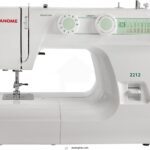
If you’re just getting into sewing and don’t want to wrestle with an overcomplicated machine, the Janome 2212 is a solid starting point.
The front-loading bobbin system is genuinely easier to thread than the drop-in style on a lot of budget machines — you can see exactly what you’re doing, which matters when you’re still learning. With 12 built-in stitches and a 4-step buttonhole function, it covers the basics well: straight seams, zigzag edges, simple garment construction.
The free arm is a nice touch for hemming sleeves or trouser cuffs, and at under 15 pounds it’s easy to carry to a class or tuck away between projects.
That said, holding the reverse switch, the entire time you’re backstitching gets old fast, and the stitch selection won’t satisfy anyone looking to branch into decorative work. Heavy fabrics like thick denim layers will also push it past its comfort zone.
For what it’s worth, though, it doesn’t pretend to be more — and that honesty is worth something.
Best For: Beginners and casual sewers who want a reliable, lightweight mechanical machine for learning basic garments, repairs, and simple quilting without the overhead of digital features.
- The front-loading vertical bobbin is straightforward to thread and less fiddly than drop-in systems, which is a real confidence boost when you’re still building muscle memory.
- At under 15 pounds with compact dimensions, it moves easily between rooms or travels to sewing classes without much hassle.
- The free arm and drop-feed mode give you more versatility than you’d expect at this price — useful for hemming cuffs, darning, or basic free-motion work.
- Holding down the reverse stitch switch continuously is awkward and tiring; a locking reverse lever would have been a much better design choice.
- Thick or layered fabrics like multiple denim plies will cause skipped stitches or stalling — it’s not built for heavy-duty work.
- Only 12 stitches with no decorative or programmable options means you’ll outgrow it quickly if your projects become more ambitious
Table Of Contents
- Key Takeaways
- Janome 2212 Key Features and Specs
- Design, Build, and Portability
- Performance on Different Fabrics
- Ease of Use for Beginners
- Included Accessories and Warranty
- Janome 2212 Pros and Cons
- Who Should Buy The Janome 2212?
- Janome 2212 Vs Other Entry-Level Machines
- Frequently Asked Questions (FAQs)
- Conclusion
Key Takeaways
- The Janome 2212’s cold-steel frame and 25-year mechanical warranty make it a genuinely durable long-term investment that computerized machines at this price simply can’t match.
- It handles cotton, light denim, and multi-layer quilting well, but stretch knits and heavy fabrics expose its motor limits — so know your projects before you buy.
- Manual tension control and the lack of an automatic needle threader add a small learning curve, but numbered threading guides and built-in lighting soften the friction considerably for beginners.
- If you need embroidery, decorative stitches, or modern automation, look elsewhere — but for reliable everyday sewing and mending, the 2212 quietly outperforms its budget price tag.
Janome 2212 Key Features and Specs
Before you decide whether the Janome 2212 fits your sewing routine, you need a clear picture of what it actually offers under the hood. This machine keeps things mechanical and straightforward, but that doesn’t mean it skips the essentials a beginner needs to learn the craft.
Its mechanical simplicity also makes maintenance refreshingly manageable, as this Janome 2212 upkeep and care guide shows.
Let’s walk through the core specs that shape how this machine processes your projects.
Stitch Options and Adjustments
Since the Janome 2212 sticks to mechanical basics, you get 12 built-in stitch patterns covering straight, zigzag, and a four-step buttonhole, plenty for everyday garment work.
The stitch selector dial pairs with the length selector dial to adjust stitch length from 0.5–4mm, while zigzag width runs 0–5mm.
That’s decent pattern versatility, though tension fine-tuning takes practice, and buttonhole consistency improves once you’ve sewn a few test rows.
Understanding the basic straight stitch helps you create strong, reliable seams.
Speed and Stitching Performance
The Janome 2212 reaches a maximum of 860 SPM, which works on everyday projects comfortably. Stitch density consistency holds well on cotton and light denim, and thread break prevention stays reliable at moderate speeds. Here’s what that means in practice:
- Seams stay even on straight runs
- Edge control holds on lightweight fabrics
- Stitch transitions between patterns require minimal rethreading
Tension and Width Controls
The manual tension dial gives you direct control over thread pull — a real advantage when switching between cotton and denim. Rotate it slightly, test on a scrap, and you’ll avoid fabric puckering before it starts.
Stitch width adjustment works through the selector dial itself, though only the zigzag benefits from it, ranging from 0 to 5 mm.
Bobbin and Threading System
The numbered threading path printed on the machine makes manual threading straightforward — follow the steps, and you’re ready in under a minute.
The front-loading bobbin drops in cleanly, with the case seated snugly beneath the needle plate for stable rotation.
Keep lint cleared regularly from that area; buildup quietly disrupts bobbin tension balance and leads to uneven stitches before you notice anything is wrong.
Design, Build, and Portability
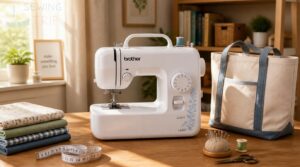
Before you commit to any machine, it’s worth knowing how it actually feels to move, store, and set up — because a sewing machine you’ll actually use beats a capable one gathering dust.
The Janome 2212 has a few physical traits that make it a practical choice for home sewists who don’t have a dedicated craft room.
Here’s what you need to know about how it’s built and how it functions in real-world use.
Dimensions and Weight
At 13.2 pounds, the Janome 2212 sits in that practical sweet spot — light enough to carry one-handed between rooms, stable enough to stay planted during fast stitching. Its compact footprint of roughly 14 by 11 inches won’t crowd a small desk.
That weight distribution keeps the base low, so it won’t tip mid-carry.
Metal Frame Construction
That metal skeleton is doing more work than you’d expect at this price. A cold-formed steel frame keeps every internal component aligned, resisting the flex and vibration that cheaper plastic-bodied machines can’t absorb. Frame alignment precision stays within ±0.2 mm — tight enough to protect stitch consistency session after session.
The cold-formed steel frame holds every component within ±0.2 mm — quiet precision that cheaper machines simply can’t match
Corrosion-resistant enamel coating adds quiet insurance against humidity, supporting genuine long-term machine longevity.
Carry Handle and Storage
Built into the top edge, the folding carry handle aligns precisely with the machine’s center of gravity, so lifting feels balanced rather than awkward. Its curved, smooth-grip profile accommodates most hand sizes comfortably, reducing fatigue during short moves between workspaces.
Meanwhile, the internal accessory drawer keeps presser feet and small tools flush with the body — compact, snag‑free, and instantly accessible without repositioning the machine.
Free-Arm Functionality
The free arm transforms the Janome 2212 into a genuinely adaptable tool for tubular sewing precision. By removing the extension table, you expose a narrow working surface that lets you rotate sleeves, cuffs, and pants legs directly under the needle — eliminating the bunching that plagues flatbed-only machines.
Curved seam control improves noticeably, and specialized foot application becomes far more practical on tight garment contours.
Performance on Different Fabrics
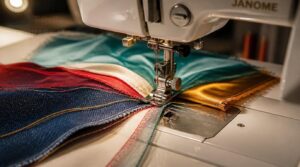
How a sewing machine works with different fabrics is really where it earns — or loses — your trust. The Janome 2212 has some clear strengths here, but also a few honest limitations worth knowing before you commit. Here’s how it performs across the materials you’re most likely to work with.
Cotton and Light Denim
Cotton and light denim are genuinely where the Janome2212 mechanical sewing machine earns its reputation.
Light denim’s diagonal twill weave creates natural durability, and this machine processes it cleanly at controlled speeds.
Stitch quality stays consistent on cotton, delivering neat, even lines that beginners can trust without constant adjustment — a solid foundation for anyone just finding their sewing rhythm.
Quilting and Multiple Layers
Quilting reveals the 2212’s surprising range. With thoughtful layering design planning and reliable basting method stability, it powers through thick stacks — past 10 fabric layers — given the correct needle choice.
- Select low-loft cotton batting for flat, crisp drape
- Pin-baste every few inches to maintain grip
- Pause deliberately at bulky seams to prevent jams
- Avoid free-motion techniques; feed dogs won’t drop
Stretch and Knit Fabric Limits
Where quilting rewards patience, stretch and knit fabrics expose the 2212’s clearest boundary.
Stretch knits recover 90–98% of elongation, demanding a needle that flexes with the fabric — a ballpoint or stretch needle prevents snagging loops. Avoid high heat, which degrades elastane.
Horizontal stretch along the course direction can also pucker seams badly, making this machine a poor fit for knit projects.
Handling Fabric Thickness Changes
Thick seams demand more finesse than knit fabrics, and the 2212 assists them — with your help.
When crossing dense fabric layers, follow these steps:
- Increase stitch length to 3.5–4 mm to prevent puckering through heavy layered seams
- Switch to a size 90/14 or 100/16 needle for better penetration
- Loosen upper tension slightly to reduce thread breaks mid-seam
Slow down, and the 2212 rewards you.
Ease of Use for Beginners
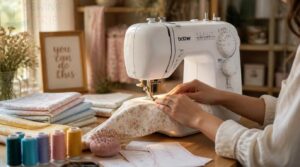
Learning to sew shouldn’t feel like cracking a code, and the Janome 2212 gets that. Its controls are straightforward enough that you can focus on building skills rather than wrestling with the machine itself. Here’s a closer look at the specific features that shape the beginner experience.
Manual Threading Process
Threading the Janome 2212 is refreshingly approachable because numbered steps are printed directly on the machine, guiding your thread path from spool to needle without consulting a manual.
You follow each marked station in sequence — over guides, through tension discs, down to the needle — and the top-loading bobbin drops in just as simply, snapping into place beneath a clear cover.
No Automatic Needle Threader
Where the numbered guides end, the needle itself becomes your final checkpoint — and no automatic needle threader means that last step is entirely on you. For most beginners, passing thread through a needle eye freehand is the steepest part of the learning curve.
Good lighting and a slow, steady hand matter here more than anything else.
Foot Pedal Speed Control
The foot pedal gives you genuine speed modulation — light pressure hovers around 200–400 stitches per minute, while moderate pressure climbs steadily toward 600–800 SPM. That graduated response lets you dial in sewing machine performance without sudden lurches.
A responsive return-to-idle means lifting your foot stops the machine promptly, reducing creep and keeping your stitch placement accurate, which matters most when you’re still building confidence.
Built-in Work Lighting
When the thread catches the light just right, you see exactly what you’re working with — and that’s the quiet advantage of the Janome 2212’s built-in work lighting.
The replaceable bulb places illumination directly over the needle, cutting shadows across your fabric and reducing eye strain during longer sessions.
It’s a small feature, but sewing machine ergonomics like this matter when you’re learning.
Included Accessories and Warranty
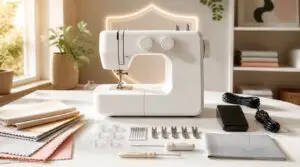
What comes in the box matters just as much as what the machine can do — especially when you’re starting out and don’t have a stash of tools yet. The Janome 2212 ships with a practical set of accessories and backs the whole package with one of the stronger warranties in its price range. Here’s a closer look at what you get.
Presser Feet and Tools
What comes in the box matters more than most people realize. The Janome 2212 includes four presser feet — a zipper foot, blind-hem foot, buttonhole foot, and universal foot — covering the core techniques beginners tackle first:
- Zipper foot for sewing close to coils
- Blind-hem foot for invisible hems
- Buttonhole foot for consistent openings
You also get a needle set, bobbin, screwdriver, and seam ripper.
Accessory Drawer Storage
The drawer is a quiet workhorse hiding in plain sight. It mounts flush beneath the sewing surface, using smooth glide runners and a magnetic catch to keep your full accessory kit secure and within reach.
| Compartment | What It Holds |
|---|---|
| Shallow top tray | Bobbins and needles |
| Deep bottom section | Extra presser feet and spool cases |
| Removable divider | Custom-sized storage zones |
| Anti-slip liner | Prevents accessories from shifting |
| Capacity limit | Up to six presser feet |
The removable tray dividers reconfigure easily as your kit grows, and the satin-finish interior wipes clean with a damp cloth.
Janome’s Warranty Coverage
Janome backs the 2212 with a 25-year limited warranty on mechanical parts — unusually generous for a machine under $150. Electrical components get 5 years of coverage, and labor is included for the first year.
Note that consumables like needles and bulbs aren’t covered, and you’ll need to register your machine and show proof of purchase to activate full protection.
Janome 2212 Pros and Cons
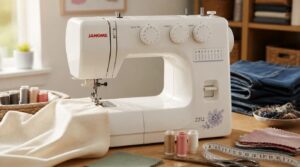
Every machine has its trade-offs, and the Janome 2212 is no different. After putting it through its paces, a clear picture emerges of what it genuinely does well and where it falls short. Here’s an honest breakdown of the pros, cons, and a common frustration you’ll want to know about before buying.
What We Love
There’s a lot to appreciate here. The 12 stitch patterns give you real versatility without overwhelming you, and the stable metal frame keeps everything steady at speed.
- Free-arm makes cuffs and sleeves genuinely manageable
- Built-in lighting keeps your needle area clearly visible
- 25-year mechanical warranty offers notable long-term confidence
For an affordable beginner sewing machine, the Janome 2212 delivers surprising reliability.
What We Found Lacking
That reliability, however, comes with real trade‑offs worth knowing upfront. Tension stability drifts during longer sessions, often demanding mid‑project re‑tuning — frustrating when you’re in a rhythm.
The bobbin system lacks clear feedback if it’s seated incorrectly, and manual tension calibration offers no fabric‑type guidance. For a beginner, that’s extra guesswork you honestly shouldn’t have to carry.
Common Jamming Issues
Jamming usually follows a pattern here. Feed roller stalls happen most when fabric thickness spikes mid‑seam, and the machine stops without warning.
Neglecting the bobbin area — lint buildup especially — compounds this quickly. Mechanical bearing wear and infrequent lubrication quietly worsen grip over time.
Clearing the sensor window and re-threading correctly after each session prevents most of these headaches before they start.
Who Should Buy The Janome 2212?
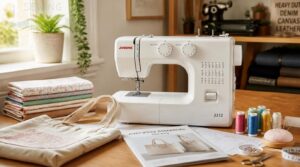
The Janome 2212 isn’t built for everyone, and knowing where it fits can save you from a frustrating purchase. It thrives in specific hands — and falls short in others. Here’s a straightforward look at who it’s really made for.
Best for First-Time Sewists
Starting your sewing journey with the right machine can shape your confidence for years.
The Janome 2212 keeps the learning curve genuinely manageable — two dials, a foot pedal, and 12 practical stitches give you enough variety for real skill development without overwhelming complexity.
It’s a budget sewing machine built for practical practice, letting beginners focus on technique rather than troubleshooting technology.
Good for Mending and Repairs
Beginners aren’t the only ones who benefit here — anyone tackling household repairs will find this mechanical sewing machine surprisingly capable. Reinforced topstitching and backstitching strengthen seam integrity on jeans, while the zigzag stitch performs quick mending techniques on knits.
You can patch denim repair sewing projects with durable repair fabrics like cotton twill, extending garment life preservation through visible mending styles that actually look intentional.
A Reliable Backup Machine
If your primary machine goes down mid-project, the Janome 2212 earns its place as a dependable backup.
Its metal frame construction keeps vibration low, and the top-loading bobbin allows quick switchovers without fuss.
On cotton, denim, and similar everyday fabrics, it delivers consistent stitch quality — exactly what you need when emergency repair readiness matters most.
When to Look Elsewhere
Though dependable, this mechanical machine hits limits fast. Choose elsewhere for embroidery, decorative or stitch-heavy projects, automation preferences like auto-threading, or quieter operation.
- Fabric compatibility gaps: stretch knits, thick denim beyond ten layers
- Professional speed needs: stronger motor power, faster output
- Modern feature requirements: computerized programs, automatic threading
Otherwise, computerized rivals deliver broader stitch libraries, lighter noise, and easy setup.
Janome 2212 Vs Other Entry-Level Machines
Numbers only tell you so much, and the Janome 2212 doesn’t exist in a vacuum—it’s competing for your money against a handful of other beginner machines that promise similar simplicity. So how does it actually stack up when you put it side by side with the competition? Let’s break down where it wins, where it loses, and whether spending more actually gets you more.
Price and Value Comparison
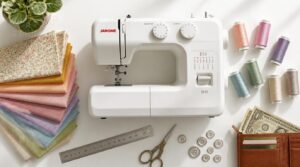
Is the Janome 2212 truly affordable, or just budget friendly? At this price point, you get a metal frame and 12 stitches, balancing budget vs performance for solid value for beginners.
| Feature | Janome 2212 |
|---|---|
| Price | Under $150 |
| Warranty | 1–2 years |
| Frame | Metal |
| Stitches | 12 |
This entry-level investment offers a strong price-to-feature ratio, rewarding long-term durability through cost-effective sewing for years.
Feature Comparison With Rivals
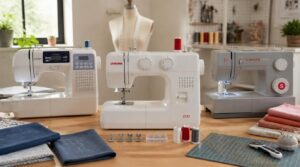
When stacked against the Brother CS6000I and Singer 4423, the Janome 2212 holds its ground mechanically but concedes some convenience. Rivals usually include automatic threading and stitch memory — features this machine skips entirely.
| Feature | Janome 2212 | Brother CS6000I |
|---|---|---|
| Auto Threader | No | Yes |
| Stitch Memory | No | Yes |
| LED Brightness | Adequate | Brighter |
This sewing machine comparison chart makes the tradeoffs clear.
Is It Worth The Upgrade?
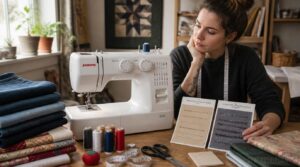
If you’ve outgrown the Janome 2212’s 12 stitches and find yourself pausing constantly to manage fabric thickness changes, an upgrade starts making real sense.
| Upgrade Factor | Worth It If… |
|---|---|
| Stitch Variety Benefits | You need decorative or stretch stitches |
| Fabric Handling Gains | You regularly sew denim or layers |
| Precision Control Improvements | Tension adjustments feel limiting now |
| Long-term Durability Value | You sew several hours weekly |
Otherwise, at this price point, the 2212 still delivers.
Frequently Asked Questions (FAQs)
Is Janome 2212 low shank?
Yes, the Janome 2212 is a low shank machine. It accepts standard 5 mm low shank presser feet, making it compatible with most universal and third-party feet without adapters.
What type of warranty does the Janome 2212 come with?
Like a shield built to last decades, the 25-year limited warranty covers mechanical parts, while electrical components get 5 years and labor just 1 — keep your proof of purchase, as commercial use voids coverage.
Is the Janome 2212 suitable for heavy duty sewing projects?
The Janome 2212 works with light to medium fabrics well, but its motor power limits make it a poor fit for heavy-duty work like upholstery or thick leather — stick to cotton and light denim.
Does the Janome 2212 have an automated needle threader?
No, the Janome 2212 does not include an automatic needle threader. You thread the needle entirely by hand — a minor inconvenience offset by clearly labeled guides and built-in lighting that brighten the needle eye.
Does the Janome 2212 come with any accessories?
It ships with a solid essential starter kit: three specialized presser feet, bobbins, needles, a seam ripper, screwdriver, dust cover, and foot pedal — everything you need to start sewing straight out of the box.
What are the dimensions of the Janome 2212?
Picture a workspace just roomy enough to spread your fabric without crowding: that’s the footprint you’re getting here. At 09 by 57 by 90 inches and roughly 2 pounds, it stays lightweight and compact while leaving real table clearance for storage.
Does the Janome 2212 support twin needle stitching?
Yes—with a compatible twin needle and proper needle plate compatibility, you’ll get clean parallel stitch quality. Always run scrap fabric testing first, checking clearance and adjusting tension adjustment tips as needed before stitching your actual project.
Can this machine sew leather or vinyl fabric?
Thin faux leather and vinyl are workable, but stay under 5mm thickness. Use a size 90–110 leather needle, a Teflon foot, and set stitch length around 0–5mm for clean, skip-free seams.
Is an extension table available for this model?
Janome doesn’t offer a native extension table for the 2212, but universal aftermarket tables for low-shank machines commonly fit well — just verify bed height and width alignment before buying to guarantee smooth, stable fabric feeding on larger projects.
How often should the machine be oiled?
Oil the machine every 8–12 hours of heavy use, or every 20–30 hours for lighter sessions. Monthly lubrication keeps things running quietly and helps prevent squeaking, jamming, and accidental fabric stains.
Conclusion
Touchscreens break. Metal frames don’t.
That’s the quiet argument the Janome 2212 sewing machine makes every time you sit down to sew—and it’s genuinely hard to argue back. This Janome 2212 sewing machine review keeps returning to one truth: the features it lacks matter far less than the reliability it delivers.
If your priority is a machine that simply works, project after project, year after year, the 2212 earns its place at your table.