This site is supported by our readers. We may earn a commission, at no cost to you, if you purchase through links.

The right sewing machine transforms your craft room from a place of frustration into creative freedom. I’ve watched countless students light up when they finally break free from hand-stitching tedious hems or wrestling with machines that jam every third stitch. Your projects deserve better than that.
Whether you’re ready to tackle home décor, fashion alterations, or quilting adventures, sewing machines for home use have evolved far beyond the clunky beasts your grandmother wrestled with. Today’s models thread themselves, adjust tension automatically, and handle everything from silk to denim without breaking a sweat.
The challenge isn’t finding a capable machine—it’s choosing the right one that matches your ambitions without draining your budget or collecting dust after the first month.
Table Of Contents
- Key Takeaways
- Best Sewing Machines for Home Use
- 1. Brother Computerized Sewing Machine Model
- 2. Janome Lovely Lilac Sewing Machine
- 3. Brother Computerized Sewing Machine
- 4. Singer Quantum Stylist Sewing Machine
- 5. Bernette Computerized Sewing Embroidery Machine
- 6. Brother Sewing And Embroidery Machine
- 7. Heavy Duty Sewing Machine
- 8. Juki Straight Stitch Sewing Machine
- 9. Singer Portable Sewing Machine Kit
- 10. Singer Easy Sewing Machine Kit
- Choosing The Right Sewing Machine Type
- Essential Features for Home Sewists
- Evaluating Performance and Reliability
- Maintenance Tips for Home Sewing Machines
- Buying Guide: Tips for Home Sewists
- Frequently Asked Questions (FAQs)
- Conclusion
Key Takeaways
- The right home sewing machine depends on matching features to your actual projects—beginners should prioritize automatic threading and simple controls, while advanced sewists need stitch variety and heavy-duty power for complex fabrics.
- Computerized machines offer automated tension and hundreds of stitches through LCD screens, but mechanical models deliver superior durability and lower maintenance costs for straightforward sewing tasks.
- Regular maintenance—weekly bobbin cleaning, monthly oiling of metal parts, and immediate needle replacement after each project—prevents expensive repairs and keeps stitch quality consistent across all fabric types.
- Budget wisely by factoring in long-term costs like replacement feet ($50-$150 yearly) and choosing machines with accessible local service centers and parts availability within five years of purchase.
Best Sewing Machines for Home Use
You’re ready to break free from expensive alterations and take full control of your wardrobe—but finding the right machine can feel overwhelming with so many options out there. I’ve tested countless models to find the ones that truly deliver on performance, reliability, and ease of use.
Here are the 10 best sewing machines that’ll help you master any project, from quick hemming jobs to ambitious garment construction.
1. Brother Computerized Sewing Machine Model
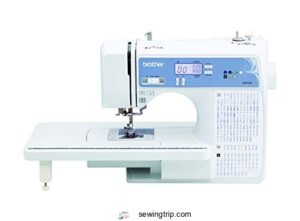
The Brother CS7000X computerized sewing machine packs serious punch with 165 built-in stitches—think utility, decorative, and heirloom options that’ll transform your fabric selection into finished masterpieces. You’ll master sewing techniques from buttonholes (8 automatic styles) to alphanumeric stitching with the user-friendly LCD display guiding your thread management every step.
Accessory options include 8 presser feet and a wide table for larger projects. Weighing just 10.1 pounds, it’s portable freedom for classes. Fair warning: this machine comparison champion won’t tackle heavy-duty materials, but for light to medium fabrics, you’re golden.
| Best For | Beginners and intermediate sewers who want a versatile machine for everyday projects like quilting, garment making, and home décor without breaking the bank. |
|---|---|
| Built-in Stitches | 165 |
| Automatic Needle Threader | Yes |
| Buttonhole Styles | 8 auto-size |
| Weight | 10.1 lbs |
| Frame Type | Not specified |
| Display Type | LCD |
| Additional Features |
|
- 165 built-in stitches plus 55 alphanumeric options give you serious creative freedom for decorative work and personalization
- Automatic needle threader and drop-in bobbin make setup genuinely painless, especially if you’re just starting out
- Lightweight at 10.1 pounds with included wide table—easy to move around but stable enough for bigger quilting projects
- Struggles with thick or heavy materials like denim or canvas, so it’s not your go-to for upholstery or heavy-duty work
- Some users report needle breaks, which can be frustrating mid-project
- Top cover doesn’t latch securely, so transporting it requires extra care
2. Janome Lovely Lilac Sewing Machine
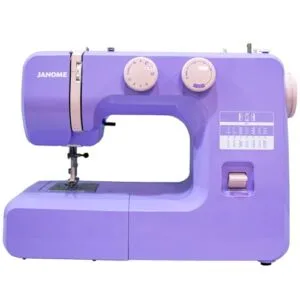
Looking for a portable powerhouse that breaks the mold? The Janome Lovely Lilac sewing machine delivers 15 built-in stitches with a 4-step buttonhole in a compact 12-pound frame. You’ll appreciate the front-loading bobbin system and heavy-duty metal interior that manages garment sewing, quilting, and home decor projects without breaking a sweat.
This Janome sewing machine review highlights its beginner-friendly design—snap-on presser feet, adjustable stitch controls, and a generous 25-year warranty. Machine portability meets durability, giving you freedom to sew anywhere your creativity demands.
| Best For | Beginners and intermediate sewists who want a lightweight, portable machine that handles everything from garments to quilts without overwhelming features. |
|---|---|
| Built-in Stitches | 15 |
| Automatic Needle Threader | No |
| Buttonhole Styles | 4-step |
| Weight | 12 lbs |
| Frame Type | Heavy duty metal |
| Display Type | None |
| Additional Features |
|
- 15 built-in stitches and a 4-step buttonhole give you versatility for most common sewing projects
- Weighs only 12 pounds with a heavy-duty metal frame, so you get durability without sacrificing portability
- Comes with a 25-year warranty, tutorial videos, and beginner accessories to help you learn and grow
- The bright purple color might not appeal to everyone’s aesthetic preferences
- Not designed for heavy-duty industrial work or extremely thick materials
- Limited to 15 stitches, which may feel restrictive as your skills advance
3. Brother Computerized Sewing Machine
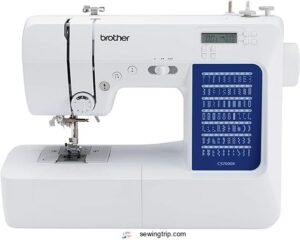
Want stitch variety that matches your ambition? The Brother CS7000X computerized sewing machine arms you with 70 built-in stitches, 7 auto-size buttonholes, and an LCD screen that puts control at your fingertips. You’ll fly through projects with adjustable sewing speed while the automatic needle threader saves time and frustration.
This Brother computerized sewing machine balances machine durability—metal frame, 14-pound solid construction—with easy-to-use computerized features. Sewing machine reviews consistently praise its wide workspace and 10 included presser feet, making it a multifaceted workhorse for quilters and garment sewers breaking free from basic machines.
| Best For | Sewers who want to move beyond basics with a machine that offers serious stitch variety and automated features without the premium price tag. |
|---|---|
| Built-in Stitches | 70 |
| Automatic Needle Threader | Yes |
| Buttonhole Styles | 7 one-step |
| Weight | 14 lbs |
| Frame Type | Metal |
| Display Type | LCD |
| Additional Features |
|
- 70 built-in stitches and 7 auto-size buttonholes give you creative freedom for quilting, garment work, and decorative projects
- Automatic needle threader and LCD display make setup quick and eliminate common frustrations
- Metal frame construction and wide workspace handle everything from delicate fabrics to thick quilt layers
- Automatic needle threading can be finicky to master, especially when you’re first learning the machine
- Only one bobbin included and removal can be awkward if you have larger hands
- Some plastic components may wear faster than metal parts with heavy use
4. Singer Quantum Stylist Sewing Machine
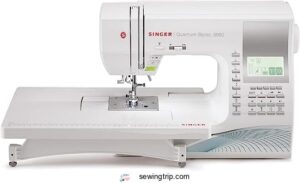
You’re ready to break every rule with the Singer Quantum Stylist—a computerized powerhouse loaded with 600 built-in stitches and 13 one-step buttonholes.
You’ll dial in your sewing speed and thread tension exactly how you need them, while the drop-in bobbin systems keep you moving without hassle.
Sewing machine reviews praise its machine durability (14.6 pounds of metal and plastic construction) and automatic needle threader.
This Singer Quantum demands notice in any sewing machine buying guide targeting rebels who refuse to settle for basic stitches.
| Best For | Sewers who want serious stitch variety and customization options without jumping to industrial-grade machines. |
|---|---|
| Built-in Stitches | 600 |
| Automatic Needle Threader | Yes |
| Buttonhole Styles | 13 one-step |
| Weight | 14.6 lbs |
| Frame Type | Metal/Plastic |
| Display Type | Not specified |
| Additional Features |
|
- 600 stitches and 13 buttonhole styles give you creative flexibility for quilting, fashion projects, and home décor
- Automatic needle threader and drop-in bobbin system make setup quick and frustration-free
- Adjustable speed control and start/stop button let you sew without a foot pedal when precision matters
- The learning curve can be steep if you’re new to computerized machines with this many features
- Some users report inconsistent stitch quality, especially on thicker fabric layers
- The throat space might feel cramped for larger quilting projects
5. Bernette Computerized Sewing Embroidery Machine
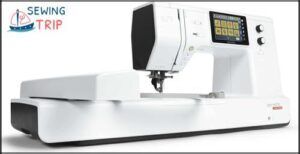
You want liberation from boring stitches? The Bernette Computerized Sewing Embroidery Machine packs 500 stitches and a 5-inch color touchscreen that puts Embroidery Options right at your fingertips.
You’ll customize designs with Stitch Designer software and swap between three embroidery hoops without breaking stride.
Bernette Features like the dual feed system and programmable foot control give you total command over Sewing Speed, though the 47-pound Machine Durability means you’re committed to one spot.
The User Interface takes memorization—this isn’t your grandmother’s plug-and-play.
| Best For | Sewers and embroidery enthusiasts who want creative freedom with 500 stitches and design software but don’t mind a learning curve and some menu memorization. |
|---|---|
| Built-in Stitches | 500 |
| Automatic Needle Threader | Semi-automatic |
| Buttonhole Styles | Multiple |
| Weight | 47 lbs |
| Frame Type | Aluminum |
| Display Type | 5-inch touchscreen |
| Additional Features |
|
- 500 built-in stitches plus Stitch Designer software let you create totally custom embroidery designs
- Dual feed system and programmable foot control give you precise control over fabric handling and speed
- Three embroidery hoops and USB design imports make it easy to switch between projects
- 47-pound weight makes it a permanent fixture on your sewing table
- Non-intuitive menus require memorization, and the manual doesn’t always clear things up
- Slow 40 second startup and tricky lower bobbin threading frustrate some users
6. Brother Sewing And Embroidery Machine
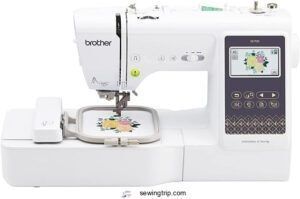
The Brother SE700 fusion model gives you dual-mode control—103 sewing stitches for everyday work, 135 embroidery options when you’re feeling bold. You’ll push sewing speed to 710 stitches per minute, and the automatic needle threader keeps thread management brutally simple. Brother’s jam-resistant drop-in bobbin systems eliminate the fussing other machines demand.
The 4″x4″ embroidery field accommodates most home projects, and wireless LAN lets you beam designs straight from your phone.
At 15.6 pounds, machine durability meets portability—this computerized powerhouse doesn’t chain you to one workspace.
| Best For | Crafters who want to jump between everyday sewing projects and custom embroidery without swapping machines or dealing with complicated setup. |
|---|---|
| Built-in Stitches | 103 |
| Automatic Needle Threader | Yes |
| Buttonhole Styles | 10 one-step |
| Weight | 15.6 lbs |
| Frame Type | Metal/Plastic |
| Display Type | 3.7-inch touchscreen |
| Additional Features |
|
- Wireless file transfer and Artspira app compatibility let you design on your phone and send patterns directly to the machine
- 710 stitches per minute with automatic needle threading means you spend less time on setup and more time creating
- 4″x4″ embroidery area handles most home projects while the 103 sewing stitches cover quilting, apparel, and home decor basics
- The 4″x4″ embroidery field won’t work for larger designs or oversized monogramming projects
- Smaller throat space makes handling thick quilts or bulky fabrics awkward
- You’ll need to budget extra for threads, specialty needles, and embroidery design software beyond what’s included
7. Heavy Duty Sewing Machine
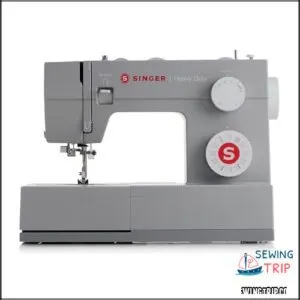
The Singer Heavy Duty 4452 doesn’t mess around—its all-metal frame construction and industrial-grade motor slam through thick layers of denim, canvas, and leather like butter. You’re getting 110 stitch applications, and that enhanced piercing power manages heavy fabric sewing other computerized machines can’t touch.
The 1-step buttonhole and top drop-in bobbin keep your workflow moving, while thick thread management stays smooth thanks to adjustable presser foot pressure. At $229.99, you’re commanding genuine heavy-duty power without the industrial price tag.
| Best For | Home sewists who regularly tackle thick fabrics like denim and canvas but don’t want to drop thousands on an industrial machine. |
|---|---|
| Built-in Stitches | 110 |
| Automatic Needle Threader | Yes |
| Buttonhole Styles | 1-step |
| Weight | 14.6 lbs |
| Frame Type | Full metal |
| Display Type | None |
| Additional Features |
|
- All-metal frame and industrial-grade motor handle multiple layers of heavy fabric without bogging down or overheating
- 110 stitch applications give you serious versatility for everything from basic repairs to quilting and home decor projects
- At $229.99, you’re getting genuine heavy-duty performance at a fraction of what commercial machines cost
- Mechanical design means you’ll need to clean and oil it after every project to keep it running smoothly
- The upright spool pin can cause thread to jump and wrap around, leading to frustrating jams mid-project
- Weighs 14.6 pounds, so it’s not the easiest to move around or store if you’re tight on space
8. Juki Straight Stitch Sewing Machine
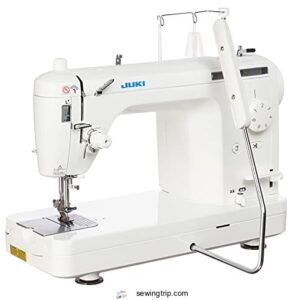
The Juki TL2000Qi obliterates the myth that straight stitch machines can’t handle serious speed—this beast rips through 1500 stitches per minute, blowing past computerized and mechanical beginner sewing machines that bog down on thick layers.
Your fabric compatibility spans denim to leather with rock-solid consistency, while the aluminum die-cast frame kills vibration dead. The automatic needle threader and LED lights give you control without the fuss.
At $499, maintenance costs stay reasonable with accessible replacement parts. This Juki machine review proves straight stitch tips don’t need fancy stitches—just relentless sewing speed control and zero compromise on power.
| Best For | Quilters and sewers who work with thick fabrics like denim and leather and need a fast, powerful machine that handles multiple layers without slowing down. |
|---|---|
| Built-in Stitches | 1 (straight stitch) |
| Automatic Needle Threader | Yes |
| Buttonhole Styles | No |
| Weight | 25.4 lbs |
| Frame Type | Aluminum die cast |
| Display Type | None |
| Additional Features |
|
- Blazing 1500 stitches per minute with a die-cast aluminum frame that keeps vibration minimal even at top speed
- Handles heavy-duty projects like bags and quilts with consistent feeding through thick layers including denim and leather
- Comes with an extension table for larger projects and automatic needle threader for quick setup
- Straight stitch only—no decorative or zigzag stitches if you need variety in your projects
- Some users report the automatic needle threader can be finicky and doesn’t always work smoothly
- Heavy at 25.4 pounds, so moving it around isn’t easy without help
9. Singer Portable Sewing Machine Kit
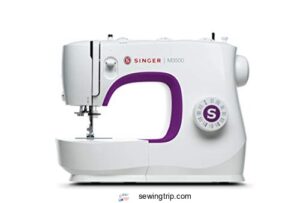
You don’t need a dedicated studio when the Singer Portable Sewing Machine Kit weighs just 9 pounds and folds for instant storage options. This compact design delivers multiple stitches, a lighted workspace, and essential sewing accessories—all ready for beginner sewing machine users tackling home decor sewing or quick repairs.
The included user manual walks you through setup without confusion, while portability features let you move from table to closet in seconds. At entry-level pricing, this Singer sewing machine proves portable doesn’t mean powerless—just liberated from staying put.
| Best For | Beginners and casual sewers who need a lightweight, easy-to-store machine for basic projects like hems, repairs, and simple garments. |
|---|---|
| Built-in Stitches | 110 |
| Automatic Needle Threader | Yes |
| Buttonhole Styles | 1-step |
| Weight | 11.79 lbs |
| Frame Type | Metal/Plastic |
| Display Type | None |
| Additional Features |
|
- Super portable at just 9 pounds with a foldable design that’s easy to store or take to classes
- Comes with essential accessories and a clear manual that makes setup straightforward for first-timers
- Lighted work area and multiple stitch options give you solid functionality without overwhelming features
- Struggles with thick fabrics like heavy denim—you’ll need to adjust settings or stick to lighter materials
- Basic buttonhole function and manual thread cutting mean it’s not built for advanced techniques
- Long-term reliability depends on careful maintenance, and replacement parts can be hard to find outside major retailers
10. Singer Easy Sewing Machine Kit
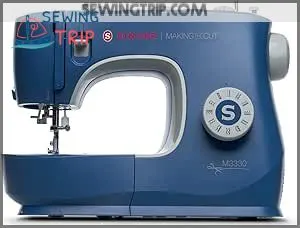
When simplicity matters more than bells and whistles, the Singer Easy Sewing Machine Kit strips sewing down to its essentials. This beginner sewing machine offers easy stitch options without overwhelming you, plus a portable design that tucks into tight spaces.
You’ll find basic sewing machine accessories included—enough to handle hems, patches, and quick alterations. Light fabric works best here; thick denim will test its limits.
For sewing kit basics and straightforward beginner tips, this model gives you control without the learning curve, making sewing machine maintenance refreshingly uncomplicated.
| Best For | Newcomers who want to learn basic sewing tasks like hems, patches, and simple repairs without investing in a complex or expensive machine. |
|---|---|
| Built-in Stitches | 97 |
| Automatic Needle Threader | Yes |
| Buttonhole Styles | 1-step |
| Weight | Not specified |
| Frame Type | Full metal |
| Display Type | None |
| Additional Features |
|
- Straightforward stitch selection and threading make it easy to get started right away, even if you’ve never touched a sewing machine before.
- Lightweight and portable design lets you stow it in a closet or carry it to different rooms without hassle.
- Comes with essential accessories like a zipper foot and buttonhole foot, so you’re ready to tackle common projects out of the box.
- Struggles with heavy fabrics like denim or multiple layers, limiting what you can sew comfortably.
- Plastic frame and lightweight construction may not hold up well to frequent or intensive use over time.
- Limited stitch options mean you’ll miss out on decorative stitches if you want to get creative with your projects.
Choosing The Right Sewing Machine Type
You can’t break free from sewing frustration until you match your machine type to your actual needs. The sewing machine world splits into four main categories, and each one gives you different levels of control, automation, and creative freedom.
Let’s cut through the marketing noise and look at what mechanical, electronic, computerized, and serger machines actually deliver for home sewists like you.
Mechanical Vs. Electronic Sewing Machines
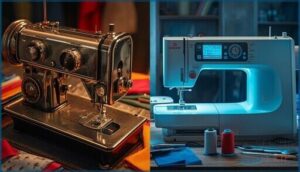
Your choice between mechanical and electronic controls shapes your entire sewing experience. Mechanical machines give you hands-on dials and rock-solid machine durability—think lower cost and straightforward repairs. Electronic models from brands like Brother offer automatic tension, LED displays, and boosted sewing speed. They handle fabric compatibility with sensors but may need specialized service.
Mechanical sewing machine types win for energy efficiency and longevity under heavy use. When writing about these machines, it’s necessary to use proper science writing guides to effectively communicate their features and benefits.
Computerized Sewing Machines Explained
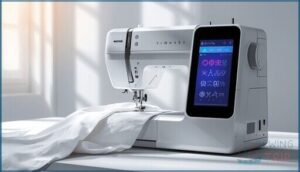
Computerized controls release serious freedom in digital stitching—Brother’s models store hundreds of patterns, adjust tension automatically, and let you edit stitch width on the fly. Fabric sensors read what you’re feeding through, so machine calibration happens in real time. Here’s what puts sewing automation ahead:
- LCD touchscreens display every stitch option instantly
- USB ports import custom embroidery designs
- Error codes troubleshoot problems before you call for help
These sewing machines eliminate guesswork. Understanding the research methodology is essential for developing sophisticated sewing technologies.
Sergers and Overlock Machines

Overlock stitches break you out of standard seam ruts—serger machines trim, stitch, and finish edges in one rebellious pass. Loopers adjustment replaces bobbins, weaving serger threads into tightly bound seams that flex with knits.
Edge finishing happens fast: 3-thread configs lock lightweight fabrics, while 4-thread serging anchors heavier materials. Fabric trimming blades slice excess as you sew, so overlock seams stay clean and pro-level polished.
Manual Machines and Their Uses
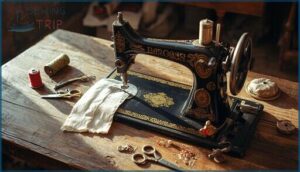
You’ll find hand crank and foot pedal machines perfect when you want portable sewing freedom without electricity. Manual stitching gives you tactile feedback that builds rock-solid sewing techniques from day one—ideal for beginner sewing machines.
They handle hems, patches, and basic alterations with mechanical simplicity. Just remember: these units lack fancy stitch patterns, and your sewing accessories options stay minimal.
Pros and Cons of Each Type
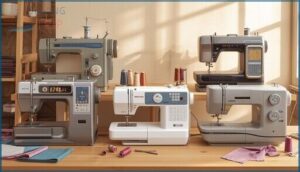
You’ve got real choices here. Let’s break down what each type brings to your sewing table:
- Mechanical – Simple operation, low sewing costs, sturdy builds, but limited stitch variety and fewer automated features.
- Computerized – Extensive stitch libraries, easy editing for complex projects, higher price, greater reliance on electronics.
- Sergers – Fast edge finishing, professional seams, separate footprint, specialized threading requirements.
- Brother and similar electronic models – Moderate cost increase, better fabric handling consistency, automated features, higher maintenance needs.
- Heavy-duty machines – Premium user experience with thick materials, metal frames, fewer decorative options.
Choose based on your project needs and comfort with technology.
Essential Features for Home Sewists

You don’t want to be stuck with a machine that looks good on paper but frustrates you every time you sit down to sew. The features that matter most aren’t always the flashiest ones—they’re the practical tools that give you control over your projects and keep your creative momentum flowing.
Let’s break down the must-have features that separate machines you’ll actually use from ones that’ll gather dust in your closet.
Number and Styles of Stitches
You’ll want a machine that gives you real freedom to experiment. Most home models pack 60–200 stitches—utility straight and zigzag for everyday sewing, stretch options for knits, and decorative embellishment methods for creative flair.
Computerized sewing machines let you tweak stitch width and length on the fly, so you’re not boxed in by rigid fabric compatibility or limited thread options.
Presser Feet Variety and Functions
The right presser feet turn your machine into a powerhouse. A buttonhole foot manages automatic buttonhole techniques with zero guesswork, while a zipper foot manages side-stitching zipper applications like a pro. Walking feet prevent fabric shift, overcast feet mimic serger-style overcast stitches, and blind hem feet create invisible hems.
Brother and other computerized sewing machines often bundle these foot accessories—giving you serious creative control.
Frame Construction and Durability
Your frame materials matter more than you’d think. Steel and cast iron frames deliver vibration control that keeps stitch consistency locked in, even when you’re powering through denim. Metal frames outlast plastic every time—durability tests prove it.
Brother computerized sewing machines and mechanical models with solid construction handle years of use without wobbling. A sturdy frame means freedom from frustrating skipped stitches.
Bobbin Types and Threading Ease
Drop-in bobbins beat front-loaders every time—you’ll load thread in seconds instead of fumbling with cases. Metal bobbins handle heavyweight fabrics better than plastic, giving you stable thread tension without constant fiddling.
Computerized and mechanical sewing machines with color-coded threading paths let you breeze through setup. That’s sewing efficiency that frees you to create, not troubleshoot bobbin winding disasters.
Extension Tables and Workspace
A machine-specific extension table boosts your sewing surface by 50%, giving you control over bulky quilts and wide garments without wrestling fabric off the edge. Workspace lighting near your sewing station cuts eye strain when you’re stitching intricate seams.
Upgrade your fabric handling with these extension accessories:
- Integrated ruler grids for confident seam alignment
- Non-slip surfaces that keep material exactly where you want it
- Storage compartments for presser feet and bobbins
- Foldable designs perfect for tight craft spaces
Table ergonomics matter—align your workstation with seated elbow height to ditch shoulder pain during marathon sewing sessions. Check leg stability monthly and store your table in a dry spot to prevent warping that sabotages smooth fabric glide.
Evaluating Performance and Reliability
You can’t judge a sewing machine by its stitch count alone—you need to see how it actually performs when you’re working through different fabrics and projects. A machine that sounds great on paper might frustrate you daily if the interface confuses you or the buttonholes come out wonky.
Let’s break down the real-world performance factors that separate machines you’ll love from ones that’ll gather dust in your closet.
Stitch Quality on Different Fabrics
Your machine’s ability to handle fabric stretch and density separates the contenders from the pretenders. I’ve watched countless computerized sewing machines nail jersey knits with ballpoint needles and narrow zigzag stitch options, while others skip stitches like they’re playing hopscotch. Thread tension and stitch balance are your ticket to seam integrity across fabric types.
| Fabric Category | Best Stitch Settings |
|---|---|
| Woven fabrics | 20–25 stitches per inch, straight stitch |
| Knit fabrics | Ballpoint needle, narrow zigzag |
| Lightweight fabrics | 1.5–2.0 mm length, Microtex needle |
| Heavy fabrics | 2.8–3.2 mm length, walking foot |
Test your picks on cotton, denim, and jersey before committing—real fabric samples reveal what spec sheets hide.
Ease of Use and User Interface
Getting smooth stitches matters—but if you can’t figure out the controls, you’re stuck. LCD screens on computerized options like the Brother CS7000X slash setup time by 20–40 seconds per project.
Automatic threading and push-button stitch selection turn beginner sewing machines into tools you’ll actually want to use, freeing you from manual fumbling and letting you focus on mastering real sewing techniques and tips.
Handling Thick Fabrics and Layers
Once you’ve nailed the controls, it’s time to push your machine to the limit. Denim hems and quilted layers separate serious machines from toys—so here’s how you take charge:
- Switch to heavy duty needles (90/14 to 120/19) for thick fabrics like canvas or upholstery.
- Raise presser foot pressure or snap on a walking foot to prevent shifting when layered sewing gets tough.
- Test bulk stitch settings on scrap stacks before tackling your main project—no surprises, just control.
Buttonhole Creation and Accuracy
A buttonhole that puckers or runs crooked steals the professional look you earned. Computerized sewing machines with automatic buttonhole techniques nail consistent stitch density if you pair them with fabric stabilizers and the right needle selection.
Brother models and other quality machines let you dial in thread tension so every hole sits flat and centered—test on scraps first, then own those perfect openings with zero drama.
Warranty and Customer Support
Before you drop cash on a new machine, check what happens when something breaks. Warranty terms between one and five years signal how much a brand stands behind their gear, and responsive customer service through phone or chat keeps you sewing instead of waiting.
- Repair options vary by region—confirm authorized service centers near you before buying
- Support channels like live chat and online manuals let you troubleshoot without leaving your workspace
- Claim process usually requires proof of purchase and registration within a specific window
- Sewing community forums and local groups often share real warranty experiences with specific brands
- Sewing technology advances mean newer models may offer remote diagnostics through apps
Maintenance Tips for Home Sewing Machines
Your sewing machine won’t run itself into the ground if you show it a little love. Think of maintenance as your insurance policy against missed stitches, jammed bobbins, and expensive repair bills down the road.
Maintenance is your insurance policy against missed stitches, jammed bobbins, and expensive repair bills down the road
Here’s how to keep your machine humming along like the workhorse it was built to be.
Regular Cleaning and Oiling
You want your sewing machine to outlast your next three hobbies? Clean the bobbin area weekly during regular use to banish lint buildup. Apply machine oil—the manufacturer-approved kind—to metal parts monthly for light users, weekly if you’re stitching constantly.
Wipe down feed dogs and the needle plate after sessions. Unplug first, oil thin, then run the machine briefly to distribute lubrication before your next project.
Managing Lint and Bobbin Case Issues
Lint buildup around your bobbin case is the silent killer of smooth stitches. Pull that case out after every project and sweep away debris with a soft brush—cheap thread and heavy fabrics shed fibers like a sheepdog in summer.
If you’re battling skipped stitches or friction noises, lint’s probably wedged in your shuttle race. Clean it, check for burrs, and swap damaged bobbin cases immediately.
Replacing Needles and Feet
Unplug your sewing machine before every needle or foot swap—sewing safety isn’t negotiable. Raise that needle and presser feet to the highest point, then swap out bent or dull needles after each project to protect your fabric.
Check needle compatibility with your machine’s system, test thread tension on scrap fabric, and keep a stash of essential presser feet ready. These maintenance tips will save you hours of frustration.
Storing Your Machine Properly
Your sewing machine deserves a dedicated home, not a dust-covered corner. Store it in a cool, dry spot with a breathable machine cover—humidity between 30% and 50% prevents rust on metal parts.
Keep cables loosely coiled to avoid kinks, and never leave thread in the bobbin case. These storage tips protect your investment and keep your sewing accessories ready for action.
Access to Local Service Centers
Finding authorized dealers within 20 miles of your home changes everything when your machine acts up. Major brands like Brother publish service center locations and repair wait times on official tools, so you’re never stranded mid-project.
Check warranty coverage before visiting non-authorized shops—they can void your terms. Local support options connect you to the sewing community and keep maintenance costs predictable.
Buying Guide: Tips for Home Sewists
You’ve done the research, compared the specs, and narrowed down your options—now it’s time to make the smartest buying decision for your home sewing setup. The right machine isn’t just about fancy features; it’s about matching your actual projects, your budget, and the long-term support you’ll need when things get tricky.
Let’s break down the three essential factors that’ll help you buy with confidence and zero regrets.
Assessing Your Sewing Needs and Projects
Before you drop cash on any machine, stop and ask yourself: what do you actually want to sew? Your sewing objectives and project planning will determine everything.
Identify your skill assessment honestly—are you tackling fabric selection for quilts or simple hems? That clarity shapes which best sewing machines for beginners match your sewing needs, keeping your budget analysis realistic for the sewing projects ahead.
Comparing Brand Support and Parts Availability
Once you know what you’ll sew, check how brands back their sewing machines. Warranty coverage usually runs one to three years—Brother and Singer offer solid terms.
Parts availability matters more than you think; major brands stock accessories within five years of release.
Service response averages 24 to 48 hours, and finding authorized centers within 25 miles keeps your customer support smooth when your sewing machine needs help.
Budget Considerations for Home Machines
Let’s talk budget planning—it’s where reality meets your sewing dreams. Cost analysis starts simple: entry-level mechanical sewing machines run $100 to $400, while computerized Brother models hit $400 to $900. Price comparison reveals long-term expense tracking matters too—presser feet and needles add $50 to $150 yearly. Financial savings come from choosing quality upfront:
- Purchase price varies by stitch count and automation level
- Computerized features increase initial investment markedly
- Accessories and replacement parts accumulate over time
- Warranty extensions add upfront but protect your budget
- Higher-end machines often deliver better long-term value
Frequently Asked Questions (FAQs)
Can I sew leather or vinyl at home?
Yes, you can—vinyl sews easily on most home machines with a walking foot.
Leather up to 5 mm works too, but heavy-duty models handle thicker material better with proper thread choices.
How do I prevent fabric from puckering?
Puckered seams happen when tension’s off, thread doesn’t match fabric weight, or stitch length runs too long.
Balance your tension, test on scraps, use interfacing on delicate materials, and match needle size to fabric thickness perfectly.
What thread weight works best for beginners?
You’ll want to start with 40 to 50-weight polyester thread for most sewing projects. It feeds smoothly through machines, works across fabrics, and helps you nail consistent stitch quality while you’re learning tension control.
Do I need a special foot for zippers?
Most sewing machines include a zipper foot, but you’ll want an adjustable one for different zipper teeth locations. Heavy fabrics may need a sturdier foot for better alignment and control.
How loud are typical home sewing machines?
Most home sewing machines hum along at 50 to 70 decibels—about conversation level. Mechanical models with solid vibration control stay quieter, while Brother’s newer designs prioritize sound reduction without sacrificing power.
Conclusion
Think of your sewing journey like learning to ride a bike—the right equipment determines whether you wobble endlessly or fly. These sewing machines for home use aren’t just tools; they’re your training wheels off moment.
You’ve seen the specs, compared the features, and explored what separates frustration from flow. Now stop second-guessing. Pick the machine that matches your ambitions, thread it up, and start creating projects that make your hands proud.
- https://www.sewleana.com/
- https://www.instagram.com/lladybird/?hl=en
- https://agni.hogaboom.org/about-kelly/
- https://academichelpexpress.blog/2024/08/please-use-the-bulleted-points-and-the-rubric-below-to-guide-your-work-your-pa/
- https://www.writingclearscience.com.au/category/writing-guides/writing-research-papers/page/2/