This site is supported by our readers. We may earn a commission, at no cost to you, if you purchase through links.
factory floor running at full tilt will chew through a home sewing machine in weeks. The mechanics aren’t even close—industrial models stitch at 5,500 times per minute while your average home machine taps out around 1,000, and that gap shows up immediately in seam quality, material control, and how long the machine lasts under pressure.
For anyone sewing denim, leather, upholstery, or high‑volume garments, the right industrial machine doesn’t just speed things up—it changes what’s possible.
These ten picks cover the best industrial sewing machines across every major use case, from heavy‑duty straight‑stitch workhorses to precision overlockers.
Table Of Contents
- Key Takeaways
- 10 Best Industrial Sewing Machines
- 1. Juki DDL-8700 Industrial Sewing Machine
- 2. Juki TL2000Qi Quilting Sewing Machine
- 3. Janome 1600P QC Sewing Machine
- 4. Juki DU-1181 Industrial Sewing Machine
- 5. Juki 4 Thread Overlock Sewing Machine
- 6. Juki TL-2010Q Portable Sewing Machine
- 7. Juki HZL LB5020 Computerized Sewing Machine
- 8. Lumina Sienna Industrial Serger Overlocker
- 9. Juki DDL8700H Heavy Duty Sewing Machine
- 10. Brother High Speed Sewing Machine
- Industrial Vs Home Sewing Machines
- Industrial Machine Types
- Key Features to Compare
- Motors and Feed Systems
- Best Uses by Material
- Setup Space and Budget
- Maintenance and Long-Term Value
- Choosing The Right Machine
- Frequently Asked Questions (FAQs)
- Conclusion
Key Takeaways
- Industrial machines stitch up to 5,500 times per minute — five times faster than home models — and that gap shows up in seam quality, material control, and how long the machine holds up under daily pressure.
- Matching the machine to your material matters more than budget: leather and canvas need a walking foot, garment finishing needs an overlocker, and straight‑stitch workhorses like the Juki DDL‑8700 handle everything in between.
- Servo motors are worth prioritizing — they run quieter, use up to 70% less energy than clutch motors, and give you smooth speed control that clutch setups simply can’t match.
- Long‑term value comes down to maintenance: swap needles every 6–8 hours, oil on schedule, and buy from brands like Juki or Janome that stock parts and back their machines with real warranties.
10 Best Industrial Sewing Machines
Not every industrial sewing machine is built for the same job, and picking the wrong one wastes both time and money.
That’s why it helps to know the key differences before you buy — check out this guide on choosing the best sewing machine for leather to match the right machine to your specific projects.
These ten models cover the widest range of real-world needs — from high-speed garment production to heavy leather and quilting work.
Here’s what made the cut.
1. Juki DDL-8700 Industrial Sewing Machine
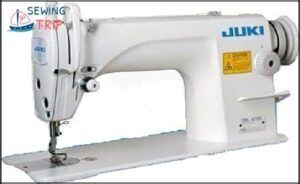
The machine serious sewers keep coming back to the Juki DDL-8700. It hits 5,500 stitches per minute, processes light to medium fabrics like shirts, denim, and uniforms without breaking a sweat.
The straight-stitch lockstitch is clean and consistent every time. Servo motor options keep noise down and give you real speed control.
You get a complete setup — head, table, stand, motor, and light — so you’re ready to produce from day one. Reliable, fast, and built to last.
| Best For | Small shop owners, alteration pros, and serious hobbyists who need a fast, reliable machine for everyday light-to-medium fabric work. |
|---|---|
| Max Stitch Speed | 5,500 SPM |
| Max Stitch Length | 5mm |
| Power Supply | 110V |
| Machine Weight | ~150 lb |
| Built-in Light | Yes |
| Stitch Type | Straight only |
| Additional Features |
|
- Screaming fast at 5,500 stitches per minute — cuts production time way down
- Comes as a complete setup so you can get to work right after assembly
- Solid cast-iron table keeps things stable and the stitching stays clean and consistent
- The clutch motor gets noisy, and it’s not built for heavy stuff like leather or canvas
- No printed manual included — you’re hunting YouTube videos to get it assembled
- At around 150 lbs, it’s a beast to move, and some shipments have shown up with missing parts or a dinged-up table
2. Juki TL2000Qi Quilting Sewing Machine
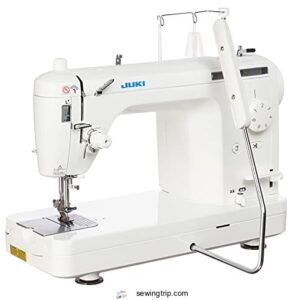
Not every serious sewer needs factory-floor firepower. The TL2000Qi hits a sweet spot — 1,500 stitches per minute, straight stitch only, built for quilters who want speed and control without the industrial footprint.
Its die-cast aluminum frame kills vibration at full throttle. You get an automatic threader, drop feed for free motion work, and a 23‑inch extension table when you need room to maneuver big quilts.
It’s quiet, precise, and built to handle denim, canvas, and multi‑layer batting without complaint.
| Best For | Quilters and home sewers who want a fast, reliable straight-stitch machine that can handle heavy fabrics and big projects without a lot of fuss. |
|---|---|
| Max Stitch Speed | 1,500 SPM |
| Max Stitch Length | 6mm |
| Power Supply | 110V |
| Machine Weight | 25.4 lb |
| Built-in Light | LED |
| Stitch Type | Straight only |
| Additional Features |
|
- Blazing fast at 1,500 SPM — great for powering through long seams and multi-layer quilts
- Die-cast aluminum frame keeps vibration low, so your stitches stay clean even at full speed
- Comes with a large extension table, making it easy to manage big quilts or wide fabric
- Straight stitch only — if you need decorative or utility stitches, look elsewhere
- Needs oiling after every use, which adds a maintenance step some users find annoying
- The included walking foot doesn’t have a quilting bar, so you may need to buy extras
3. Janome 1600P QC Sewing Machine
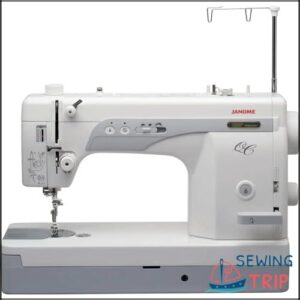
Want speed without committing to a full industrial setup? The Janome 1600P-QC delivers 1,600 stitches per minute in a 40‑pound package you can actually move.
It’s straight‑stitch only, but that’s the point — no distractions, just clean, fast seams through denim, canvas, and quilted layers.
The knee lift keeps your hands on the fabric, and 11 pounds of presser‑foot pressure means thick stacks won’t slow you down.
At $1,599, it punches well above its weight class.
| Best For | Quilters, sewists, and makers who need serious straight-stitch speed for heavy projects like canvas, denim, or multi-layer quilts — without the footprint of a true industrial machine. |
|---|---|
| Max Stitch Speed | 1,600 SPM |
| Max Stitch Length | Not listed |
| Power Supply | 110V |
| Machine Weight | 40 lb |
| Built-in Light | Yes |
| Stitch Type | Straight only |
| Additional Features |
|
- Blazing fast at 1,600 stitches per minute, with a speed slider so you can dial it back when needed
- 11 lbs of presser-foot pressure chews through thick fabric stacks without hesitation
- Knee lift keeps both hands on your work — huge time-saver on big projects
- Straight-stitch only — no zigzag, no decorative stitches, full stop
- The small bobbin runs out fast and is a pain to swap out
- $1,599 is a real commitment, especially for hobbyists who sew occasionally
4. Juki DU-1181 Industrial Sewing Machine
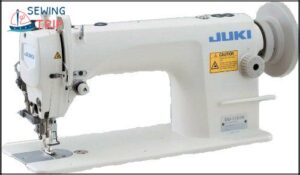
Need a machine that feeds multiple layers without a fight? The Juki DU-1181 uses synchronized top and bottom feed — that’s the walking foot system — to keep thick stacks moving evenly at up to 2,000 stitches per minute.
It processes bags, upholstery, and multi-layer projects without slipping or skewing seams. Stitch length goes up to 9 mm. The servo motor runs quietly. At $1,549, you get a complete setup: table, stand, motor, and light included.
| Best For | Small studio owners and makers who regularly sew bags, upholstery, or anything with multiple thick layers. |
|---|---|
| Max Stitch Speed | 2,000 SPM |
| Max Stitch Length | 9mm |
| Power Supply | 110V |
| Machine Weight | Heavy cast-iron |
| Built-in Light | Yes |
| Stitch Type | Straight only |
| Additional Features |
|
- Top and bottom feed keeps heavy fabrics and stacked layers moving smoothly without slipping
- Quiet servo motor makes it workable in a home workshop or small studio
- Comes as a complete ready-to-sew setup — table, stand, motor, and light all included
- No printed manual, so setup leans heavily on online videos and can take a few hours
- Heavy cast-iron build means delivery can be a hassle — possibly needing a pallet jack
- Some users have run into bobbin and stitch-quality issues, and there’s no automatic thread cutter
5. Juki 4 Thread Overlock Sewing Machine
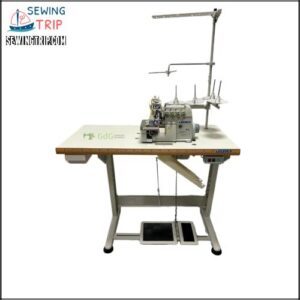
Garment edges that fray are a production killer. The Juki MO-6814S manages that problem with a 4-thread overlock system — two needle threads, two looper threads — sewing and finishing seams in one clean pass at up to 7,000 stitches per minute.
It manages everything from lightweight knits to heavier garment fabrics without stretching or distorting edges. The integrated servo motor keeps noise low during long runs. Color-coded threading paths cut setup time.
For professional apparel finishing, this machine doesn’t just keep up — it leads.
| Best For | Garment makers and small production shops who need clean, professional seam finishing on a range of fabrics — from lightweight knits to heavier materials. |
|---|---|
| Max Stitch Speed | Not listed |
| Max Stitch Length | Not listed |
| Power Supply | 120V |
| Machine Weight | ~150 lb |
| Built-in Light | LED |
| Stitch Type | Overlock/Safety |
| Additional Features |
|
- 4-thread overlock sews and finishes seams in one pass, saving real time on production work
- Integrated servo motor runs quietly, so long sewing sessions don’t wear you out
- LED light with adjustable brightness makes it easy to see your work on dark or detailed fabrics
- Assembly instructions are minimal and the process can get frustrating — budget extra time for setup
- At 150 lbs, it’s not something you’ll be moving around often, so make sure you have a dedicated spot for it
- The foot pedal is sometimes missing from the box, and getting a replacement takes extra legwork
6. Juki TL-2010Q Portable Sewing Machine
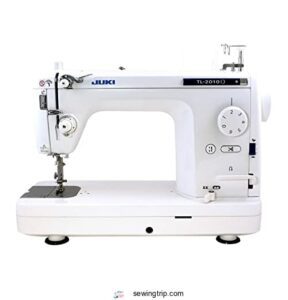
The TL-2010Q is where portability meets real production power. At 25.4 lb with a built-in handle, it travels — but don’t let that fool you.
It hits 1,500 stitches per minute on straight lockstitch, works with denim, upholstery, and quilting layers, and stops cleanly with automatic thread trimming. The knee lifter frees both hands for bulky seams.
Stitch length adjusts to 6 mm. You get the even-feed foot, zipper foot, and ¼‑inch quilting foot included.
Serious work, compact package.
| Best For | Quilters, bag makers, and anyone regularly working with heavy fabrics who wants a fast, reliable straight-stitch machine they can take to class or a studio. |
|---|---|
| Max Stitch Speed | Not listed |
| Max Stitch Length | Not listed |
| Power Supply | Not listed |
| Machine Weight | 38 lb |
| Built-in Light | Yes |
| Stitch Type | Straight only |
| Additional Features |
|
- All-metal build handles denim, upholstery, and thick quilt layers without breaking a sweat
- Automatic thread trimmer and knee lifter seriously speed up your workflow
- Portable with a built-in handle — easy to pack up and bring wherever the project takes you
- Straight stitch only, so you’ll need a second machine if you want zigzag or decorative stitches
- At 38 lb, "portable" is relative — it’s manageable, but not exactly light
- The needle threader can be fussy, and useful accessories like a walking foot aren’t included at that price
7. Juki HZL LB5020 Computerized Sewing Machine
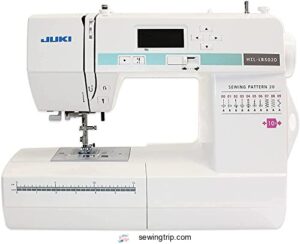
The HZL-LB5020 is Juki’s bridge between home convenience and serious capability. It packs 20 stitch patterns, an LCD screen, and a 7-point feed dog into a 5.6 kg frame you can actually carry.
Speed tops out at 700 spm — not industrial territory, but the drop feed, free arm, and one-step buttonhole make it a legitimate workhorse for quilters and detail sewists.
Presser foot lift reaches 12 mm. Auto needle threader, needle up/down control, and LED lighting round out a genuinely capable computerized package.
| Best For | Hobbyists and quilters who want a reliable computerized machine with solid everyday features without paying for a high-end model. |
|---|---|
| Max Stitch Speed | Not listed |
| Max Stitch Length | Not listed |
| Power Supply | Not listed |
| Machine Weight | Not listed |
| Built-in Light | LED |
| Stitch Type | 20 stitch patterns |
| Additional Features |
|
- The 7-point feed dog and drop-feed system handle everything from lycra to multiple quilt layers without fussing
- LCD screen, auto needle threader, and needle up/down control make the whole sewing experience noticeably smoother
- Free arm and one-step buttonhole mean you can tackle detailed or fiddly projects without workarounds
- Made in Taiwan, not Japan — worth knowing if brand origin matters to you
- Some buyers have reported incomplete accessory sets out of the box
- Warranty doesn’t cover freight costs for repairs, which can sting if something goes wrong
8. Lumina Sienna Industrial Serger Overlocker
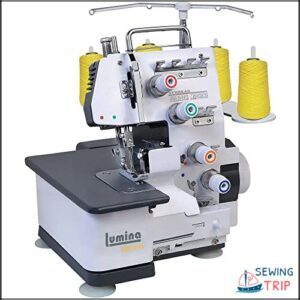
The Lumina Sienna punches above its $199.99 price tag. It runs 3‑ and 4‑thread overlock at 1,250 spm, trims, finishes, and sews in one pass — which cuts finishing time dramatically on heavy denim, canvas, and woven fabrics.
Heavy users will want to stay on top of routine sewing machine cleaning and oiling, especially when pushing the Sienna through thick denim and canvas regularly.
The color‑coded threading system ships factory‑threaded, so you’re not wrestling with setup on day one.
Metal frame, built‑in LED, and automatic trim blade keep work clean and precise.
Note: customer support is email‑only, and spare blades can be hard to source.
| Best For | Home sewers and semi-pro makers who work with heavy fabrics and want a fast, capable serger without spending a fortune. |
|---|---|
| Max Stitch Speed | 1,250 SPM |
| Max Stitch Length | Not listed |
| Power Supply | Not listed |
| Machine Weight | 17.6 lb |
| Built-in Light | LED |
| Stitch Type | 3/4-thread overlock |
| Additional Features |
|
- Handles tough fabrics like denim and canvas at up to 1,250 stitches per minute — serious speed for the price
- Ships factory-threaded with a color-coded guide, so getting started is way less intimidating
- Solid all-metal frame with a built-in LED and auto-trim blade for clean, professional results
- Email-only customer support with slow response times — not great if something goes wrong
- No speed control for slower settings, which can be tricky on delicate fabrics or for beginners
- Replacement blades are hard to find, and long-term parts availability isn’t guaranteed
9. Juki DDL8700H Heavy Duty Sewing Machine
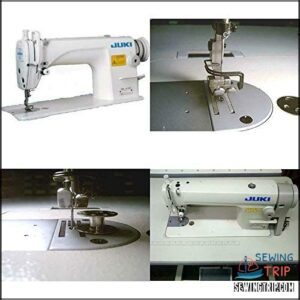
DDL-8700H is built for the work that breaks lesser machines. It processes medium to heavy materials — denim, canvas, leather, upholstery — at up to 5,500 stitches per minute with a 5 mm stitch length.
The 10.5‑inch throat gives you real room to maneuver bulky layers.
Presser foot lifts 13 mm by knee, which matters when you’re stacking thick fabric.
Assembly takes effort and instructions aren’t printed, so budget time for setup. Worth it once it’s running.
| Best For | Sewers and crafters who regularly work with heavy materials like denim, leather, or canvas and need a machine that can keep up with serious production. |
|---|---|
| Max Stitch Speed | 5,500 SPM |
| Max Stitch Length | 5mm |
| Power Supply | Not listed |
| Machine Weight | 15 lb |
| Built-in Light | Not listed |
| Stitch Type | Straight only |
| Additional Features |
|
- Blazing fast at 5,500 stitches per minute — great for getting through big projects quickly
- Generous arm space makes handling quilts and bulky layers a lot easier
- Built tough with stainless steel and plastic construction that’s meant to last
- Assembly can be a real time sink, and there are no printed instructions to lean on
- Some buyers have run into missing or damaged parts right out of the box
- The under-table tray and oiler feel a bit cheap compared to the rest of the machine
10. Brother High Speed Sewing Machine
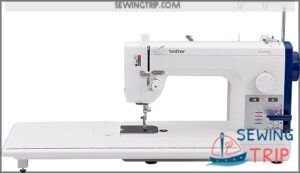
Brother PQ1600S isn’t industrial in the factory sense, but it earns its place here. It runs at 1,500 stitches per minute — fast enough for serious quilters and heavy-project sewists.
The 11.1" x 23.3" table manages bulky layers without a fight. Pin feed keeps your fabric from shifting.
You get a knee lifter, push-button thread cutter, and automatic needle stop.
At $999.99 with a 25-year warranty, it’s built for hobbyists ready to work at a professional pace.
| Best For | Serious quilters and sewists who tackle large, heavy-duty projects and want near-professional speed without stepping into a full industrial machine. |
|---|---|
| Max Stitch Speed | 1,500 SPM |
| Max Stitch Length | Not listed |
| Power Supply | Not listed |
| Machine Weight | 24 lb |
| Built-in Light | Not listed |
| Stitch Type | Straight only |
| Additional Features |
|
- Blazing fast at 1,500 stitches per minute — gets through big projects without the wait
- Huge work table (11.1" x 23.3") makes wrangling quilts and weighted blankets way less frustrating
- Handy built-ins like the knee lifter, push-button thread cutter, and pin feed keep your workflow smooth
- Side-loading bobbin doesn’t warn you when thread runs out — you’ll only find out mid-seam
- Needle threader is fiddly, and the tension dial is tough to read at a glance
- Can get squeaky with heavy use, and the pin feed may wear out over time
Industrial Vs Home Sewing Machines
If you’ve wondered what sets industrial sewing machines apart from home models, you’re not alone.
The differences go far beyond price or size.
Let’s break down what really matters when you’re choosing between the two.
Speed and Power Differences
Home machines top out around 1,000 stitches per minute. Industrial machines blow past that — reaching 5,500 spm with RPM stability that home motors simply can’t match.
| Feature | Home Machine | Industrial Machine |
|---|---|---|
| Speed | ~1,000 spm | Up to 5,500 spm |
| Industrial Motor Torque | Low | High Peak Surge |
| Power-to-Weight | Limited | Optimized |
Servo motor advantages include tighter Acceleration Profiles and a stronger Torque Curve — giving you real industrial power for high‑speed stitching through denim or leather.
Continuous-duty Performance
Speed gets you started — but Continuous-Drive Reliability keeps you running. Industrial machines are built around Duty Cycle Ratings that home models simply ignore.
| Factor | Home Machine | Industrial Machine |
|---|---|---|
| Runtime Before Rest | 30–60 min | Hours nonstop |
| Thermal Management | Basic | Dedicated cooling |
| Extended Maintenance Intervals | Frequent | Every 3–5 years |
| Servo Torque Stability | Inconsistent | Steady under load |
| Industrial Motor Durability | Limited | Reinforced windings |
That’s what industrial sewing machine durability actually means.
Stitch Consistency on Thick Layers
Durability keeps you running — but stitch consistency is where industrial machines truly earn their reputation.
| Factor | Home Machine | Industrial Machine |
|---|---|---|
| Feed Balance | Bottom feed only | Walking foot mechanism |
| Presser Lift | ~7 mm | Up to 20 mm |
| Stitch Length | ~4 mm max | Up to 9–12 mm |
Heavy duty fabric handling demands the right needle size, calibrated thread tension, and a servo motor that holds stitch quality without drifting on industrial lockstitch seams.
walking foot mechanism helps prevent layer shifting in multi‑layer projects.
Durability and Metal Construction
Metal Frame Rigidity separates machines that last decades from ones that quit early. Cast iron bodies and all-metal construction absorb the punishment of high-speed runs without flexing or creeping across the table.
Industrial machines need dedicated tables for best performance.
| Feature | Home Machine | Industrial Machine |
|---|---|---|
| Frame Material | Plastic/light alloy | Cast iron/aluminum |
| Vibration Dampening | Minimal | Built-in rigid head |
| Lubrication System Design | Manual spots | Sealed oil paths |
Steel gears and Internal Gear Longevity come standard — and Corrosion Coating keeps them protected through long production shifts.
Who Should Upgrade
Not every sewer needs an industrial upgrade — but some clearly do.
| Who | Why Upgrade | Machine Type |
|---|---|---|
| High-volume workshops | Daily batch output demands speed | Lockstitch/Overlock |
| Heavy fabric specialists | Denim, canvas, leather need power | Walking foot |
| Precision stitch users | Long seams require consistency | Servo-motor straight stitch |
Scaling hobbyists and dedicated workspace owners gain the most. If your home machine skips stitches on thick layers, that’s your sign.
Industrial Machine Types
Not all industrial machines are built for the same job — and picking the wrong type is the fastest way to waste money. Each category has a specific purpose, and knowing the difference changes everything.
Here’s what you need to know about the main types.
Straight-stitch Workhorses
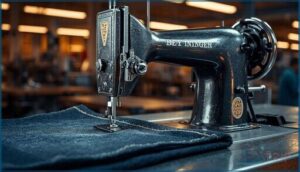
The backbone of any serious sewing operation is the straight‑stitch industrial machine. Models like the Juki DDL8700 Industrial Straight Stitch Sewing Machine and Juki DDL8100 Industrial Sewing Machine deliver stitch tolerance within ±0.2 mm across heavy layers. The Brother PQ1600S High‑Speed Straight Stitch Sewing Quilting Machine holds its own too.
What makes these straight‑stitch industrial machines unstoppable:
- Needle bar precision eliminates skipped stitches on denim or canvas
- Thread tension control stays locked at ±0.5 units automatically
- Metal frame vibration stays minimal during 8‑hour production runs
- Servo speed consistency keeps stitch length uniform at high RPM
- Cast‑iron builds handle continuous duty without flexing or fatigue
Walking Foot Machines
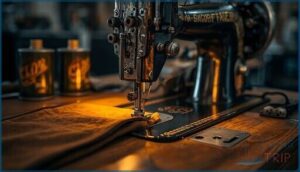
Walking Foot machines are your secret weapon for tackling thick layers and stubborn fabrics. Feed Synchronization keeps layer alignment tight, while generous Foot Lift Clearance lets you slide bulky material under the needle.
A regular Maintenance Oil Schedule protects the feed mechanism. Thread Tension Control stays steady, so stitches don’t wander. For Walking Foot Sewing Machine Benefits, check our Industrial Sewing Machine Buying Guide: Top Picks for Industrial Sewing Machines.
Overlock and Serger Machines
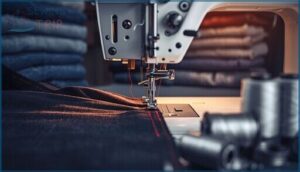
Overlock and serger machines do two jobs at once — they sew the seam and trim the edge in a single pass.
The Juki MO6814S Industrial 4Thread Overlock hits 7,000 spm with excellent Edge Finish Quality.
The Juki MO6714S Industrial 4Thread Overlock Sewing Machine and Lumina Sienna Serger Sewing Machine both offer Threading Simplicity, Stitch Variety, Noise Reduction, and solid Energy Efficiency.
Quilting and Semi-industrial Models
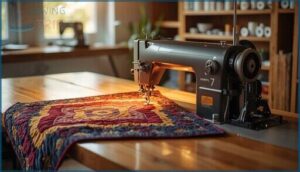
Semi-industrial quilting machines give you real speed without anchoring you to a factory floor.
- Juki TL-2000Qi reaches 1,500 spm with a Thread Trimmer Feature and Knee Lift Design
- Juki TL-2010Q adds variable Portable Quilting Speed from 200–1,500 spm
- Both offer strong Bobbin Capacity and Extension Table Compatibility
- These Quilting Machine Recommendations suit any Portable Semi-Industrial Machine setup
Computerized Specialty Machines
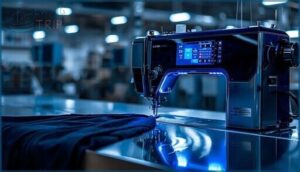
Computerized specialty machines put precision on autopilot. The Juki HZL-LB5020 Computerized Sewing Machine is a standout in any Industrial Sewing Machine Review — it packs electronic stitch libraries, automatic thread trimming, knee lift controls, and digital tension management into one unit.
Programmable seam paths mean repeat jobs stay consistent without constant adjustments.
For any Industrial Sewing Machine Buying Guide or Features Checklist, these top industrial sewing machine models deliver real factory-floor control.
Key Features to Compare
Not every industrial machine is built the same, and those differences really do matter once you’re deep in a production run.
Before you spend a dollar, you need to know which specs actually move the needle — and which ones are just marketing noise.
Here’s what to compare.
Stitches Per Minute
SPM — stitches per minute — is your machine’s heartbeat. Home machines crawl at 600–1,000 SPM. Industrial models start at 1,500 and climb to 6,500 stitches per minute. But speed rating variance matters more than the ceiling number.
- Motor type influence shapes real-world output — servo motors hold speed more steadily
- Fabric thickness limits force slower pacing on heavy denim or leather
- Operator skill effect determines whether high‑speed stitching helps or hurts accuracy
Presser Foot Lift
Speed gets the seams done — lift height gets the fabric in position.
On an industrial sewing machine, presser foot lift determines how much layered material slides under the foot. Most walking foot models offer bulk material clearance around 16 mm.
Knee lifter mechanism keeps both hands free while repositioning. Automatic lift systems handle repeat stops smoothly.
Adjustable pressure settings and a solid lift height range give you real control.
Needle and Thread Compatibility
Lift height sets the stage — but needle and thread compatibility determines whether your stitch actually holds.
Match your thread Tex 70 selection to the right needle size: Tex 70 needs a 100/16 to 110/18. Too small, and you’ll shred thread.
Industrial needle types — sharp, ballpoint, leather — matter as much as size. Hook clearance limits shift when you go too large, causing skipped stitches and stitch quality factors to suffer quickly.
Stitch Length Adjustment
Needle and thread set the foundation — now stitch length adjustment gives you real control.
Three things to know:
- Dial Calibration runs 0–9 mm on machines like the Juki LU2-4400 — fabric matching starts here
- Digital Display steps in 0.5 mm increments for precision stitching
- Reverse Lever and Eccentric Pin let you set forward and backward lengths independently
Thread tension adjustment follows naturally once length is dialed in.
Bobbin Size and Hook System
Most sewers overlook this — but your bobbin system quietly controls stitch quality more than almost anything else. Industrial sewing machines use M‑style bobbins, roughly 1 inch wide with higher thread capacity than home machines.
Double‑capacity hooks cut bobbin changes dramatically on long seams. Match your horizontal‑axis hook with Bobbin Compatibility Charts, then fine‑tune hook tension adjustment for balanced, consistent stitches every time.
Table, Stand, and Included Accessories
What comes with your machine transforms the experience completely. A proper industrial table — usually 60×30 inches — gives you room to actually work. Look for these essentials:
- Knee Lifter for hands-free presser foot control
- Tool Drawer to keep accessories within reach
- Integrated Lighting for needle-area visibility
Adjustable Height stands, T-Molding Edge protection, and cylinder bed or flatbed table options round out smart machine ergonomics.
Motors and Feed Systems
motor and feed system running your machine shape everything — speed, control, and how well it processes tough materials.
Choosing the wrong setup is like having a sports car with a bicycle brake.
Here’s what you need to know before picking yours.
Servo Vs Clutch Motors
The motor under your table decides everything. Servo motors win on Fine Speed Control, quiet running, and Power Consumption — using roughly 70% less energy than clutch motors.
Clutch motors run constantly, generating more heat; Vibration Reduction becomes a real concern during long sessions.
| Feature | Servo Motor | Clutch Motor |
|---|---|---|
| Speed Control | Smooth, adjustable | Fixed, abrupt |
| Noise Level | Quiet | Loud |
| Power Use | Low | Continuous draw |
| Precision Work | Excellent | Limited |
Direct-drive Advantages
Cut the belt, and everything changes.
Direct-drive machines use Compact Motor Integration to connect the motor straight into the head — no pulley, no lag. You get Instant Power Transfer the moment your foot hits the pedal.
That Belt-less Design means Low Heat Generation, low noise operation, and Energy Efficient Control. Pair that with a brushless servo motor, and you’ve got high power with minimal waste.
Walking Foot Vs Bottom Feed
Layer Alignment is where walking foot machines prove their worth. Bottom feed moves fabric from below — clean and simple, but the top layer can drift on thick stacks.
- Walking Foot locks every layer in sync.
- Bottom feed excels on flat, light garments.
- Feed Mechanism Complexity rises with walking foot systems.
- Speed Tradeoff: bottom feed wins on fast, simple runs.
- Maintenance Demands and Noise Levels are higher with walking foot setups.
Needle Feed and Compound Feed
Needle feed and compound feed are your secret weapons for stitch precision on heavy‑duty fabrics. Needle feed moves with the cloth mid‑stitch, preventing slip and layer drift.
Compound feed synchronizes the needle, feed dog, and presser foot for complete material grip — essential for leather, canvas, and upholstery. Both systems belong on any serious industrial sewing machine features checklist where layer alignment and feed synchronization define the final result.
Speed Control for Precision Work
Once your feed system has a grip on the fabric, servo motor control becomes your next tool for mastery. Servo speed adjusts from a crawl to full throttle—giving you stitch precision exactly where corners and curves demand it.
A speed reducer adds torque at low RPM, while smooth pedal response keeps needle positioning predictable.
That combination? Pure stitch quality on command.
Noise and Energy Efficiency
Servo motors don’t just give you control — they slash noise and energy waste too.
A clutch motor burns around 150 W just sitting idle. A servo? About 3 W.
That’s Quiet Motor Design and Low Idle Power working together. Less Vibration Dampening stress, cooler running parts, and Energy-Saving Controls mean your shop stays quieter, cooler, and cheaper to run all day.
Best Uses by Material
every machine processes every material well, and that gap matters more than most buyers expect.
right industrial machine for denim isn’t the right one for leather or knits.
top models stack up across the materials you’re most likely working with.
Denim and Workwear
Denim doesn’t forgive weak machines. At 12–14 oz twill, it demands real stitch reinforcement — think bar tacks at stress points and flat‑felled inseams that won’t fray. Industrial Sewing Machines for Heavy Fabrics handle high‑speed stitching through multiple denim layers without stalling.
- Bar tacks prevent pocket tear‑out under load
- Gusset design areas need precise, unbroken seam control
- Stretch denim blends require consistent tension across elastane fibers
- Indigo fading accelerates where stitching pulls tight
- Industrial durability keeps denim stitching capability consistent through long production runs
Canvas and Marine Fabrics
step up from denim in one key way — they fight back with bulk. UV Resistance and Mildew Prevention aren’t optional here; they’re survival requirements.
Bonded polyester thread manages sun exposure, while heavier Fabric Weight demands consistent high‑speed stitching. Seam Hardware must resist corrosion.
Walking‑foot machines with Water Repellency fabric compatibility make marine canvas and outdoor gear sewing manageable.
Leather and Upholstery
Leather demands respect — and the right machine.
Walking Foot Clearance keeps thick hides feeding evenly, while Presser Foot Lift manages stacked upholstery layers without jamming.
Leather Point Needles cut cleanly; Bonded Nylon Thread holds seams under real stress.
Cylinder Arm Reach lets you work curved surfaces like seat cushions.
For leather upholstery stitching, a commercial heavy-duty industrial sewing machine isn’t optional — it’s essential.
Knits and Garment Finishing
Knits play by different rules. Ballpoint Needles separate yarn loops instead of piercing them, preventing snags.
Pair that with a Stretch Stitch, and your seams move with the fabric. An Overlock Machine or Serger Machine manages Edge Binding and Flatlock Seams cleanly. Use a Walking Foot for stable feeding, and add a Stabilizer where hems roll.
This is Apparel Manufacturing Sewing done right.
Quilting Cotton and Patchwork
Precision quilting demands the right machine. Layered batting shifts, quilt block alignment suffers, and thread tension control becomes critical fast.
- Juki TL2000Qi Sewing and Quilting Machine — drops feed dogs for free‑motion guidance on curved designs
- Janome 1600PQC High‑Speed Sewing and Quilting Machine — 1,600 SPM keeps quilt edge finishing tight and consistent
- Walking Foot — holds cotton layers flat without bunching
- Heavy‑Duty Fabrics — this quilt‑making machine manages king‑size cotton sandwiches without stalling
Multi-layer Commercial Projects
Multi-layer commercial work is where most home machines tap out completely. You’re pushing through 6 to 12 layers of leather, canvas, vinyl, or webbing — and slip prevention becomes everything.
A walking foot keeps layer alignment tight. Bobbin capacity and thread tension directly affect stitch density on long runs.
| Challenge | Solution |
|---|---|
| Layer shifting | Walking foot feed system |
| Thread jams | Large-capacity bobbin |
| Uneven stitch density | Servo motor speed control |
Any multi-layer commercial use sewing machine worth buying manages heavy-duty fabrics without flinching.
Setup Space and Budget
Before you buy, the machine itself is only half the equation — where it lives and what it costs to set up matters just as much.
The right choice depends on your floor space, power supply, and how much you’re ready to spend from day one.
Here’s what to think through before you commit.
Full-table Vs Portable Machines
Full-table setups win on stability trade-offs — vibration damping from heavy industrial stands keeps your work steady at 5,500 stitches per minute.
But transport logistics? That’s where portable semi-industrial machines take over. They weigh 25–43 lbs versus a full assembled workstation.
Operator ergonomics improve with fixed-height industrial sewing tables, though installation time runs longer.
Choose based on whether your shop moves or stays put.
Workshop Footprint Considerations
Space is power — and a cramped workshop kills your momentum fast.
Before buying, map your floor space carefully:
- A single industrial sewing table needs roughly a 6×3‑foot clearance zone minimum.
- Cable management keeps cords off the floor and prevents dangerous trips.
- Lighting layout around the needle zone demands shadow‑free overhead coverage.
Tight on room? A portable semi‑industrial machine with compact dimensions fits a 4×8 corner setup comfortably.
Power and Voltage Needs
Once your footprint is sorted, check your outlet before anything else.
Most industrial machines run on 220V to 240V — not your standard 120V household socket.
Voltage Compatibility and Phase Requirements matter here: single-phase works for most shops, but older factory setups may need three-phase.
Servo motor technology and brushless motor technology cut Power Consumption substantially.
Always verify Grounding Safety — it’s non‑negotiable.
Entry-level Vs Professional Pricing
Budget shapes everything.
Entry-level industrial machines run $600–$1,500 — solid for beginners learning the craft.
Professional heavy-duty sewing machines start around $1,000 and climb past $8,000.
The real cost drivers? Speed, metal construction, and warranty value.
ROI analysis tips: less downtime, longer lifespan.
Financing Options and Trade-in Programs make that jump manageable.
Know your industrial sewing price range before you shop.
Head-only Vs Complete System
Once you’ve nailed your budget, the next call is: head-only or complete system?
- Head-only gives you Installation Flexibility and an Upgrade Path — bolt it onto your existing bench, swap motors freely.
- Complete systems win on Cost Efficiency and Component Compatibility — everything matched and ready.
- Footprint Adaptability matters: a head-only fits tight shops; a complete industrial sewing machine setup needs dedicated floor space.
Cost of Accessories and Upgrades
Once you’ve settled the head-only vs. complete system question, accessories and upgrades will quietly reshape your total cost.
| Upgrade/Accessory | Typical Cost |
|---|---|
| Servo motor kit | $80–$180 |
| Presser feet (specialty) | $15–$40 each |
| Spare parts kit | $50–$150 |
Budget Planning Tips: factor these into your industrial sewing machine buying guide from day one — not after checkout.
Maintenance and Long-Term Value
A great industrial machine is only as good as the care you put into it.
How you maintain it determines whether it runs for two years or twenty.
Here’s what actually matters for long-term value.
Oiling and Cleaning Basics
Think of your machine as a high-performance engine — skip the oil, and it seizes.
Start with Oil Pan Inspection: fill between the HIGH and LOW marks, then confirm Hook Race Lubrication with 1–3 mm splashes on paper.
Apply Needle Bar Oil for smooth vertical movement.
For Lint Removal Techniques, brush feed dogs, swab tension disks with alcohol.
Follow an Oil Change Schedule every 3–6 months under heavy production.
Needle, Belt, and Bobbin Care
Rotating through these three components on schedule keeps your machine dialed in. Swap needles every 8–12 hours of heavy use — bent ones destroy thread path hygiene fast.
Check belt alignment and belt guard condition after every timing adjustment. Confirm bobbin tension snaps securely and winds evenly. Scheduled component checks, logged consistently, reveal wear patterns before they become costly problems.
Preventing Skipped Stitches
Skipped stitches on an industrial sewing machine usually trace back to three fixable culprits:
- Needle Timing — even a slight shift stops the hook from catching the thread loop
- Thread Tension — excessive stitch tension control shrinks the loop size the hook must enter
- Presser Foot Pressure — too little lets heavy-duty fabrics flag upward
Check Walking Foot Alignment, confirm Hook Lubrication, and let your servo motor do the rest.
Service Intervals and Repairs
Your machine’s lifespan is earned, not guaranteed.
Stick to a Lubrication Schedule every 6–12 months and pair it with Belt Tension Checks every 1,000 hours.
| Service Task | Interval |
|---|---|
| Needle Wear Monitoring | Every 8–10 hours |
| Servo Motor Diagnostics | Every 1,000–2,000 hours |
| Component Rebuild Timing | Every 40,000–80,000 hours |
Industrial sewing machine maintenance isn’t optional — it’s your edge.
Warranty and Parts Availability
Warranty Coverage varies by brand — JUKI covers motors and electronics for 2 years, with factory defects on other parts lasting 5 years. Janome stretches to 25 years on mechanical defects.
Consumable Exclusions: needles, bobbins, and rotary hooks aren’t covered anywhere.
Parts Lead Time stays short when you buy through an authorized Dealer Network — JUKI stocks over 100,000 spare parts.
Brand Reliability Over Time
Juki’s been at this since 1938. Janome has been at this since 1921.
That kind of Historical Service Record doesn’t happen by accident — it’s earned through decades of redesign, real‑world feedback, and machines that keep running.
Their Brand Reputation Evolution shows in Longevity of Parts, strong Resale Value Trends, and a Warranty Track Record that holds up.
When you’re building an industrial sewing machine buying guide, reliability like this matters.
Choosing The Right Machine
Picking the right industrial machine isn’t just about budget — it’s about matching the tool to the job you actually do. Get that wrong, and even a $3,000 machine becomes a frustrating waste of floor space.
The right industrial machine isn’t the most expensive one — it’s the one built for your exact job
Here’s what to think through before you buy.
Match The Machine to Projects
Every project tells you what it needs — you just have to listen.
Leather upholstery and automotive interiors demand a walking foot industrial sewing machine that won’t slip on thick layers.
Marine canvas needs heavy-duty denim-grade power.
Custom bag work calls for a cylinder-arm setup.
Even a budget machine for beginners manages light apparel manufacturing well when matched correctly to the task.
Choose for Business Volume
Volume is the real deciding factor here. If you’re running commercial sewing operations at thousands of pieces weekly, you need high speed stitching — machines hitting 5,000–7,000 stitches per minute with serious Duty Cycle Management.
Smaller shops can skip that investment.
Production Speed Scaling, Operator Fatigue Reduction through servo motors, and Energy Cost Efficiency all compound over time.
Match the machine’s output capacity to your actual workload.
Pick The Right Bed Style
Bed style shapes everything — Material Compatibility, Operator Ergonomics, and Space Constraints all hinge on this one choice.
Flatbed machines handle long, flat panels like denim and canvas beautifully.
Cylinder Bed vs Flatbed Sewing Machines comes down to shape: sleeves, cuffs, and bags need a Cylinder Bed.
Walking Foot models shine in Industrial Sewing Machine Applications in Apparel Manufacturing involving thick layers.
Pick the bed your projects actually demand.
Prioritize Must-have Features
Once you’ve matched the bed to your work, features seal the deal.
Metal Frame holds up under daily production stress.
Knee Lift keeps your hands free.
Servo Efficiency delivers Energy Savings — some motors cut power use by 70%.
Thread Capacity determines how often you stop mid-run.
These key features of industrial sewing machines separate capable machines from frustrating ones.
Avoid Common Buying Mistakes
Rushing into a purchase is where most buyers stumble.
Used Machine Risks are real — worn feed dogs, missing warranties, and parts that disappeared off shelves years ago.
Space Constraints before you commit; a 48-inch table won’t fit every workshop.
Power Compatibility for dedicated 110V outlets, and confirm Service Accessibility nearby.
These aren’t small details — they’re deal-breakers.
Final Industrial Sewing Checklist
Before you pull the trigger, run through this checklist:
- Confirm Electrical Requirements — match voltage to your dedicated outlet.
- Check Thread Tension and Machine Calibration settings before first use.
- Invest in Operator Training — even experienced sewists need time with industrial controls.
- Gather Safety Gear and review industrial sewing safety protocols.
Master these factors, and your machine works for you from day one.
Frequently Asked Questions (FAQs)
Why is Juki the best?
Juki dominates because it combines servo innovation, automatic thread trimmer tech, high presser lift, and metal construction across models like the DDL-8700H, TL-2010Q, DNU-1541S, and HZL‑LB
— backed by industrial sewing machine durability and extended warranty protection.
What are industrial sewing machines?
Industrial sewing machines are heavy-duty workhorses built for continuous production.
They run 4,000–7,000 stitches per minute, handle thick materials like leather and canvas, and are engineered for industrial sewing durability across long daily shifts.
Which sewing machine is best for beginners?
Paradoxically, the best beginner industrial machine isn’t the simplest — it’s the one that grows with you. The Juki DDL-8700 wins here: Simple Controls, Threading Ease, and a compact footprint make it approachable.
What is the best industrial sewing machine?
The best fit depends on your work. For speed and garments, the Juki DDL-8700 wins. For leather or canvas, go compound-feed. Match the machine to your material first.
What sewing machines do professionals use?
The thread is the backbone of every professional seam.
Pros rely on metal frame construction and servo motor control — machines like the Juki DDL-8700 deliver heavy-duty feed and high-speed stitch accuracy at 5,500 spm.
What is the best heavy duty sewing machine?
The Juki DDL-8700H wins for heavy-duty work.
It hits 4,000 stitches per minute, manages thick fabrics without stalling, and pairs beautifully with a quiet servo motor for consistent thread tension all day.
What is the best industrial sewing machine 2025?
The DDL-9000C leads 2025 for top industrial sewing machine models 2025 — direct-drive, 5,000 spm, low noise levels, strong warranty coverage, and smart thread compatibility. Brand reputation matters. The DDL-8700 wins best value.
What is the typical power requirement for industrial sewing machines?
Most industrial sewing machines run on 110V or 220V, with servo motors generally rated between 550W and 750W.
Clutch motors draw more power but offer less speed control than modern servo options.
What is the typical lifespan of industrial sewing machine needles?
Needles need replacing every 6–8 hours of active sewing. Heavy material stress from denim or leather speeds that up.
Watch for skipped stitches or thread breakage — those wear signs mean change it now.
Can industrial sewing machines be used for embroidery?
Yes, but with limits.
Industrial sewing machines can handle free‑motion embroidery if you manage thread tension, dial in speed control, and choose the right needle selection.
Just don’t expect automatic color‑change limitations to disappear — they won’t.
Conclusion
Think of it this way: the best industrial sewing machines don’t just handle more fabric—they handle more ambition.
Every real performance difference in this guide reflects a real performance difference you’ll feel the moment needle meets material.
Match the machine to your workload, not the other way around.
The right motor, feed system and stitch speed will quietly transform what you can build.
Choose with intention, and your work will show it.
- https://sewingmachinesplus.com/collections/walking-foot-sewing-machines
- https://meissnersewing.com/products/juki-lu-1508nh-heavy-duty-single-needle-walking-foot-with-needle-feed-includes-table-and-servo-motor-table-comes-assembled
- https://www.juki.co.jp/en/products/industrial.html
- https://www.directsewingmachines.co.uk/the-10-best-juki-sewing-machines/
- https://rfsupply.com/servo-motor-for-industrial-sewing-machine-variable-speed-free-ups-ground-shipping-in-continental-usa/