This site is supported by our readers. We may earn a commission, at no cost to you, if you purchase through links.
The right sewing machine can mean the difference between a project you’re proud of and a seam that unravels on the third wear. With hundreds of models crowding the market—from basic mechanical machines to computerized workhorses packed with 400‑stitch options—picking the wrong one wastes both money and momentum.
Skill level, fabric type, and how often you sew all shape what "best" actually means for your setup. The ten machines reviewed here cover the full range, so whether you’re hemming curtains or building a wardrobe from scratch, you’ll find a clear match.
Table Of Contents
- Key Takeaways
- Top 10 Best Sewing Machines Reviewed
- 1. Brother Computerized Sewing and Quilting Machine
- 2. Janome Lovely Lilac Sewing Machine
- 3. Brother CS7000X Sewing and Quilting Machine
- 4. Singer Quantum Stylist Sewing Machine
- 5. Bernette B79 Sewing and Embroidery Machine
- 6. Brother SE700 Sewing Embroidery Machine
- 7. Heavy Duty Sewing Machine Kit
- 8. Juki TL-2000Qi Sewing Quilting Machine
- 9. Singer M3500 Sewing Machine with Kit
- 10. Singer Easy Sewing Machine Kit
- Key Features to Look For
- Types of Sewing Machines Explained
- Choosing The Right Sewing Machine
- Essential Sewing Machine Accessories
- Sewing Machine Maintenance Tips
- Frequently Asked Questions (FAQs)
- Conclusion
Key Takeaways
- skill level, fabric type, and project goals matter more than price when choosing a sewing machine — a $169 Brother CS7000X can outperform a $600 machine if it fits how you actually sew.
- Features like an automatic needle threader, drop‑in bobbin, and LCD display aren’t just conveniences — they’re the difference between a machine you’ll use daily and one that collects dust.
- Heavy‑duty fabrics like denim and canvas demand a metal‑frame machine with a stronger motor, and trying to force a basic model through thick layers will cost you more in frustration than upgrading would have.
- A sewing machine can last 20 years or more, but only if you clean it after every few projects, oil it regularly, and replace the needle every 8–10 hours of use.
Top 10 Best Sewing Machines Reviewed
Finding the right sewing machine comes down to knowing what’s actually worth your money in 2026. We tested machines across every skill level and price point to separate the standouts from the also-rans. Here are the ten best options you’ll want to explore.
A good setup goes beyond the machine itself — pairing yours with one of the best cutting mats for home sewing rooms can make a real difference in how smoothly your projects come together.
1. Brother Computerized Sewing and Quilting Machine
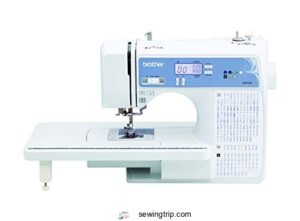
Brother XR9550 is a solid choice if you want a machine that grows with you. It packs 165 built-in stitches — utility, decorative, and buttonhole styles — so you’re covered whether you’re hemming pants or finishing a quilt top.
The LCD display makes stitch selection quick and clear, and the automatic needle threader saves you from squinting. Loading the drop-in bobbin takes seconds, not minutes.
You also get a free arm for sleeves and cuffs, plus a wide table for bigger projects. At $269.99, it’s a practical pick for beginners and intermediate sewers who want real versatility without overcomplicating things.
| Best For | Beginners and intermediate sewers who want a versatile, easy-to-use machine for garments and quilting without a steep learning curve. |
|---|---|
| Built-in Stitches | 165 |
| Needle Threader | Automatic |
| Bobbin Type | Drop-in |
| Free Arm | Yes |
| Price | $269.99 |
| Skill Level | Beginner–Intermediate |
| Additional Features |
|
- 165 built-in stitches give you plenty of options for everyday sewing and creative projects
- Automatic needle threader and drop-in bobbin make setup fast and frustration-free
- Lightweight and portable, so it’s easy to take to classes or a friend’s place
- Not the best fit for advanced sewers who need heavy-duty or professional-grade features
- The hard plastic cover has been known to fit poorly
- Warranty is void outside the US or if used at a voltage other than 120V
2. Janome Lovely Lilac Sewing Machine
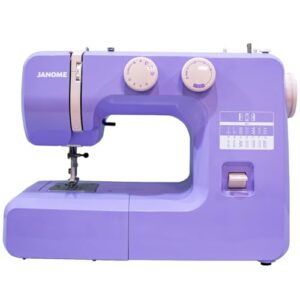
Not every great machine needs a screen. The Janome Lovely Lilac keeps refreshingly simple — 15 built-in stitches, a dial selector you can adjust mid‑project, and a front‑loading bobbin that’s easy to thread without second‑guessing yourself.
What sets it apart at $129 is its interior metal frame. Most machines at this price use all plastic, which means wobble and wear. The Lilac stays stable and quiet enough to use without disrupting the room — though some users do note it gets louder on thicker fabric.
You get a removable free arm for sleeves and hems, adjustable stitch length and width, plus a four‑step buttonhole that processes garments and crafts without fuss. It’s compact, portable, and genuinely ready to go right out of the box.
| Best For | Beginners and casual sewists who want a reliable, no-fuss machine for everyday projects like repairs, home décor, and light quilting. |
|---|---|
| Built-in Stitches | 15 |
| Needle Threader | Manual |
| Bobbin Type | Front-loading |
| Free Arm | Yes (removable) |
| Price | $129 |
| Skill Level | Beginner |
| Additional Features |
|
- Interior metal frame keeps it sturdy and stable — rare at this price point
- 15 built-in stitches and a 4-step buttonhole cover most everyday sewing needs
- Compact and lightweight, so it’s easy to pack up for classes or store between projects
- Can get noticeably loud, especially when working with thicker fabrics
- Thread breaks have been reported, which can interrupt your workflow
- Instructions are only available in English, which may be a barrier for some users
3. Brother CS7000X Sewing and Quilting Machine
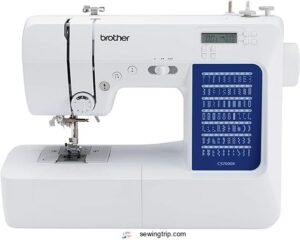
If the Janome keeps it simple, the Brother CS7000X goes the other direction — and does it without breaking the bank.
You get 70 built-in stitches covering utility, decorative, heirloom, and quilting styles, all selectable through a clear LCD display.
The drop-in top bobbin resists jams, and the automatic needle threader cuts setup time substantially. Threading diagrams are printed right on the machine, so you’re never guessing.
The detachable wide table is a genuine help for quilts and larger projects.
At around $169 to $249 depending on where you shop, it punches well above its price.
Ten presser feet are included, so you’re ready to work from day one.
| Best For | Beginners and hobbyists who want a versatile, affordable machine that can handle everything from everyday sewing to quilting projects. |
|---|---|
| Built-in Stitches | 70 |
| Needle Threader | Automatic |
| Bobbin Type | Drop-in |
| Free Arm | Yes |
| Price | $169–$249 |
| Skill Level | Beginner–Hobbyist |
| Additional Features |
|
- 70 built-in stitches across multiple styles gives you plenty to work with without feeling overwhelmed
- Automatic needle threader and drop-in bobbin make setup quick and frustration-free
- The detachable wide table is a real bonus for quilts and bigger projects
- Only runs on 120V, so international users will need a power adapter
- Advanced sewers might outgrow the 70 stitch options fairly quickly
- Some users find the automatic bobbin threader a bit tricky to get the hang of
4. Singer Quantum Stylist Sewing Machine
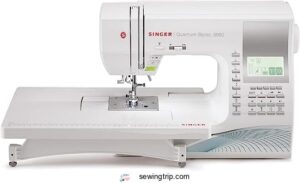
If 70 stitches feel like enough, the Singer Quantum Stylist 9960 will genuinely change your perspective.
You get 600 built‑in stitches, 13 automatic one‑step buttonhole styles, and stitch memory to save your favorite combinations. The top drop‑in bobbin loads fast, and the automatic needle threader means less squinting before you even start.
At 850 stitches per minute, it moves. The start/stop button lets you skip the foot pedal entirely, which is a small thing until it isn’t.
Priced around $550 to $600, it’s a real workhorse for garments, quilts, and home décor. Intermediate sewers get the most from it, but beginners won’t outgrow it quickly.
| Best For | Hobbyist sewers who’ve outgrown the basics and want room to grow — great for garments, quilts, and home décor projects. |
|---|---|
| Built-in Stitches | 600 |
| Needle Threader | Automatic |
| Bobbin Type | Drop-in |
| Free Arm | Yes |
| Price | $550–$600 |
| Skill Level | Intermediate–Advanced |
| Additional Features |
|
- 600 stitches and 13 automatic buttonhole styles give you serious creative range
- Automatic needle threader and top drop-in bobbin make setup quick and painless
- Start/stop button means you can sew comfortably without a foot pedal
- The throat plate runs small, which can be frustrating on bigger quilting projects
- So many features means a real learning curve — the manual is not optional
- Not built for commercial use, so heavy production workloads are off the table
5. Bernette B79 Sewing and Embroidery Machine
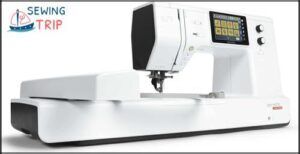
The Bernette B79 isn’t just a sewing machine — it’s a creative studio in one unit. You get 500 built-in stitches, 208 embroidery designs, and a spacious 260 x 160 mm embroidery area that gives your projects real room to breathe.
The 5-inch color touchscreen makes browsing designs feel natural, and dual feed manages tricky fabrics without the usual headaches.
Automatic hoop recognition and three included hoops keep your workflow moving. At up to 1,000 stitches per minute, it doesn’t slow you down.
Fair warning though — the menu system has a learning curve. But once you’re past it, this machine opens up a serious range of possibilities.
| Best For | Hobbyists and creative sewers who want an all-in-one machine for embroidery, quilting, and home décor projects. |
|---|---|
| Built-in Stitches | 500 |
| Needle Threader | Automatic |
| Bobbin Type | Drop-in |
| Free Arm | Yes |
| Price | High-end |
| Skill Level | Hobbyist–Creative |
| Additional Features |
|
- Dual feed handles tricky fabrics smoothly and keeps things moving fast
- Reads multiple embroidery file types, so you’re not locked into one format
- On-board help menus mean you’re not totally on your own when things get confusing
- The menu system has a real learning curve — expect some frustrating early sessions
- Threading the lower bobbin is trickier than it should be
- Not built for heavy-duty fabrics or thick layers, so it has its limits
6. Brother SE700 Sewing Embroidery Machine
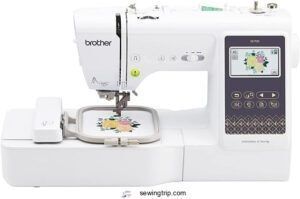
The Brother SE700 sits in a sweet spot — capable enough for real embroidery work, approachable enough for someone still building confidence.
You get 135 built-in designs, 103 stitches, and wireless connectivity through the Artspira mobile app, so transferring custom patterns is simple and fast. The 3.7-inch touchscreen makes editing and positioning designs feel natural rather than frustrating.
At a 4×4-inch embroidery field, it manages most small to mid-sized projects well. Sewing speed tops out at 710 stitches per minute, and the automatic needle threader takes away one of the most common daily annoyances.
For around $500, it’s hard to find this balance of features elsewhere.
| Best For | Beginners and hobbyists who want a capable machine that handles both sewing and embroidery without a steep learning curve. |
|---|---|
| Built-in Stitches | 103 |
| Needle Threader | Automatic |
| Bobbin Type | Drop-in |
| Free Arm | Yes |
| Price | ~$500 |
| Skill Level | Beginner–Hobbyist |
| Additional Features |
|
- Wireless file transfer via the Artspira app makes loading custom designs quick and painless
- 135 built-in embroidery designs plus a 3.7" touchscreen means you can dive in right away without extra purchases
- Automatic needle threader is a small but genuinely appreciated time-saver for everyday use
- The 4×4" embroidery field is limiting if you want to tackle larger designs
- You need a wireless network to unlock the app features, which is a dealbreaker in some setups
- Takes some time to get comfortable with all the settings — expect a bit of trial and error early on
7. Heavy Duty Sewing Machine Kit
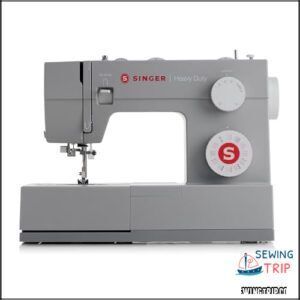
Sometimes a project simply demands more muscle. If you’ve ever watched a regular machine struggle through doubled denim or thick canvas, you know exactly what that feels like. That’s where the Singer Heavy Duty kit steps in.
Built around a full metal frame and a stronger motor, it manages multiple fabric layers without skipping a beat. You get 32 built-in stitches with 110 stitch applications, a jam‑proof drop‑in bobbin, and a built‑in needle threader. The kit adds a heavy duty presser foot, size 18 needles, and reinforced feed dogs — everything aimed at thick, stubborn materials.
At $249.99, it’s practical, reliable, and genuinely built to last. For denim, upholstery, or bags, this machine earns its place on your table.
| Best For | Sewers who regularly work with heavy fabrics like denim, canvas, or upholstery and want a reliable machine that won’t quit mid-project. |
|---|---|
| Built-in Stitches | 32 |
| Needle Threader | Built-in |
| Bobbin Type | Drop-in |
| Free Arm | Yes |
| Price | $249.99 |
| Skill Level | Intermediate |
| Additional Features |
|
- Powerful motor that pushes through thick, stubborn fabrics without skipping or stalling
- Jam-proof drop-in bobbin and built-in needle threader make setup quick and frustration-free
- 32 built-in stitches with 110 applications gives you plenty of versatility for different projects
- Knobs and dials can feel confusing at first, especially without clear labeling
- Not ideal for advanced sewers who want digital controls or high-end features
- Thread jamming can be an issue when using the upright spool pin
8. Juki TL-2000Qi Sewing Quilting Machine
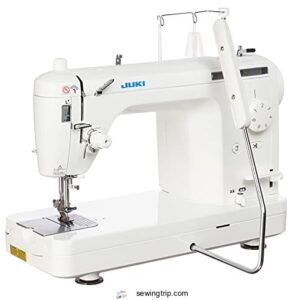
Juki TL-2000Qi bridges the gap between hobbyist and professional quite like no other. At 1,500 stitches per minute, it turns a king‑size quilt from a weekend ordeal into something you can actually finish. The aluminum die‑cast arm and bed keep vibration low, so your seams stay straight even when you’re pushing the speed.
The automatic needle threader and built‑in thread cutter save you the small frustrations that add up over long sessions. Attach the included extension table and you’ve got a generous work area for managing bulky layers.
It’s a straight‑stitch‑only machine, which suits serious quilters just fine. If clean, fast, reliable stitching is your priority, the TL‑2000Qi is hard to argue with.
| Best For | Quilters and home sewers who want a fast, reliable straight-stitch machine for tackling big projects like quilts, apparel, and home décor. |
|---|---|
| Built-in Stitches | 1 (straight stitch) |
| Needle Threader | Automatic |
| Bobbin Type | Drop-in |
| Free Arm | Yes |
| Price | Premium |
| Skill Level | Advanced–Quilter |
| Additional Features |
|
- Screams through fabric at 1,500 SPM — a king-size quilt won’t take all weekend
- Aluminum die-cast build keeps vibration low, so your stitches stay clean and even
- Automatic needle threader and thread cutter cut down on the little frustrations during long sewing sessions
- Straight stitch only — if you need zigzag or decorative stitches, look elsewhere
- Needs oiling after every use, which adds a maintenance step most machines don’t require
- The included walking foot has no quilting bar, so you may need to buy extra accessories to get the most out of it
9. Singer M3500 Sewing Machine with Kit
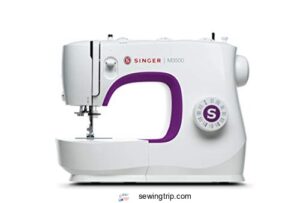
The Singer M3500 punches well above its price tag. You get 32 built-in stitches — basic, decorative, and stretch — plus adjustable length and width so you can dial in exactly what a project needs.
The automatic needle threader and bright LED lighting make setup quick, and the free arm manages sleeves and cuffs without a fight.
A front-loading bobbin keeps things simple during changes. The metal internal frame gives it a solidity you don’t always expect at this price.
It manages everything from sheer fabrics to denim, and the included kit adds real starter value.
For beginners and intermediate sewers who want a reliable, no‑fuss machine, the M3500 is a smart pick.
| Best For | Beginners and intermediate sewers who want a solid, easy-to-use machine that handles everything from light fabrics to denim without breaking the bank. |
|---|---|
| Built-in Stitches | 32 |
| Needle Threader | Automatic |
| Bobbin Type | Front-loading |
| Free Arm | Yes |
| Price | Budget |
| Skill Level | Beginner–Intermediate |
| Additional Features |
|
- 110 stitch options with adjustable length and width — plenty of variety for most projects
- Automatic needle threader and LED lighting make setup fast and easy
- Metal frame gives it a sturdy feel that holds up over time
- Some users have run into jamming and needle-breaking issues
- The automatic threader can be finicky and may still require manual threading
- Not compatible with UK voltage (110V only)
10. Singer Easy Sewing Machine Kit
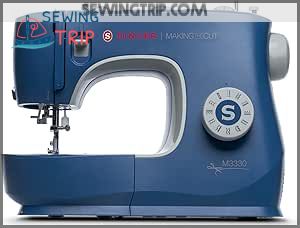
If you want a machine that comes ready to go, the Singer M3330 Kit might be exactly that. You get 23 built-in stitches with 97 stitch applications, an automatic needle threader, and a free arm for tackling cuffs and sleeves without the usual frustration.
The metal frame keeps it sturdy, and it manages everything from sheer fabrics to denim without drama.
The included 43-piece starter kit — pins, thread, seam ripper, measuring tape — means you’re not scrambling for basics on day one.
Bobbin installation takes a little patience, but once you’re set up, this machine stays out of your way and lets you focus on actually sewing.
| Best For | Beginners and hobbyists who want a reliable, ready-to-go machine for everyday sewing, repairs, and DIY projects. |
|---|---|
| Built-in Stitches | 23 |
| Needle Threader | Automatic |
| Bobbin Type | Front-loading |
| Free Arm | Yes |
| Price | ~$75+ |
| Skill Level | Beginner–Experienced |
| Additional Features |
|
- 23 built-in stitches with 97 applications gives you plenty of variety without feeling overwhelming
- Comes with a 43-piece starter kit so you’re set up from day one
- Handles a wide range of fabrics — from sheer to denim — without much fuss
- The automatic needle threader can be tricky to get right
- Front-loading bobbin is prone to jamming and takes some patience to install
- No physical manual included — you’ll need to look everything up online
Key Features to Look For
Not all sewing machines are built the same, and the differences often come down to a handful of features that matter more than the price tag. Knowing what to look for before you buy saves you from ending up with a machine that fights you on every project.
Here are the key features worth paying attention to.
Number and Types of Stitches
Stitch count isn’t everything — but the right stitches absolutely are.
Basic machines cover the essentials: straight stitch, zigzag, and buttonhole. That’s genuinely enough for most projects.
Go higher‑end, though, and you get decorative stitch libraries, adjustable stitch width, stitch length variations, and serious stitch density options for embroidery or sergers.
Stitch selection should match your work, not impress anyone. Prioritize stitch quality over quantity, and you’ll never feel limited.
Automatic Needle Threader
Threading a needle by hand gets old fast — and if your eyesight isn’t what it used to be, it’s genuinely frustrating. That’s where a quality automatic threader earns its place in any sewing machine reviews shortlist.
The Threader Mechanism Design uses a small wire hook that passes through the needle eye, grabs the thread, and pulls it through in one to three seconds. Most built‑in systems offer solid Needle Size Compatibility, handling sizes 70/10 and up with around 95 % first‑attempt success.
- Ergonomic Lever Action keeps wrist strain low with smooth, minimal rotation
- Safety Interlock Features stop the threader if the needle isn’t properly positioned
- Threader Maintenance Tips: clean the needle clamp area regularly to prevent lint buildup
They also reduce eye strain for users with vision impairments, a key benefit of automatic needle threaders.
Bobbin Type and Loading Mechanism
Your bobbin setup matters more than most people realize.
Drop‑In Convenience means you load and go — clear covers let you monitor thread at a glance. Front‑Load Tension gives you finer control but has a steeper learning curve.
For Class 15 Compatibility, always match your machine specs exactly; even slight size differences cause skipped stitches.
| Feature | Drop‑In Bobbin | Front‑Load Bobbin |
|---|---|---|
| Ease of Use | Beginner‑friendly | Intermediate |
| Tension Control | Moderate | Precise |
| Metal vs Plastic Bins | Usually plastic | Often metal |
Choosing the right Class 15 bobbins is essential for smooth stitching. Keep Bobbin Case Maintenance simple — clear lint regularly to protect stitch quality.
Presser Feet and Accessories
Once you’ve sorted your bobbin setup, the next thing that shapes what your sewing machine can actually do is your presser feet collection. Most machines include 4 to 12 feet right out of the box, and that variety matters.
Here’s what to focus on:
- Zipper Foot Uses — stitches tight to zipper teeth for clean, even results
- Overcast Edge Techniques — mimics a serger finish to stop fabric fraying
- Walking Feed Benefits — moves multiple layers evenly, perfect for quilts or denim
- Blind Hem Applications — creates nearly invisible hems on garments
For Specialty Embroidery Feet, cording and appliqué feet open up decorative possibilities. Always verify snap-on versus proprietary shank compatibility before buying extra Sewing Accessories.
LCD Display and Controls
The screen on a computerized sewing machine tells you more than you’d expect. Entry-level models offer basic button navigation on small displays, but premium machines feature bright, adjustable touchscreens with Touch Navigation that puts 400+ stitches at your fingertips.
Resolution Settings and Screen Brightness controls reduce eye strain during long sessions.
You’ll also appreciate Diagnostic Menus for quick troubleshooting and Firmware Updates that add new features over time — keeping your machine relevant as your skills grow.
Speed and Motor Power
Motor power shapes every stitch you make. Most domestic sewing machines hit 400 to 1,000 SPM, with RPM range and torque consistency determining how well they handle denim or delicate silk without skipping.
Direct drive benefits include snappier response and stronger low‑speed control, while belt drive maintenance adds a minor upkeep task but smooths out vibration on heavy‑duty fabrics. Energy efficiency modes keep wattage in check during long sessions — smart for any serious computerized sewing setup.
Types of Sewing Machines Explained
Not all sewing machines are built the same, and that difference matters more than most people realize.
type you choose shapes what you can make, how fast you’ll learn, and how long the machine will last.
five main types so you can zero in on the right one.
Mechanical Sewing Machines
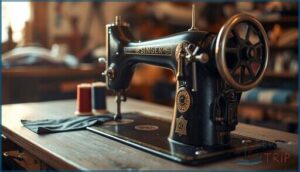
Mechanical sewing machines put you fully in charge — no screens, no menus, just a gear mechanism, a foot pedal control, and your hands. That’s a setup serious sewers have trusted for decades.
- Metal frame durability means these machines can last 40+ years
- Manual tension dial gives you precise, tactile thread control
- Fixed stitch limits keep operation simple and reliable
- Foot pedal control delivers direct speed response
- Low maintenance needs make long-term ownership affordable
Computerized Sewing Machines
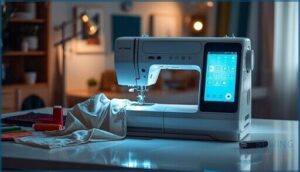
Computerized sewing machines are where control meets creativity. Machines like the Brother CS7000X and Singer Quantum Stylist 9960 give you 600+ stitches, stitch memory for saving custom sequences, and user interface customization that fits your workflow.
Design import via USB, solid connectivity options, and energy efficiency make them genuinely future-proof.
If this is your sewing machine buying guide moment, computerized sewing delivers precision that grows with you.
Serger and Overlock Machines
Think of sergers as your seam-finishing secret weapon.
These machines trim, stitch, and enclose raw edges in a single pass — something a regular sewing machine simply can’t do.
Thread tension across three or four threads controls overlock width and seam strength, while differential feed prevents stretching on knits.
Needle size and fabric compatibility matter here, so check both before you start serging or overlocking any project.
Embroidery and Quilting Machines
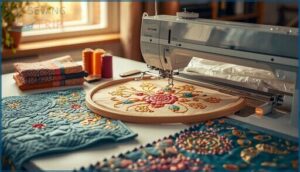
Embroidery and quilting machines are where fabric truly becomes a canvas. A good Brother Machine or Janome Machine gives you built‑in designs, adjustable Thread Tension, and Free‑Motion Mode for stippling and swirls. Hoop Size determines how large your designs run — most mid‑range Embroidery Machines and Quilting Machines offer a 5"x7" field. Add a Quilt Frame for bed‑sized projects, and use USB Design Transfer to load custom patterns instantly.
- Drop-in bobbins refill fast during long quilting sessions
- Free-Motion Mode drops the feed dogs for freehand stitching
- USB ports enable smooth Design Transfer from third-party libraries
Heavy-Duty and Industrial Machines
When delicate art is handled, heavy‑duty and industrial machines do the hard labor.
Frame Reinforcement in these builds means a reinforced steel chassis that won’t flex stitching through canvas, leather, or denim. Servo Motors deliver high torque at low speeds — critical for 18 mm material. Thermal Protection prevents motor burnout during long runs.
| Feature | Heavy-Duty | Industrial |
|---|---|---|
| Motor | Servo/AC | High-torque servo |
| Speed | 800–1,500 SPM | Up to 4,000 RPM |
| Feed Dog Design | Layered grip | Needle‑feed walking |
| Industrial Warranty | Limited | Commercial‑grade |
Singer Heavy Duty models are solid starting points among HeavyDuty Machine Reviews.
Choosing The Right Sewing Machine
Picking the right sewing machine comes down to a few things that really matter to you personally.
Everyone’s needs look a little different depending on skill, budget, and the kind of projects you actually want to make.
Here’s what to think about before you decide.
Assessing Skill Level and Project Needs
Before spending a cent, be honest about where you’re in your sewing journey.
Beginner project matching starts with machines offering 10–25 stitches — simple, focused, and forgiving.
Intermediate fabric choices open up once you’re comfortable controlling tension and speed across different materials.
High-level stitch precision and skill-based machine settings matter most when your sewing projects grow in complexity.
And if you’re cutting leather or stacking thick layers, sturdy construction isn’t optional — it’s the foundation.
Machine Performance and Stitch Quality
Once you’ve sized up your skill level, the next question is: does the machine actually perform when it matters? Stitch Tension Balance is where most machines quietly fail. Aim for a default tension around 4 to 4.5 on medium cotton, then adjust from there.
Here’s what to evaluate:
- Adjustable Stitch Length — look for 0.1‑mm increments for real precision
- Stitch Width Range — 7‑mm maximum opens up decorative options
- Maximum Sewing Speed — 850 stitches per minute manages demanding projects
- Feed Dog Mechanism — smooth, consistent fabric feeding prevents skipped stitches
- Thread Management — compatibility across thread weights keeps seams clean
Ease of Use and User-Friendly Features
Performance gets you halfway there. Responsive controls close the gap.
Computerized machines with quick‑setup features — like the Brother CS7000X’s automatic needle threader and drop‑in bobbin — genuinely cut frustration for beginner sewing and experienced hands alike. Speed sliders let you stay in control without white‑knuckling the pedal.
| Feature | Why It Matters |
|---|---|
| Automatic Needle Threader | Saves time, reduces eye strain |
| LCD Display | Clear stitch selection at a glance |
| Speed Control Slider | Prevents rushing on detailed work |
| Drop-In Bobbin | No fumbling mid‑project |
| Start/Stop Button | Sews hands‑free, great for all skill levels |
Ergonomic design and clear instruction guides make best sewing machines for beginners feel approachable — not intimidating.
Machine Weight and Portability
Weight shapes your workflow more than you’d think. For home sewing that travels — classes, craft fairs, a friend’s studio — lightweight design matters. The Brother CS7000X hits 10.5 pounds with carry grips and compact dimensions that slip into travel cases easily. The Janome Sew Mini goes even lighter at 6.9 pounds.
Best sewing machines for portability offer:
- Integrated carry grips for one-hand transport
- Compact dimensions under 17 inches wide
- Lightweight frames between 6–11 pounds
- Compatible travel cases with foam padding
- Portable storage solutions with removable extension tables
Price Range and Value
Most sewists find their sweet spot somewhere between $150 and $700. Budget models under $200 work well for sewing for beginners, while mid‑range pricing tiers enable real automation. Premium best sewing machines justify higher costs through long‑term savings on repairs and sewing machine maintenance.
| Tier | Price Range | Best For |
|---|---|---|
| Budget | $150–$300 | Beginners, basic projects |
| Mid-Range | $350–$700 | Adaptable everyday sewing |
| Premium | $800–$1,500 | Embroidery, heavy fabrics |
Feature Price Ratio and value for money define the smartest picks.
Essential Sewing Machine Accessories
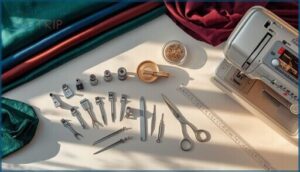
A good sewing machine is only part of the story — what you pair it with matters just as much.
The right accessories can save you time, protect your investment, and open up projects you couldn’t tackle before.
Here are the essentials worth adding to your setup.
Extension Tables and Storage Trays
A good extension table changes everything about how your sewing machine manages big projects. Leaf mechanisms let you expand the surface instantly, then fold it away when you’re done. Hidden compartments keep your sewing accessories and tools organized without cluttering your workspace. Here’s why they’re worth adding:
- Extra surface area prevents fabric bunching during quilts or large garments.
- Load capacity holds heavy materials without wobbling.
- Aesthetic finishes match your machine and room.
- Portable wheels make repositioning easy.
Extra Bobbins and Needles
Those three bobbins your sewing machine came with? They’ll disappear fast. Serious sewing demands 20 to 30 on hand, and specialty bobbin types—like pre‑wound or quilting bobbins—keep thread tension matching consistent throughout long sessions.
| Needle Size Guide | Best For |
|---|---|
| 60/8 – 75/11 | Lightweight fabrics |
| 80/12 – 90/14 | Medium woven fabrics |
| 100/16 – 110/18 | Heavy-duty materials |
| Ballpoint (any size) | Knits and stretch |
Bobbin color coding simplifies your storage organizer tips—swap needles every eight hours and match sizes to fabric weight.
Specialty Presser Feet
The right presser feet turn an ordinary machine into a powerhouse. Zipper Feet let you stitch tight against teeth with precision, while Quilting Feet feed every layer evenly — no more puckering.
These Crafting Tools enable Sophisticated Sewing Techniques across all Sewing Machine Types.
- Zipper Feet — navigate metal and invisible zippers cleanly
- Quilting Feet — walking feet grip quilt sandwiches evenly
- Hemming Tools — rolled hem feet finish delicate edges fast
- Buttonhole Attachments — sense fabric thickness for consistent sizing
Maintenance Tools and Kits
A neglected machine is a slow machine. Keep yours running with a solid maintenance kit — think Precision Screwdriver Set, Dust Removal Brushes, and Lubricant Application Tools.
Oil after every few bobbin changes, and use a Thread Tension Gauge to catch balance issues early.
Across all Sewing Machine Types, these Calibration Measuring Instruments and Crafting Tools are what separate the best sewing machines from the frustrating ones.
Sewing Machine Maintenance Tips
A good sewing machine can last 20 years or more — but only if you treat it right.
A good sewing machine can last twenty years or more, but only if you treat it right
The way you clean, store, and troubleshoot your machine makes all the difference between one that hums along and one that collects dust in a closet. Here’s what you need to know to keep yours running its best.
Cleaning and Oiling Procedures
Keeping your sewing machine clean isn’t optional — it’s what separates a machine that lasts decades from one that breaks down mid-project. Start with lint removal after every few bobbins, clearing the bobbin area and feed dogs with a soft brush. Here’s your go-to maintenance routine:
- Clear thread path after each project
- Apply oil every 8–12 hours of sewing
- Lubricate the needle bar and presser foot lever monthly
- Remove the needle plate for bobbin area lubrication quarterly
- Test stitches on scrap fabric after every oiling session
These sewing tips keep your machine humming reliably.
Proper Storage and Handling
Once your cleaning routine is locked in, storage becomes the next line of defense. Keep your sewing machine in a stable environment — ideally between 10°C and 25°C — with humidity below 60% to prevent rust and warping.
Use breathable portable cases for dust protection and smart cord management to avoid kinks.
For transport, lower the needle position first.
These simple sewing tips protect your machine maintenance investment long‑term.
Troubleshooting Common Issues
Even the best machine throws a curveball sometimes. Thread tension is the usual suspect — re-thread completely and test on scrap fabric before assuming the worst.
Here’s what to watch for:
- Needle skipping or breaking: Replace your needle every 8–10 hours of sewing
- Bobbin jamming: Lint buildup in the bobbin case causes nearly a third of all stoppages — brush it out monthly
- Motor overheating: Turn off immediately if the machine jams; forcing it worsens damage
Warranty and Support Options
Once you’ve sorted out the common fixes, it’s worth knowing what happens when something needs professional attention. Your warranty is your safety net — and knowing exactly what it covers saves real headaches later.
Coverage duration varies by brand. Most machines come with one year of parts and labor. Singer’s tiered plans stretch that considerably on select models, while higher‑end machines often include two to five years on mechanical components.
Here’s what solid warranty support generally looks like:
- Authorized service centers repair your machine using genuine parts
- Extended Warranty Cost adds three to five years beyond your standard plan
- Claim Documentation requires proof of purchase and photos of the defect
- Service Response Time ranges from 24 hours to standard business days depending on your tier
- International Repair routes through authorized centers in your country of purchase
Unauthorized modifications void coverage — always check before customizing.
Frequently Asked Questions (FAQs)
What sewing machine has the least problems?
Like a car that just runs, the Janome 6250QC stands out for fewest headaches — smooth tension, stable feed dogs, and consistent stitches across fabrics make it a dependable daily workhorse.
What is the most sought after sewing machine?
The Brother CS7000X tops the charts right now.
User reviews praise its reliability, feature demand is high, and brand reputation keeps it ahead of Singer and Juki rivals across every price trend.
What is the best sewing machine?
Finding the right sewing machine feels like threading a needle in the dark — until you know what to look for.
The CS7000X from Brother delivers stitch durability, beginner-friendly controls, and solid warranty length in one reliable package.
Which sewing machine is the most user-friendly?
For sewing beginners, the Brother CS7000X wins on every front — quick setup, a clear interface, an automatic needle threader, and 70 built-in stitches that make learning sewing techniques genuinely enjoyable from day one.
How do I choose the best sewing machines?
Start with your skill level and the projects you plan to tackle.
Match features to those needs, factor in Budget Constraints, Fabric Compatibility, Portability Factors, and Warranty Coverage, then cross-check User Reviews before deciding.
What is the best sewing machine for dance costumes?
Dance costumes demand a lot from your machine. You need stretch stitch support, thick fabric capability, and free arm stitching for sleeves and leggings.
The Singer Quantum Stylist and Brother CS6000i both deliver.
How do I choose the right accessories for dance costumes?
Every accessory decision is make-or-break for dance costumes.
Prioritize stretch fabric compatibility with ballpoint needles, secure fastening systems, and embellishment attachment methods that hold through spins. Lightweight accessory materials and comfort fit adjustments keep performers moving freely.
What machine brands are best for dance costumes?
Brother leads for Stretch Stitch Performance and Sequins Handling, while Janome wins on Fabric Durability.
Juki delivers raw Motor Speed, and Bernette adds Embroidery Integration — all strong picks for costume work.
What are the best serger recommendations for dance costumes?
Sergers like the Brother 1034D and Juki MO-654DE are hard to beat for costume work on spandex and chiffon.
Differential feed, color-coded threading, and rolled hem precision keep lightweight fabric handling clean and fast.
How do I handle different types of dance fabric?
Match your needle to your fabric first. Ballpoint needles protect stretch knits, while sharp needles suit woven silks.
Adjust thread tension carefully, use stretch stitches, and always align grain for clean drape.
Conclusion
A quilt isn’t built in a single stitch—built in thousands of small, confident decisions.
Finding the best sewing machines works the same way: Finding the best sewing machines, one honest choice sets everything else in motion.
You now know what separates a machine that frustrates from one that machine that actually fits your hands, your projects, and your pace.
Trust what you’ve learned here, pick the machine that matches where you’re today, and let the work speak for itself.