This site is supported by our readers. We may earn a commission, at no cost to you, if you purchase through links.
The difference between upholstery that lasts decades and work that falls apart after a season often comes down to what’s attached to your machine—not the machine itself.
A $200 walking foot outperforms a $2,000 industrial setup paired with the wrong needle.
That’s the reality most beginners discover mid‑project, usually while ripping out uneven seams in heavy canvas.
The right sewing machine accessories for upholstery projects don’t just make the work easier—they determine whether your stitches hold under stress, your cuts stay true, and your finished piece looks professional.
From heavy‑duty needles that push through leather without deflecting to specialized presser feet that keep piping crisp and consistent, every accessory plays a specific role.
Here’s what actually belongs in your upholstery toolkit.
Table Of Contents
- Key Takeaways
- Essential Accessories for Upholstery Sewing
- Must-Have Cutting and Measuring Tools
- Specialized Presser Feet for Upholstery
- Top Sewing Machines for Upholstery Projects
- 1. Singer Classic HD500 Sewing Machine
- 2. Singer Heavy Duty 4452 Sewing Machine
- 3. Singer Heavy Duty 4452 Sewing Machine Bundle
- 4. Singer Heavy Duty 4411 Sewing Machine
- 5. Brother XM2701 Sewing Machine
- 6. Singer Heavy Duty 4423 Sewing Machine
- 7. Industrial 6500RPM Heavy Duty Sewing Machine
- 8. Singer HD500 Classic Heavy Duty Sewing Machine
- 9. Singer Heavy Duty 4432 Sewing Machine
- 10. VEVOR 550W Industrial Sewing Machine
- Maintenance Accessories for Upholstery Sewing
- Frequently Asked Questions (FAQs)
- Conclusion
Key Takeaways
- The accessories attached to your machine matter more than the machine itself — the right needle, foot, and thread can outperform a far more expensive setup paired with the wrong tools.
- Matching your needle size, point type, and thread weight to your specific fabric is what keeps stitches from failing under stress — get this wrong and no presser foot can save the seam.
- Specialized feet like the walking foot and piping foot aren’t optional upgrades; they’re what stop heavy layers from shifting and keep welting crisp and consistent on every pass.
- Clean, sharp, well-maintained tools — from titanium-coated needles swapped every 6–8 hours to a regularly oiled hook assembly — are the difference between a machine that lasts and one that fails mid-project.
Essential Accessories for Upholstery Sewing
The right accessories can make or break an upholstery project — especially when you’re working with thick canvas, dense foam, or multiple stubborn layers.
For tackling those tougher materials, these sewing tips for bag making and upholstery projects can save you a lot of frustration before you even thread the needle.
Your machine is only as capable as the tools paired with it.
Here are the essential accessories that serious upholstery work demands.
Heavy Duty Sewing Machine Needles
The right needles make or break your upholstery work. For heavy‑duty sewing machine projects, match Needle Size Ranges to your fabric — sizes 100/16 through 110/18 cover most upholstery sewing machine tasks. Choose Point Types carefully: leather points for vinyl, sharp points for canvas. Understanding heavy‑duty needle types helps prevent fabric damage.
Here’s what to keep on hand:
- Sizes 90/14–120/19 for full range coverage
- Leather-point needles for coated vinyl and genuine leather
- System Compatibility: 130/705 H for domestic machines
- Chrome or ceramic Material Coatings for reduced friction
- Watch Wear Indicators — swap needles every 6–8 hours
Upholstery Threads and Bobbins
Thread material selection matters as much as your needle choice. Bonded nylon supports indoor seating well — it flexes without snapping.
For outdoor cushions, Bonded polyester resists UV and moisture far better long‑term. Nylon upholstery thread provides high tensile strength for durable indoor seams. Use this thread size guide as your starting point:
| Fabric Type | Thread Size |
|---|---|
| Light upholstery cloth | Tex 69–92 |
| Heavy canvas or denim | Tex 92–138 |
Bobbin class compatibility is just as important — most domestic machines use Class 15 bobbins. Match your bobbin thread to your top thread for easier tension balancing and cleaner seams.
Walking Foot and Roller Foot Attachments
Once your thread is dialed in, the right presser foot transforms how fabric moves. A walking foot uses feed synchronization — upper and lower feed dogs working together — to handle multiple vinyl or canvas layers without puckering. Roller feet glide over leather effortlessly.
Both support speeds up to 1100 SPM with clean stitch quality impact. Installation takes minutes — loosen, position, tighten, test.
Extension Tables for Large Projects
A solid extension table is one of those upholstery tools that changes everything. It gives heavy fabric full support instead of letting it drag and distort your seams. Here’s what to look for:
- Table Height Adjustment — Level the surface flush with your machine bed
- Surface Material Choices — Smooth acrylic lets canvas and vinyl glide cleanly
- Leg Stability Options — Four adjustable legs prevent wobble on long seams
- Custom Size Planning — Aim for 18×24 inches minimum for cushions and slipcovers
Extra-Large Bobbin Cases
Most sewers don’t think about bobbin cases until thread runs out mid-seam.
M-size bobbins solve that — their capacity advantages mean 20–40% more thread than standard sizes, cutting interruptions on long upholstery runs.
Machine compatibility covers industrial workhorses like Juki DDL-5600 and Consew 146RB.
Installation guide tip: align the projection tab, click it in, and leave a 4-inch thread tail for clean tension every time.
Must-Have Cutting and Measuring Tools
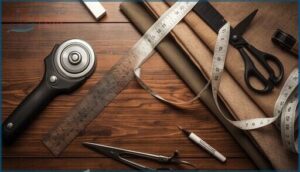
Cutting and measuring tools are the unsung heroes of any upholstery project — get them wrong and even the best sewing machine can’t save you. Precision starts long before the needle touches the fabric.
Even the best sewing machine can’t save a project ruined by imprecise cuts and measurements
Here are the must-have tools that’ll keep your cuts clean and your measurements spot-on.
Upholstery Shears and Scissors
The right upholstery shears can make or break your project. Blade materials matter — high-carbon stainless steel stays sharp through leather and vinyl. Grip ergonomics reduce fatigue on long cuts. Size selection depends on your task: 10–12 inches for large panels, 8–9 inches for curves.
- Pivot technology like Ringlock eliminates blade wobble
- Sharpening techniques with 180–220 grit sandpaper restore edges fast
- Bent grips keep blades flat for cleaner cuts
Rotary Cutters and Cutting Mats
Cutting through heavy upholstery materials demands the right tools. Blade size selection starts with a 60mm rotary cutter — it manages thick upholstery fabrics and reduces wrist strain on long cuts.
Pair it with a self-healing mat; its multi-layer PVC construction prevents grooves and extends blade life.
Protecting your investment starts with the right tools, and pairing smart accessories with an affordable sewing machine built for home use means you’ll spend more time creating and less time troubleshooting.
Grid angle guides at 30, 45, and 60 degrees keep your cuts precise.
Always engage safety blade mechanisms when stepping away, and stock replacement blade types such as pinking or tungsten steel for adaptable upholstery supplies.
Measuring Tapes and Rulers
Accurate measurement is the backbone of clean upholstery work. A fiberglass tape delivers Fiberglass Tape Benefits you can’t ignore — it resists stretching across long sofa backs and repels moisture from steamy workshops. Dual Unit Scales let you switch between inches and centimeters without math headaches.
- Retractable Tape Features: lock button freezes readings, hands‑free
- Non‑slip Grip Rulers prevent shifting during long cuts
- Grid Ruler Uses: square corners and repeat band widths consistently
- 60‑inch flexible tapes curve around cushions and chair arms
- Clear plastic rulers align fabric motifs precisely
Pattern Weights and Marking Tools
Pattern weights and marking tools are the unsung heroes of clean upholstery work.
For DIY Weights, stack three 2.5-inch steel washers — they stay flat and won’t shift on thick upholstery materials.
As for marking, Chalk Wheel Tips work best on textured fabrics, while Heat Erasable Pens vanish with a quick iron press.
Keep both in your sewing accessories kit.
Specialized Presser Feet for Upholstery
The right presser foot can make or break an upholstery project — the wrong one turns clean work into a frustrating mess.
Specialized feet are built to handle the bulk, stiffness, and layering that standard feet simply can’t manage.
Here are the key options worth having in your toolkit.
Cording and Piping Feet
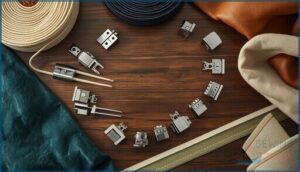
A cording foot can make or break your piping work. Groove Depth Variations matter here — a foot sized for 1/4‑inch welting cord delivers tight, precise stitches, while Cord Size Matching prevents crushing soft braided cord. Multi‑Cord Hole Designs let you run three to five cords at once, and Clear Front Visibility helps you steer every curve with confidence.
- Use adjustable presser foot pressure to avoid flattening soft cords
- Choose Sewing Machine Accessories for upholstery with the right groove size, not the closest available
- Pair your walking foot with a piping foot on thick, layered seams
Zipper Feet for Upholstery
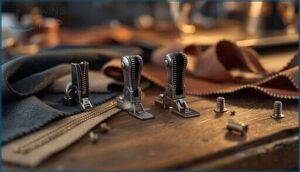
Just like a piping foot owns its groove, a zipper foot owns its clearance.
Zipper Foot Clearance keeps stitches tight against the teeth without catching the slider.
Use a Narrow Zipper Foot on lighter cushion zippers, Adjustable Zipper Feet when switching sides, and an Industrial Walking Foot for heavy automotive or furniture Upholstery Projects — essential Sewing Machine Accessories for Upholstery.
Binding Attachments
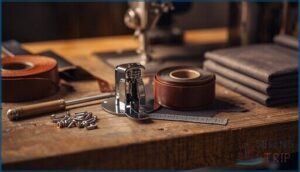
Zipper feet handle the teeth — binding attachments handle the edges.
Swing-Away Binders mount beside the needle plate and swing clear after each pass. Tape Width Options range from ¾‑inch to 1¼‑inch for different upholstery edges. The Adjustable Stop Screw prevents the binder from jumping under load.
Key Binder Installation Tips:
- Secure with two 6-40 screws
- Adjust left-right for precise stitch alignment
- Use bias-cut tape for curves
- Swing arm back when reverse‑sewing thick stacks
Double Fold Binder Attachments
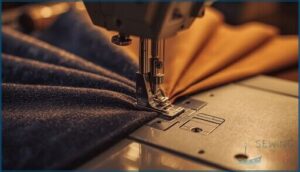
Double fold binders take edge finishing further than a standard binding attachment. They wrap both sides of a raw edge in one pass — no flipping, no second run.
Use Tape Width Selection to match your input strip to the edge thickness; a 26 mm strip folds down to roughly 6.5 mm finished. Check Compatibility Charts before buying, since mounting patterns vary by brand.
Top Sewing Machines for Upholstery Projects
The right machine makes all the difference when you’re working through thick foam, vinyl, or layered fabric.
Not every sewing machine can handle the demands of upholstery — but the ones below were built for exactly that.
Here are the top picks worth your attention in 2026.
1. Singer Classic HD500 Sewing Machine
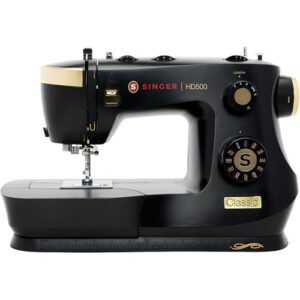
Singer Classic HD500 punches above its weight for home upholstery work. Its heavy-duty metal frame keeps things steady when you’re pushing through multiple layers of denim or canvas, and the 7-point feed dog system moves bulky fabric without puckering.
You get 23 built-in stitches, adjustable presser foot pressure, and a high foot lift for thick materials. The extra-high presser foot lift and free arm make cushion covers and slipcovers far less frustrating.
It’s a solid, reliable workhorse for demanding home projects.
| Best For | Home sewers who regularly work with heavy fabrics like denim, canvas, or multiple layers and need a machine that can keep up without falling apart. |
|---|---|
| Motor Power | 50% more than standard |
| Frame Material | Full metal frame |
| Built-in Stitches | 23 stitches |
| LED Lighting | Yes |
| Needle Threader | Automatic |
| Max Stitch Speed | Not specified |
| Additional Features |
|
- The full metal frame keeps the machine rock-solid — no wobbling or walking across the table when you’re pushing through thick material.
- 50% more motor power than standard models means it handles upholstery, denim, and canvas without bogging down.
- Built-in needle threader and one-step buttonhole make the everyday stuff quick and painless.
- Some users have run into thread breaking and occasional malfunctions, which can get frustrating mid-project.
- The plastic bobbin feels a little cheap for a heavy-duty machine — you may want to grab metal bobbins separately.
- No full printed manual in the box, so new users will need to download it from Singer’s site.
2. Singer Heavy Duty 4452 Sewing Machine
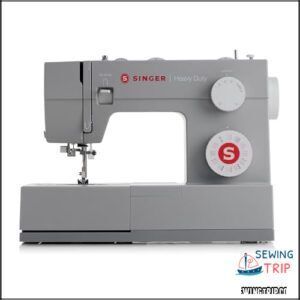
The 4452 is a speed-and-power upgrade that serious upholstery work demands. Its motor runs 60% stronger than a standard home machine, pushing through dense canvas, vinyl, and denim at up to 1,100 stitches per minute. That’s real throughput on long cushion seams.
You get 32 built-in stitches, a stainless steel bedplate for smooth fabric glide, and a high presser foot lifter that clears thick piping easily. At $215, it’s a capable, no-nonsense machine for demanding home upholstery projects.
| Best For | Home sewists tackling heavy-duty projects like denim, canvas, and multi-layer fabrics—whether you’re a beginner or a seasoned pro. |
|---|---|
| Motor Power | Enhanced piercing power |
| Frame Material | Full metal frame |
| Built-in Stitches | 110 stitch applications |
| LED Lighting | Yes |
| Needle Threader | Built-in automatic |
| Max Stitch Speed | Not specified |
| Additional Features |
|
- Powerful motor handles thick, tough fabrics like denim and canvas without breaking a sweat
- 110 built-in stitches plus a full metal frame give you both versatility and long-term durability
- Beginner-friendly features like the built-in needle threader, drop-in bobbin, and 1-step buttonhole make it easy to get started fast
- The upright spool pin can be a bit wobbly, which may cause thread feed issues on certain projects
- At 14.6 pounds, it’s not the lightest machine to move around or store
- Priced at $215, it’s a solid mid-range investment—but may feel steep for casual or occasional sewists
3. Singer Heavy Duty 4452 Sewing Machine Bundle
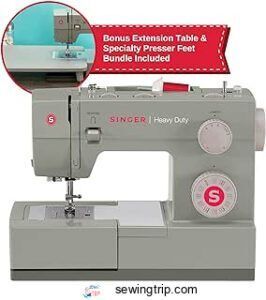
The bundle version of the 4452 is worth a close look if you’re serious about upholstery work. It adds an Even Feed walking foot, a non‑stick foot, a clearance plate, and size 16 heavy‑duty needles — exactly what you need for piping, boxed edges, and vinyl panels.
The extension table is a genuine upgrade too, giving you a wide, stable surface for large cushion work.
You get the same powerful machine, just better equipped from day one.
| Best For | Home sewers and upholstery enthusiasts who work with heavy fabrics like denim, canvas, and leather — and want a reliable, well-equipped machine without a steep learning curve. |
|---|---|
| Motor Power | Strong motor |
| Frame Material | Full metal frame |
| Built-in Stitches | 32 stitches / 110 applications |
| LED Lighting | StayBright LED |
| Needle Threader | Built-in automatic |
| Max Stitch Speed | 1,100 stitches/min |
| Additional Features |
|
- Punches through tough materials with ease — the strong motor and metal frame hold up to denim, canvas, and vinyl without skipping a beat
- The extension table gives you real room to work, which is a game-changer for cushions, quilts, and larger projects
- The bundle comes ready for upholstery work right out of the box — walking foot, non-stick foot, and heavy-duty needles included
- At nearly 15 pounds, it’s not something you’ll want to lug around — pick a spot and leave it there
- The upright spool pin can cause thread to wrap and jam, which gets frustrating fast if you’re in a groove
- The front cover doesn’t open, so fixing thread issues takes more effort than it should
4. Singer Heavy Duty 4411 Sewing Machine
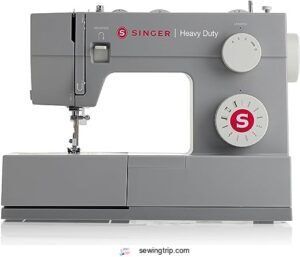
At 1,100 stitches per minute with a motor 60% stronger than standard domestic machines, the Heavy Duty 4411 punches well above its weight class. That extra power lets you drive through canvas, denim, and light upholstery leather without stalling.
The stainless steel bedplate keeps fabric gliding smoothly, and the adjustable presser foot pressure means you’re not guessing when switching between slipcover fabric and thick cushion seams. It’s a solid, portable workhorse for home upholstery projects.
| Best For | Home sewers and DIYers who regularly work with thick or tough fabrics like denim, canvas, and leather. |
|---|---|
| Motor Power | 50% more than standard |
| Frame Material | Full metal frame |
| Built-in Stitches | 69 stitch applications |
| LED Lighting | Yes |
| Needle Threader | Easy thread system |
| Max Stitch Speed | 1,100 stitches/min |
| Additional Features |
|
- Handles heavy fabrics with ease — 50% more power than standard machines means fewer stalls and skipped stitches
- Fast stitching at 1,100 SPM helps you knock out projects quickly, whether it’s curtains or clothing repairs
- Easy to set up and use, with a drop-in bobbin and clear threading path that won’t frustrate beginners
- Only works on 110V, so it’s not a great fit if you’re outside the US or Canada
- Some users run into thread breakage with certain spool setups, which can slow you down mid-project
- Not all presser feet from other machines will fit, so accessory compatibility is something to check before buying
5. Brother XM2701 Sewing Machine
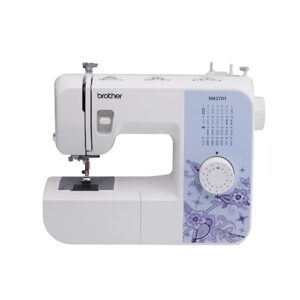
Not every upholstery project calls for an industrial workhorse. The Brother XM2701 is a smart pick for light upholstery accents, cushion covers, and slipcover panels.
Its 27 built-in stitches, six-point feed dogs, and zipper foot handle medium‑weight fabrics with ease.
At 12.6 pounds, you can move it wherever the project demands.
The automatic needle threader and drop-in bobbin keep your workflow moving.
Just stay within its limits — thick vinyl and heavy canvas will push it past its comfort zone.
| Best For | Beginners and casual sewers tackling light upholstery accents, cushion covers, and everyday home projects. |
|---|---|
| Motor Power | Standard motor |
| Frame Material | Metal frame |
| Built-in Stitches | 27 stitches |
| LED Lighting | Yes |
| Needle Threader | Automatic |
| Max Stitch Speed | Not specified |
| Additional Features |
|
- 27 built-in stitches and an automatic needle threader make it genuinely easy to pick up and use
- Lightweight at 12.6 pounds, so you can move it around without a hassle
- Backed by a 25-year limited warranty, which is hard to beat at this price point
- Struggles with thick fabrics like heavy canvas or vinyl — it’s not built for tough stuff
- The spool pin feels a bit flimsy and has been known to break
- No handle for carrying it, and you’ll need to track down your own screwdriver to change the needle
6. Singer Heavy Duty 4423 Sewing Machine
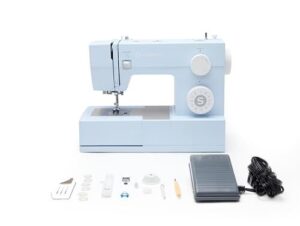
Singer Heavy Duty 4423 punches well above its price point. Its motor delivers 60% more power than standard domestic machines, pushing through denim, canvas, and light vinyl without stalling.
You get 23 built-in stitches, adjustable stitch length up to 4.5mm, and a metal frame that stays planted at 1,100 stitches per minute. The top drop-in bobbin lets you monitor thread mid‑seam — no surprises on long cushion runs. A solid workhorse for serious home upholstery projects.
| Best For | Home sewists and hobbyists who want a reliable, fast machine that handles everyday projects and the occasional thick fabric without breaking the bank. |
|---|---|
| Motor Power | 50% more than standard |
| Frame Material | Metal frame |
| Built-in Stitches | 97 stitch applications |
| LED Lighting | Yes |
| Needle Threader | Automatic |
| Max Stitch Speed | 1,100 stitches/min |
| Additional Features |
|
- Sews at 1,100 stitches per minute with a motor that’s 50% stronger than standard machines — great for moving through heavier fabrics
- 97 built-in stitches plus a one-step buttonhole gives you plenty of options without overcomplicating things
- The top drop-in bobbin and automatic needle threader make setup quick and frustration-free
- The manual is thin on detail, so beginners may find themselves hunting for answers online
- The included needles aren’t ideal for tough materials, meaning you’ll likely need to buy better ones separately
- Despite the "heavy duty" label, it may struggle with truly thick or industrial-grade projects
7. Industrial 6500RPM Heavy Duty Sewing Machine
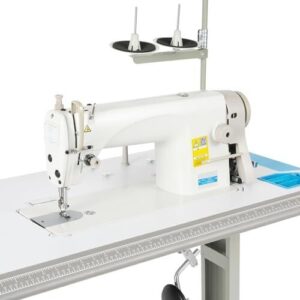
When speed is everything, this machine delivers.
The Industrial 6500RPM Heavy Duty Sewing Machine runs a 550W pure copper motor that hits 3,500 stitches per minute — fast enough for serious production runs on automotive seats, boat covers, and furniture upholstery.
It processes dense vinyl, canvas, and leather without stalling.
The low 30dB noise level keeps your workspace quiet.
At 64 pounds with a cast-frame build, it stays planted through every long seam you throw at it.
| Best For | Professional tailors, upholstery shops, and small production operations that need a fast, quiet, heavy-duty machine for leather, canvas, and dense fabrics. |
|---|---|
| Motor Power | 550W pure copper |
| Frame Material | Iron and aluminum |
| Built-in Stitches | Adjustable needle length |
| LED Lighting | Not specified |
| Needle Threader | Not included |
| Max Stitch Speed | 3,500 stitches/min |
| Additional Features |
|
- Blazing 3,500 stitches per minute makes short work of long production runs
- Runs at just 30dB — impressively quiet for an industrial machine
- Adjustable needle length means it handles everything from thin fabric to thick leather
- No table or stand included, so budget extra for a proper setup
- English manual may not be in the box, which can make getting started a headache
- At 64 pounds, it’s not something you’re moving around easily
8. Singer HD500 Classic Heavy Duty Sewing Machine
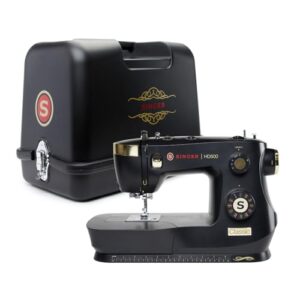
Not every upholstery project needs an industrial workhorse. The Singer HD500 Classic is built for sewists who want serious capability without the bulk.
Its full metal frame and rust-resistant bedplate keep things stable through dense canvas and leather.
You get 23 built-in stitches, adjustable presser foot pressure, and a jam-resistant drop-in bobbin — all practical wins for cushions and slipcovers.
At 21.5 pounds, it’s portable enough for workshops, yet sturdy enough to handle multi-layer upholstery seams without stalling.
| Best For | Sewists who want a durable, versatile machine that can tackle heavier fabrics like leather and canvas without committing to a full industrial setup. |
|---|---|
| Motor Power | Strong motor |
| Frame Material | Full metal frame |
| Built-in Stitches | 23 stitches / 110 applications |
| LED Lighting | Yes |
| Needle Threader | Built-in automatic |
| Max Stitch Speed | Not specified |
| Additional Features |
|
- Full metal frame keeps it solid through tough, multi-layer projects like cushions and slipcovers
- 23 built-in stitches with a jam-resistant drop-in bobbin makes it practical for a wide range of work
- Portable enough at 21.5 lbs to take to classes or workshops without a ton of hassle
- Some users have run into thread breaking or bunching, which can interrupt your workflow
- The machine can produce a clicking or knocking noise during use
- No manual included in the box — you’ll need to download it from Singer’s website
9. Singer Heavy Duty 4432 Sewing Machine
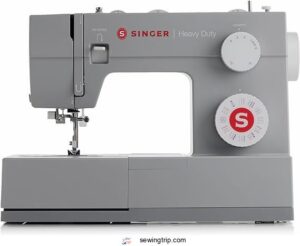
If you need a step up in power without going full industrial, the 4432 delivers.
Its motor runs about 60% stronger than a standard home machine, pushing up to 1,100 stitches per minute through denim, canvas, and thick upholstery layers without breaking a sweat.
The heavy-duty metal frame and stainless-steel bedplate keep everything locked and steady.
You also get adjustable presser-foot pressure and an extra-high foot lifter — both genuinely useful when you’re feeding thick, bulky pieces through tight seams.
| Best For | Home sewers who regularly work with heavy fabrics like denim, canvas, or thick upholstery and want a durable, reliable machine without jumping to industrial equipment. |
|---|---|
| Motor Power | Strong motor |
| Frame Material | Heavy duty metal frame |
| Built-in Stitches | 110 stitch applications |
| LED Lighting | Yes |
| Needle Threader | Automatic |
| Max Stitch Speed | 1,100 stitches/min |
| Additional Features |
|
- Blazing fast at up to 1,100 stitches per minute — handles tough fabrics without slowing down or skipping
- Heavy-duty metal frame and stainless-steel bedplate keep the machine rock-solid, even during long sewing sessions
- Beginner-friendly features like an automatic needle threader, drop-in bobbin, and 110 built-in stitches make it easy to get started
- Not built for extreme materials like thick leather or heavy vinyl — it has limits
- The user manual leaves a bit to be desired, so some features may take trial and error to figure out
- Needs regular maintenance to stay in top shape, which can add up over time
10. VEVOR 550W Industrial Sewing Machine
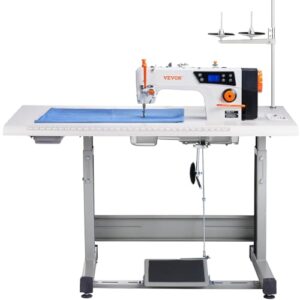
When you’re ready to go full industrial, the VEVOR 550W is a serious upgrade.
Its 550W servo motor hits 5,000 stitches per minute — handling 15 layers of denim without flinching.
The LCD touchscreen puts speed, tension, and stitch length at your fingertips.
It sews through leather, canvas, and vinyl up to 9 mm thick, making it ideal for automotive seats and boat cushions.
The knee lifter keeps your hands free when repositioning heavy material mid‑seam.
| Best For | Shop owners, upholsterers, and serious makers who need a workhorse machine for heavy-duty projects like leather goods, automotive interiors, and canvas. |
|---|---|
| Motor Power | 550W servo motor |
| Frame Material | Metal frame |
| Built-in Stitches | Multiple stitch functions |
| LED Lighting | Yes |
| Needle Threader | Not specified |
| Max Stitch Speed | 5,000 stitches/min |
| Additional Features |
|
- Blazing 5,000 stitches per minute with a 550W servo motor — chews through denim, leather, and vinyl without breaking a sweat
- LCD touchscreen makes adjusting speed, tension, and stitch length quick and straightforward
- Handles a huge range of materials, from delicate silk to thick 9mm vinyl, so it grows with your work
- The instruction manual leaves a lot to be desired — expect to spend time on YouTube filling in the gaps
- At 77.5 pounds, it’s not going anywhere, and assembly (especially the table) can be a real headache
- Shipping damage has been an issue for some buyers, so inspect it carefully when it arrives
Maintenance Accessories for Upholstery Sewing
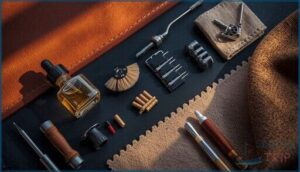
Your machine works hard on upholstery — dense fabrics, thick layers, and constant tension take a real toll.
Skipping maintenance is how good machines go bad fast.
Here are the essential accessories that’ll keep yours running clean and strong.
Sewing Machine Oil and Cleaning Brushes
Keeping your machine clean isn’t optional — it’s what separates a smooth session from a skipped stitch. The right oil types and brush designs make all the difference in sewing machine maintenance for upholstery.
- Use Juki Defrix or Super Lube synthetic oil for heavy-duty application points
- Apply one drop per oil point every 100,000 stitches
- Lubricate the hook area daily after upholstery projects
- Use bendable lint brushes to reach under needle plates
- Increase oil frequency by 25% when sewing dense webbing
Lint Removers and Dust Covers
Protecting your machine between sessions is just as important as oiling it. Nylon and two-sided lint brushes — key upholstery sewing machine maintenance tools — cut skipped stitches by 41%. Pair them with waterproof or heavy canvas dust covers featuring storage pockets for bobbins and scissors.
| Feature | Brush Types | Cover Materials |
|---|---|---|
| Best Use | Bobbin/feed dog cleaning | Daily storage protection |
| Maintenance Benefits | Extends repair intervals 25–40% | Prevents dust migration 20+ years |
| Storage Features | Compact heads for tight spaces | Built-in pockets for sewing machine accessories |
Replacement Needles and Spare Parts
Every upholstery project demands sharp, reliable needles and compatible spare parts. Follow a Needle Size Guide — size 100/16 for canvas and vinyl, 110/18 for leather — and choose Titanium Coated Needles for extended durability.
Master Needle Insertion Tips: flat side back, replaced every 6–8 hours. Confirm Bobbin Case Compatibility and schedule Hook Assembly Maintenance to keep your Sewing Machine Maintenance routine tight and uninterrupted.
Bobbin Winders and Organizers
Bobbins are small but they’ll stall your whole workflow when they run out mid-project.
Portable Winders like the SINGER model use auto-stop mechanisms to prevent overfilling, while Industrial Winders mount directly to your table and handle heavy duty sewing machine demands at up to 2800 rpm.
Use tension adjustment settings to match your thread weight.
Pair everything with Bobbin Storage Solutions to keep your upholstery tools and sewing machine accessories organized and ready.
Frequently Asked Questions (FAQs)
How do hog ring pliers assist in upholstery work?
Like a staple gun’s smarter cousin, hog ring pliers give you precise jaw adjustment and ergonomic grip to crimp rings through fabric onto frames — delivering tension control and material compatibility that keeps upholstery projects tight and professional.
How do curved needles help with upholstery corners?
Curved needles give you corner access that straight needles simply can’t.
Their arc shape lets you push through tight folds with stitch precision, reduced hand strain, and strong seam durability — even in thick upholstery layers.
Conclusion
Cheap tools waste good fabric.
The right sewing machine accessories for upholstery projects turn an average machine into a precision instrument.
A walking foot tracks heavy vinyl without shifting. A piping foot keeps every welt sharp.
Heavy-duty needles push through leather cleanly, every time.
These aren’t upgrades—they’re the foundation your finished work stands on.
Build your toolkit deliberately, and the difference between amateur results and professional-grade upholstery becomes obvious in your very first seam.
- https://www.sewingbeefabrics.co.uk/sewing-machine-feet-guide/
- https://www.longsew.com/news/bestwalkingfootsewingmachineforupholstery-8497.html
- https://www.tolindsewmach.com/walking-foot.html
- https://www.maggieframes.com/ko/blogs/embroidery-blogs/machine-needle-sizes-decoded-choose-perfect-needles-for-any-fabric
- https://www.allbrands.com/categories/495